


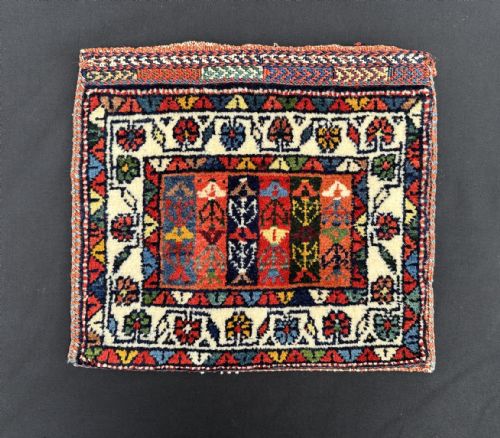
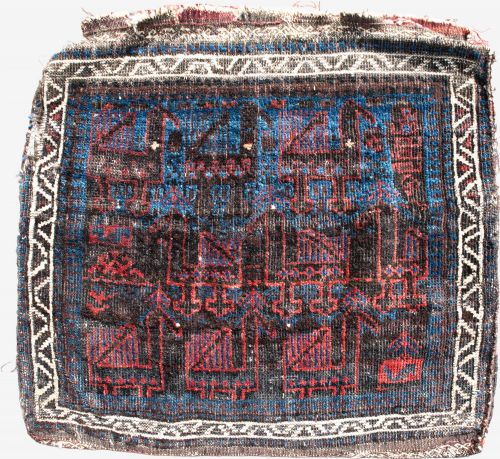
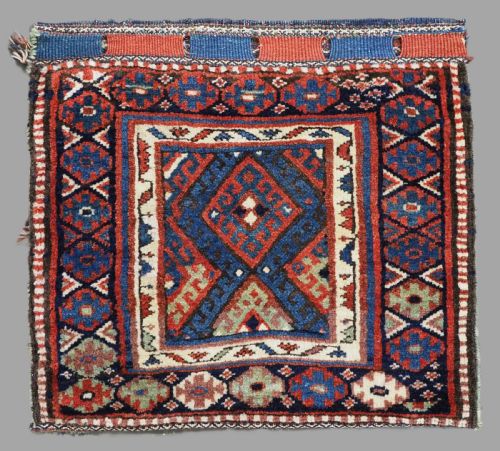


Antique Khorjin Bag
An antique khorjin bag is a tribal storage pouch woven by nomadic weavers across Persia and the Caucasus for pack animals.
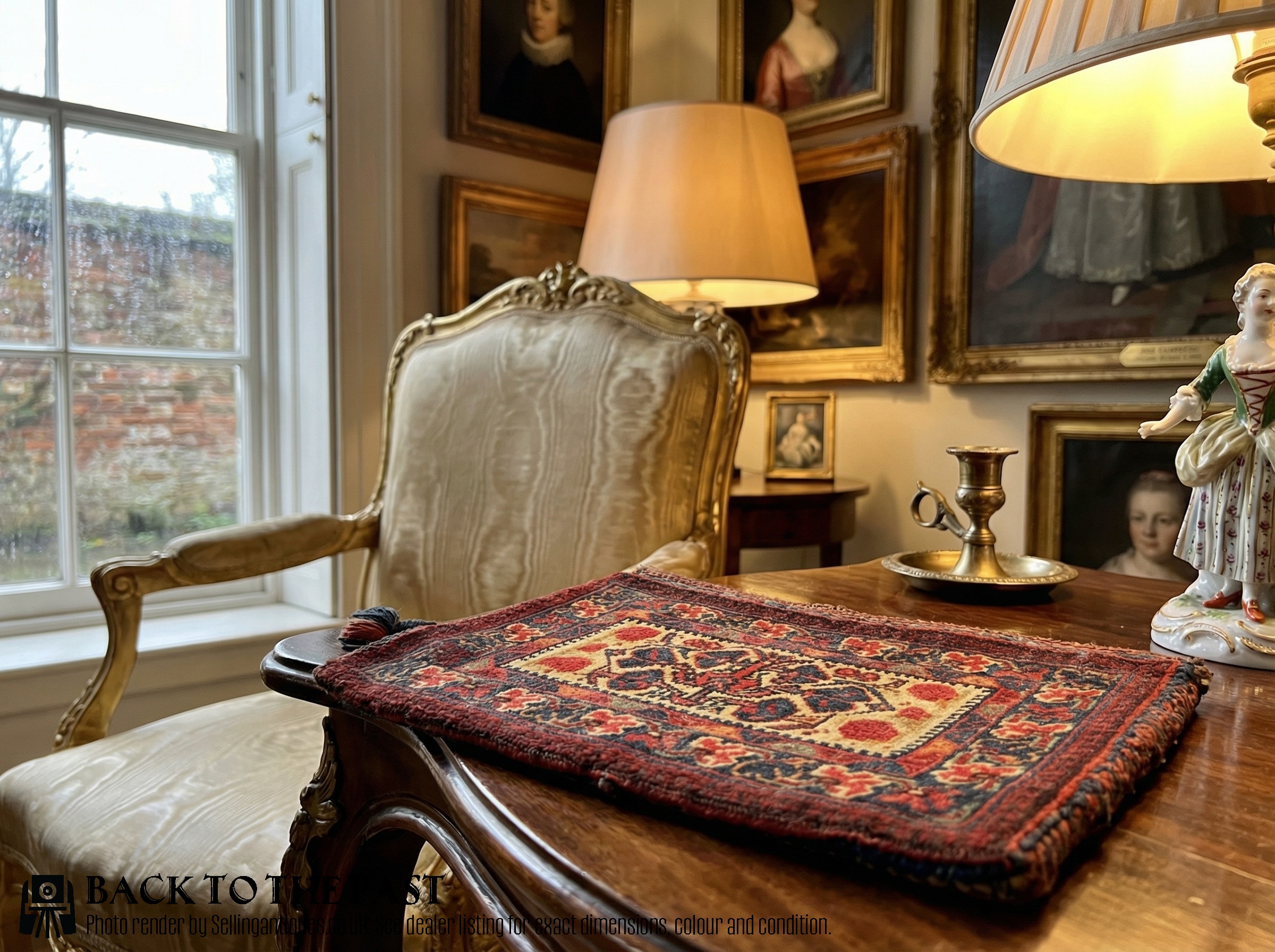
Antique Khorjin Bag
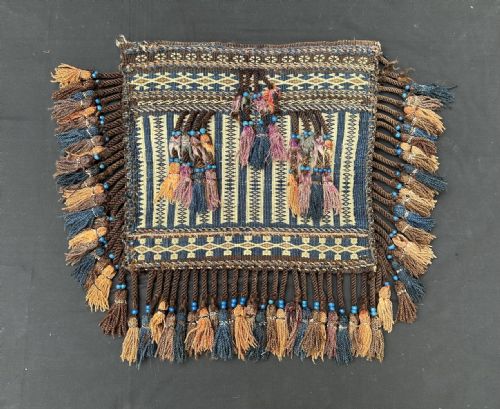
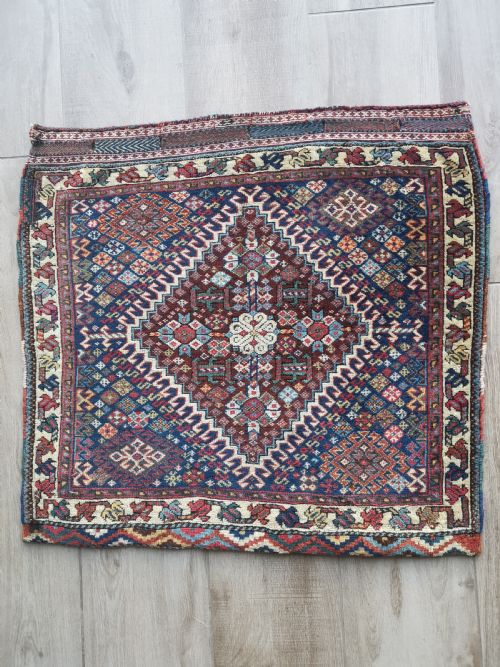
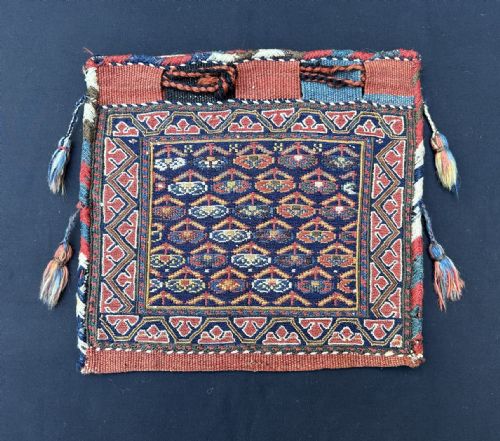
An antique khorjin bag encompasses both complete double saddlebags linked by a central slit and single bag faces that have been separated over time. These textiles were produced by nomadic groups such as the Qashqai, Shahsevan, Afshar, Baluch, and Kurdish tribes during the nineteenth and early twentieth centuries.
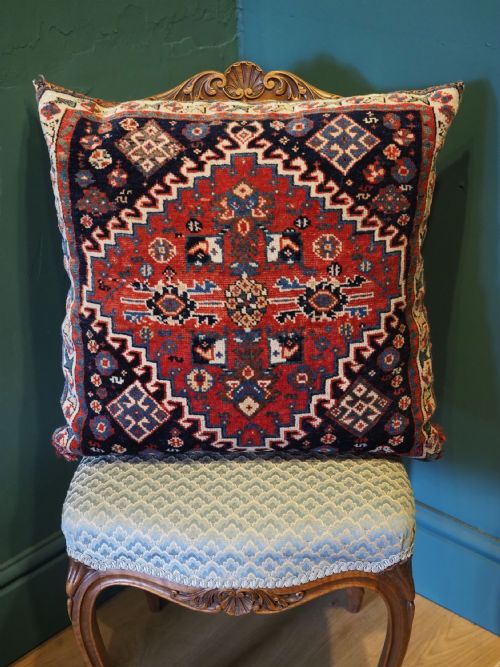
The surviving examples range from small personal vanity bags and bird bags to substantial saddle storage pouches. Many retain their original plain weave backs or decorative back panels, while others survive as individual cushion faces or textile art.
The designs draw upon tribal traditions, incorporating geometric medallions, boteh motifs, and tile patterns that reflect the specific region and weaving heritage of the maker.
What Varies in Quality
Survival of original components also dictates the standing of a piece. Complete pairs retaining their connecting webs and plain weave backs hold greater integrity than single fragmented bag faces, though wool quality and structural tightness remain paramount regardless of format.
Listings feature pieces from the nineteenth and early twentieth centuries, spanning wool, natural dyes, and goat hair.
The Antique Khorjin Bag Glossary
- Khorjin
- A traditional tribal double saddlebag used by nomadic groups for transport and storage. These pieces were slung over pack animals before being repurposed or divided by collectors.
- Soumak
- A flatweave technique involving wrap-threads that produce a smooth, durable face resembling embroidery. This method creates crisp geometric patterns without a cut pile.
- Boteh
- A stylised almond or paisley motif representing a floral spray or cypress tree. It appears frequently in Persian tribal weaving.
- Chanteh
- A small personal bag or vanity pouch carried by individuals rather than loaded onto pack animals. These smaller formats often display exceptionally fine knotting.
- Bag face
- The decorative front panel of a storage bag that survived after the plain weave back was removed or worn away. Many examples are mounted as cushions or wall art.
Antique Khorjin Bag: Frequently Asked Questions
What is a khorjin bag?
A khorjin is a traditional double saddlebag woven by nomadic tribes in Persia and the Caucasus for practical use on animals.
Over time, many of these transport bags were divided into single bag faces or adapted into domestic cushions and decorative panels.
How were these bags used?
Nomadic communities used these woven pouches to transport belongings, grain, and personal items during seasonal migrations.
They were designed to hang across the backs of horses, donkeys, or camels, combining utility with distinct tribal iconography.
How do I identify tribal origins?
Tribal attribution relies on the specific wool quality, knotting structure, colour palette, and recurring geometric or pictorial motifs.
Groups such as the Shahsevan, Qashqai, Afshar, and Baluch each employed distinct patterns and structural methods that distinguish their weaving.
How should I care for a textile?
Protect these historic textiles from direct sunlight to preserve the natural dyes and prevent the hand-spun wool from fading.
Gentle vacuuming without a rotating brush and professional textile cleaning help maintain the structural integrity of the weave.