
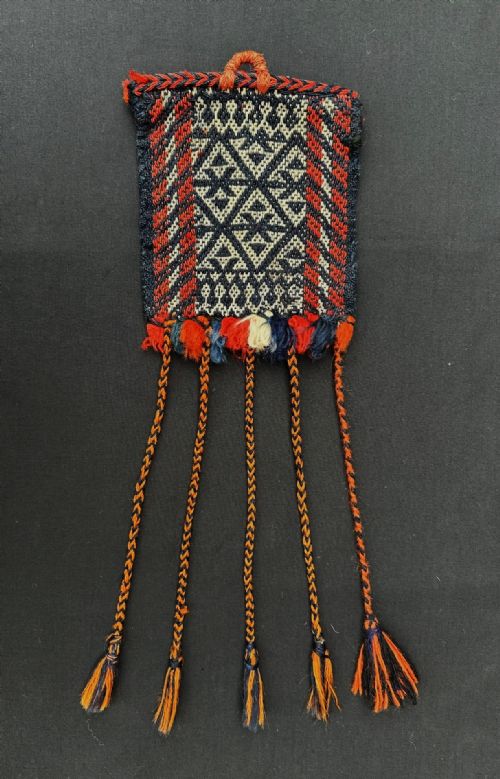
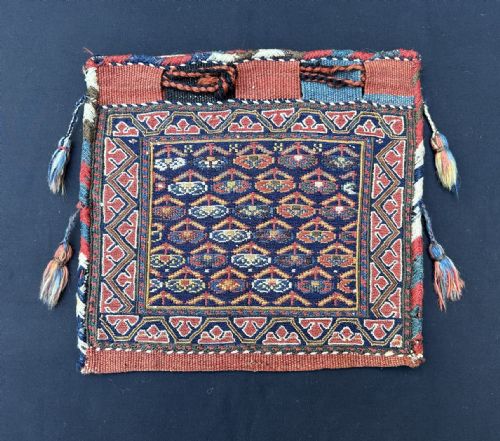


Navy Blue Tribal Bag
A navy blue tribal bag brings nomadic woven art into a room, offering deep indigo tones and authentic geometric patterns.
Navy Blue Tribal Bag
Buyers encountering these items on this page most frequently meet saddlebag faces and flatwoven bag fragments displaying rich indigo grounds and traditional tribal motifs. The forms range from square rug fragments intended to adorn animal transport to functional pouches utilising soumak or pile techniques.
Materials and construction
These textiles rely upon hand-spun wool combined with cotton foundations, utilising natural and vegetable dyes to achieve deep navy blue and indigo hues. The wool quality provides a lustrous surface that ages gracefully over generations of use.
Weavers employed distinct structural methods including pile knotting and soumak flatweaving techniques. These constructions allowed nomadic makers to create durable utility items featuring intricate bird, dragon, and boteh designs.
Nomadic weavers sometimes hid tiny asymmetry mistakes in their patterns to ward off evil eye spirits.
Assessing quality in nomadic weavings
Quality rests upon the fineness of the knotting or weave structure and the purity of the natural dyestuffs used. Pieces featuring luminous, hand-spun wool and crisp tribal geometry demonstrate superior craftsmanship.
The survival of original flatweave backs, complete edges, and undiminished pile distinguishes better-preserved examples. Depth of colour and clarity in motifs like the boteh or animal figures dictate the standing of an individual piece.
The Navy Blue Tribal Bag Glossary
- Khorjin
- A traditional double-sided saddlebag used by nomads for transport and storage. These were often separated over time, leaving surviving faces as individual wall hangings or small rugs.
- Boteh
- A stylised floral or almond-shaped motif commonly found in Persian weaving. This ancient symbol appears frequently in tribal designs.
- Soumak
- A flatweave technique involving wrapping supplementary weft threads over warp threads. This creates a braided surface texture that is sturdier than standard kilim weaving.
- Okbash
- A specialised tent-pole bag produced by Yomut and other Turkmen groups. These cylindrical containers served both practical and decorative purposes within the yurt.
Navy Blue Tribal Bag: Frequently Asked Questions
How were these bags used?
Nomadic tribes utilised these woven containers for carrying personal possessions, bedding, and household goods during seasonal migrations.
Mounted across pack animals or hung inside tents, the bags served both practical storage functions and decorative roles within daily tribal life.
How do I date a piece?
Dating relies upon examining wool characteristics, natural dye palettes, and structural wear consistent with nineteenth-century production.
Stylistic conventions and tribal attributions offer further clues to whether a weaving originates from the mid-nineteenth century or the nineteen-hundreds.
Are these pieces fragile?
Antique nomadic textiles constructed from hand-spun wool and cotton possess robust natural durability despite their age.
Gentle placement away from direct foot traffic ensures these historic bag faces remain stable for display in modern interiors.
What tribes made these bags?
Nomadic confederations and groups across Persia and Central Asia produced these textiles, including the Afshar, Qashqa'i, Bakhtiari, Shahsavan, and Yomut.
Each group maintained distinct weaving traditions, colour preferences, and geometric iconography passed down through generations.