






Dark Red Baluch Rug
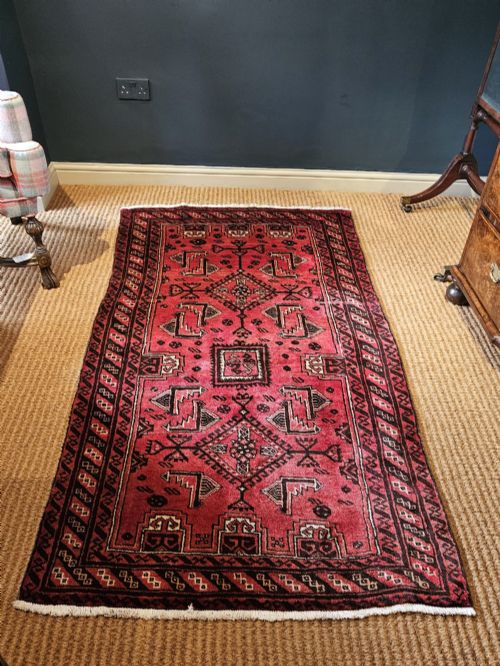
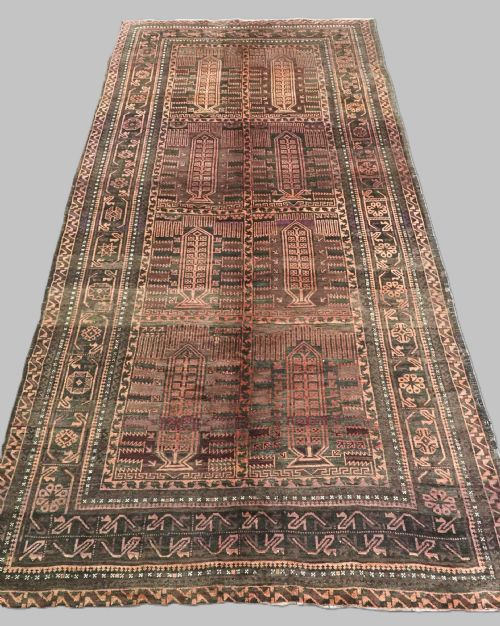
When you search for a dark red baluch rug, you find woven tribal textiles featuring deep crimson tones from nineteenth and early twentieth century borderlands.
Dark Red Baluch Rug
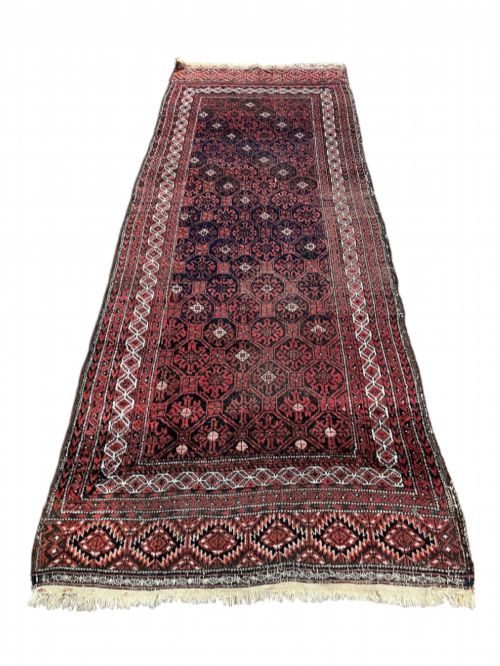
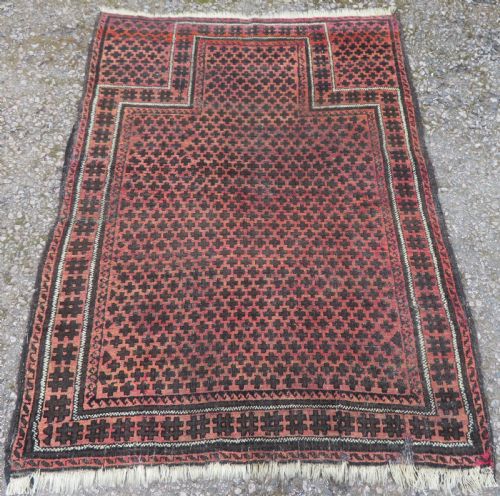
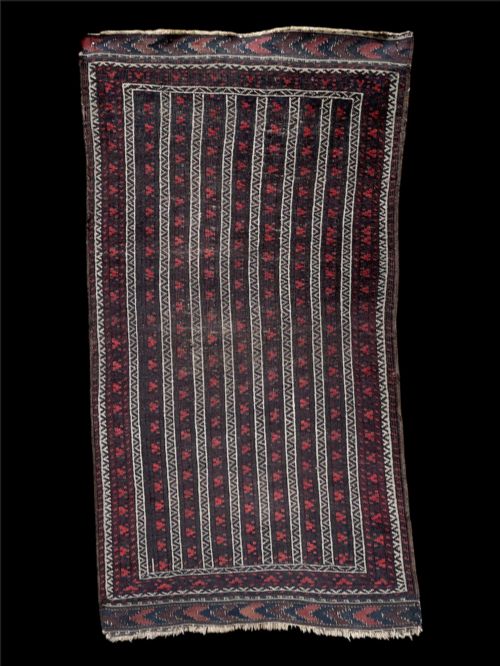
A dark red baluch rug is a tribal textile originating from the borderlands of Persia and Afghanistan, created by nomadic and village weavers. These pieces frequently manifest as floor coverings, runners, and prayer rugs displaying characteristic geometric motifs.
The selections available here span from the late nineteenth century through to the 1930s, encompassing regional subtwists such as Timuri, Mushwani, and Mahdad Khani groups. Buyers most commonly encounter smaller format formats like prayer rugs and scatter rugs alongside utility bags and cushions.
Materials and construction
Weavers constructed these textiles primarily using wool, hand-spun wool, and pure wool, often incorporating cotton foundations and occasional goat hair details for structural resilience. Natural dyes provided the characteristic deep palette dominated by dark crimson and rich red tones.
The construction relies on traditional handweaving techniques executed by tribal groups across Khorasan and Western Afghanistan. Plain weave backs and double-sided formats appear alongside knotted pile surfaces designed for durability.
Nomadic weavers occasionally tucked spare wool and tiny amulets into the back of a bag just to keep the spirits happy.
Assessing quality in weaving
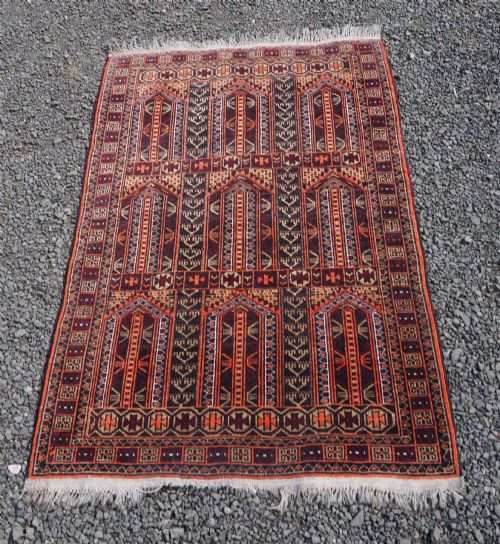
Quality rests in the fineness of the knotting and the crispness of the geometric design, whether handling a pencil box pattern, a lattice, or a mihrab prayer layout. Tightly packed wool yields a heavier, more flexible handle that lays flat and withstands time.
The depth and saturation of the natural dyes distinguish superior examples, as does the precision of secondary motifs like stars, guls, and octagons. Greater attention to border details and structural integrity elevates certain regional pieces above standard utilitarian items.
The Dark Red Baluch Rug Glossary
- Mihrab
- A niche design symbolising a doorway or prayer arch, commonly found pointing towards Mecca on tribal prayer rugs. Double and triple variations appear frequently in these borderland pieces.
- Gul
- A repeating medallion motif often associated with tribal weaving traditions, functioning as a primary structural element across the field. These octagonal or polygonal forms vary by regional group.
- Sofreh
- A flatwoven spread or cloth used historically for dining, food preparation, or grain storage among nomadic families. They display utilitarian geometric arrangements distinct from pile carpets.
- Balisht
- A traditional storage or grain bag featuring a decorative face and a plain weave back. Collectors value these items for their intact tribal utility and compact formats.
- Kalam Donneh
- A specific repeat motif resembling a pencil box or compartmented structure. This pattern provides a strong diagnostic marker for specific nineteenth century regional workshops.
Dark Red Baluch Rug: Frequently Asked Questions
What is a dark red baluch rug?
A dark red baluch rug is a handwoven tribal textile created by nomadic and village weavers in the borderlands between Persia and Afghanistan. These pieces are distinguished by their deep crimson colour palettes and traditional geometric patterns.
They encompass floor rugs, prayer mats, and smaller utility items produced from the nineteenth century through the early decades of the twentieth century.
How do I identify a prayer rug?
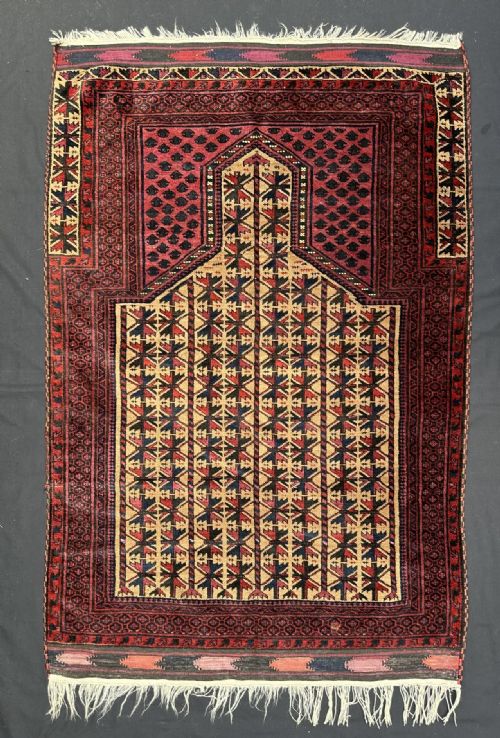
A prayer rug is typically identified by the presence of a mihrab, which is a pointed arch or niche design at one or both ends of the textile. This architectural motif indicates the direction of prayer for the user.
Examples on this page often feature single, double, or triple mihrabs decorated with small stars and floral elements.
Where were these rugs made?
These textiles originated in the border regions of north-east Persia, Khorasan, and western Afghanistan. Different tribal groups, including the Timuri, Mushwani, and Mahdad Khani, produced distinct regional variations.
Local access to specific natural dye materials and sheep breeds influenced the unique colour depth and handle of each weaving group.
How should I care for an antique rug?
Antique wool textiles require gentle maintenance, starting with regular light vacuuming without a rotating brush bar to protect the pile. Keeping them out of direct sunlight prevents the natural dyes from fading over time.
Using a breathable underlay helps secure the rug on hard floors and prevents unnecessary friction against the hand-spun wool foundation.