





Antique Persia Rug Panel
These antique persia rug panel pieces are woven textiles and fragments carrying traditional tribal motifs that bring rich colour and history into a room.
Antique Persia Rug Panel
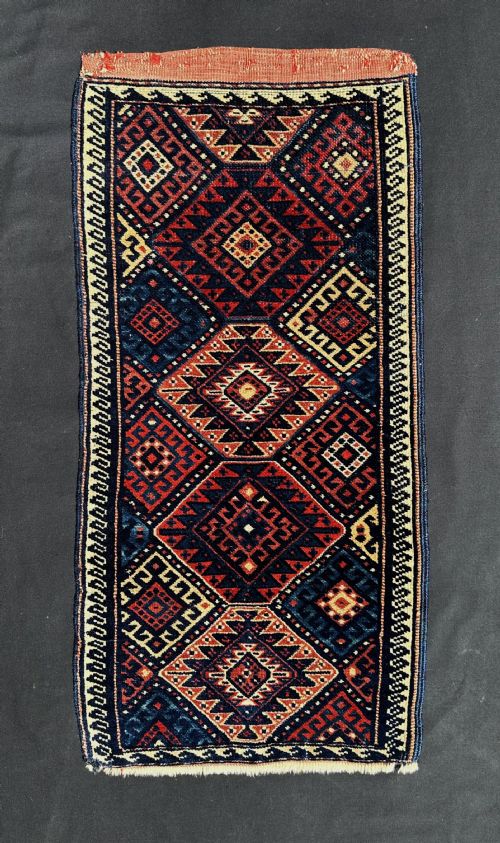
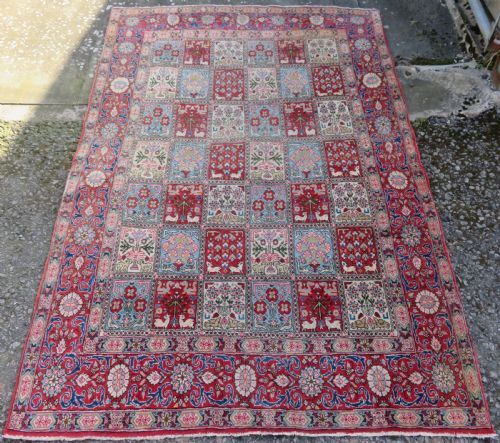
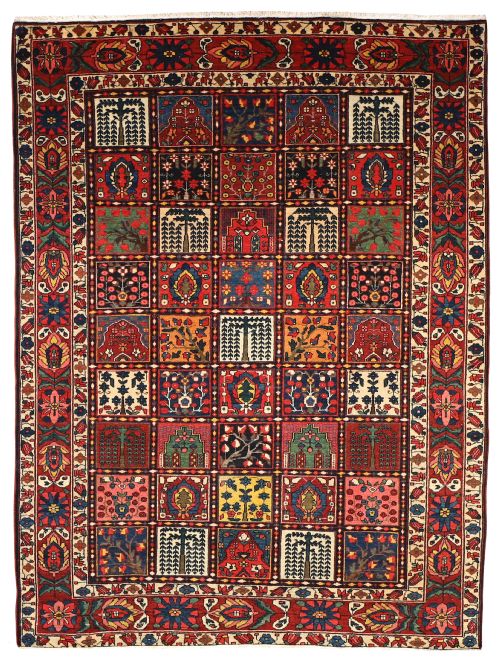
When you search for an antique persia rug panel, you are looking at fragments, sections, and functional woven items originating from various nomadic and village traditions across Persia. The items appearing here include fragments such as balisht-face pillow bags, saddle-bags, wheat sacks, and garden design rugs.
The periods represented stretch from the mid-nineteenth century through the early twentieth century, capturing regional weaving practices from tribal groups like the Qashqa'i, Baluch, Kordi, Bakhtiari, and Afshar. Buyers encounter both utilitarian fragments repurposed for display and complete rugs bearing traditional village designs.
What Varies in Quality
Quality in these textiles rests upon the integrity of the wool, the depth and stability of the natural dyes, and the precision of the tribal motifs. Hand-spun wool displaying subtle abrash - natural tonal variations within a single dye colour - demonstrates superior material handling.
The execution of regional patterns, whether a tile design, a garden layout, or a tribal medallion, dictates the visual success of the piece. Finer knot density and intact original edges separate high-status village and nomadic work from standard utility items.
Several items started life as donkey saddle-bags before finding retirement on a living room wall.
The Antique Persia Rug Panel Glossary
- Abrash
- Natural tonal variation within a field of a single colour caused by batches of hand-spun yarn absorbing dye differently. This characteristic is a marker of traditional dyeing methods.
- Balisht-Face
- The face of a small sleeping pillow or cushion bag woven by tribal groups. These items typically display intricate geometric or pictorial field patterns.
- Tasheh
- A specific type of woven wheat sack produced by tribal groups in western Persia. They combine utility with traditional regional symbolism.
- Qashqa'i
- A confederation of pastoral nomadic tribes in south-west Persia known for expressive animal and geometric motifs. Their weaving frequently employs saturated reds and deep blues.
Antique Persia Rug Panel: Frequently Asked Questions
What is an antique persia rug panel?
An antique persia rug panel is a woven section, fragment, or face removed from a larger tribal bag, saddle-bag, or carpet originating from Persia.
These pieces preserve traditional village patterns and natural dye palettes from nineteenth and early twentieth-century nomadic groups.
How were these woven panels used originally?
Nomadic and village communities utilised these textiles for daily functional tasks, including storage bags, transport sacks, and bedding.
Over time, surviving fragments and complete smaller formats have transitioned into decorative wall hangings and interior floor coverings.
How do I care for an antique wool textile?
Protect the textile from direct sunlight to prevent natural dye fading and gently vacuum using low suction without a beater bar.
Professional textile conservators should handle any deep cleaning or structural stabilisation to preserve the hand-spun wool fibres.
How can I tell different tribal designs apart?
Tribal designs vary by region, with Qashqa'i weavers favouring bold medallions and animal motifs, while Bakhtiari artisans often construct structured garden panel layouts.
Examining the materials, such as goat hair selvedges or cotton foundations, helps trace pieces to specific provinces like Khorassan or Fars.