


Antique Oriental Saddle Bag
An antique oriental saddle bag brings nomadic history and dense tribal patterns directly into a modern interior.
Antique Oriental Saddle Bag
An antique oriental saddle bag is a utilitarian weaving created by nomadic groups for transport on animals, which now survives as a decorative textile. When you search for this phrase, you encounter functional equestrian gear translated into domestic furnishing through centuries of tribal tradition.
The pieces listed here span the nineteenth century up to nineteen hundred, encompassing complete sets, single faces, and flattened fragments. They originate from Persian, Anatolian, and Caucasian tribal groups such as the Qashqai, Shahsavan, Afshar, and Turkmen.
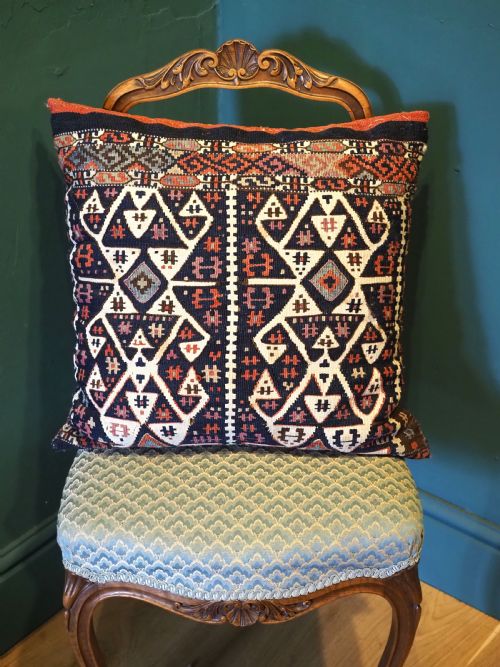
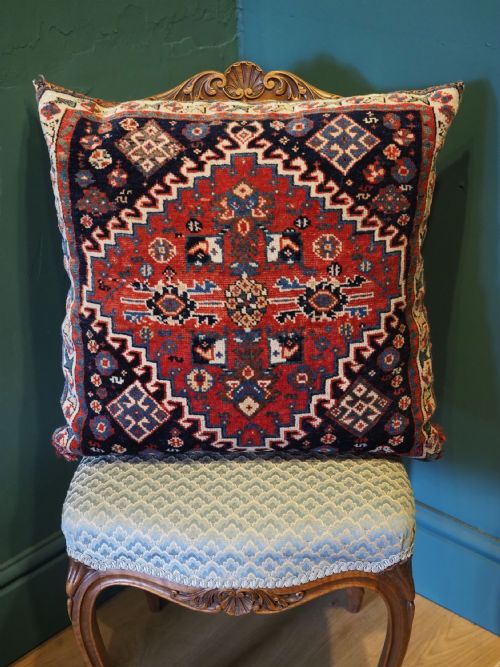
Most examples appear today converted into cushions or preserved as wall-hanging rug fragments, retaining their original nomadic designs. You will frequently meet single bag faces and half sections rather than intact pairs.
Factors determining quality
The quality of a tribal weaving rests upon the handle of the wool and the density of the knotting or weave. Finer materials and tighter structures distinguish the top tier of nomadic production from everyday utilitarian items.
Design clarity and the saturation of natural dyes dictate visual success. Strong, balanced geometry and intact original structures command greater appreciation among collectors than heavily restored or degraded examples.
Listings feature pieces utilising hand-spun wool, cotton, and natural dyes from nineteenth century Persian and Anatolian tribes.
The Antique Oriental Saddle Bag Glossary
- Khorjin
- The traditional Persian term for a saddle bag used by nomadic tribes. These items were designed to carry possessions across rugged terrain.
- Chuval
- A large storage bag produced by Turkmen tribes, often featuring distinct gul motifs. They served practical domestic storage functions inside tents.
- Sumac
- A flat-weave technique where coloured weft threads wrap around the warp threads. This method creates a durable, structurally sound textile without a raised pile.
- Kilim
- A tapestry-woven carpet or flat-weave textile produced without pile. It forms the lightweight structural backings or faces of many nomadic bags.
- Gul
- A repeating medallion motif used extensively in Turkmen tribal weaving. Each design often signifies a specific clan or lineage.
Antique Oriental Saddle Bag: Frequently Asked Questions
What is an oriental saddle bag?
An oriental saddle bag is a woven carrier made by nomadic weavers in regions such as Persia and Anatolia.
These functional items stored belongings during seasonal migrations before being collected as decorative textiles.
How were saddle bags used?
Tribes slung these heavy woven bags across horses, camels, or donkeys to transport household goods. They functioned as portable storage units during nomadic travels.
When emptied, they served as domestic containers within tents before later conversion into cushions and wall hangings.
How do I live with one?
You can display saddle bags as wall art or use them as decorative floor cushions and pillows. Their durable wool construction suits everyday interior settings.
Protect them from direct sunlight to preserve the natural dyes and hand-spun fibres.
How do I identify different tribes?
Tribal identity reveals itself through distinct geometric patterns, colour palettes, and weaving structures. Qashqai, Afshar, and Shahsavan groups each employed signature motifs.
Comparing structural details like sumac work or kilim ends helps distinguish one regional style from another.