




Antique Persian Khorjin
These antique persian khorjin are authentic nomadic storage bags woven by tribal groups, offering collectors vibrant wool geometry and rich regional history.
Antique Persian Khorjin
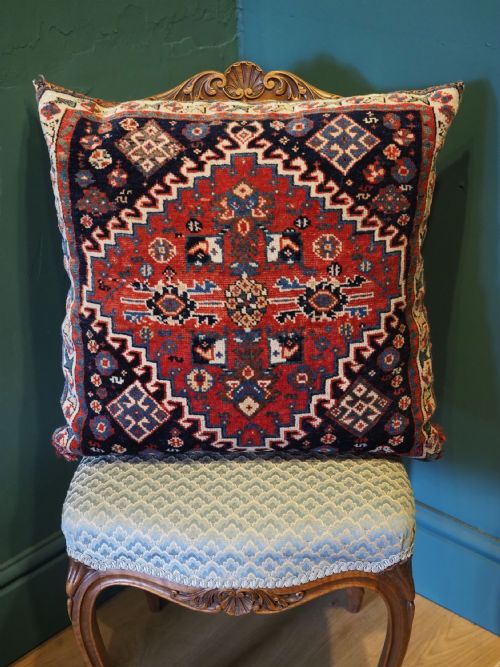
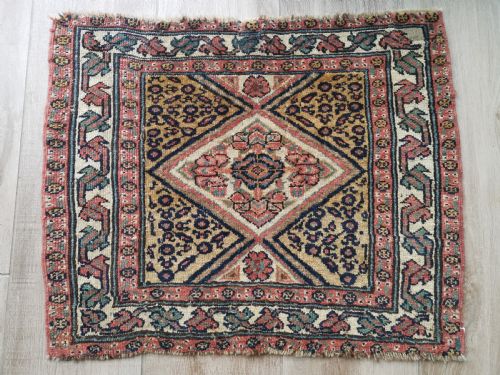
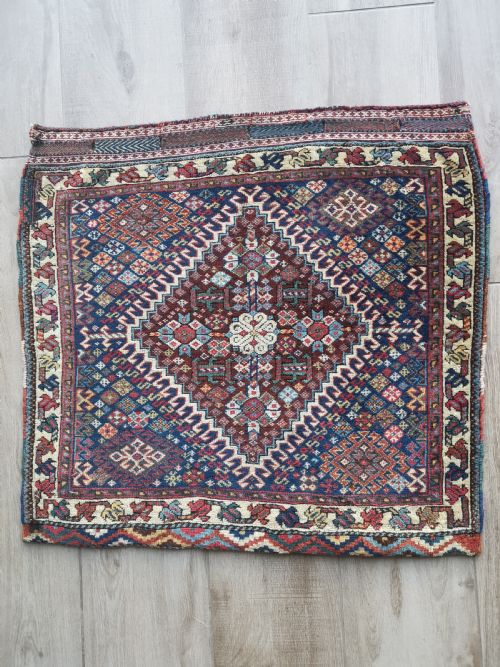
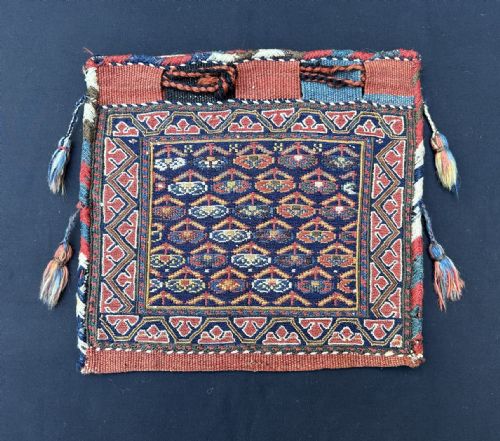
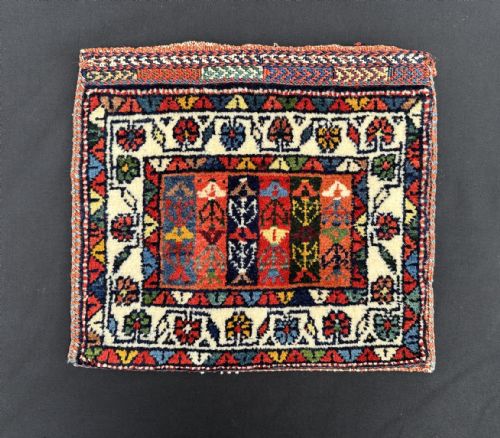
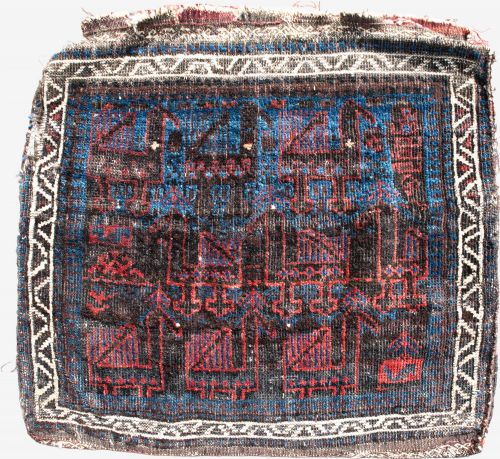
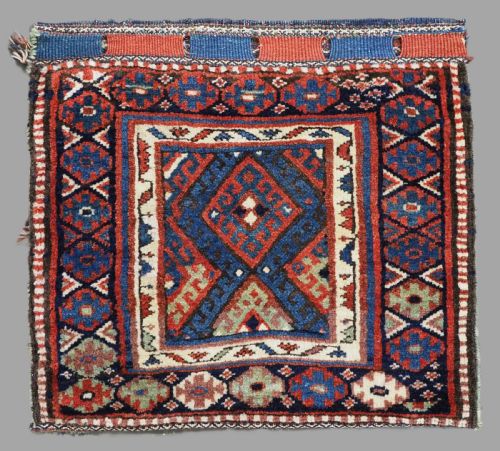
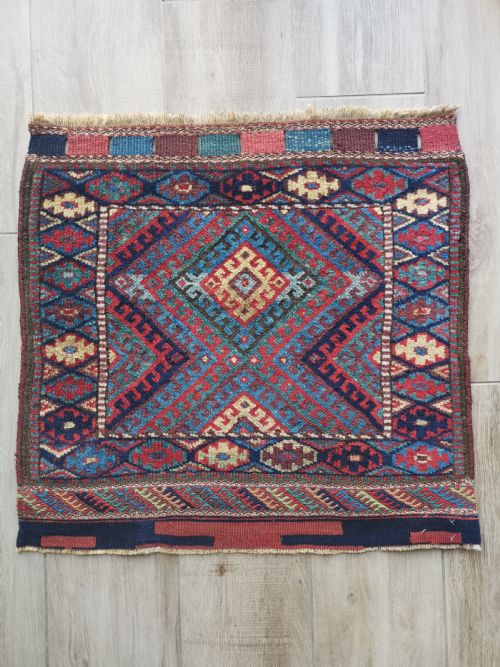
When you search for antique persian khorjin, you are looking at utilitarian baggage created by nomadic and confederation weavers across Persia during the late nineteenth century. These items include complete double saddle bags, individual saddlebag faces, half-saddlebags, and kilim bags made for practical transit on animals.
You are most likely to meet pieces originating from the Qashqai and Shahsavan tribes, alongside examples from Afshar nomads. The designs reflect specific tribal identities from regions such as Fars province and north-west Persia.
The forms range from full pairs linked by a central web to single flattened panels preserved as tribal textiles. Each format showcases the traditional iconography and geometric field arrangements characteristic of nineteenth-century weaving.
Materials and construction
The foundation utilises hand-spun wool and cotton, woven with durable techniques suited to heavy nomadic use and travel. Some examples incorporate leather and metal elements for structural reinforcement and closure.
Weavers employed natural dyes to colour the lustrous wool, creating deep tones that age gracefully over the decades. The surface structures combine pile knotting with flatweave kilim techniques depending on the specific tribal origin.
Antique Persian Khorjin Retail Price Guide 2026
Typical asking prices for persian khorjin among the pieces listed under this phrase on Sellingantiques today, from the lower quarter to the upper quarter. They describe what is for sale here now, not the wider market.
Pack animals in nineteenth-century Persia travelled in style, carrying their worldly belongings in vibrant geometric wool.
Assessing quality in tribal weaving
The distinction between average and exceptional pieces rests in the handling of the wool and the vibrancy of the natural dyes. Lustrous, luminous wool yields a depth of colour that enhances the intricacy of the tribal motifs.
Structural completeness also dictates the standing of a piece, whether it survives as a complete set or a carefully preserved bag face. Finer knot density and precise execution of complex geometric layouts elevate the work of the nomad weaver.
Qashqa'i Tribes·Afshar Nomads·Shahsavan Of Moghan·Ard Kapan Taifeh
The Antique Persian Khorjin Glossary
- Khorjin
- The traditional Persian term for a saddle bag used by nomadic tribes for transport and storage. These bags typically feature symmetrical designs intended to balance on an animal's flank.
- Qashqai
- A major tribal confederation in south-west Persia known for highly decorative weaving. Their textiles frequently employ bold geometric medallions and rich saturated hues.
- Shahsavan
- A tribal group originating in north-west Persia famous for distinctive flatweave structures and kilim bags. Their work often displays striking striped or hooked patterns.
- Afshar
- A nomadic group located in the Kerman province of south Persia. Their textile output is recognised by intricate boteh motifs and balanced geometric compositions.
- Kilim
- A tapestry-woven textile produced without a pile. These flatweave surfaces form durable compartments and structural edges on nomadic storage bags.
Antique Persian Khorjin: Frequently Asked Questions
What is a khorjin used for?
These textiles served as functional storage bags for nomadic families travelling across Persia. They were loaded onto pack animals to carry personal belongings during seasonal migrations.
Over time, many complete pairs were separated into individual bag faces as the utilitarian textiles transitioned into decorative wall hangings or collector items.
Are these bags complete pairs?
Survival rates vary, with some listings offering complete double saddle bags linked by a central web, while others preserve only a single face or half-saddlebag. Complete sets remain particularly scarce.
Both full pairs and individual panels offer authentic insight into nineteenth-century nomadic textile traditions.
How should I display a bag face?
Many collectors mount these textile panels flat on a neutral backing or hang them securely from a padded sleeve. This protects the hand-spun wool structure from undue strain.
Keeping them away from direct sunlight preserves the natural dyes used by the nineteenth-century weavers.