


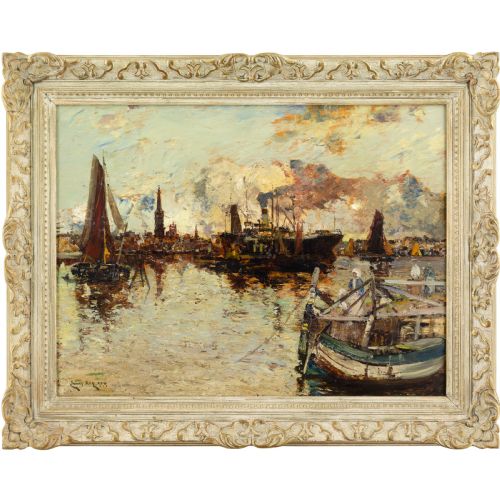
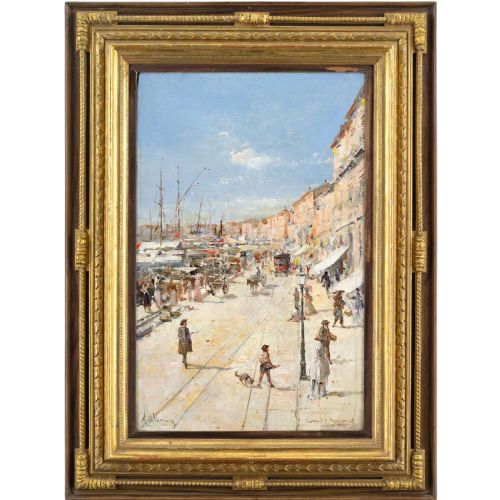
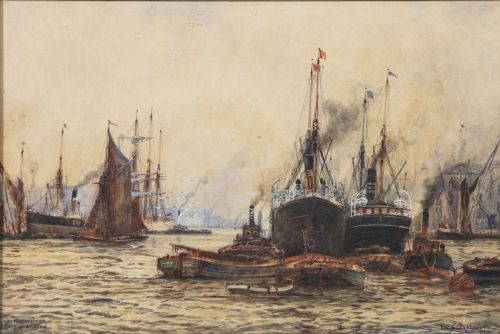
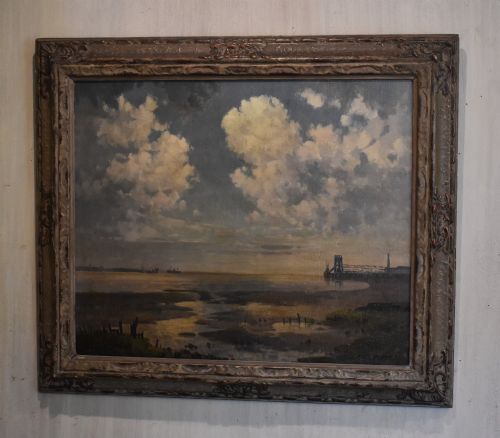
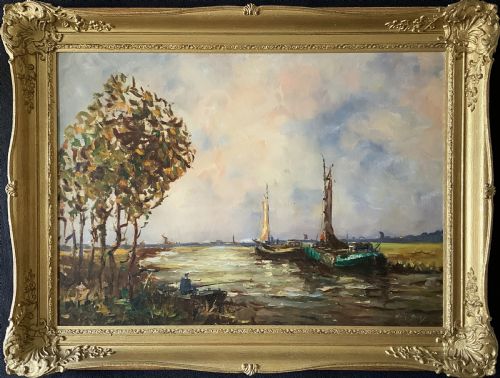
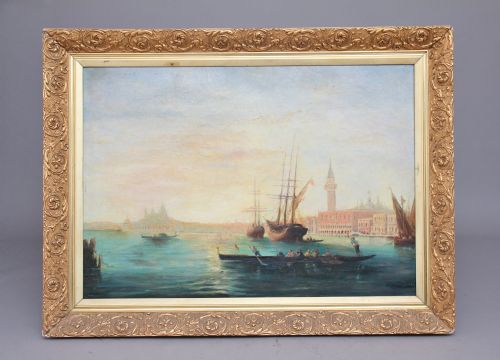
Vintage Harbour Painting
When you search for a vintage harbour painting, you enter a world of coastal quays, fishing boats and tidal moorings captured across the nineteenth and twentieth centuries.
Vintage Harbour Painting
A vintage harbour painting records maritime life, coastal architecture and working ports from periods spanning the Victorian era through to the mid-twentieth century.
Most examples found here date from the early nineteen-hundreds to the nineteen-fifties, reflecting British and European coastal scenes executed in oils or watercolours.
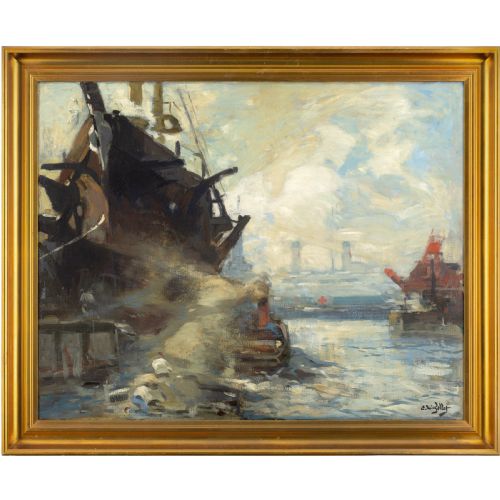
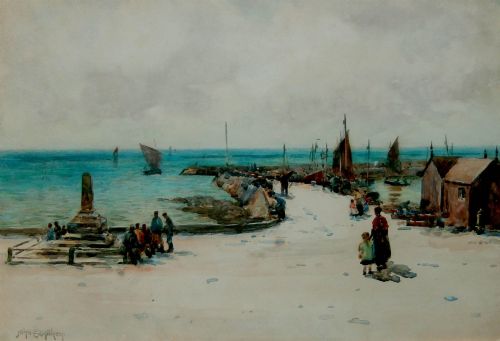
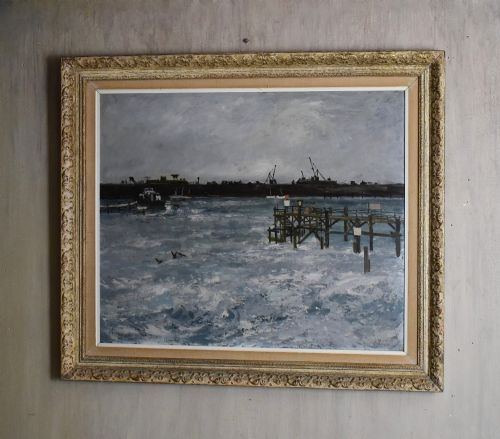
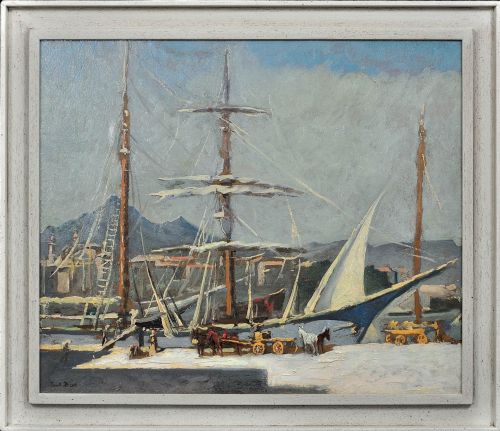
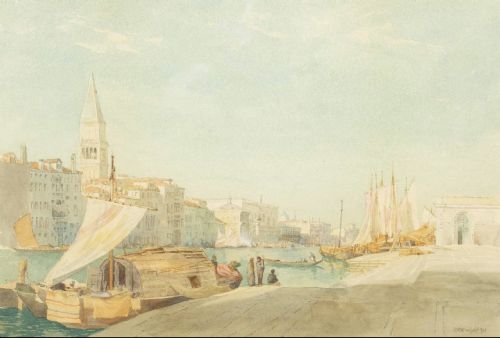
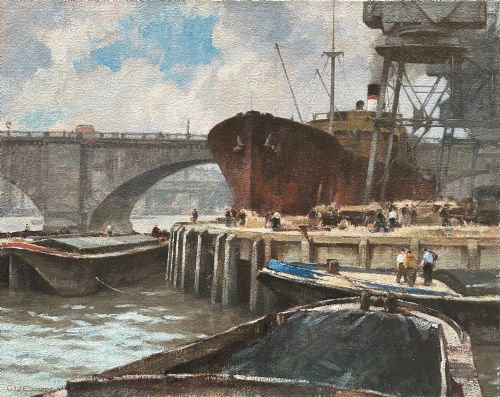
These works range from detailed topographical watercolours of Cornish fishing ports to expressive twentieth-century oil paintings of industrial docks and Mediterranean harbours.
How they were made
Artists painted primarily in oil on canvas or board, and in watercolour on paper, utilising traditional brushes and pigments suited to capturing light on water.
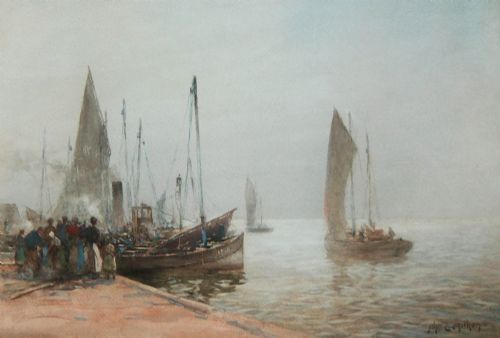
Watercolour works often rely on washes and pencil outlines for architectural clarity, whereas oil paintings employ layered brushwork and impasto to build texture on the surface.
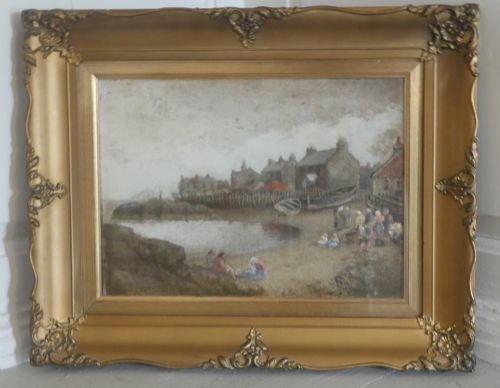
Framing typically involves wood and glass for works on paper, or gilt frames for oil paintings, preserving the physical integrity of the artwork over decades.
Even naval commanders found time for art, recording Olympic sailing events in Sydney Harbour between royal duties.
What varies in quality
Quality rests in the artist's handling of atmospheric light, perspective and the movement of water, distinguishing observational mastery from routine topographical illustration.
The strength of composition and the handling of medium define the enduring appeal of each piece, whether through delicate watercolour transparency or confident oil impasto.
Kenneth Cozens·Eugène-Louis Gillot·Edward Mills·James E. Aitken·John E. Aitken·William Banks Fortescue·James Kay·Augusto Alberici·Frank William Scarbrough·Clive Browne·Peter Brannan·Paul Bret·Richard Henry Wright·Cyril Walduck Edwards·Willem Bos·William Matthison·Frank Kelsey·Walter Goodin·F A Roylance·George F Pennington·Alfred George Morgan·Paul-Jean Anderbouhr·Commander Eric Tufnell·Lokre·William Edward Webb
The Vintage Harbour Painting Glossary
- Watercolour
- A painting method where fine pigment is suspended in a water-based, translucent solution applied to paper. This technique allows for luminous washes and delicate atmospheric effects.
- Impasto
- Paint applied thickly to a canvas or board so that it stands proud of the surface. This technique preserves the physical gesture of the brush and catches natural light.
- Provenance
- The documented history of ownership of an artwork. A clear record helps establish authenticity and historical context.
- Seascape
- A work of art depicting the sea, coastal views or maritime subjects. These scenes often focus on tidal changes and shipping activity.
- Gilt frame
- A wooden picture frame coated with a thin layer of gold leaf or metallic paint. Such frames were often chosen to complement the tones of traditional oil paintings.
Vintage Harbour Painting: Frequently Asked Questions
How do I care for a watercolour harbour painting?
Keep works on paper away from direct sunlight to prevent fading of the pigments and discolouration of the paper support.
Ensure the framing remains sealed to protect the painting from humidity and dust accumulation over time.
What is the difference between oil and watercolour?
Oils offer a rich, opaque finish on canvas or board that can build heavy texture, while watercolours provide translucent, fluid effects on paper.
Watercolours require glass protection for display, whereas oil paintings are generally open to the room environment.
How can I tell the period of a painting?
Clothing styles of figures, types of vessels in the harbour, and framing materials often provide clues to the decade of execution.
Signatures, artist birth and death dates, and exhibition labels on the reverse help narrow down the historical context.