



Maritime Watercolour Picture
When you search for a maritime watercolour picture, you are looking at coastal scenes, harbour views and open sea studies captured on paper.
Maritime Watercolour Picture
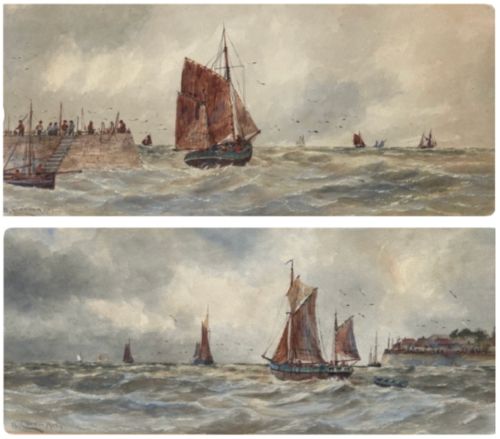
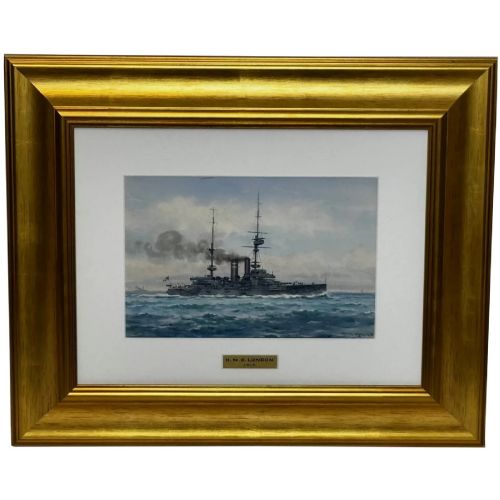
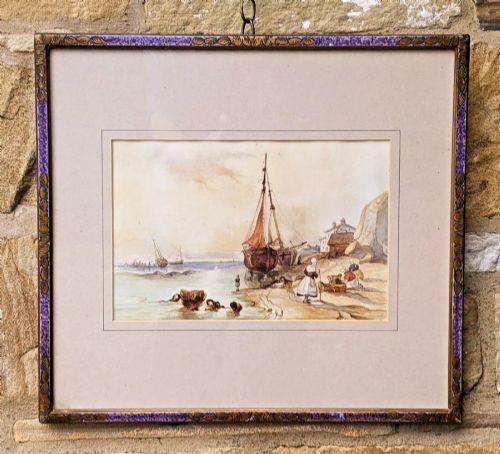
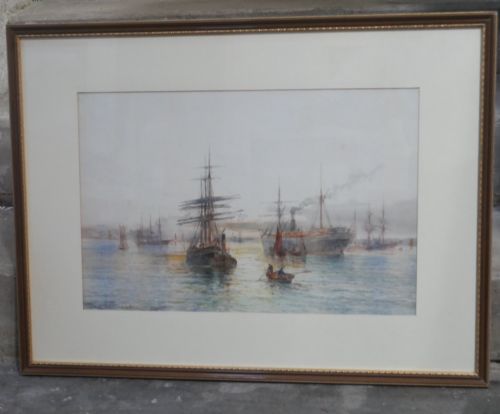
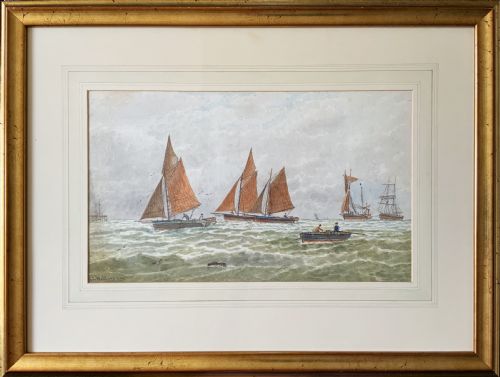
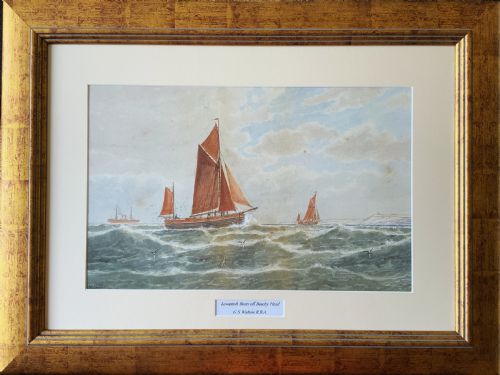
A maritime watercolour picture typically portrays sailing ships, fishing boats, steam vessels and coastal harbours from the nineteenth and early twentieth centuries. These works record busy British and European dockyards, quiet estuaries and naval engagements with direct observation. Buyers encounter Victorian maritime studies alongside Edwardian and mid-century interpretations of coastal life.
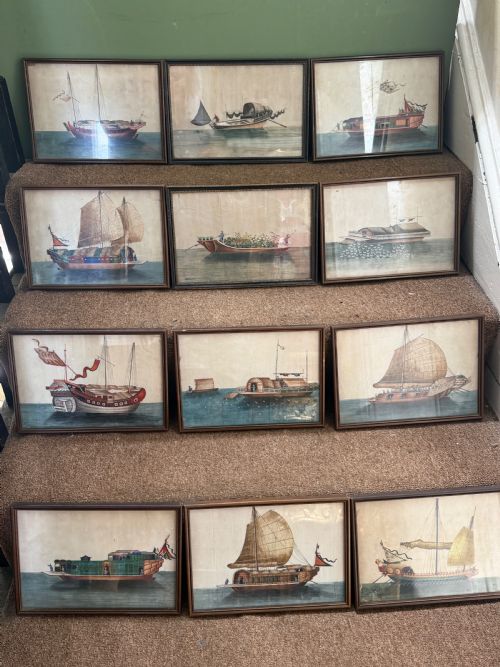
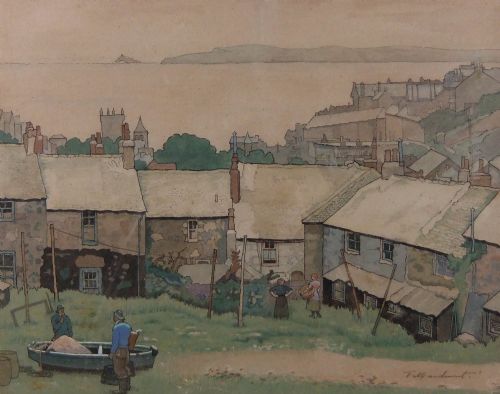
The subjects range from detailed depictions of named naval vessels and merchant clippers to atmospheric impressions of fishing communities in places like Whitby, St Ives and Whitstable. Many sheets focus on specific regional ports, recording local craft such as Yorkshire cobles, Scottish luggers and Chinese export junks.
Most surviving examples arrive framed behind glass in gilt wood or simple wooden mouldings that reflect their period of creation. The format varies from intimate sketchbook sheets to large finished gallery paintings intended for domestic display.
Materials and methods
Artists executed these works using watercolour pigment, often combined with gouache, ink or bodycolour on paper supports. The application ranges from thin, transparent washes that let the bright paper grain illuminate the sky and water to dense, opaque layers that capture heavy sea foam and dark hulls.
Draftsmen laid down pencil or pen underdrawings to map out rigging, vessel proportions and shoreline architecture before applying the wash. Framing materials traditionally include protective glass set within timber frames, sometimes accented with gold leaf or gilt wood slips.
Maritime Watercolour Picture Retail Price Guide 2026
Typical asking prices for maritime watercolour picture among the pieces listed under this phrase on Sellingantiques today, from the lower quarter to the upper quarter. They describe what is for sale here now, not the wider market.
Distinctions in execution
Quality rests upon the artist's command of atmospheric light, water movement and accurate nautical rigging. Stronger examples display confident brushwork and precise topographical or marine knowledge, whereas weaker sheets rely on formulaic compositions and stiff, static water.
Condition plays a central role in valuation, as paper is vulnerable to fading, foxing and acid discolouration from old mounts. Works that retain their original pigment intensity and sit beneath clean glass demonstrate superior preservation.
George Stanfield Walters·William Frederick Settle·Thomas Bush Hardy·Frank Watson Wood·Vincenzo D'Esposito·Charles Harmony Harrison
The Maritime Watercolour Picture Glossary
- Gouache
- An opaque watercolour paint mixed with a binding agent such as gum, creating a heavier matte surface that allows artists to paint lighter tones over dark washes.
- Foxing
- Small reddish-brown spots caused by fungal oxidation on old paper, frequently encountered in nineteenth-century sheets.
- Bodycolour
- Watercolour pigment mixed with white to produce an opaque finish similar to gouache, used to highlight highlights on sails and cresting waves.
- Seascape
- A work of art depicting the sea, coastal views or maritime activity, distinct from a landscape focused purely on land.
- Provenance
- The documented history of ownership of an artwork, which helps confirm attribution and authenticity.
Maritime Watercolour Picture: Frequently Asked Questions
How do I care for antique watercolours?
Keep these works away from direct sunlight to prevent the pigments from fading and the paper from yellowing over time. Stable indoor humidity levels protect the paper support and prevent mould or foxing from developing behind the glass.
When rehanging or reframing, use acid-free mount board and backing materials to shield the paper from chemical degradation. Professional conservation framing ensures the sheet breathes properly without adhering directly to the glass.
How can I tell the period of a maritime painting?
Examine the vessel types, rigging styles and clothing depicted in the scene, as naval architecture and fashion evolved rapidly from the Victorian era onward. Steamships, ironclads and specific naval uniforms help narrow down the date of execution.
Signatures, artist biographies and framing style offer further chronological clues. Many period works bear contemporary inscriptions, gallery labels or dates on the reverse of the frame or paper.
Were these painted outdoors or in studios?
Artists typically created pencil sketches, tonal studies and watercolour notes directly on location at the harbour side or aboard ship. They then used these observational studies to finish more elaborate, detailed paintings back in the studio.
Quick en plein air sketches capture immediate weather conditions and changing light, while larger studio watercolours offer greater compositional finish and precise architectural detail.
What is the difference between a marine painting and a seascape?
A marine painting specifically focuses on human interaction with the sea, featuring ships, boats, naval engagements, lighthouses or harbour infrastructure. The primary subject is the vessel or maritime trade.
A seascape concentrates primarily on the sea itself, the coastline, weather conditions and tidal effects, often with minimal or absent shipping. Many Victorian works blend these definitions by placing working vessels within an expansive coastal landscape.