

Vintage Earthenware Jug
These vintage earthenware jugs span Georgian, Victorian and Edwardian periods, bringing tactile pottery forms and hand-painted or transfer-printed decoration to everyday spaces.
Vintage Earthenware Jug
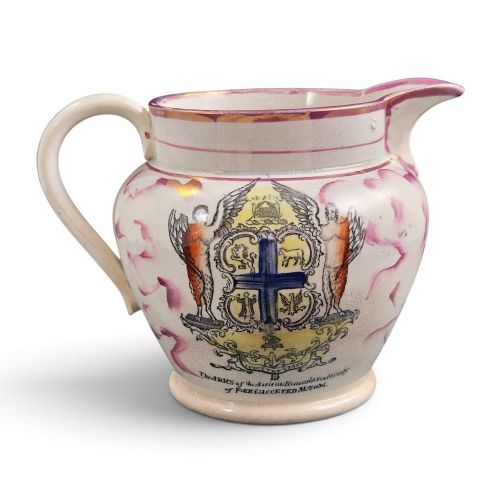
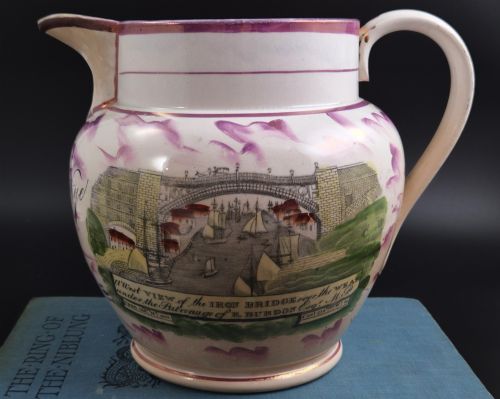
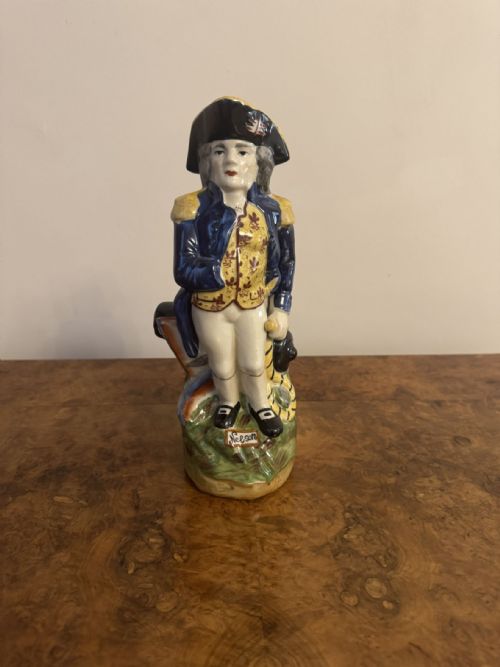
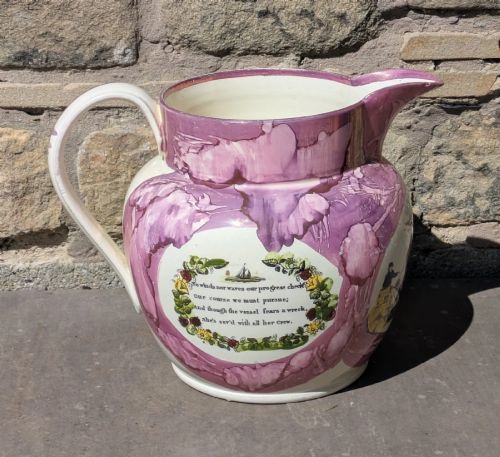
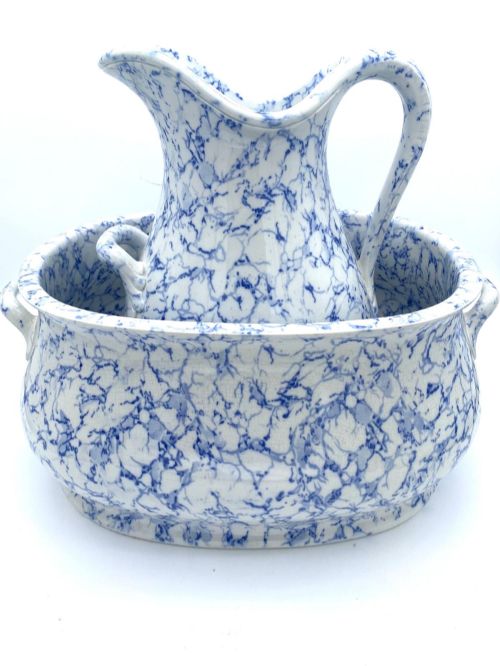
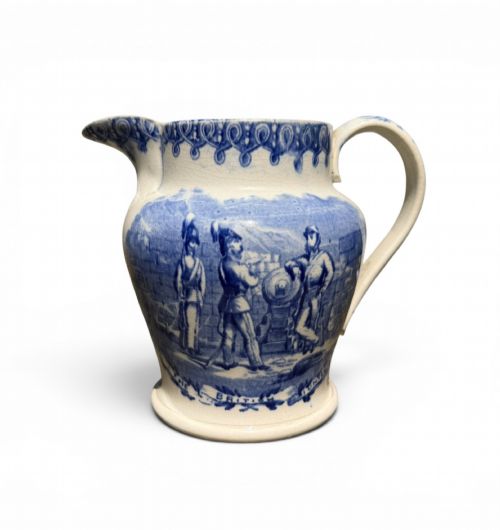
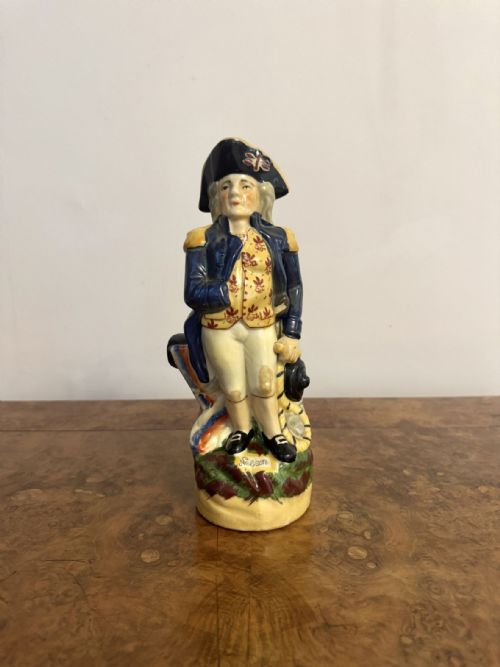
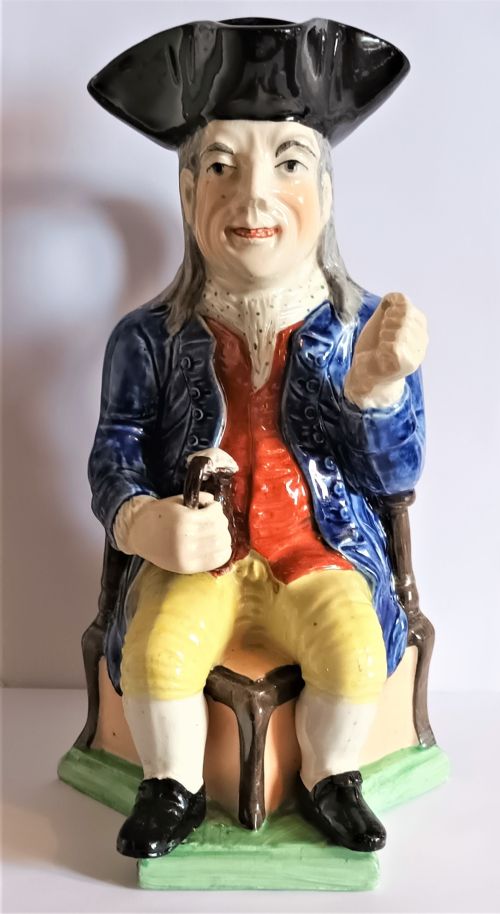
A vintage earthenware jug is a utilitarian or decorative vessel shaped from porous clay and hardened by kiln firing. When you search for this phrase, you encounter forms ranging from robust tavern pitchers and transfer-printed Sunderland lustre pieces to characterful Toby jugs and wash set ewers.
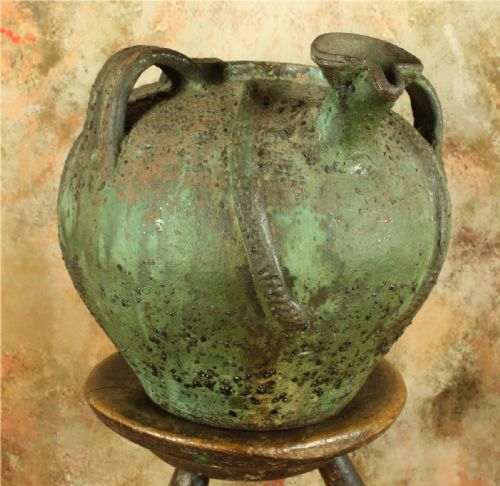
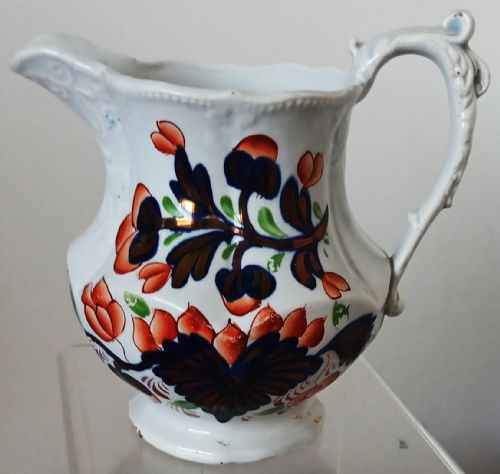
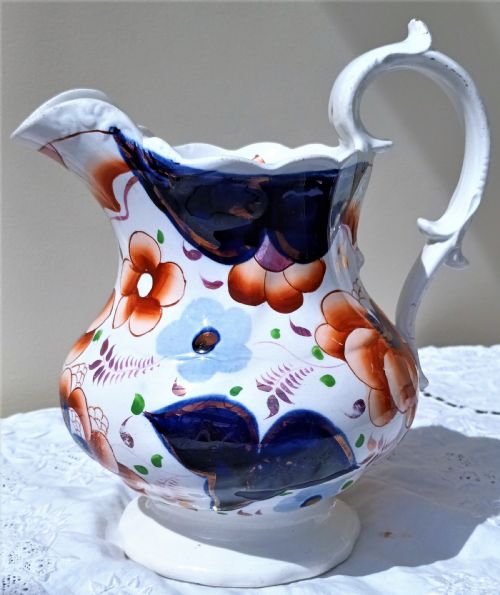
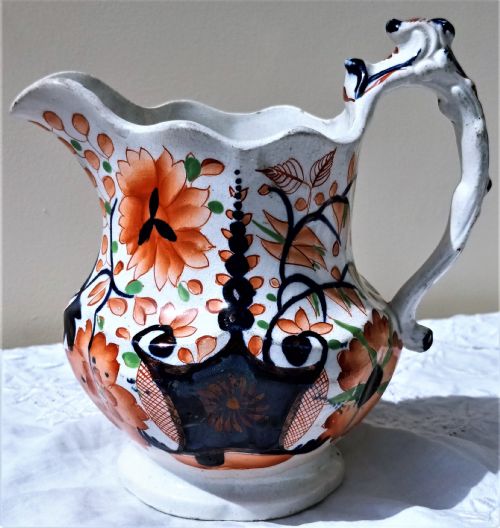
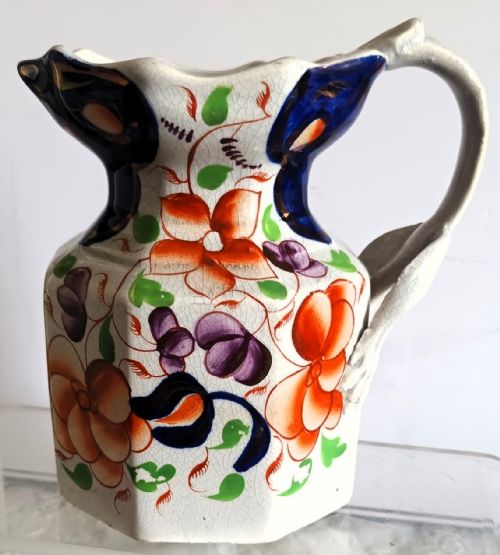
The selection here draws heavily on 19th-century British production, particularly Staffordshire pottery, alongside continental salt-glazed stoneware and French earthenware vessels. You will find examples carrying maritime themes, Masonic symbols, floral Gaudy Welsh patterns, and classical moulded motifs.
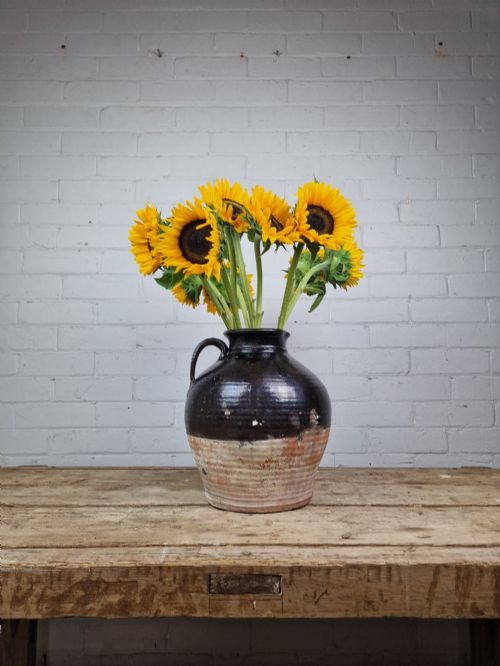
Most pieces serve as decorative displays, holding dried flowers or standing alone on shelves. Their practical origins in domestic service or hospitality give them a robust, grounded presence in modern interiors.
How they were made
Potters shaped these vessels using traditional throwing techniques on a wheel or by pressing clay into plaster moulds. Slipware and creamware bodies formed the base for liquid clay slips, while salt glazing created a characteristic orange-peel texture on stoneware surfaces.
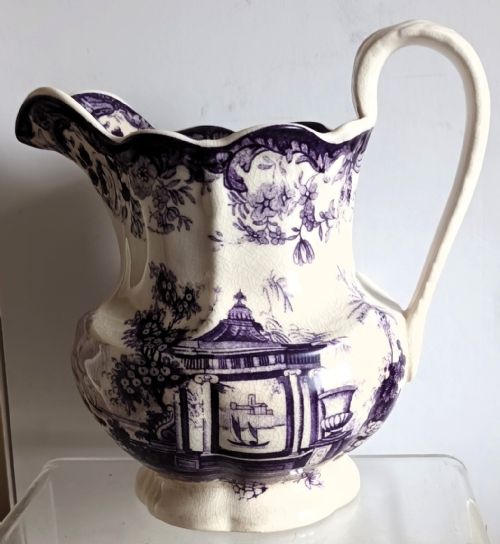
Decoration relied on hand-painted enamels, transfer printing in pink lustre or blue and white, and applied moulded details like cabbage leaves or handles. Subsequent firings melted the applied glazes to seal the porous earthenware beneath.
Listings feature earthenware, stoneware, terracotta, and clay materials spanning Georgian, Victorian, and Edwardian eras.
What varies in quality
The artistic ambition of the transfer print or painted scene separates standard utilitarian vessels from highly decorative parlour pieces. Maker attribution and well-preserved metallic lustre or enamel colours further elevate the standing of a piece.
Minton·Royal Doulton·Doulton Lambeth·Leeds Pottery·Davenport
The Vintage Earthenware Jug Glossary
- Earthenware
- Porous pottery fired at lower temperatures than stoneware, requiring a vitreous glaze to hold liquids.
- Lustreware
- Pottery finished with a metallic glaze that reflects a coppery or pink sheen when caught by the light.
- Slipware
- Pottery decorated with a thin mixture of coloured clay applied before firing, often trailing combed patterns.
- Creamware
- A refined, pale-yellow earthenware developed in Yorkshire during the eighteenth century.
- Transfer printing
- A decoration method where an engraved copper plate transfers a design onto paper and then onto the ceramic surface.
Vintage Earthenware Jug: Frequently Asked Questions
What is a Toby jug?
A Toby jug is a pottery pitcher modelled as a full-bodied person, usually a stout, cheerful figure holding a mug and a pipe.
Originating in eighteenth-century England, these jugs served practical roles in taverns before becoming collectable mantelpiece ornaments.
How do I clean an old jug?
Dust these pieces gently with a soft, dry cloth and avoid submerging fragile earthenware in water for long periods.
Aggressive scrubbing or harsh chemical detergents will damage historic glazes and fade delicate enamel or lustre decorations.
How can I tell the period?
Dating relies on body weight, glaze characteristics, the type of transfer print, and the style of the handle and base.
Georgian and Victorian pieces often show heavier potting and hand-applied details, whereas Edwardian bathroom sets feature uniform transfer printing.
Were these jugs used daily?
Many of these vessels held beer, water, milk, or cream in domestic and tavern settings across the nineteenth century.
Larger items functioned as parts of wash sets in bedrooms before indoor plumbing became standard.