


Blue White Pottery Pitcher
A blue white pottery pitcher brings cobalt pattern and earthen weight to a table, offering both service and display in one traditional vessel.
Blue White Pottery Pitcher
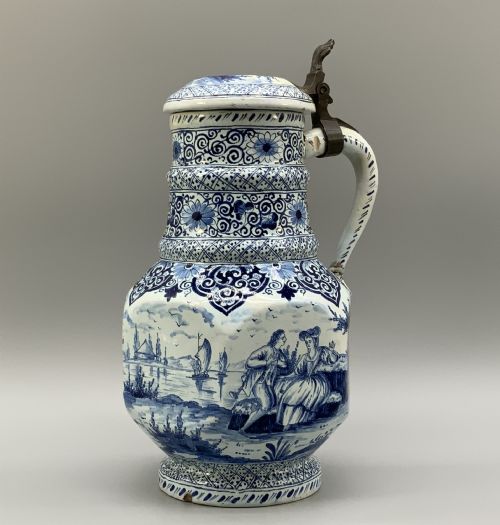
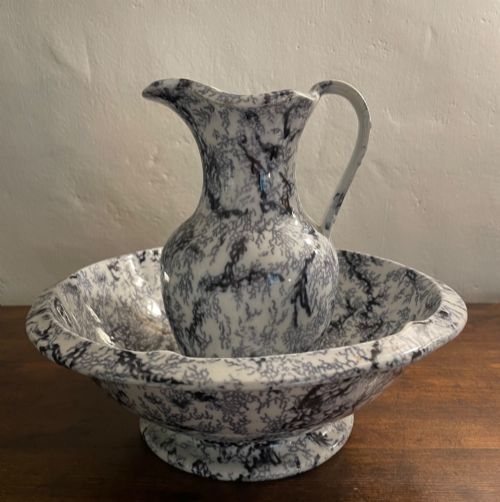
A blue white pottery pitcher encompasses utility vessels shaped for liquids, from tall water jugs to small creamers and large footbath pieces. Buyers encounter forms ranging from 17th-century Dutch delftware and Persian Safavid kendis to Victorian Staffordshire and Georgian transfer-printed ironstone.
The selection on this page spans centuries of domestic and decorative production across English, Dutch, and continental workshops. Pieces include puzzle jugs, Toby jugs, apothecary wet drug jars, and graduated sets designed for daily service or display.
Judging quality
Quality rests in the crispness of the blue pigment against the glaze and the precision of the painted or transfer-printed lines. Early delftware exhibits subtle variations in the tin glaze, whereas later ironstone and porcelain display a more uniform surface finish.
The harmony of the handle, spout, and body proportions dictates the success of the form, particularly in matched sets or graduated series. Potter's touch remains evident in the potting weight and the depth of the cobalt saturation beneath the final gloss.
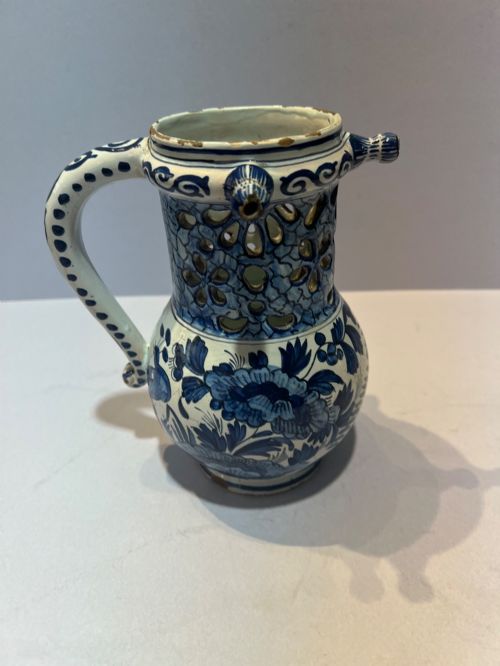
An 18th-century puzzle jug confounds dinner guests by leaking through hidden neck perforations unless they solve the drinking secret.
Minton·Doulton Lambeth·Doulton Burslem·Mason's·Pieter Verburg·John Rogers & Son
The Blue White Pottery Pitcher Glossary
- Tin-glazed earthenware
- Earthenware covered with a tin oxide glaze that fires opaque white, providing an ideal surface for blue painted decoration. This technique underpins traditional delftware and faience production.
- Transfer printing
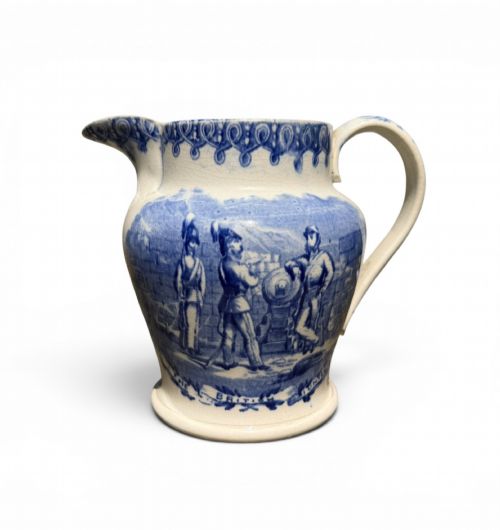
- A mechanical method of applying complex designs to pottery by transferring a printed paper design from an engraved copper plate onto the ceramic surface before glazing and firing. It allowed intricate historical and pictorial scenes to be produced in volume.
- Toby jug
- A pottery jug shaped as a jovial, full-figured man wearing a tricorn hat, typically seated and holding a mug or jug of beer. These figural vessels date back to the 18th century and often feature cobalt or polychrome painting.
- Puzzle jug
- An earthenware vessel with a perforated neck and hollow rim that forces the drinker to solve a riddle or cover hidden holes with their fingers to drink without spilling. They represent playful examples of historical ceramic craftsmanship.
- Faience
- European tin-glazed earthenware, particularly that made in France, Italy, and the Netherlands. The term describes pottery coated with an opaque white glaze that accepts fine cobalt painting.
Blue White Pottery Pitcher: Frequently Asked Questions
How do I date an old blue white pottery pitcher?
Dating relies on examining the glaze characteristics, ceramic body weight, and the style of the cobalt decoration. Early 17th and 18th-century pieces often show tin-glaze subtleties, while 19th-century examples frequently employ transfer printing.
Maker marks, where present underneath the base, help narrow the production period. Comparing the potting style to documented factory outputs confirms the likely decade.
Are these pitchers safe for holding water or serving drinks?
Many historic pitchers remain structurally sound for holding water or serving liquids during meals. However, hairline cracks or historical repairs mean some pieces suit display rather than daily use.
Inspect the interior glaze for stability and avoid exposing antique earthenware to sudden temperature changes or modern dishwashers.
What is the difference between delftware and ironstone pitchers?
Delftware uses a porous earthenware body covered in an opaque tin glaze that absorbs cobalt paint with soft edges. Ironstone is a dense, hard-wearing ceramic developed in the 19th century to resist chipping.
Ironstone pitchers often feature transfer-printed patterns with sharper lines and a more uniform, vitrified body than earlier tin-glazed wares.