


English Tin Glazed Earthenware
English tin glazed earthenware brings historic ceramic artistry into your home through charming plates, chargers and apothecary jars.
English Tin Glazed Earthenware
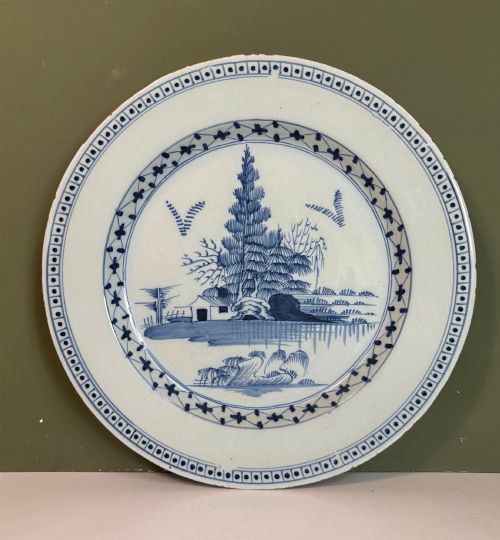
When you search for English tin glazed earthenware, you examine historic ceramics produced primarily across the seventeenth and eighteenth centuries. These pieces encompass utilitarian domestic vessels alongside decorative items designed for display.
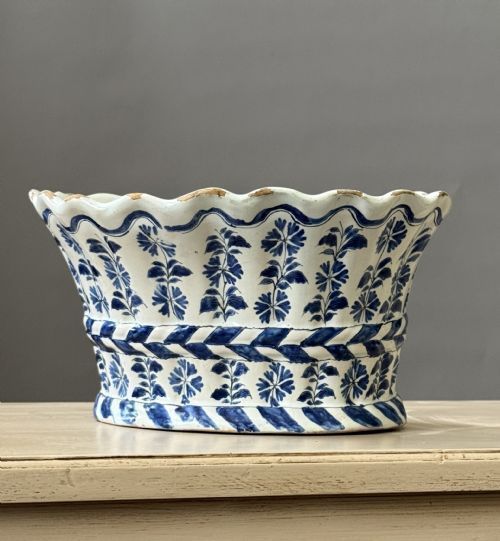
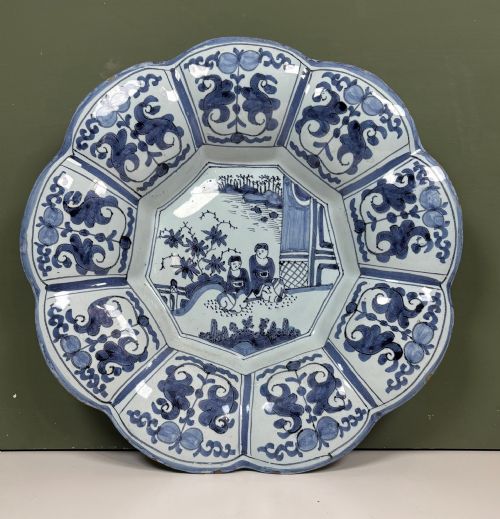
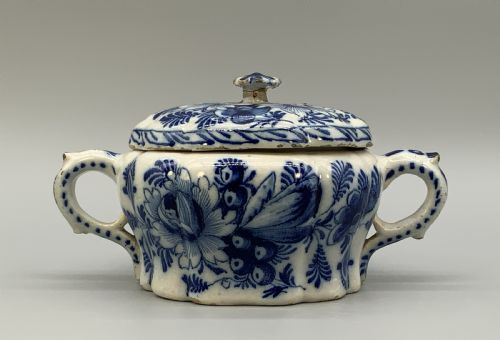
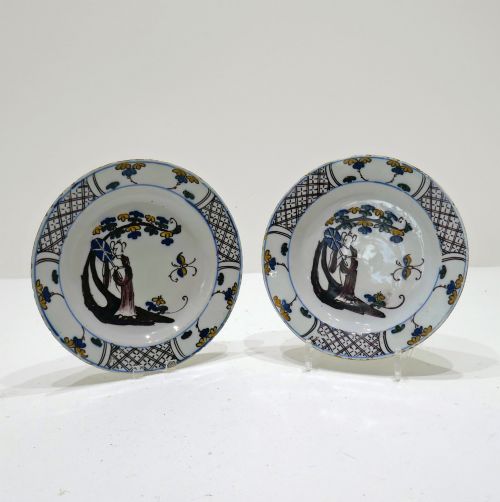
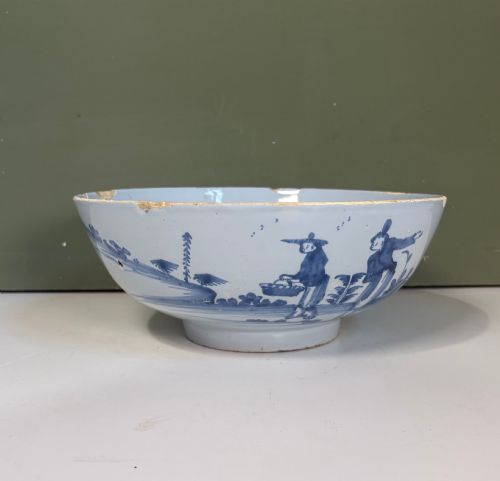
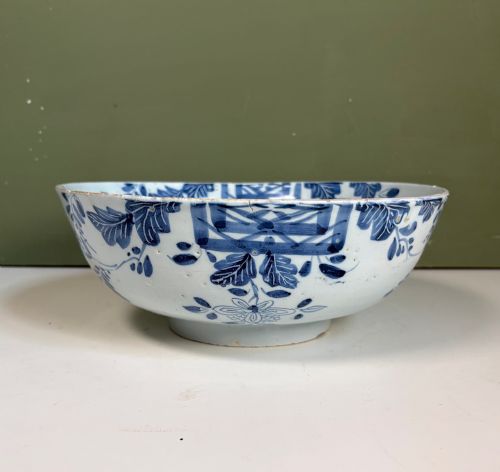
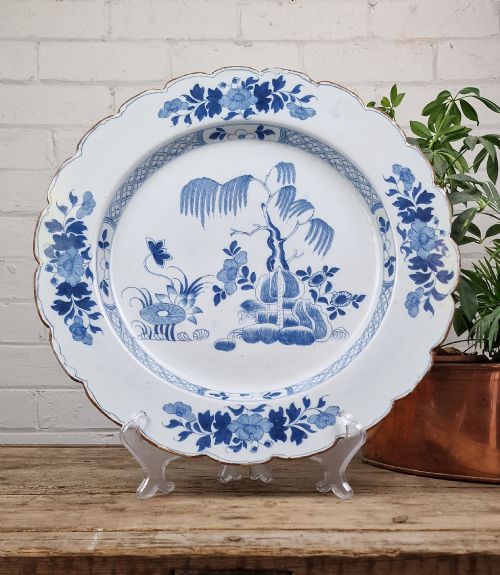
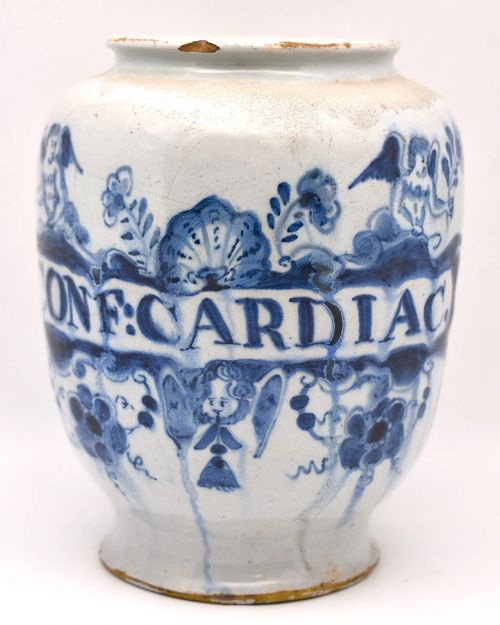
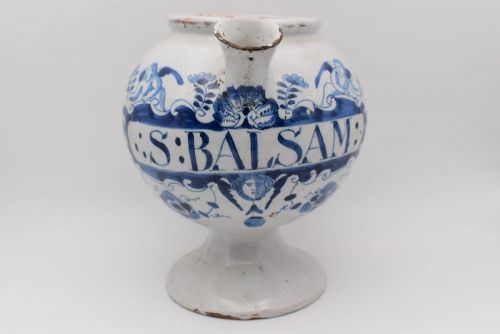
Chargers and plates form the most common format encountered on this page. Alongside these flatware pieces, collectors find specialised forms such as posset pots, drug jars, bough pots and bowls.
The aesthetic bridges domestic English craft with wider stylistic movements. Many examples display Georgian or Chinoiserie influences adapted by local potteries.
Materials and Method
Potters shaped local earthenware bodies before applying an opaque tin glaze that created a smooth, white working surface. This foundational coating masked the darker clay beneath.
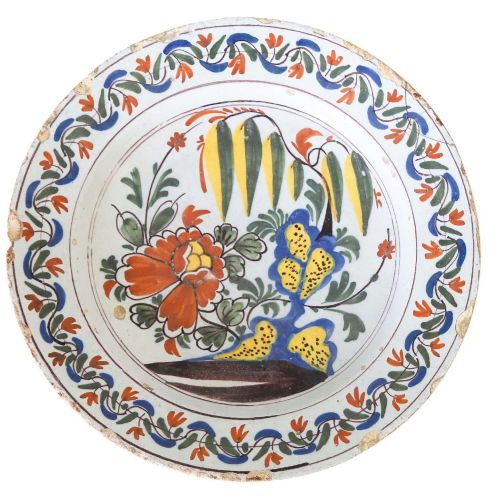
Decorators applied pigments directly onto the absorbent raw glaze surface using mineral oxides. Cobalt oxide produced deep blues, while other metallic pigments created polychrome palettes.
Firing sealed the pigments into the vitreous glaze layer. This technique required considerable skill because the porous ceramic absorbed the liquid colour instantly upon contact.
Marriage plates recorded matrimonial unions with painted initials, offering domestic romance frozen in tin glaze.
Assessing Quality and Execution
Quality rests upon the clarity of the painted decoration and the stability of the glaze. Finer pieces demonstrate confident brushwork and controlled pigment application without excessive blurring.
The structural integrity of the ceramic body and the uniformity of the tin glaze dictate the success of the piece. Superior examples maintain an even glaze coating across the entire surface.
Historical significance and specialised forms elevate certain items above standard domestic plates. Apothecary jars with legible inscriptions and well-preserved posset pots represent high achievements of the period.
Lambeth Pottery·Bristol Delft
The English Tin Glazed Earthenware Glossary
- Tin glaze
- An opaque white glaze made by adding tin oxide to a lead glaze base. This technique provided the characteristic white ground for hand-painted decoration.
- Charger
- A large decorative plate intended for display on a wall or dresser rather than for dining use. These items frequently measure over thirty centimetres in diameter.
- Polychrome
- Decoration utilising multiple colours rather than a single pigment. On these ceramics, this typically involves a combination of blues, greens, yellows and reds.
- Posset pot
- A spouted vessel with handles used for serving a traditional hot drink made from curdled milk and wine or ale. Surviving examples often retain matching lids.
- Drug jar
- A cylindrical ceramic container used by apothecaries to store medicinal compounds. These pieces often feature painted labels denoting specific contents.
English Tin Glazed Earthenware: Frequently Asked Questions
How were chargers displayed historically?
Chargers were displayed prominently on dressers or hung upon walls within prosperous homes. Their large painted surfaces functioned as decorative art rather than everyday tableware.
This method of display protected the soft earthenware body from the wear and tear of active dining use.
What is a posset pot used for?
A posset pot held a warm, spiced milk drink curdled with wine or ale, often served during celebrations or as a remedy. Guests drank from the spout or used spoons.
These covered vessels represent some of the more complex domestic forms produced by period potters.
How do I care for tin glazed earthenware?
Keep these historic ceramics away from modern dishwashers and harsh cleaning chemicals. Dust them gently with a dry, soft cloth to protect the glaze surface.
Display them securely on stable brackets or flat surfaces to prevent accidental impact.
Why are some pieces painted in blue only?
Blue and white decoration relied on cobalt oxide, which withstood high kiln temperatures reliably. This aesthetic was heavily inspired by imported Asian porcelain.
Polychrome designs required additional pigments and more complex firing controls to achieve stable results.