


Antique Delftware Jug
An antique delftware jug brings tin-glazed earthenware and cobalt pigment into a room, offering centuries of ceramic history and hand-painted blue and white decoration.
Antique Delftware Jug
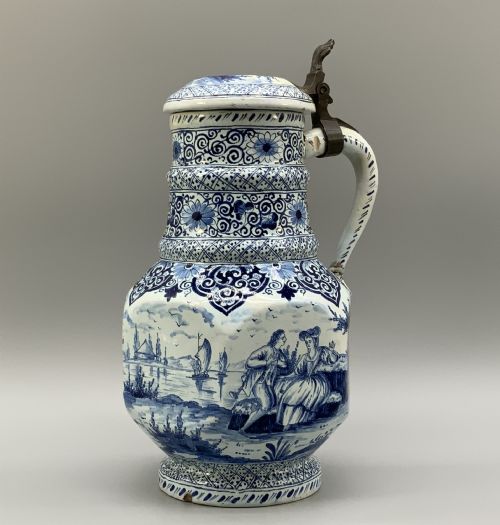
An antique delftware jug represents a tradition of tin-glazed earthenware shaped into pitchers, tankards, and puzzle jugs across the seventeenth, eighteenth, and nineteenth centuries. These vessels display forms ranging from Dutch Baroque profiles to Toby jugs and German historicism beer steins.
Makers produced pieces decorated with blue and white floral patterns, chinoiserie scenes, and polychrome palettes. The most frequent examples on this page are eighteenth-century Dutch pieces, alongside nineteenth-century iterations with manganese and polychrome details.
How they were made
Potters shaped ceramic earthenware bodies on the wheel before applying an opaque white tin glaze that created a smooth surface for painting. Artisans then brushed cobalt pigment and other metal oxides directly onto the porous unfired glaze.
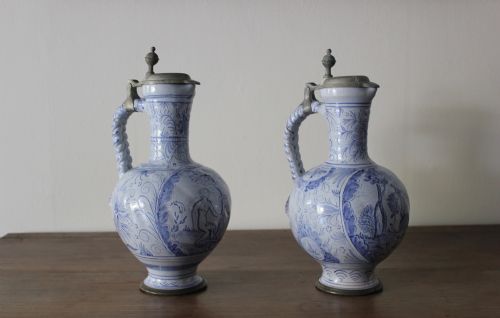
Firing fused the pigments into the tin glaze, yielding the characteristic gloss and vibrant blue or polychrome coloration. Some iterations incorporated fitted pewter lids mounted to the ceramic rims.
Monkey Toby jugs demonstrate that historical potters enjoyed combining functional beer vessels with satirical primate portraiture.
What varies in quality
The precision and fluidity of the hand-painted decoration separate simpler utility wares from masterwork examples. Crispness in chinoiserie motifs and botanical details indicates the skill of the painter.
The purity and depth of the tin glaze, alongside the preservation of the painted surface, dictate the visual impact of the vessel. Potter control during the kiln firing determines whether colours remain sharp or blur into the white background.
Pieter Verburg
The Antique Delftware Jug Glossary
- Tin glaze
- An opaque white ceramic glaze containing tin oxide, which provides a smooth canvas for hand-painted pigments.
- Cobalt pigment
- A metallic blue colorant used extensively under the glaze to create deep blue floral and landscape designs.
- Chinoiserie
- European decorative motifs inspired by Chinese art, featuring imaginative landscapes, figures, and pavilions.
- Puzzle jug
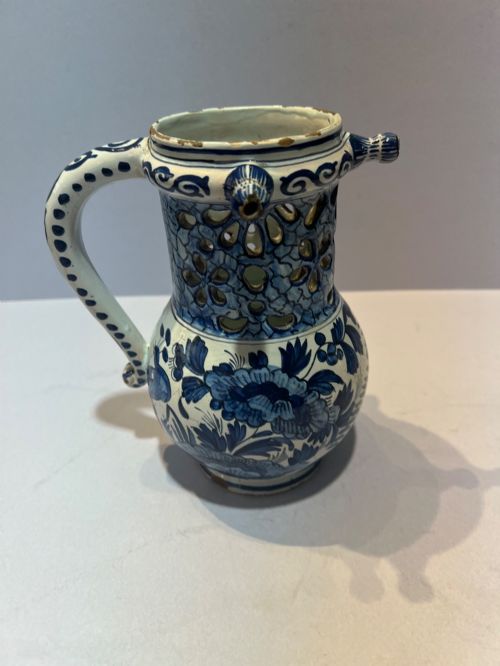
- A vessel with a perforated neck and multiple spouts that requires the drinker to solve a riddle to drink without spilling.
- Polychrome
- Decoration employing multiple colours rather than a single pigment like blue or manganese.
Antique Delftware Jug: Frequently Asked Questions
How do I clean an antique delftware jug?
Dust the surface gently with a soft dry cloth to remove particles. Avoid submerging the ceramic in water, as moisture can penetrate old glaze fractures.
Keep tin-glazed earthenware away from direct sunlight and damp environments to protect the fragile glaze and iron or pewter mounts.
Are these jugs safe for holding liquids?
Most antique earthenware jugs are intended for display rather than daily service. Hairline fractures and historic repairs mean modern liquids can destabilize the ceramic body.
Use these vessels strictly for decorative purposes to preserve the tin glaze and painted pigments from further wear.
How can I tell a seventeenth-century jug from a nineteenth-century one?
Seventeenth-century pieces often display tin glazes with distinct blue and white chinoiserie painting styles and Dutch Baroque forms. Nineteenth-century examples frequently introduce polychrome palettes, Toby jug figures, and German historicism influences.
Examine the weight of the ceramic body and the tone of the cobalt pigment, as earlier bodies tend to be heavier and thicker.
What is a puzzle jug used for?
A puzzle jug served as a drinking game vessel in taverns and social gatherings. Guests attempted to drink from the correct spout while covering hidden holes in the neck.
These ceramic items combined domestic utility with interactive entertainment for historical households.