
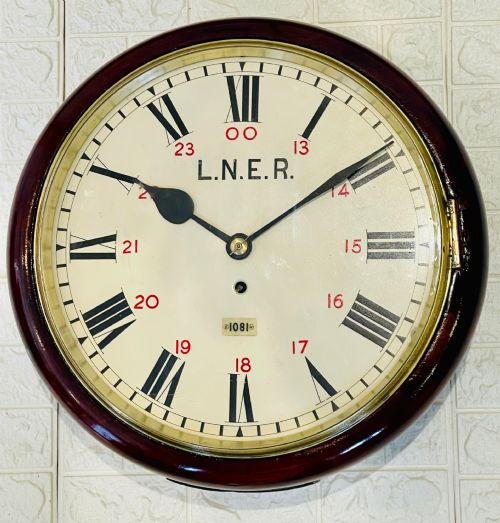
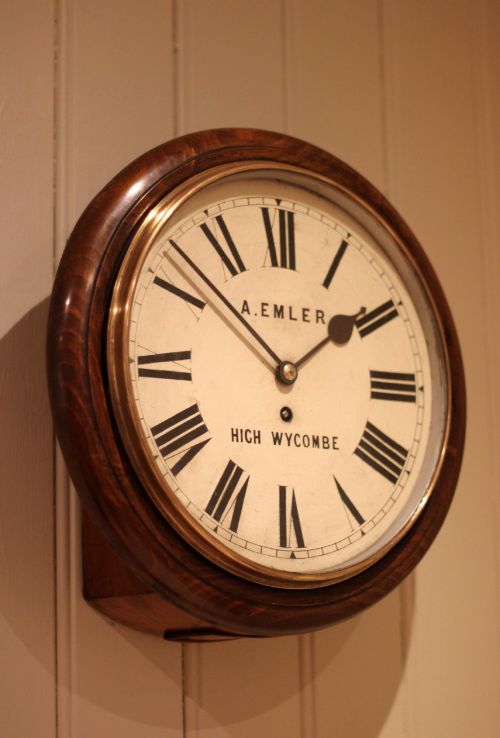
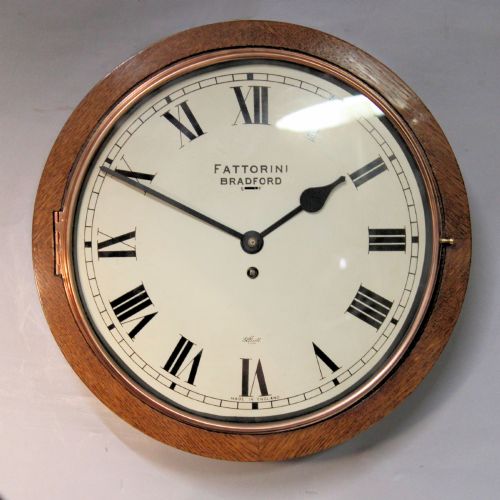
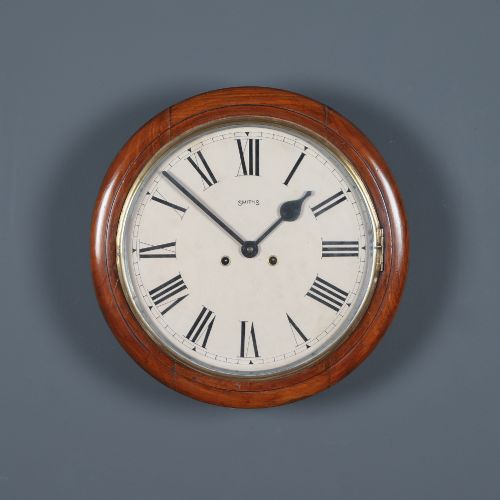
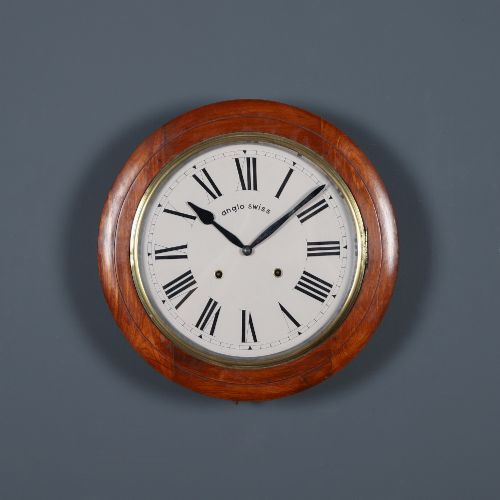
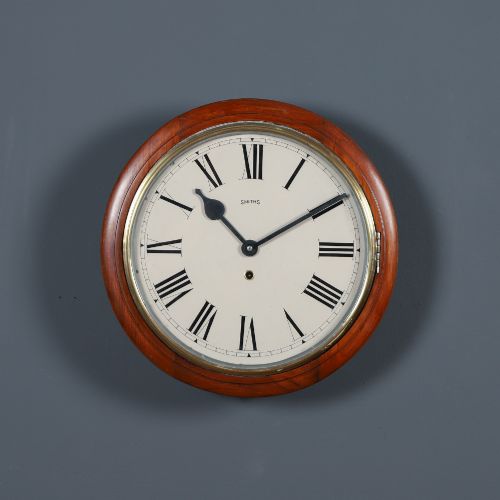
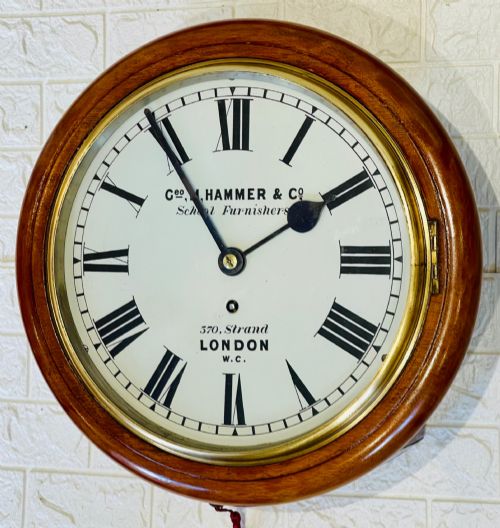
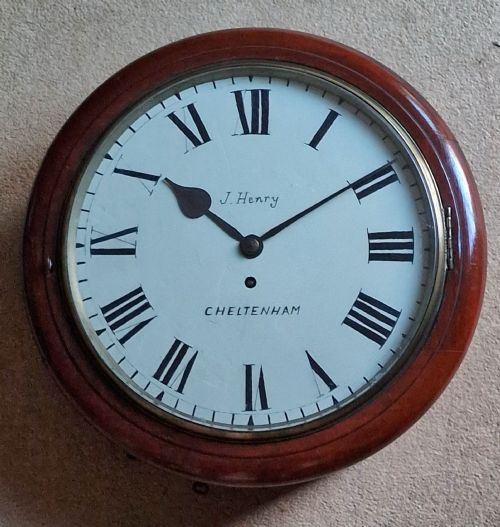
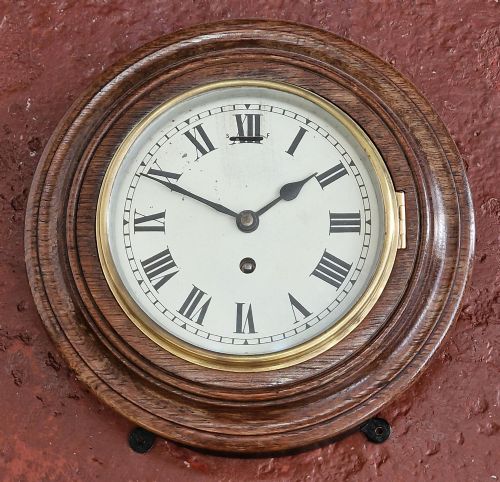
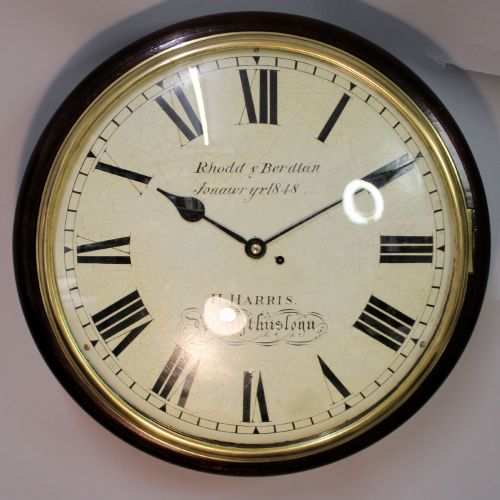
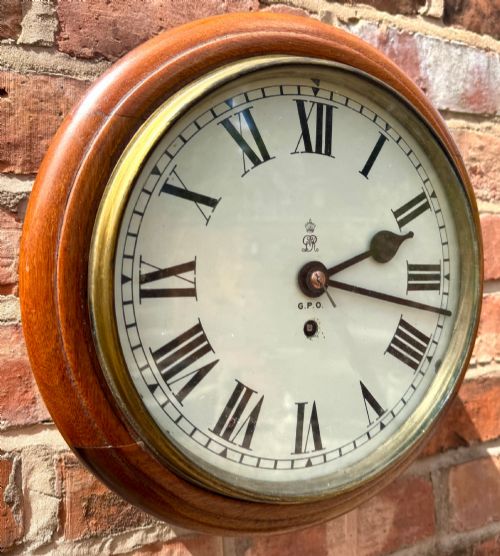
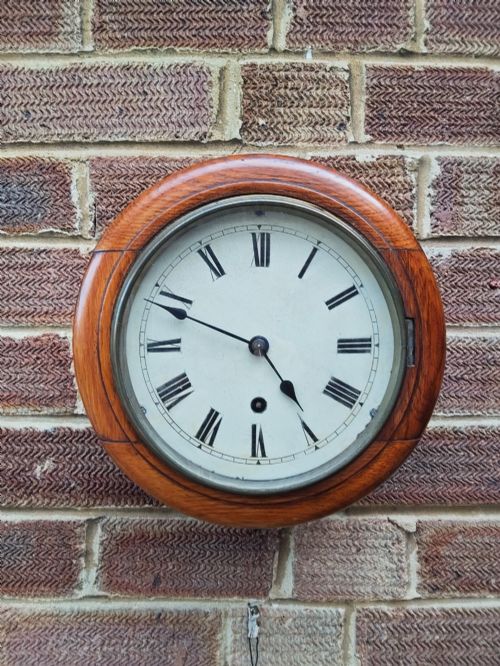
Vintage Circular Wall Clock
A vintage circular wall clock brings the precise engineering of railway stations, factories and offices into a domestic room.
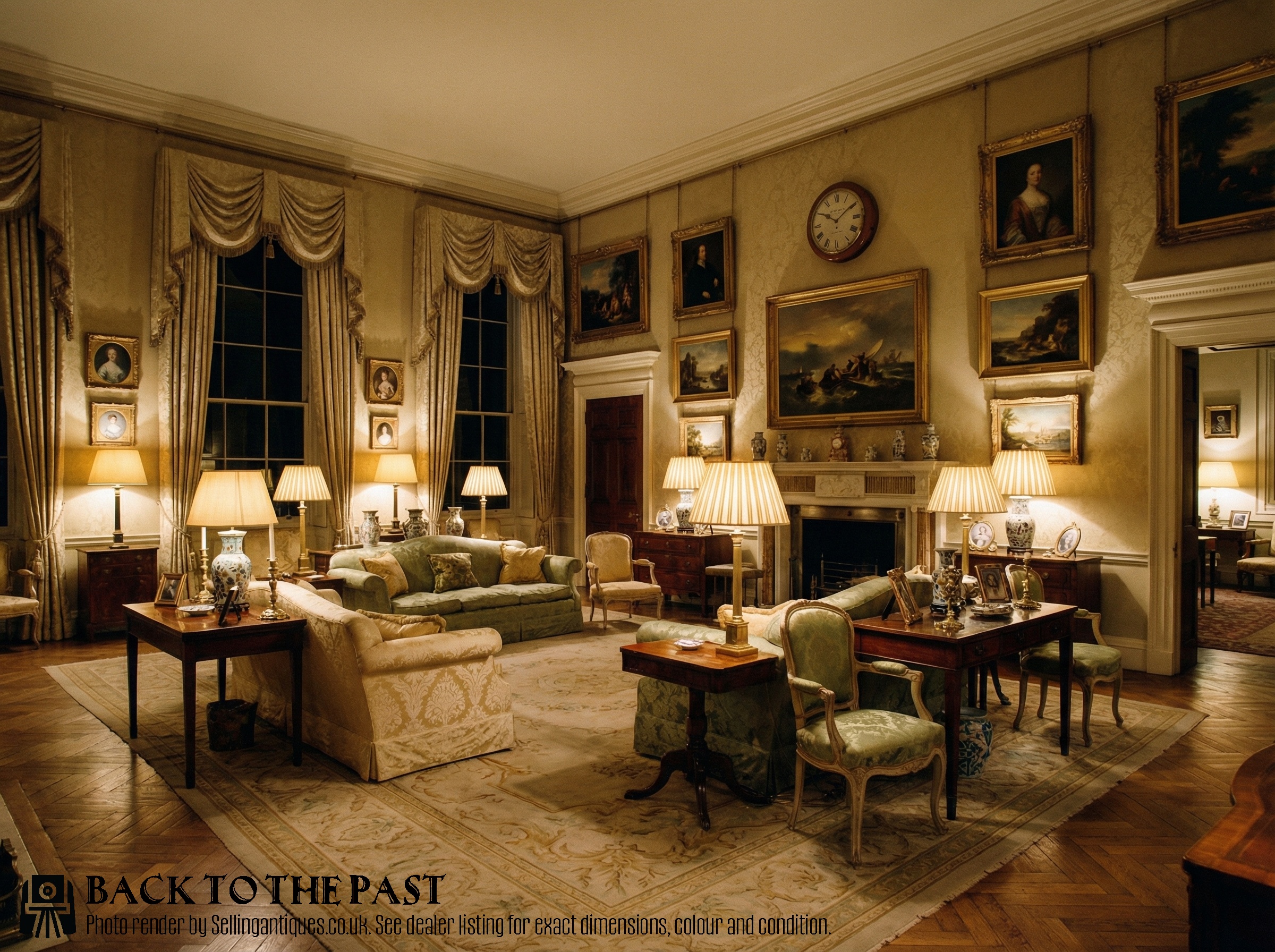
Vintage Circular Wall Clock
When you search for a vintage circular wall clock, you are looking at round dial timepieces originating from Georgian, Victorian and mid-twentieth-century periods. These round clocks served practical roles in railway stations, schools, offices and postal departments before finding a place in domestic interiors.
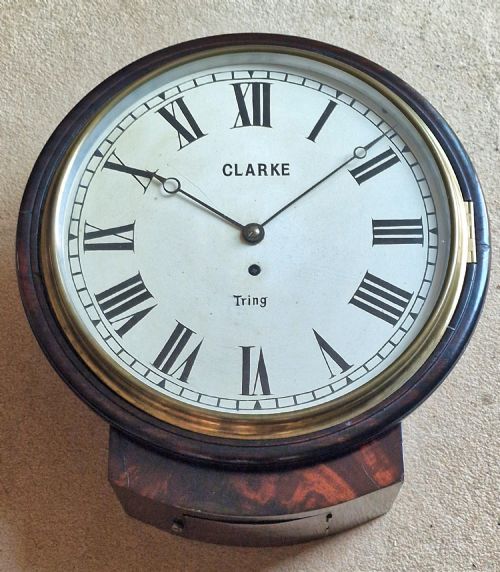
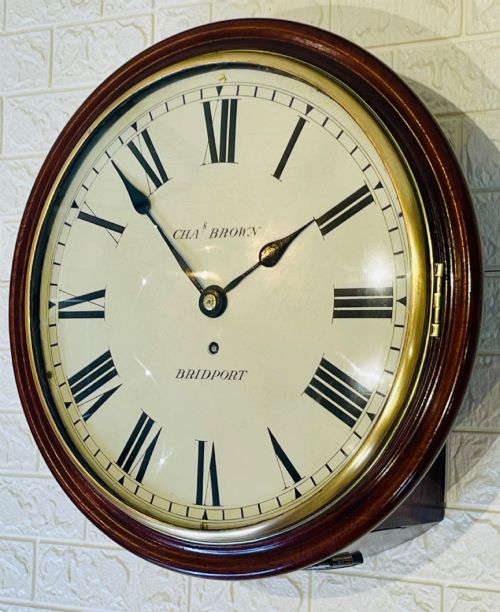
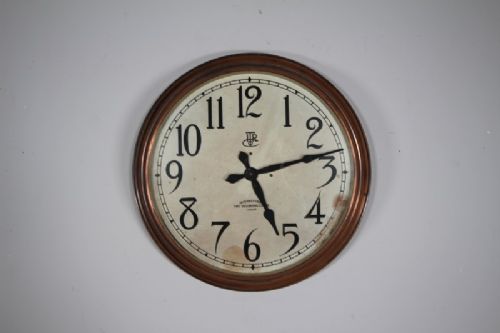
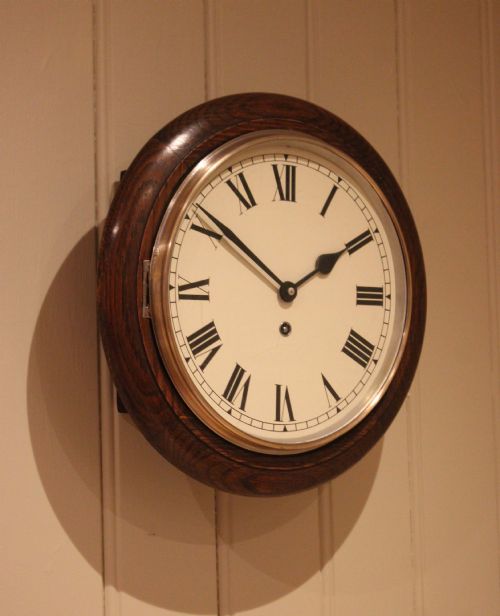
The most common version met on this page is the fusee dial wall clock, often housed in mahogany or oak cases with glass covers. Other forms include railway station and school round dial clocks, barometers, and Art Deco designs in elm or oak.
The origins of these pieces stretch across English towns, London makers, and transport networks such as the L.N.E.R., LMS and British Railways. Their straightforward circular format prioritises legibility above all else.
Materials and Construction
The construction of a vintage circular wall clock relies heavily on timber cases turned or joined to hold a heavy brass or iron movement behind glass. Mahogany and oak dominate the timber frames, providing the structural stability needed for heavy spring-driven or fusee mechanisms.
Dials are typically painted metal, iron or wood, marked with clear numerals designed to be read from a distance in public spaces. Brass makes up the gear trains and escapements, while cast iron and glass protect the face and internal components.
Vintage Circular Wall Clock Retail Price Guide 2026
Typical asking prices for vintage circular wall clock among the pieces listed under this phrase on Sellingantiques today, from the lower quarter to the upper quarter. They describe what is for sale here now, not the wider market.
Listings feature brass, mahogany, iron and oak across Victorian, Georgian and twentieth-century periods.
Separating the Range
Quality in a vintage circular wall clock rests upon the crispness of the timber case joinery and the precision of the internal movement. Clocks by named provincial or London makers display finer tolerances in their gear trains than mass-produced utilitarian counterparts.
The integrity of the dial signwriting and the originality of the brass bezel and glass further distinguish superior examples. A well-preserved mahogany case with an untouched movement sits at the top of the range.
Elliott·Smiths·Henry Harris of Monythusloyn·Thomas Hedge of Colchester·John Walker
The Vintage Circular Wall Clock Glossary
- Fusee
- A conical pulley used in a clock movement to maintain even power as the mainspring unwinds. This mechanism ensures more consistent timekeeping throughout the running period.
- Dial
- The face of the clock where the numbers and hands are displayed. On these pieces, dials are usually round and protected by a glass door.
- Bezel
- The metal or wooden ring that holds the glass cover over the dial. It often hinges open to allow hand-setting.
- Escapement
- The mechanism that controls the release of power in the gear train to drive the pendulum or balance wheel. Common types include lever and verge escapements.
- Timepiece
- A clock that indicates the time without any striking or chiming mechanism. It requires only a going train.
Vintage Circular Wall Clock: Frequently Asked Questions
How do I wind a fusee wall clock?
A key is inserted into the dial hole to wind the chain or wire around the fusee cone.
Care must be taken not to overwind the movement to avoid damaging the mainspring.
Where were railway dial clocks used?
These clocks hung in booking halls, platforms, station offices and signal boxes to keep staff and passengers on schedule.
They were built for high visibility and robust daily use in busy transport hubs.
How do I date an oak dial clock?
Dating relies on the style of the case, the wood used, and any markings or station stampings on the dial or rear box.
Fusee movements and certain timber patinations typically point toward Victorian or earlier origins.
Can these clocks be hung on any wall?
The weight of a hardwood case and brass movement requires secure fixing into wall studs or masonry.
Most pieces feature robust mounting brackets or sturdy backboxes designed for safe hanging.