
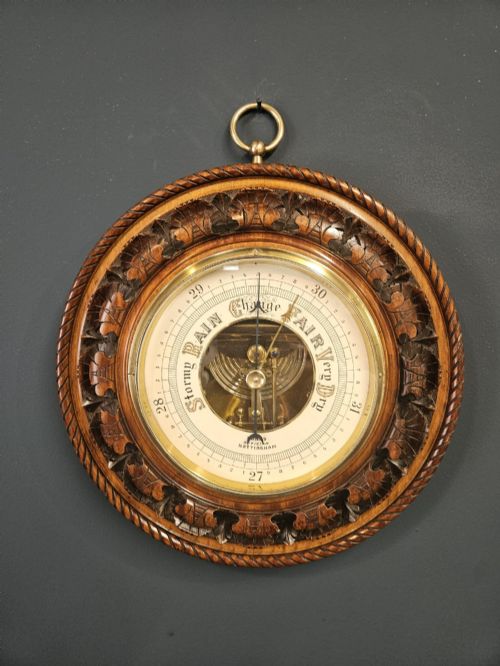




Large Dial Wall Clock
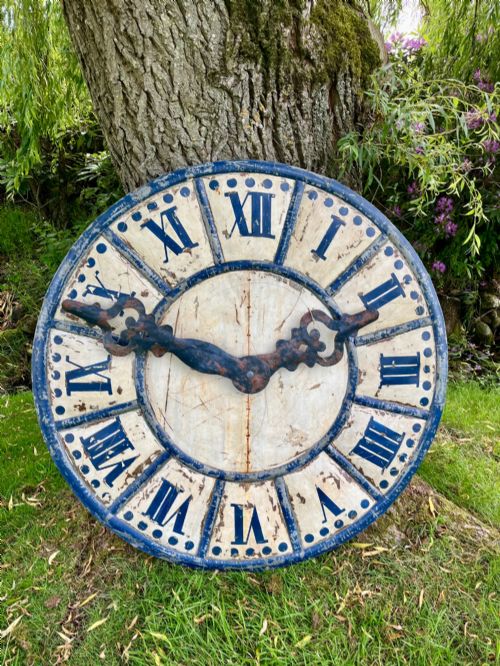
A large dial wall clock is a commanding timepiece built to tell time across a grand room, railway station or factory floor.
Large Dial Wall Clock
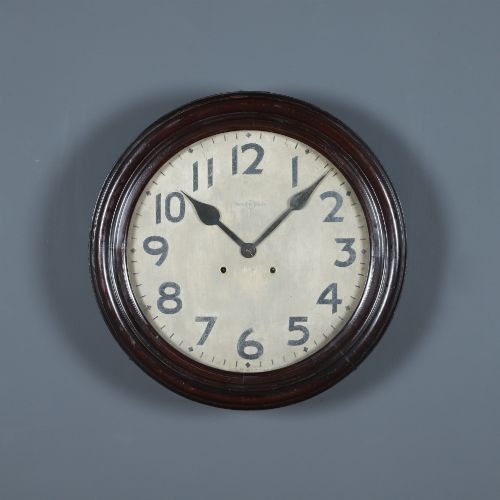
A large dial wall clock is a substantial timekeeper designed for public spaces, offices, or sizable domestic rooms where legibility from a distance is essential. The core of this category comprises pieces from the Victorian era alongside mid-century 1930s industrial examples.
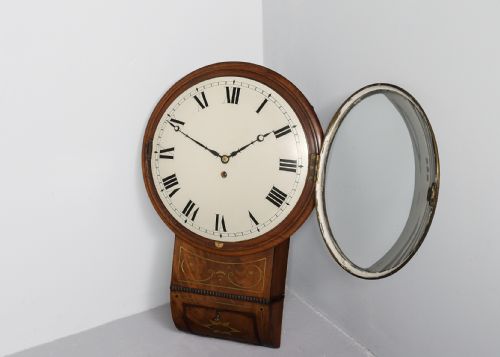
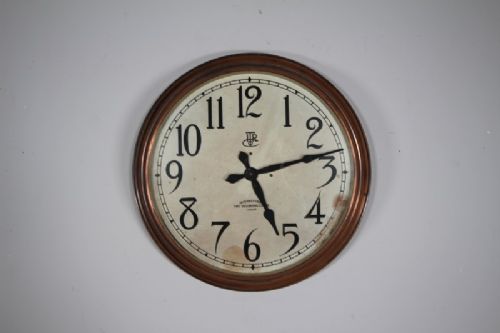
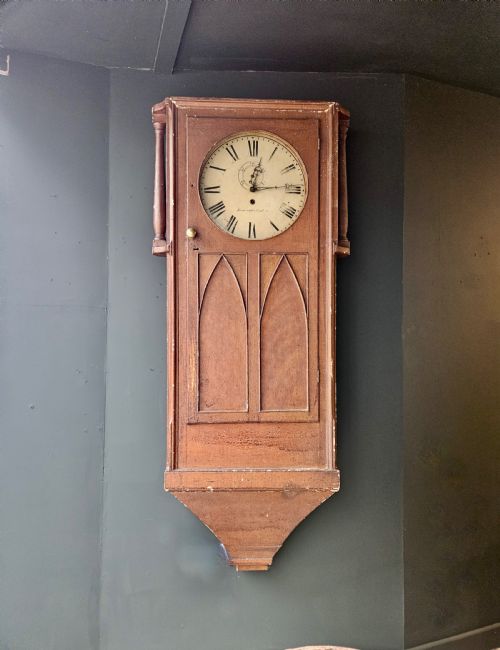
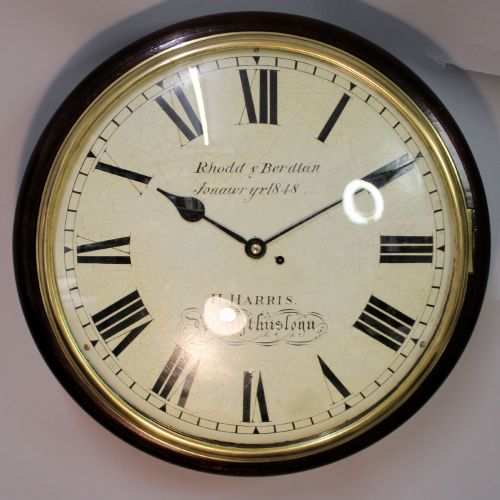
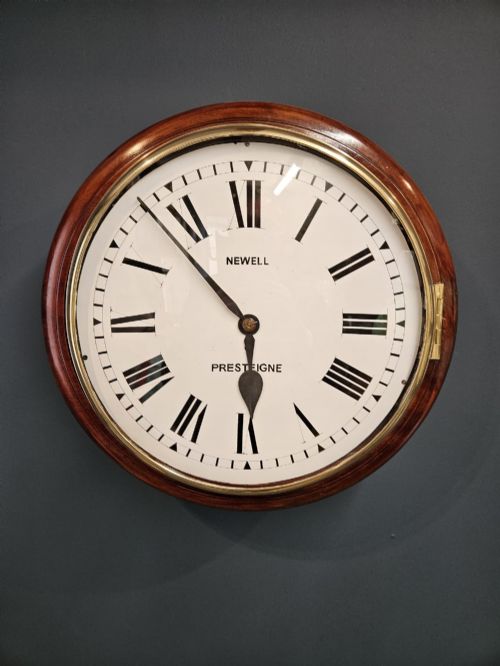
Most pieces seen here take the form of standard wall clocks or drop-dial variations, housed in robust timber or metal surrounds. They originate from English and Scottish makers, shifting from traditional boardroom fusee movements to heavier industrial and electric mechanisms.
Materials and Construction
Casework relies heavily on solid timber such as mahogany and oak, formed into sturdy circular or drop-dial surrounds designed to house weighty movements. Glazed front doors utilise thick glass panes to protect the painted or wooden dials within.
Internal mechanisms combine brass, iron, and steel components to drive the heavy gear trains, particularly in eight-day fusee and striking movements. Later 1930s industrial iterations incorporate modern materials like Bakelite alongside traditional metals.
Listings feature Victorian and 1930s periods, utilising mahogany, oak, brass, iron, steel, and Bakelite.
Assessing Quality and Merit
The distinction between a standard timekeeper and a superior piece lies in the complexity of the movement and the provenance of the maker. Fusee movements offering eight-day reliability represent a higher standard of clockmaking than simpler utility mechanisms.
Cabinetwork quality separates ordinary workshop clocks from boardroom pieces, visible in the choice of well-figured mahogany or oak and the precision of the bezel construction. Signed dials bearing recognised London or provincial makers add significant weight to a piece's standing.
Barrauds Cornhill London·Gillett and Johnston Croydon·L.J. Meyer Bristol·Anthony Furnace·Grimshaw and Baxter London·G.W Barker Chiswick
The Large Dial Wall Clock Glossary
- Fusee
- A conical pulley used with a chain or cord to maintain even power as the mainspring unwinds. This mechanism ensures consistent timekeeping throughout the running period of the clock.
- Drop-dial
- A clock case featuring an extended lower section below the main dial, often housing a pendulum box. This shape accommodates the drop of the movement and provides a balanced visual proportion.
- Bakelite
- An early synthetic thermosetting plastic utilised in twentieth-century manufacturing. It appears in later industrial clock surrounds for its durability and distinct finish.
- Convex dial
- A clock face that curves outward toward the viewer rather than sitting flat. This design reduces glare from windows and gas or electric lighting.
Large Dial Wall Clock: Frequently Asked Questions
How do fusee movements work?
A fusee movement uses a conical pulley and a chain to equalise the declining power of the mainspring as it unwinds. This clever piece of engineering ensures the clock maintains steady force and accurate time throughout its run.
Most traditional wall clocks of this scale rely on this system for dependable timekeeping across their eight-day duration.
Where were these clocks originally used?
Large dial clocks hung in places that required clear timekeeping for many people at once, including railway stations, boardrooms, and factories. Their generous proportions ensured the hands could be read easily from across a bustling room.
Domestic versions also found homes in large Victorian entrance halls and high-ceilinged kitchens.
How do I wind a wall clock?
Winding requires inserting the appropriate key into the winding hole on the dial and turning it gently until the spring reaches resistance. Care must be taken not to overwind the mechanism, which can damage the internal gearing.
Regular winding at the same time each week keeps the movement running reliably.