


Victorian Station Clock
When you search for a victorian station clock, you are looking for robust timekeepers built to keep accurate time in bustling nineteenth century travel hubs.
Victorian Station Clock
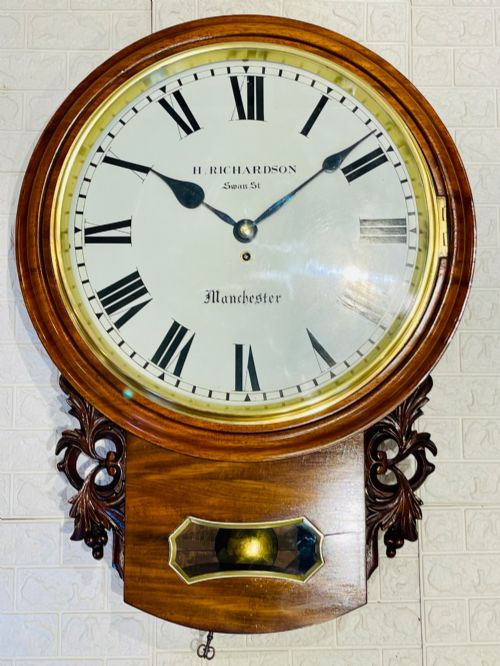
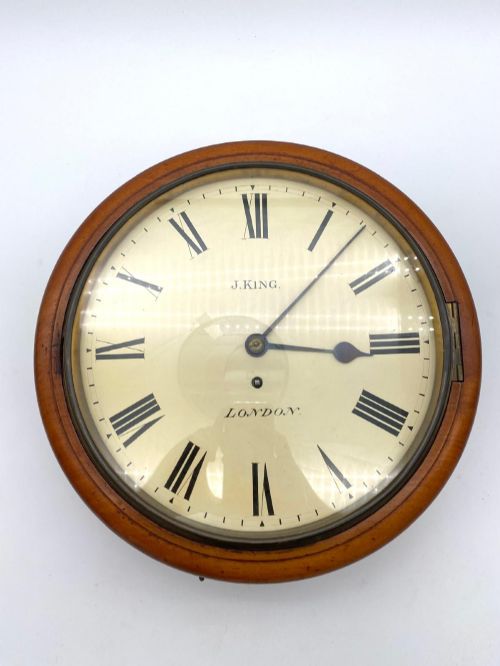
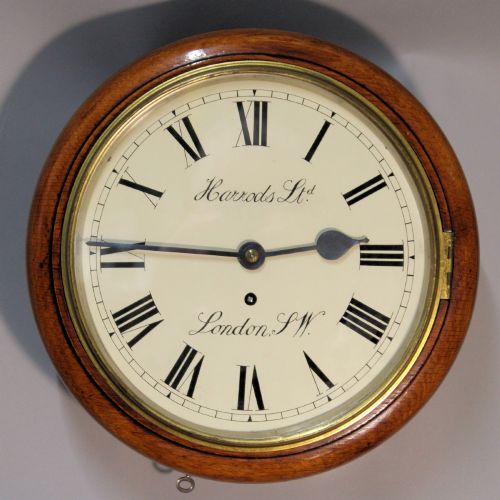
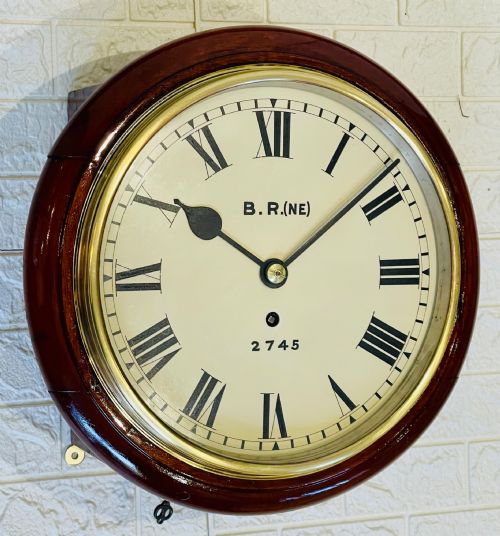
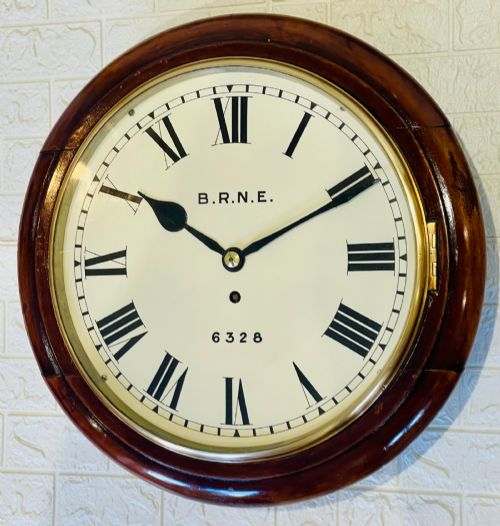
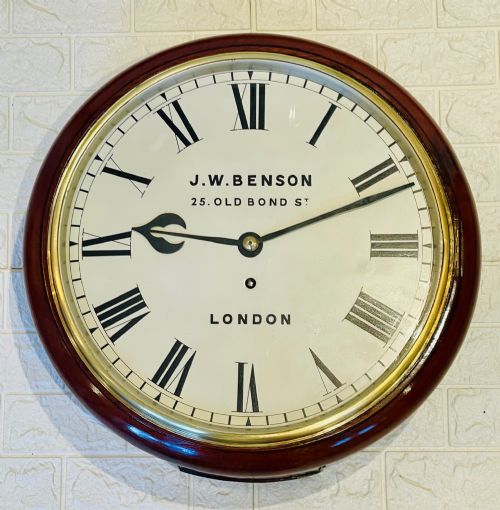
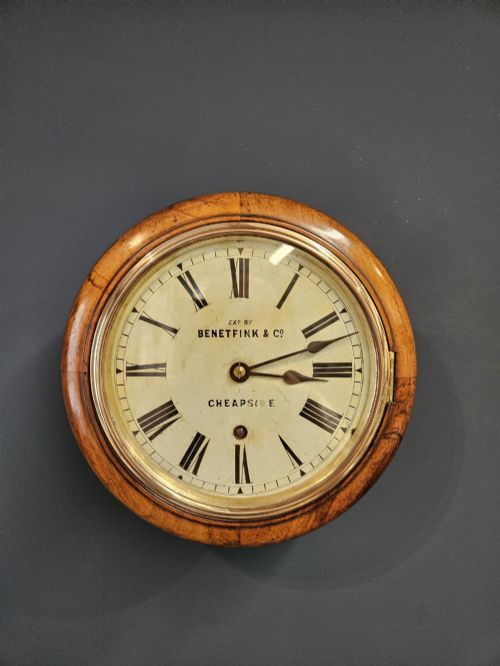
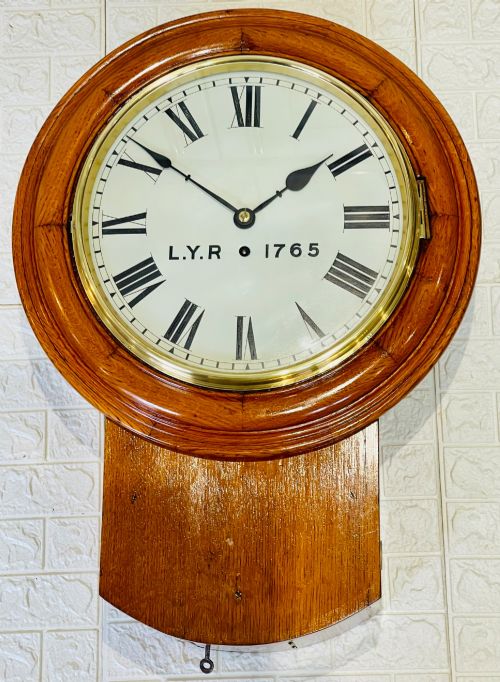
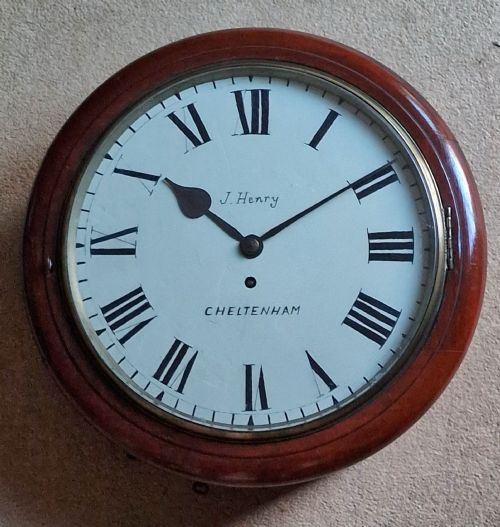
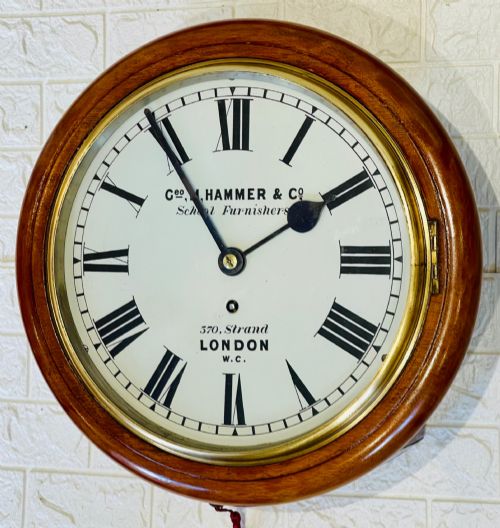
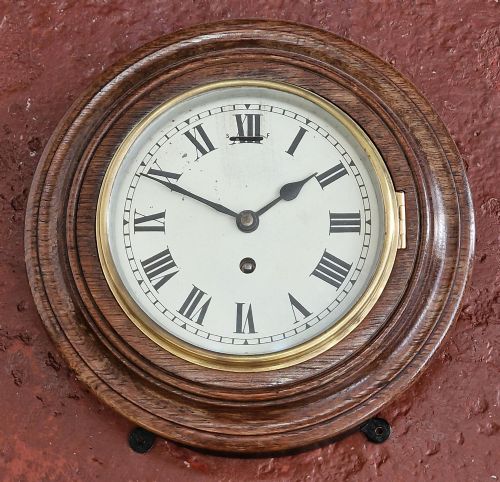
A victorian station clock typically takes the form of a round dial wall clock, often featuring a fusee movement designed for steady timekeeping. These pieces originated in railway offices, platforms, and waiting rooms across Britain during the nineteenth and early twentieth centuries.
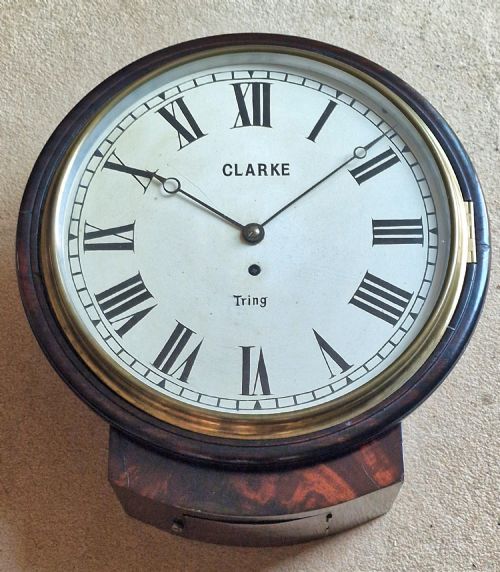
The selection includes drop-dial variants and regional railway company pieces alongside simpler school and office clocks housed in sturdy wooden surrounds. Makers ranged from local provincial clockmakers to established names supplying major networks like the Great Western Railway.
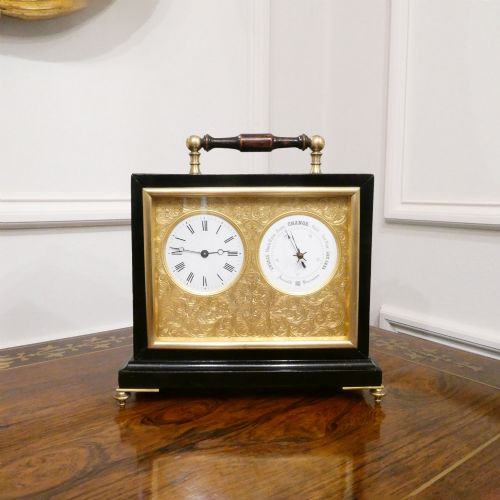
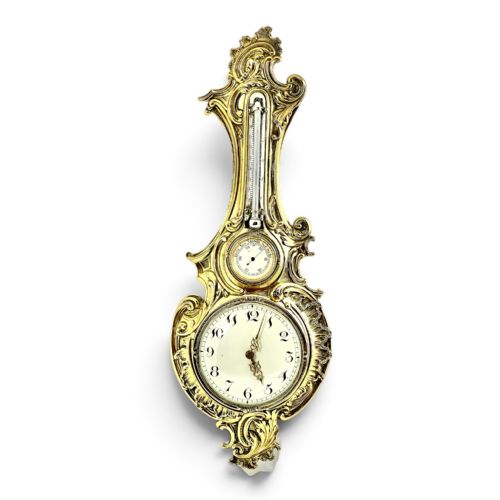
Beyond wall-mounted timepieces, the category occasionally encompasses banjo barometers and combined desk or mantel instruments used by station masters to monitor weather and time.
How they were made
Casework relies heavily on dense timbers such as mahogany, oak, and walnut, chosen to withstand fluctuating platform temperatures and constant vibration from passing trains. Surrounds are frequently turned from single blocks of wood or joined with strong box construction.
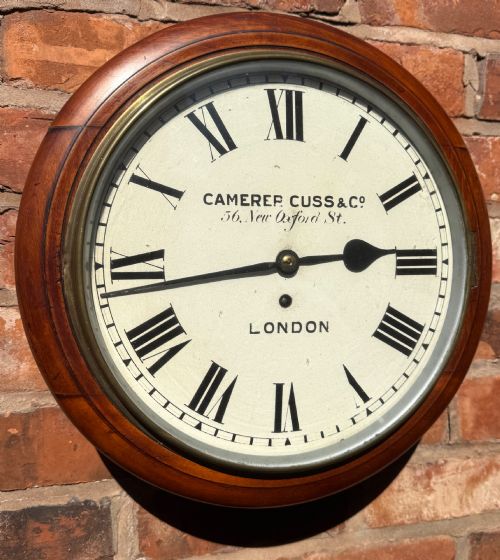
Dials are constructed from painted iron or enamel, featuring clear Roman numerals designed for rapid legibility from a distance. Movement mechanism relies primarily on chain or wire fusee gear systems to equalise the pull of the mainspring as it unwinds.
Victorian Station Clock Retail Price Guide 2026
Typical asking prices for victorian station clock among the pieces listed under this phrase on Sellingantiques today, from the lower quarter to the upper quarter. They describe what is for sale here now, not the wider market.
Station clocks kept generations of travellers running for trains, even when the fog rolled thickly across the platform.
What varies in quality
The distinction between standard utility timepieces and finer examples often lies in the provenance and the complexity of the movement. Pieces bearing specific railway company engravings or signed by prominent London and regional makers command greater interest among collectors.
Originality of components also dictates standing, particularly where painted dials, brass bezels, and matching wooden backboxes remain unaltered by later replacements. The crispness of dial lettering and the precision of the fusee movement reflect the original workshop standards.
Camerer Cuss And Co·John Walker·Henry Harris·Dent Of London
The Victorian Station Clock Glossary
- Fusee
- A conical pulley used in mechanical clocks to maintain an even drive on the gear train as the mainspring loses tension. This mechanism ensures consistent timekeeping across the duration of the wind.
- Drop-dial
- A wall clock design where the circular dial sits above an extended wooden box, often housing a pendulum bob. This shape allows space for a longer pendulum while keeping the clock face compact.
- Dial clock
- A timepiece characterised by a prominent circular face designed for clear visibility in public rooms or transport hubs. These clocks are typically mounted high on interior walls.
- Aneroid barometer
- An instrument that measures atmospheric pressure using a small, flexible metal box without liquid. These devices are frequently incorporated into combined weather station instruments.
Victorian Station Clock: Frequently Asked Questions
How do I wind a fusee wall clock?
Most fusee wall clocks require a winding key inserted into the dial face to tension the chain movement, typically on a weekly cycle.
Care must be taken not to overwind the movement, stopping as soon as resistance is felt to protect the historical gear train.
Were these clocks used outside on platforms?
The majority of these dial clocks were mounted inside booking halls, station master offices, and waiting rooms rather than exposed to the elements.
Weather protection inside station buildings preserved the painted iron dials and wooden cases from excessive dampness and decay.
How can I identify a railway-issued clock?
Many authentic railway timepieces feature company initials, inventory numbers, or station names painted on the dial or stamped into the wooden case.
Associated paperwork and provenance records often confirm active deployment on specific nineteenth century networks.
Why do some clocks have drop cases?
The extended lower case accommodates the swing of a longer pendulum, which improves the overall accuracy of the movement.
This drop-dial configuration became a standard aesthetic for British public and railway buildings throughout the Victorian period.