

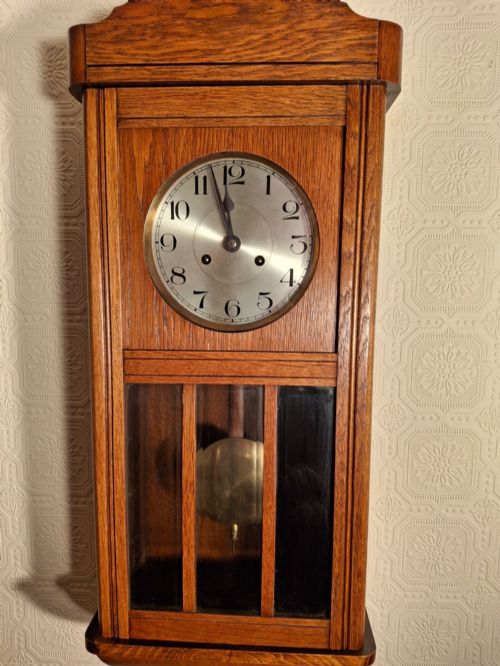
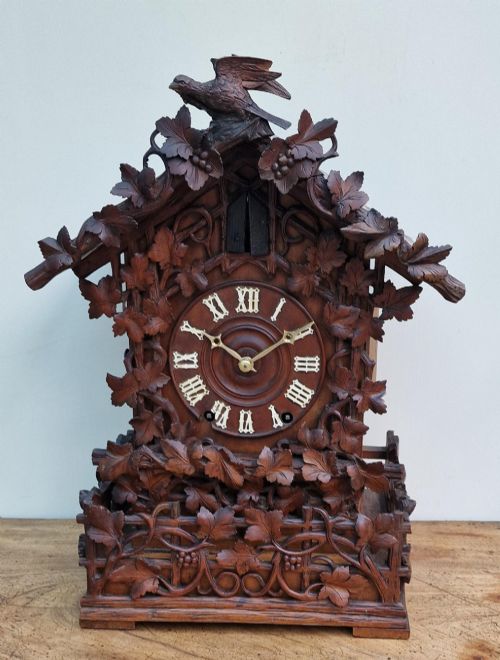
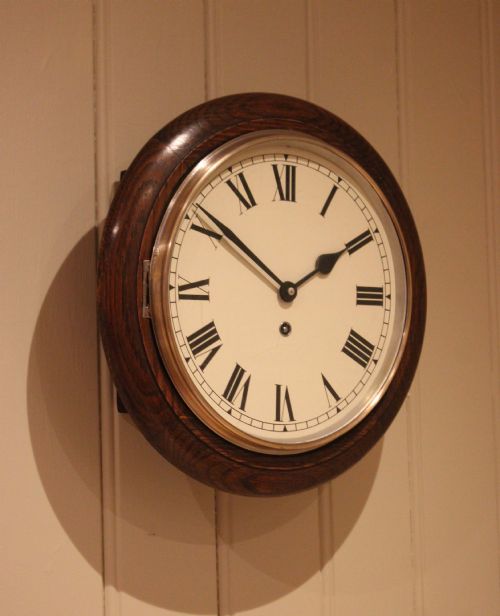
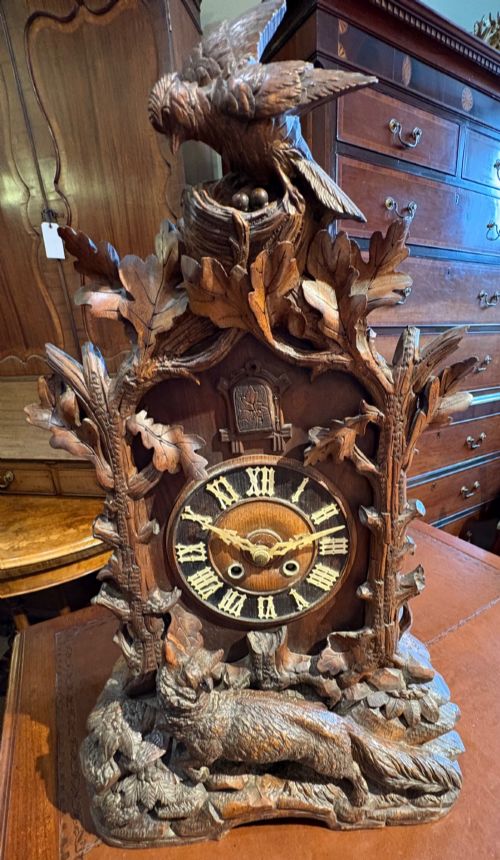

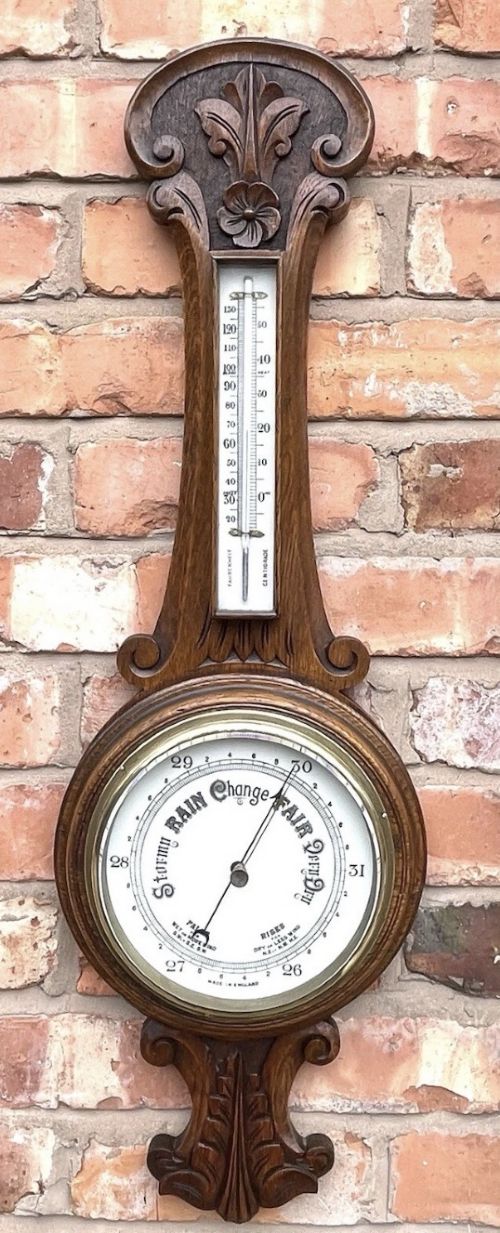


Traditional Oak Wall Clock
A traditional oak wall clock brings time and texture to a room, offering the steady weight of timber alongside mechanical precision.
Traditional Oak Wall Clock
A traditional oak wall clock is a timekeeping piece designed to hang securely, combining practical utility with period craftsmanship. When searching for this style, buyers encounter various forms ranging from dial clocks to elaborate carved designs.
The selections available here span multiple eras, notably the nineteenth and early twentieth centuries, alongside Victorian, Edwardian, and Arts and Crafts examples. Oak is the primary timber, often complemented by walnut or mahogany in specific regional styles.
Beyond standard wall clocks, related items such as banjo barometers, mantel clocks, and hooded wall clocks frequently appear under this heading. Each piece reflects the interior domestic tastes of its period, from simple dial timepieces to ornate carved wooden housings.
How they were made
The construction of these pieces relies heavily on solid oak and carved wood, shaped by cabinetmakers using traditional joinery techniques. Frames are built to house mechanical movements securely while displaying the natural grain and colour of the timber.
Clock dials and internal components incorporate brass, glass, enamel, and occasionally bone for numerals or subsidiary indicators. Dial clocks utilise robust fusee movements designed for accurate timekeeping over extended periods.
Traditional Oak Wall Clock Retail Price Guide 2026
Typical asking prices for traditional oak wall clock among the pieces listed under this phrase on Sellingantiques today, from the lower quarter to the upper quarter. They describe what is for sale here now, not the wider market.
What varies in quality
Quality in these clocks rests upon the crispness of the timber carving and the sophistication of the internal movement. Finer pieces demonstrate meticulous attention to dial legibility and the integration of brass bezels and glass doors.
The distinction between standard domestic timepieces and superior examples often lies in the provenance of the maker and the complexity of the mechanism, such as fusee movements or musical capabilities.
Henry Deykin Worcester
The Traditional Oak Wall Clock Glossary
- Dial clock
- A wall-mounted timepiece featuring a prominent circular face, frequently used in public spaces and domestic halls during the nineteenth century.
- Fusee movement
- A conical pulley mechanism that equalises the driving force of the mainspring as it unwinds, ensuring consistent timekeeping accuracy.
- Aneroid barometer
- An atmospheric pressure measuring instrument that operates without liquid, often housed in a carved wood wall case alongside a thermometer.
- Hooded wall clock
- An early clock style featuring a protective wooden cover over the dial and movement, designed to hang on a wall above supporting brackets.
- Arts and Crafts
- A design movement prioritising traditional craftsmanship, visible grain, and simple construction over mass-produced ornamentation.
Traditional Oak Wall Clock: Frequently Asked Questions
How do I wind a fusee wall clock?
Winding a fusee wall clock requires a specific key inserted into the dial winding hole, turning it gently until resistance is met.
Care must be taken not to overwind the mechanism, ensuring the mainspring maintains its tension evenly.
Where should I hang a heavy oak clock?
Heavy oak wall clocks need to be mounted directly into wall studs or masonry using appropriate fixings to support the weight securely.
Placing the clock on a stable interior wall away from excessive vibrations or dampness helps preserve the movement.
How do I identify a nineteenth century oak clock?
Nineteenth century oak clocks display characteristic timber patination, traditional hand-cut joinery, and period dial materials such as enamel or painted metal.
Examining the style of the numerals, bezel construction, and backplate markings often helps confirm the approximate era of manufacture.