

Victorian Sideboard Server
When choosing a victorian sideboard server, you select a substantial dining room furnishing designed for serving food and storing silver and linen.
Victorian Sideboard Server
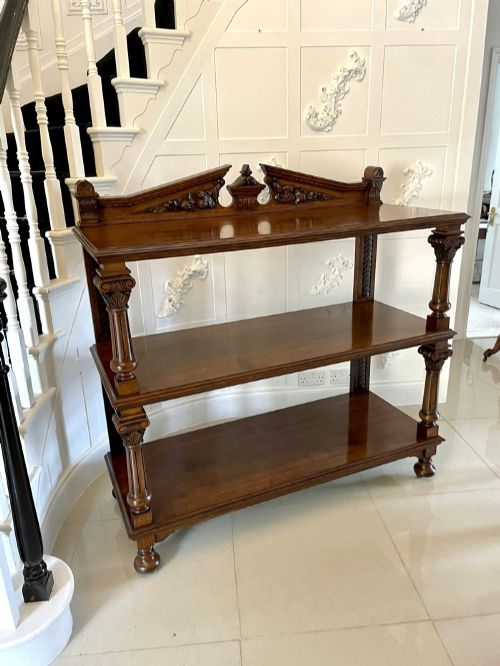
A victorian sideboard server is a substantial dining room piece designed for storage and food presentation during the nineteenth century. These forms include credenzas, chiffoniers, buffets, and dresser bases suited to domestic service.
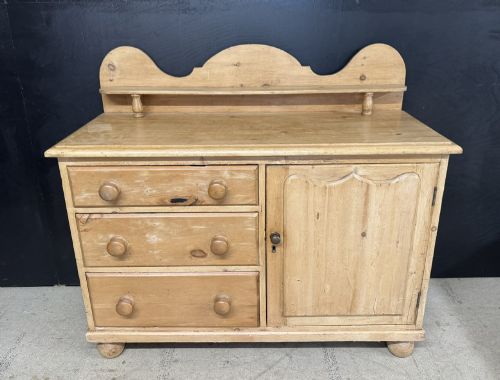
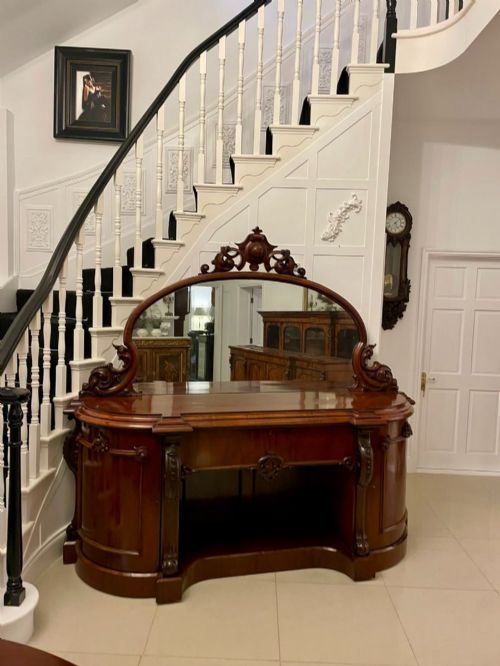
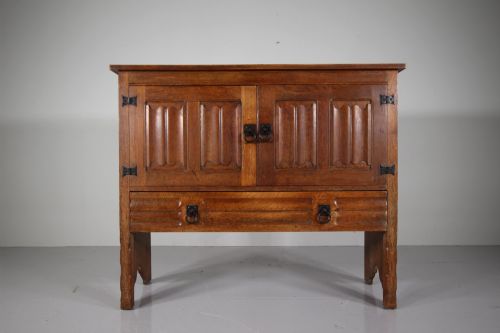
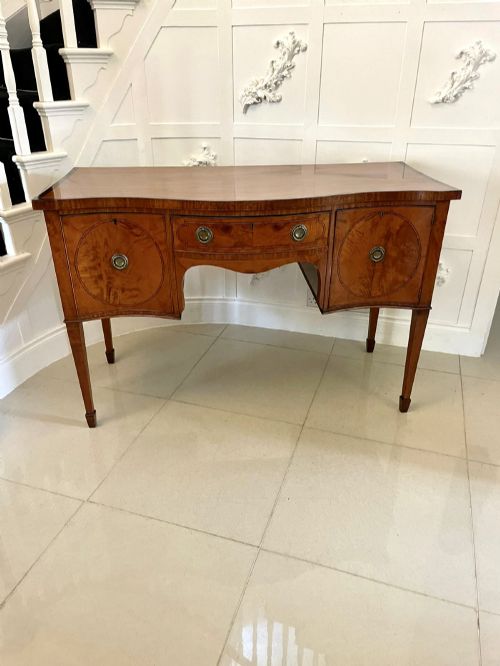
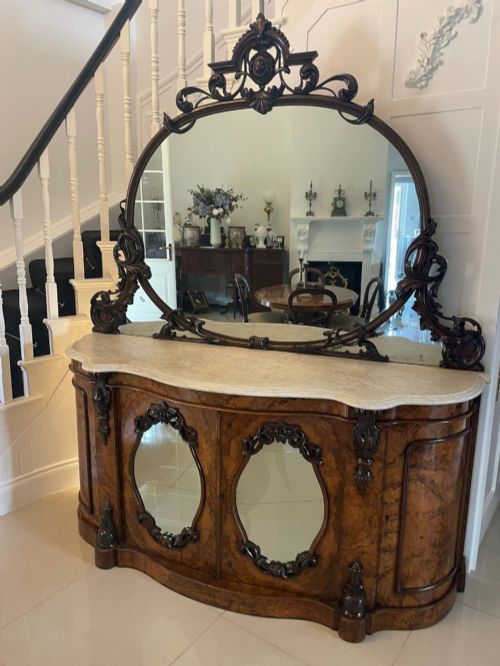
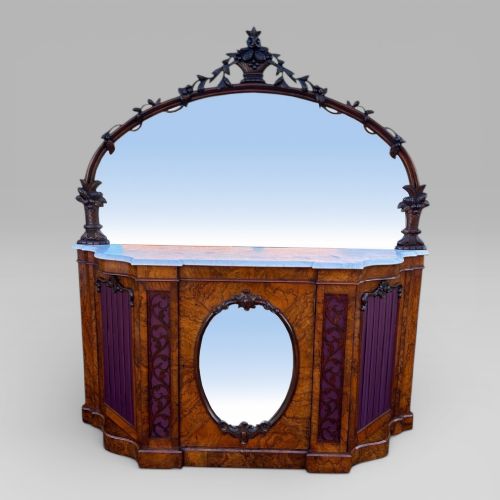
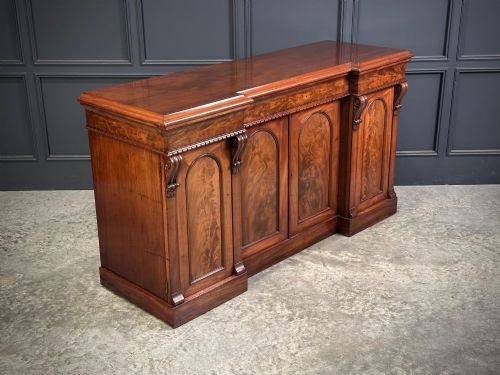
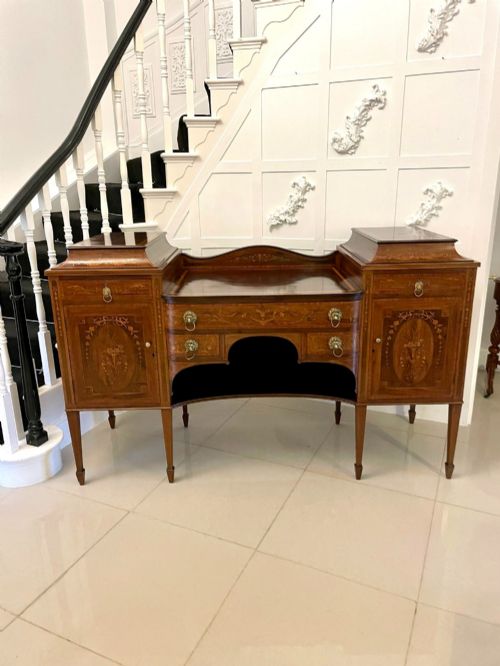
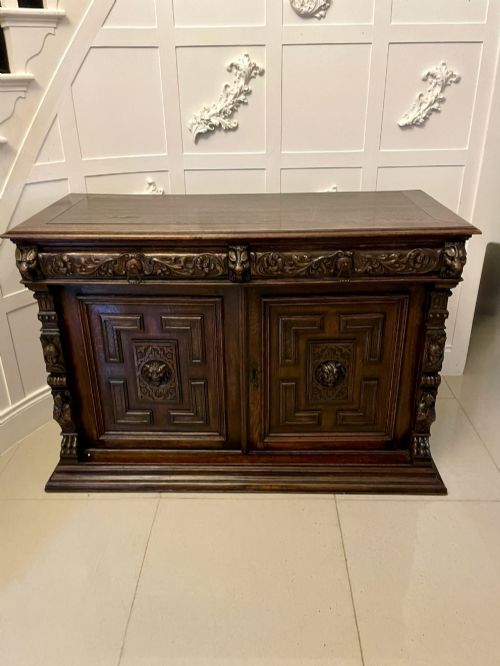
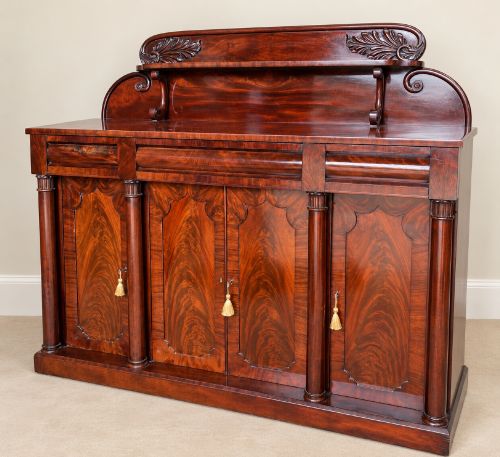
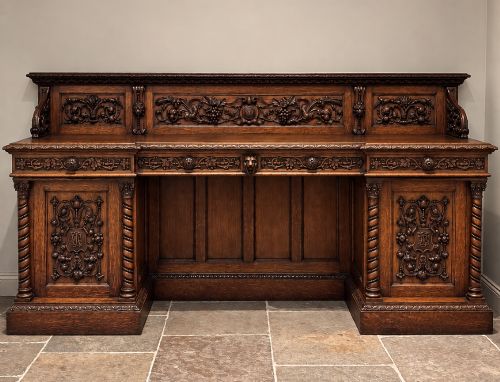
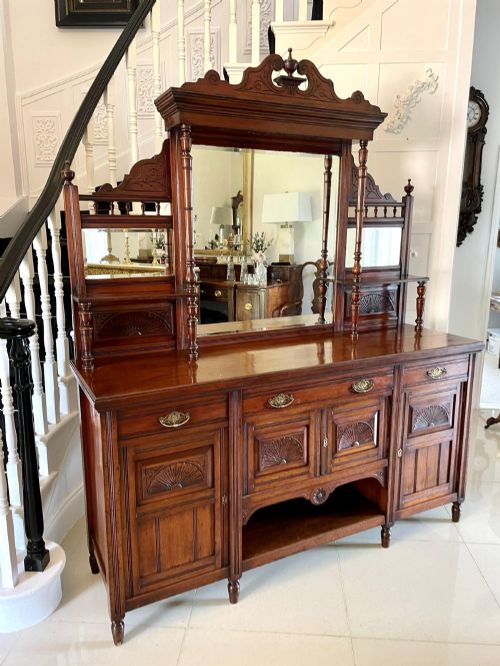
The specimens seen here span the Victorian era alongside related nineteenth-century revivals, showing heavy carved oak, flame mahogany, and burr walnut. Many feature mirror backs, marble tops, or multi-tiered shelving configurations.
Buyers encounter variations ranging from large four-door mahogany carcasses to narrow Gothic Revival oak pieces and simpler pine kitchen server bases.
How They Were Made
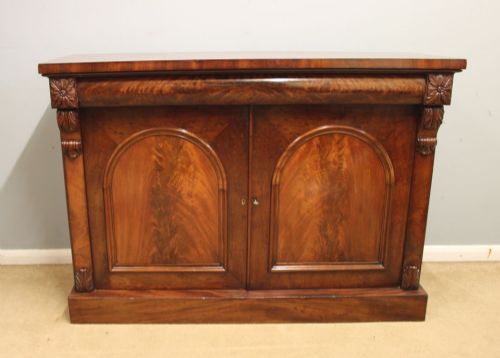
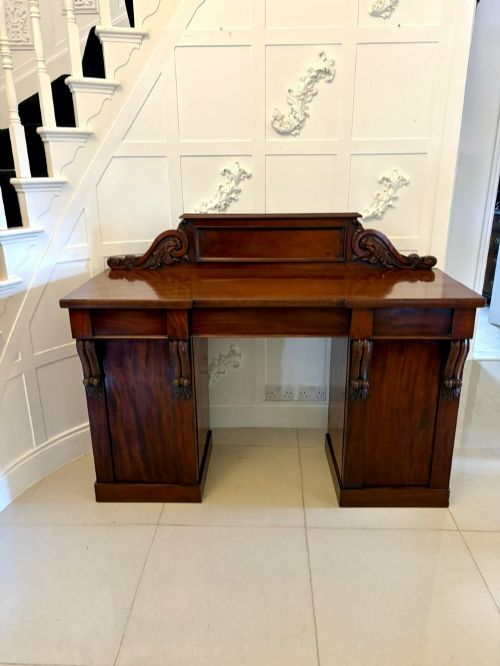
Cabinet makers utilised dense hardwoods like mahogany, oak, walnut, and pollard oak, often highlighting figured grain patterns and flame veneers. Secondary timbers included pine for internal construction and drawer linings.
Surface ornamentation relied on deep hand carving, marquetry inlay, and brass hardware, occasionally paired with inset marble tops or glazed grill doors. Mirror backs were frequently integrated into the upper superstructure of formal reception pieces.
Listings feature woods including oak, mahogany, walnut, pine, brass, glass, and marble across Victorian and nineteenth-century periods.
What Varies in Quality
The hierarchy of quality rests upon the selection of timber, such as highly figured flame mahogany or burr walnut against standard utility softwoods. Cabinetmaking standards show in the depth of hand carving and the precision of veneer matching.
Attribution to documented makers like Hewetsons, James Schoolbred, or Oetzmann elevates a piece, as does the integration of substantial original elements like marble slabs and mirrored superstructures.
Hewetsons London·Oetzmann And Co
The Victorian Sideboard Server Glossary
- Chiffonier
- A compact sideboard or cabinet featuring a raised shelf or mirror back above enclosed lower cupboards. These pieces became common in Victorian dining and drawing rooms.
- Credenza
- A low-standing sideboard or buffet, frequently ornamented with marquetry, inlay, or mirrored back panels. The form developed from Italian prototypes into a staple of nineteenth-century formal interiors.
- Dumbwaiter
- A multi-tiered serving table or sideboard utilised for holding dishes without servants present. Examples feature rotating or stacked wooden trays supported by turned columns.
- Marquetry
- The art of forming decorative patterns using fitted pieces of coloured wood veneer. This technique adorned high-status cabinet doors and drawer fronts.
- Pollard oak
- Timber taken from trees that were pollarded, creating burr and knot formations with highly decorative grain patterns. Cabinetmakers prized this wood for luxury Victorian server doors.
Victorian Sideboard Server: Frequently Asked Questions
Where did these servers stand?
These servers stood against dining room walls to hold dishes, glassware, and cutlery during meals. They acted as auxiliary workspace for household staff.
In smaller homes, simpler chiffonier versions occupied sitting rooms for general storage and display.
How do I clean polished wood?
Maintain polished mahogany and oak surfaces using traditional beeswax and a soft lint-free cloth. Avoid modern silicone sprays that build up residue over time.
Protect marble tops from acidic spills by wiping them promptly with a damp cloth.
Were mirror backs original?
Many Victorian sideboards incorporated mirror backs framed in carved wood to reflect light and display glassware. These superstructures were built as an integral part of the cabinet design.
Simpler server bases and chiffoniers omitted mirrors in favour of raised wooden galleries or plain panelled backs.
How do I date a sideboard?
Dating relies on stylistic shifts between heavy Gothic Revival carving, mid-century flame mahogany veneers, and late-century marquetry. Construction marks, secondary pine linings, and maker stamps help narrow the decade.
Documentation or inscribed dates on pieces like oak server bases provide exact markers.