
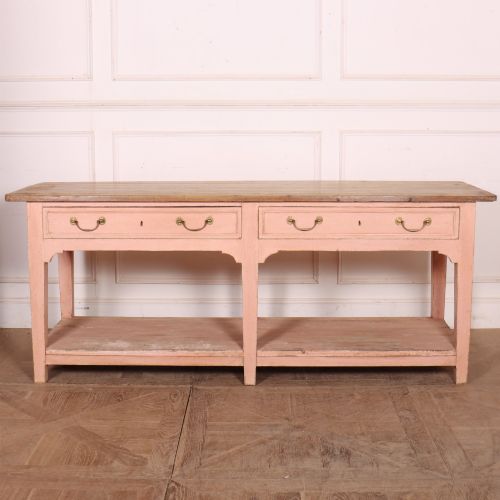
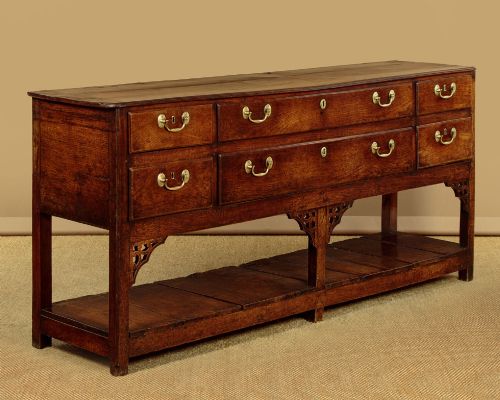
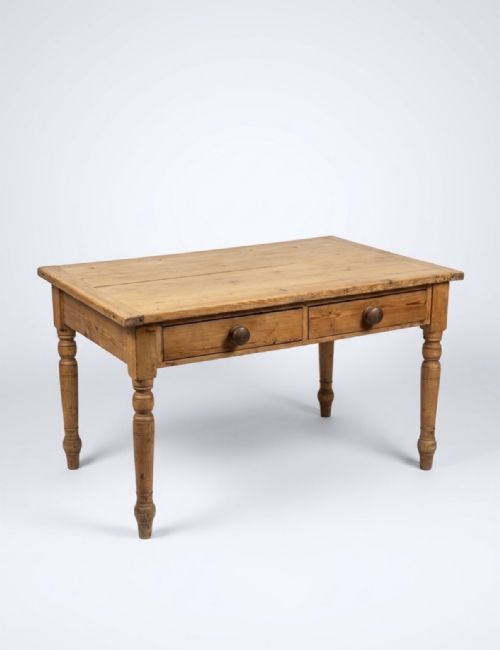
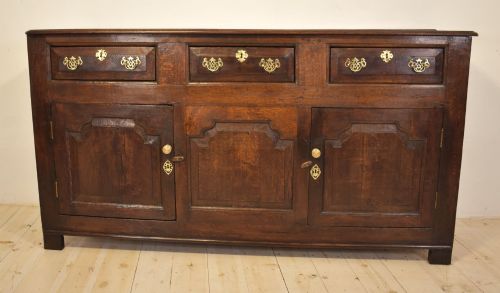
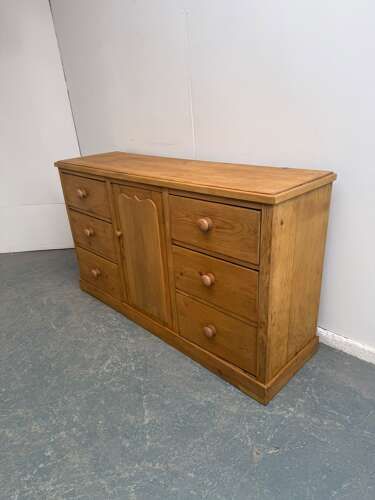
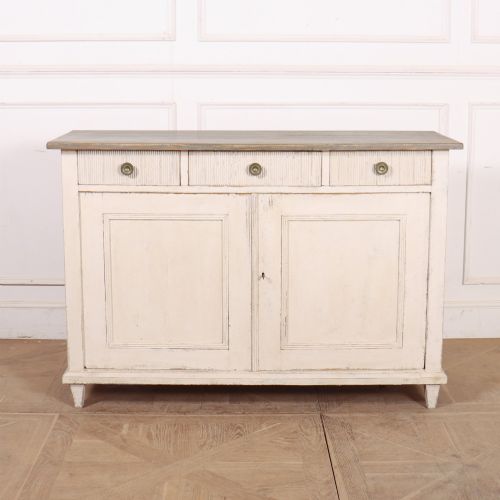
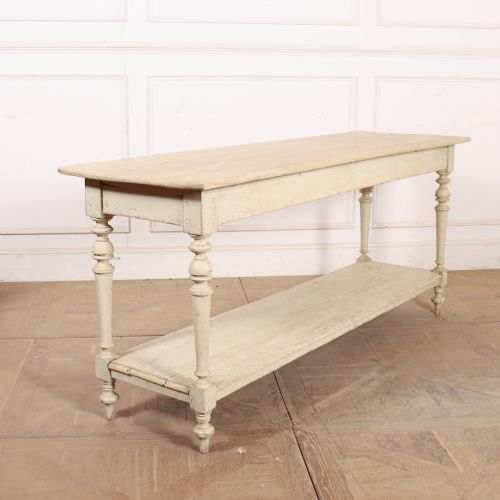
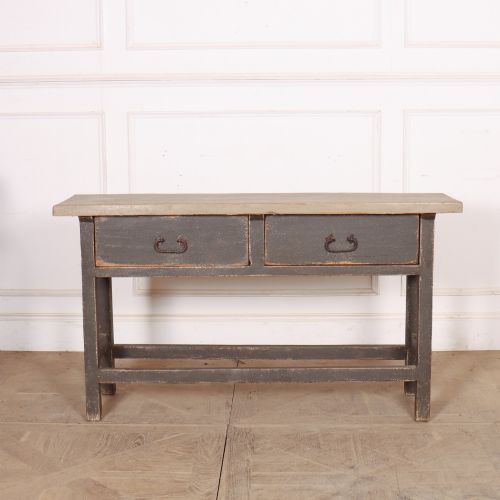
Rustic Wooden Server
A rustic wooden server brings honest utility and time-worn character to a dining room or hallway.
Rustic Wooden Server
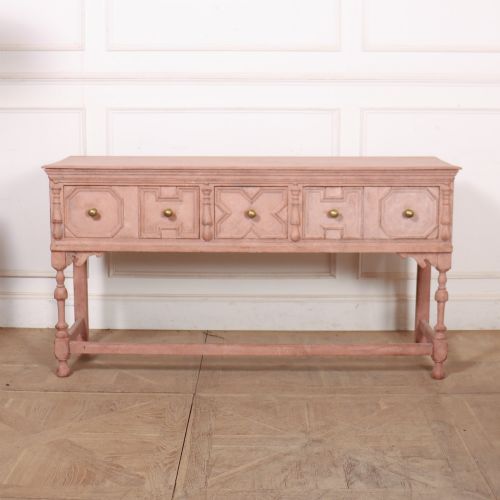
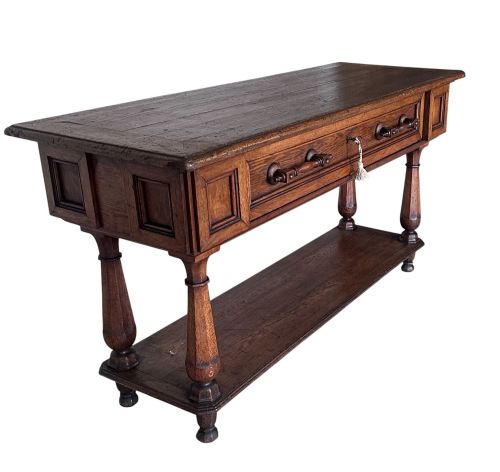
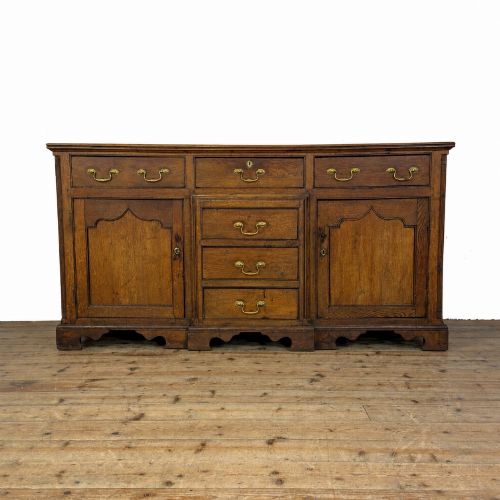
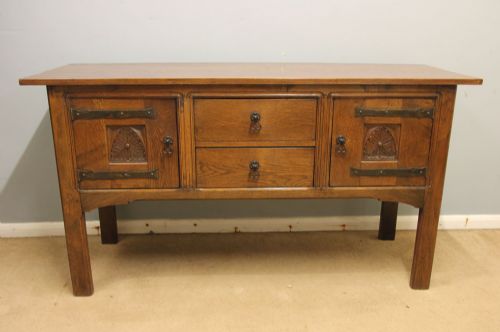
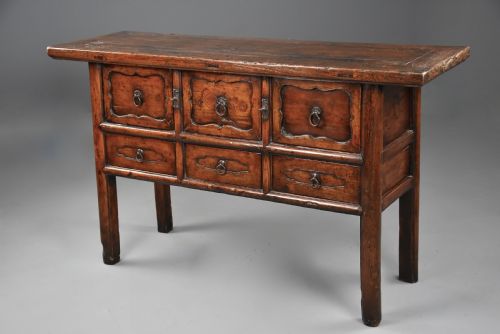
A rustic wooden server encompasses practical forms such as dresser bases, serving tables, sideboards, and console tables designed for food preparation and storage. Buyers seeking a rustic wooden server typically encounter sturdy oak, pine, and elm pieces originating from English, French, and Welsh country traditions.
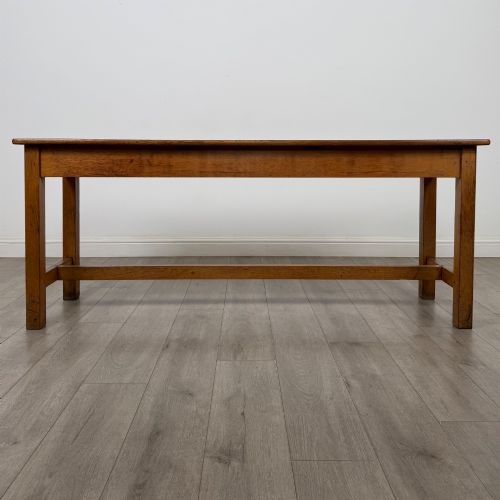
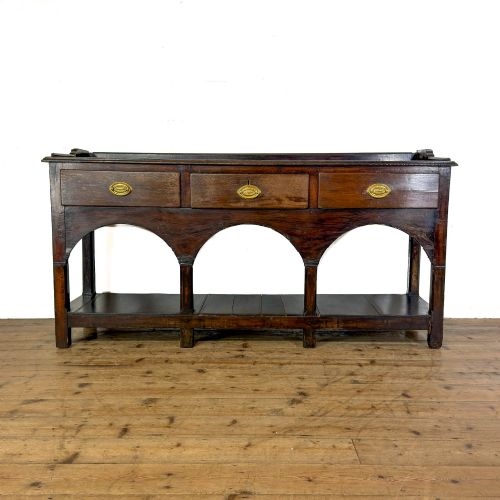
These items range from straightforward kitchen work tables and dairy prep surfaces to formal potboard dresser bases with drawers and lower shelves. Pieces span several centuries, with particular emphasis on 18th-century and 19th-century examples displaying natural wood grains or aged painted finishes.
Construction and materials
Cabinetmakers and joiners constructed these tables primarily using solid timbers like oak, pine, fruitwood, elm, and sycamore, often combining secondary woods for internal drawer components. Construction relied on traditional pegged joinery and hand-planed boards to build durable frames capable of enduring heavy daily use.
Surfaces frequently show the honest marks of labour, whether left as waxed bare timber, bleached by time, or coated in original paint. Additional hardware such as brass handles, iron fittings, and lower potboards provide structural stability and utilitarian function.
Some dairy prep tables still carry the faint, ghostly scent of spilled cream from centuries past.
Judging quality and character
Quality rests upon the integrity of the timber, the depth of the patination, and whether the piece retains its original structural elements and surface finish. Superior examples display honest signs of age integrated harmoniously into the wood, whereas heavily altered pieces lose their historical coherence.
Proportion and regional carpentry traits also dictate value, with untouched country workshops exhibiting distinct local joinery styles. The presence of original painted finishes or dry waxed surfaces elevates an item above standard stripped or heavily restored counterparts.
The Rustic Wooden Server Glossary
- Potboard dresser base
- A low sideboard or serving table featuring an open lower shelf traditionally used for storing pots and pans. This lower tier sits just above the floor, supported by sturdy legs.
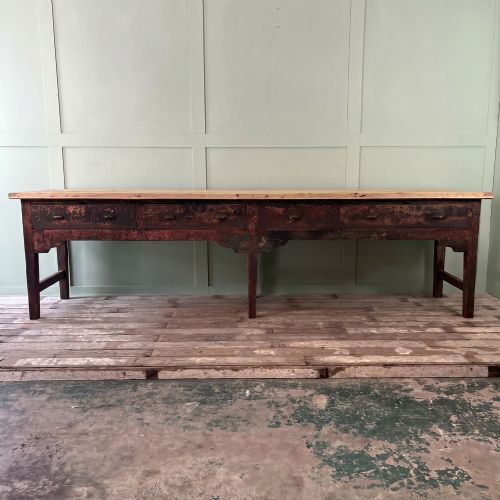
- Drapers table
- A long, narrow table historically used in textile shops for measuring cloth, often adapted as a serving table or console. These tables typically provide generous surface length.
- Patina
- The deep, lustrous surface sheen developed on wood through decades of handling, polishing, and exposure to light. It serves as a primary indicator of genuine age.
- Dairy table
- A utilitarian work table, frequently fashioned from scrubbed pine or sycamore, used in food production. These pieces often feature unpretentious lines and robust construction.
- Pine
- A soft timber widely utilised in country furniture for its accessibility and workability. It accepts painted finishes and wax treatments readily.
Rustic Wooden Server: Frequently Asked Questions
What is a rustic wooden server used for?
These pieces serve as practical sideboards, serving stations, or console tables in dining rooms, kitchens, and hallways. Their sturdy tops and drawer storage accommodate tableware, linens, and everyday household items.
Historically deployed for food preparation and serving in country houses and farmhouses, they now function as decorative anchor furniture. Their utilitarian origins make them suitable for modern spaces requiring surface space and character.
How do I care for antique pine furniture?
Maintain waxed pine surfaces by applying a traditional beeswax polish sparingly and buffing with a soft cloth. Avoid placing these tables near direct heat sources or strong sunlight to prevent the timber from drying out.
Keep moisture off the bare wood by using coasters and placemats during daily use. Gentle dusting with a dry cloth preserves the aged patina without stripping the historic finish.
How can I tell an 18th-century base apart from a Victorian one?
Eighteenth-century pieces typically display hand-sawn timber marks, pegged joinery, and deeper patination resulting from extensive use. Drawer construction often utilises hand-cut dovetails that differ in regularity from later machine-made joints.
Victorian and later 19th-century examples frequently employ pitch pine or standardised fixings while retaining traditional country forms. Examining the interior drawer linings and underside construction clarifies the manufacturing era.
Are painted finishes on these servers original?
Original painted finishes show natural wear, crackling, and multiple underlying layers that correspond to the age of the wood beneath. These surface coats often bear minor scuffs and marks accumulated through decades of domestic service.
Repainted surfaces usually appear uniform and lack the subtle integration into the timber found in genuine antique paintwork. Close inspection under natural light helps determine whether the pigment belongs to the period of manufacture.