




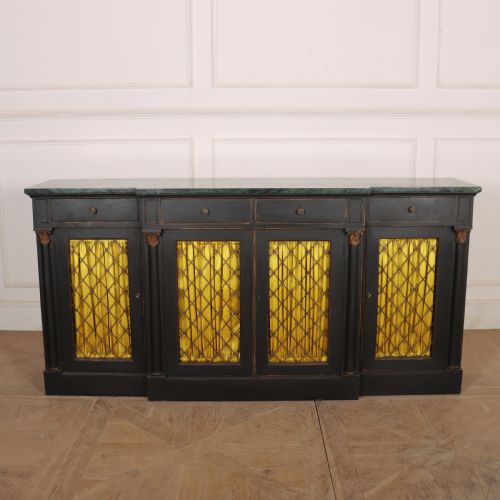


Green Painted Dresser Base
A green painted dresser base brings robust utility and characterful painted timber to a room, offering generous storage through cupboards and drawers.
Green Painted Dresser Base
When you search for a green painted dresser base, you encounter substantial utilitarian furniture originating predominantly from the nineteenth and eighteenth centuries. These pieces function as kitchen cupboards, sideboards, buffets, and serving tables, reflecting traditional domestic spaces.
The versions most commonly met on this page include large English potboard serving tables, country house pieces, and regional examples such as Scottish dairy dressers and console tables. Their forms range from breakfront designs to shallow two-door formats.
How they were made
Construction relies primarily on sturdy timber such as pine and oak, built to withstand daily use in domestic and farmhouse settings. Joinery techniques are straightforward and robust, prioritising durability over delicate ornamentation.
Surfaces receive layers of paint, often in original or historically applied green finishes, accompanied by brass or metal hardware. This combination of painted timber and utilitarian metalwork defines the physical presence of each piece.
Green Painted Dresser Base Retail Price Guide 2026
Typical asking prices for green painted dresser base among the pieces listed under this phrase on Sellingantiques today, from the lower quarter to the upper quarter. They describe what is for sale here now, not the wider market.
Listings span the eighteenth and nineteenth centuries, featuring materials such as pine, oak, painted timber, and brass.
What varies in quality
Quality rests in the integrity of the timber frame and the character of the painted surface, where authentic age shows through natural wear and patination. Pieces that retain their original proportions and unaltered structure command greater attention.
Proportion and scale also distinguish the range, from smaller shallow formats to large country house serving tables and breakfront cupboards. The harmonious integration of drawers, doors, and open potboards marks the distinction between standard and superior examples.
The Green Painted Dresser Base Glossary
- Potboard
- A lower open shelf on a dresser base, traditionally used for storing pots and heavy kitchenware. This feature distinguishes many serving tables and large country pieces.
- Breakfront
- A piece of furniture whose central section projects forward from the flanking outer sections. This architectural arrangement adds depth and visual interest to larger base units.
- Housekeeper cupboard
- A tall, capacious storage cabinet used in large domestic settings for linens and provisions. These substantial pieces share construction methods with heavy dresser bases.
- Patina
- The surface sheen and softening of colour developed through decades of handling, cleaning, and ageing. It provides a reliable visual indicator of genuine period use.
Green Painted Dresser Base: Frequently Asked Questions
What is a green painted dresser base?
A green painted dresser base is a heavy storage unit, typically featuring drawers and cupboards, finished in a green paint surface. These pieces originate from domestic and rural settings spanning the eighteenth and nineteenth centuries.
They serve as practical sideboards, serving tables, and kitchen cupboards, combining utilitarian storage with traditional painted timber aesthetics.
Where were these dresser bases used?
These pieces traditionally served in country houses, farmhouses, dairies, and domestic kitchens. Their robust construction suited them for food preparation, storage, and serving tasks.
Today, they transition easily into modern living spaces, serving as sideboards in dining rooms or console tables in hallways.
How do I date a dresser base?
Dating relies on examining construction methods, timber types such as pine and oak, and the nature of the painted finish. Eighteenth-century examples often display simpler, heavier joinery compared to nineteenth-century variants.
Hardware details, including brass and metal fittings, also offer clues to the period of manufacture or subsequent adaptation.
How do I care for painted timber?
Maintain painted furniture by keeping it away from direct heat sources and strong sunlight, which can dry out the wood and fade pigments. Dust gently with a dry or slightly damp cloth.
Avoid harsh chemical cleaners that might compromise the historic paint surface or underlying timber.