
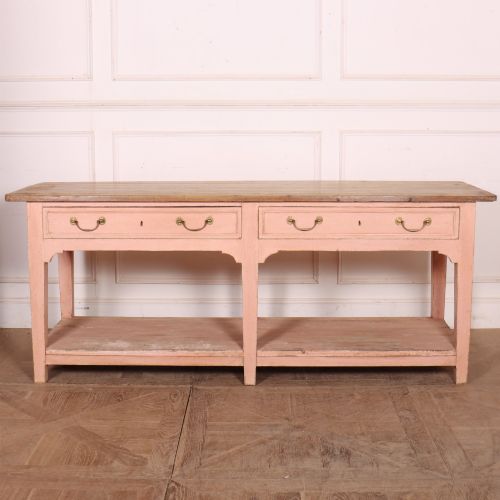
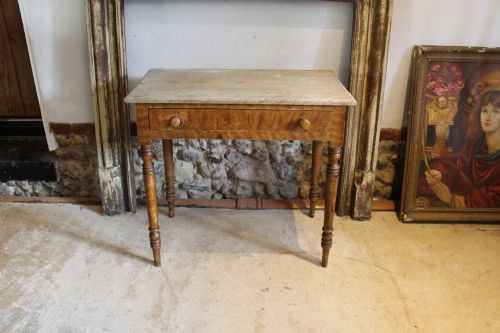
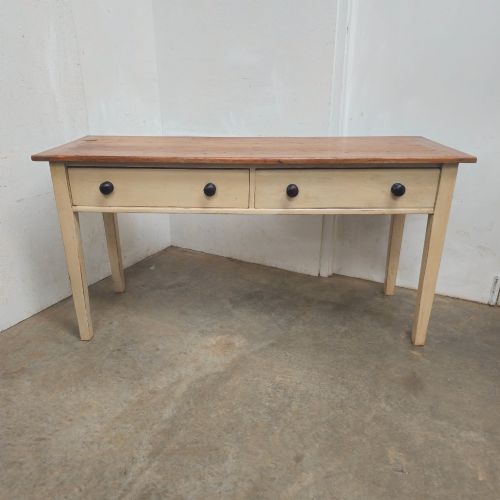
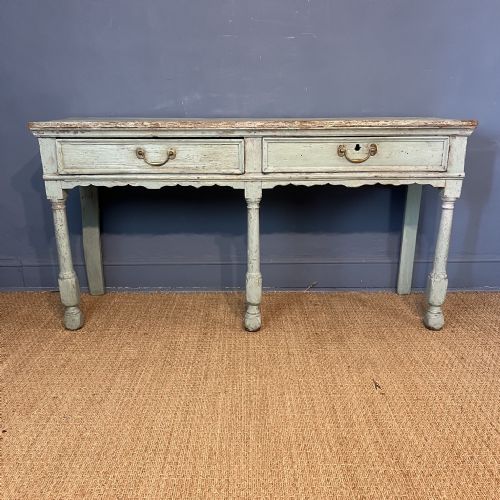
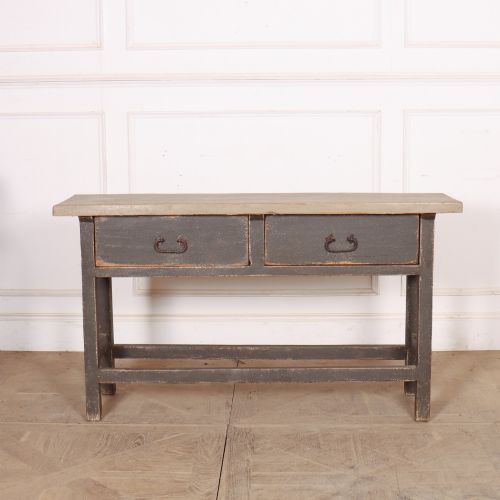
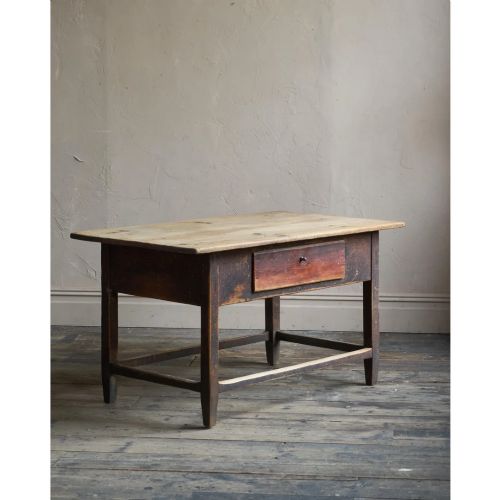
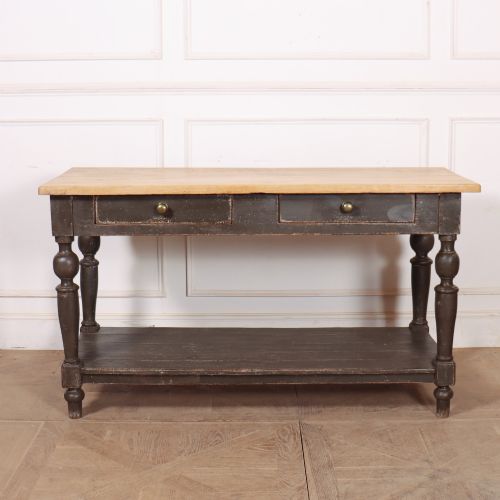
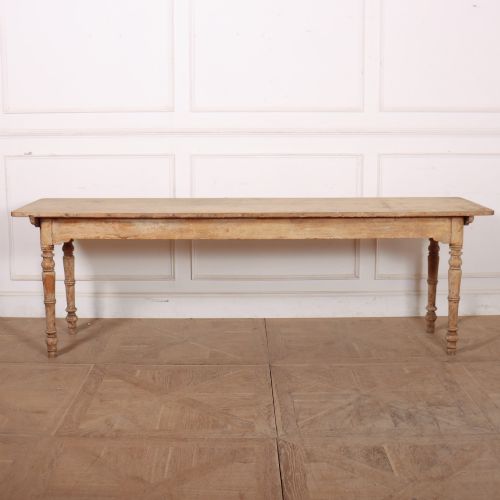



Painted Pine Console Table
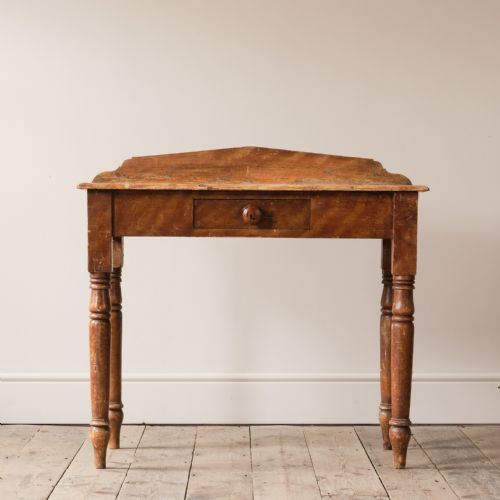
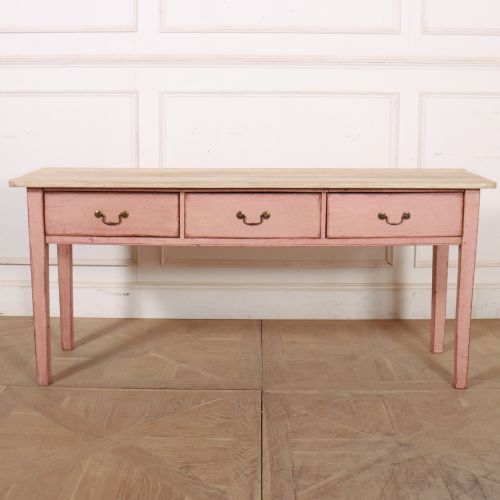
A painted pine console table brings honest rustic charm and practical utility to a hallway or reception room.
What these painted pine console tables are
The search phrase painted pine console table brings up sturdy wooden items originating from English and Continental workshops. These pieces span the eighteenth, nineteenth and early twentieth centuries, reflecting diverse domestic and commercial uses.
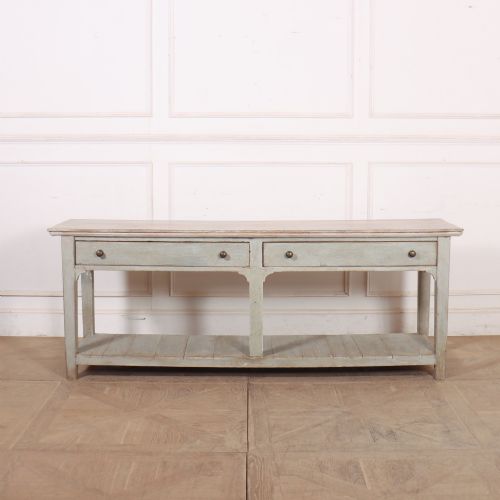
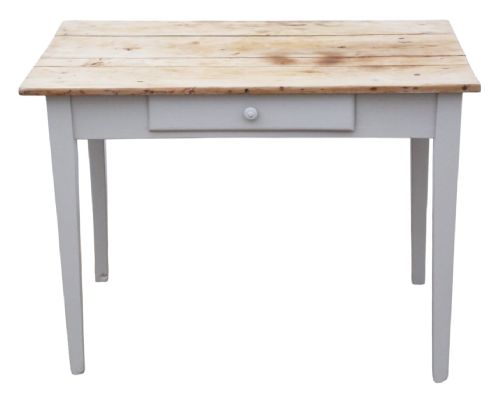
You are most likely to encounter nineteenth century examples on this page, alongside earlier eighteenth century dresser bases and Victorian variations. Formats range from narrow hallway stands and side tables to broader drapers and dairy tables.
English country and French country styles dominate the selection, often pairing a soft painted finish with natural wooden tops. Occasional neoclassical touches appear, such as carved details or marble inserts set into the pine framework.
How they were made
Carpenters constructed these tables primarily from solid pine timber, utilising traditional joinery methods suited to utilitarian furniture. Frameworks occasionally incorporated secondary hardwoods such as oak for structural stability.
Surfaces received layers of protective and decorative paint, sometimes applied over successive generations of use. Hardware elements like brass fittings or metal accents appear on select pieces to secure joints or drawers.
Retail Price Guide 2026
Typical UK retail prices for painted pine console table, calculated from the Sellingantiques database of over a million retail prices indexed since 2003. This retail price guide relies exclusively on Sellingantiques data; no external sources or auction records are used, so the figures do not describe the wider market.
Listings feature pine, oak, marble, brass and metal elements combined across various nineteenth century and eighteenth century forms.
What varies in quality
Quality rests upon the integrity of the pine construction and the preservation of the original painted surface. Finer examples display harmonious proportions and balanced integration of decorative elements like marble tops or carved detailing.
The character of the paint finish dictates much of the visual appeal, distinguishing intentional patination from later overpainting. Superior pieces maintain an authentic integration between the wooden substrate and its historical coat.
The Painted Pine Console Table Glossary
- Console table
- A narrow table designed to stand flat against a wall, frequently used in hallways or reception rooms. These pieces often feature shallow depths to fit compact spaces.
- Draper table
- A long utility table traditionally used in textile shops for folding cloth, characterised by generous proportions and sturdy pine construction. They provide ample surface area for display or preparation.
- Dairy table
- A functional work table historically utilised in agricultural dairies, typically built from robust pine to withstand heavy daily use. Their clean lines suit contemporary domestic interiors.
- Dresser base
- The lower section of a kitchen or dining room storage unit, featuring cupboards or drawers beneath a solid wooden top. These items offer substantial storage capacity.
- Patina
- The surface sheen and colour variation developed by wood and paint over decades of handling and exposure. This gradual ageing process enhances the visual depth of the furniture.
Frequently Asked Questions
Where should I place a console table?
A narrow console table fits naturally in a hallway, landing or living room where floor space is limited. Its shallow profile allows it to sit against a wall without obstructing movement.
In dining spaces or kitchens, similar utility tables function well as serving surfaces or makeshift preparation areas. Their understated design complements both traditional and modern interior schemes.
How do I care for painted pine furniture?
Dust surfaces regularly with a soft, dry cloth to prevent the accumulation of grit on the painted finish. Avoid harsh chemical cleaners that might degrade historical paint layers.
Keep wooden furniture away from direct heat sources and strong sunlight to minimise the risk of warping or fading. Applying a microcrystalline wax can help protect exposed wooden tops.
What is the difference between English and French country styles?
English country pieces tend to emphasise utilitarian simplicity and robust pine construction, reflecting rural domestic traditions. Their forms remain straightforward and functional.
French country examples frequently incorporate softer decorative curves, lighter painted tones or occasional neoclassical influences. These aesthetic details lend a slightly more formal appearance to the rustic pine base.
How can I tell an older table from a newer one?
Examine the construction methods, tool marks and timber characteristics visible on the underside and interior joints. Hand-cut joinery and older saw marks typically indicate nineteenth century or earlier production.
The nature of the paint layer also provides clues, as genuine historical pieces show gradual wear patterns and multiple underlying coats. Modern reproductions often lack this authentic depth of surface history.