



Victorian Ships Clock
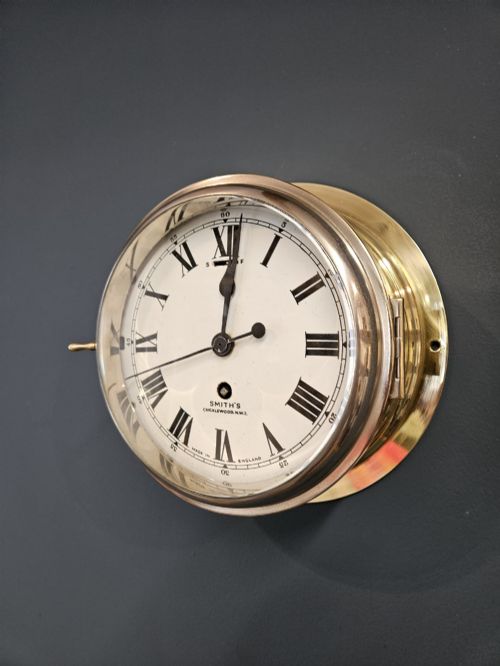
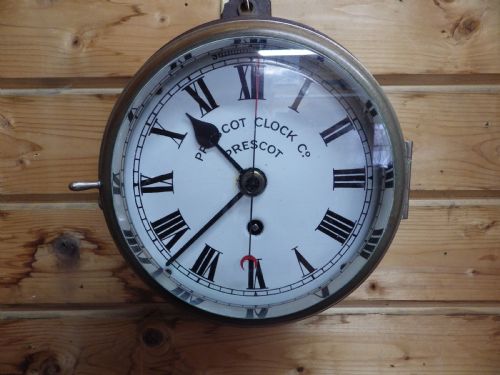
These Victorian ships clock examples bring heavy maritime brass and precise movements straight from the bulkhead into your study.
Victorian Ships Clock
A Victorian ships clock is a dependable marine timekeeper designed to maintain accuracy aboard rolling vessels or within maritime homes.
You are most likely to meet sturdy brass bulkhead wall clocks and heavy mantel designs when browsing these listings.
The pieces on this page span the nineteenth century, including Edwardian examples, taking the form of wall clocks, mantel clocks, and desk clocks.
How they were made
Maker workshops built these instruments using heavy brass cases, glass covers, and enamel or silvered metal dials.
Movements often utilise chain fusee mechanisms to equalise the pull of the mainspring and ensure steady timekeeping.
Casing materials also include mahogany, ebonised wood, marble, and gilded metal alongside the dominant brass.
Victorian Ships Clock Retail Price Guide 2026
Typical asking prices for victorian ships clock among the pieces listed under this phrase on Sellingantiques today, from the lower quarter to the upper quarter. They describe what is for sale here now, not the wider market.
What varies in quality
Quality rests upon the sophistication of the internal movement, with fusee and chain mechanisms marking a higher grade of horology than standard spring movements.
The crispness of the dial engraving and the solidity of the heavy brass casting distinguish superior pieces from standard workshop output.
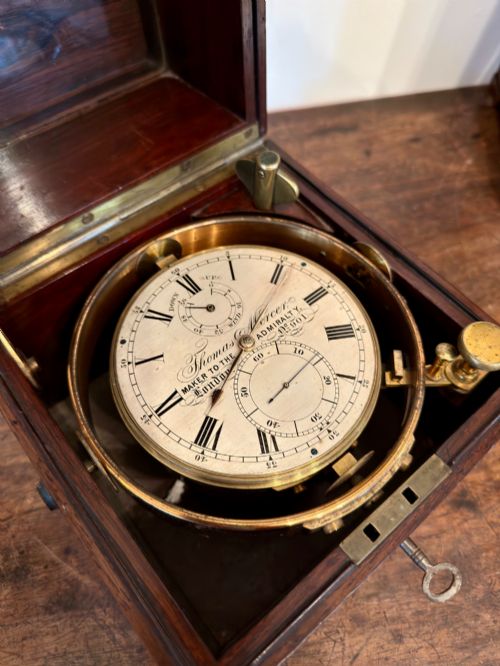
Mercer of London·Prescot Clock Co Prescot·Benson·Smiths of Enfield·Guilmet
The Victorian Ships Clock Glossary
- Fusee
- A conical pulley used with a cord or chain to maintain even power as the mainspring unwinds. This mechanical addition ensures the clock keeps consistent time.
- Bulkhead clock
- A timepiece designed to mount directly onto the interior wall of a ship cabin. These items feature secure latches and heavy brass bezels to withstand maritime movement.
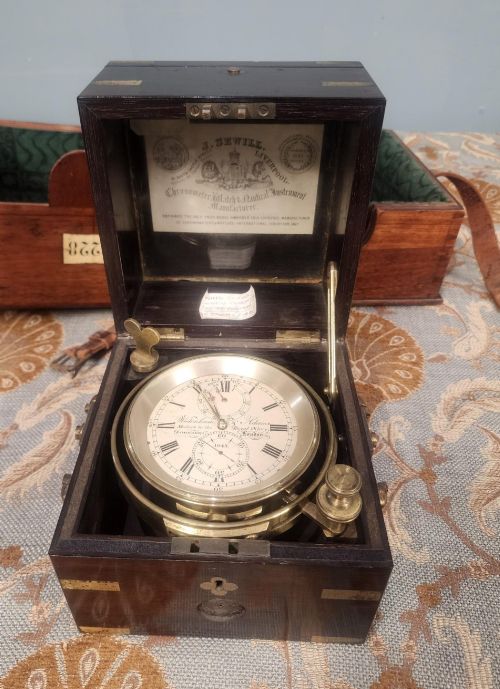
- Marine chronometer
- A highly accurate portable timekeeper used for navigation at sea. They sit in gimbaled mountings to remain level regardless of the vessel roll.
- Silvered metal
- A brass or copper dial treated with a silver compound to create a matte white metallic finish. This surface takes black enamel lettering cleanly for clear legibility.
Victorian Ships Clock: Frequently Asked Questions
How do I mount a bulkhead clock?
Bulkhead clocks secure directly to walls through pre-drilled holes in the heavy brass flange surrounding the case. Ensure you anchor the fixings firmly into solid wood or masonry to support the considerable weight of the brass and glass.
Keep the clock away from damp exterior walls to protect the internal brass movement and delicate enamel dial from moisture damage.
What is a fusee movement?
A fusee movement uses a conical pulley connected to the mainspring by a fine chain to regulate power delivery. As the spring loses tension, the chain climbs to a wider part of the cone to maintain consistent torque.
This intricate mechanical arrangement represents a mark of traditional British horological quality.
How do I wind an antique ships clock?
Insert the matching winding key into the dial aperture and turn it gently in the correct direction until you feel resistance. Do not overwind the mechanism, as this can strain the mainspring and chain.
Allow the pendulum or balance wheel to settle into an even beat after setting the time.
Where were these clocks used?
These timepieces served aboard merchant vessels, passenger liners like the SS Ethiopia, and naval ships to track Greenwich Mean Time and coordinate navigation. Owners also placed them in maritime homes and offices on desks and mantelpieces.
The robust brass construction protected the delicate gears from salt spray and humidity.