


Antique Marine Clock
An antique marine clock is a heavy-duty maritime timekeeper built for shipboard life, offering robust precision and nautical character for the home.
Antique Marine Clock
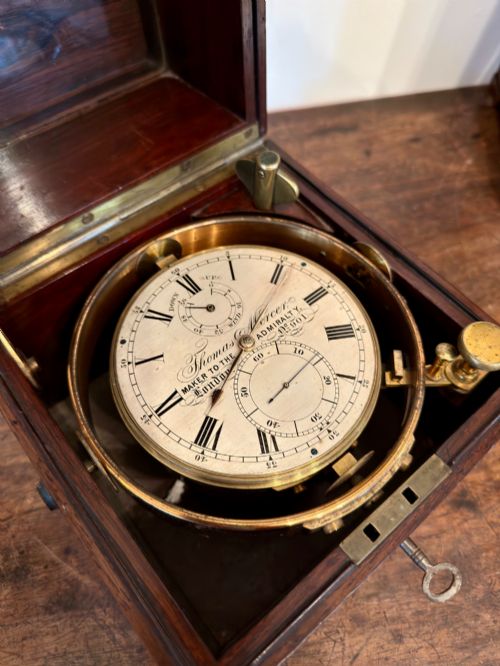
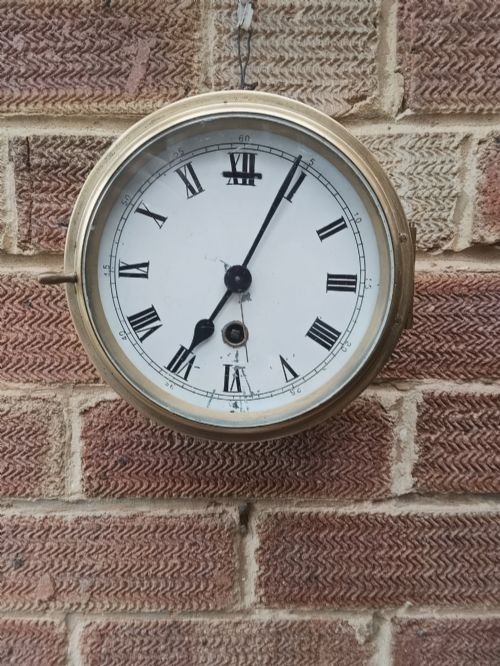
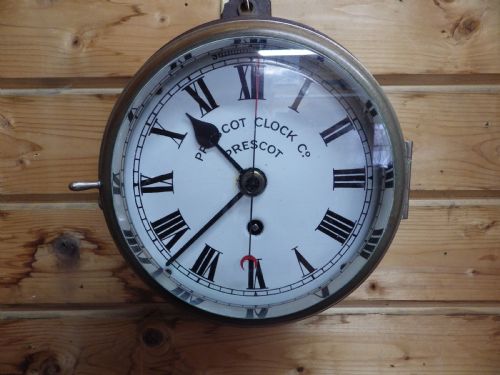
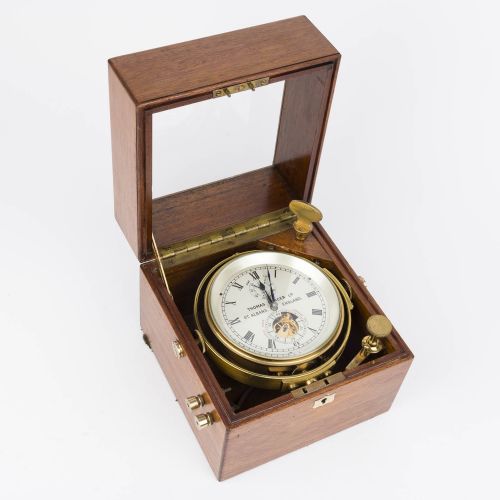
When you search for an antique marine clock, you are looking at timepieces built to endure the motion and dampness of a vessel at sea. These objects range from heavy bulkhead wall clocks designed for ship cabins to precision marine chronometers used for navigation. Victorian and Edwardian examples dominate the selection, alongside pieces from the mid-twentieth century.
You will encounter several distinct forms among these listings, including wall clocks, desk clocks, mantel clocks, and specialised marine chronometers. Many retain their original brass cases and enamel dials, reflecting their working origins on ships and in engine rooms. Some feature chain fusee movements, which maintain steady force as the mainspring unwinds.
The origins of these clocks stretch across the nineteenth and twentieth centuries, taking in maritime and industrial styles. Pieces often bear the marks of makers and retailers from London, Liverpool, and other maritime centres. Whether intended for a ship's bulkhead or a captain's desk, each piece carries the functional design of nautical engineering.
How they were made
Makers housed these movements in robust cases of brass, mahogany, and wood, designed to protect the delicate mechanics from salt air and heavy knocks. Heavy glass bezels sealed the dials, keeping moisture away from paper and enamel faces. Chrome and silvered metal also appear in later industrial pieces.
Inside, intricate steel and brass gear trains drove the hands, often regulated by fusee movements and high-precision escapements. Enamel dials provided clear legibility in dim cabins, fired to withstand decades of cleaning. Every component was engineered for reliable timekeeping under constant motion.
Materials recorded across the inventory include brass, mahogany, glass, enamel, steel, and silvered metal.
What varies in quality
The sophistication of the movement largely dictates the standing of a piece, separating standard bulkhead clocks from precision chronometers with complex fusee mechanisms. Maker attribution also plays a role, with signed works from established chronometer makers commanding greater attention. The integrity of the original case materials and dial finish further distinguishes finer examples.
Proportion and execution reveal the workshop's standards, from the weight of the cast brass bezel to the crispness of the lettering on the enamel dial. Pieces retaining their original gimbals or fitted wooden travel boxes show a higher degree of completeness. Minor variations in mounting hardware reflect whether a clock served a grand saloon or a utilitarian engine room.
Mercer of London·Thomas Mercer·Litherland Davies Of Liverpool·Prescot Clock Co·Kelvin White Hutton London·James McCabe·Gay Vicarino·Pascall Atkey·Japy Frères
The Antique Marine Clock Glossary
- Fusee
- A conical pulley used in mechanical clocks to equalize the power of the mainspring as it unwinds. This mechanism ensures consistent torque and therefore more accurate timekeeping throughout the power reserve.
- Chronometer
- A highly accurate marine timekeeper used for navigation at sea. These instruments are typically housed in gimbals to keep the dial level despite the roll of a ship.
- Bulkhead
- A vertical partition dividing the hull or rooms of a ship. Bulkhead clocks are built to mount directly onto these structural walls.
- Gimbal
- A pivoted support ring that allows a chronometer or compass to remain horizontal regardless of the vessel's motion. This suspension prevents tilting from affecting the delicate balance wheel.
- Bezel
- The metal ring that holds the glass face of a clock in place over the dial. In marine timepieces, these are often hinged and screwed down tightly to seal against moisture.
Antique Marine Clock: Frequently Asked Questions
What is a marine chronometer?
A marine chronometer is an ultra-precise timepiece used historically for calculating longitude at sea.
Unlike standard clocks, they are mounted on gimbals to stay level and maintain accuracy despite a ship's movement.
How do I mount a bulkhead clock?
Bulkhead clocks are designed to screw directly onto walls through pre-drilled holes in the brass flange or case.
Ensure you use appropriate fixings for your wall type, as these brass and glass pieces can be surprisingly heavy.
What is a fusee movement?
A fusee movement uses a conical pulley and a chain to regulate the pull of the mainspring.
This clever mechanical device ensures the clock receives even power as the spring runs down, improving accuracy.
How do I wind a marine clock?
Most antique marine clocks require a matching winding key inserted into the dial face or movement back.
Turn the key gently until you feel resistance, taking care not to overwind the mainspring.
Are these clocks water resistant?
While built for damp marine environments with sealed glass bezels, antique clocks are not waterproof.
Keep them away from high-moisture areas in the home to protect the internal brass and steel components.