



Antique Bulkhead Clock
An antique bulkhead clock brings maritime history straight into a room, offering heavy metal cases and crisp enamel dials designed to withstand heavy seas.
Antique Bulkhead Clock
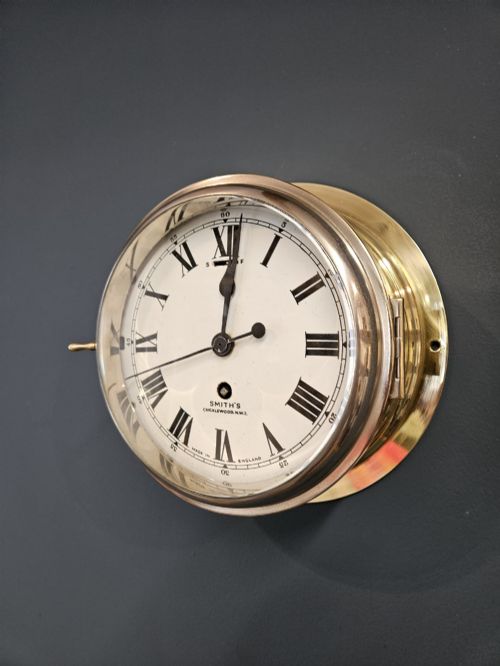
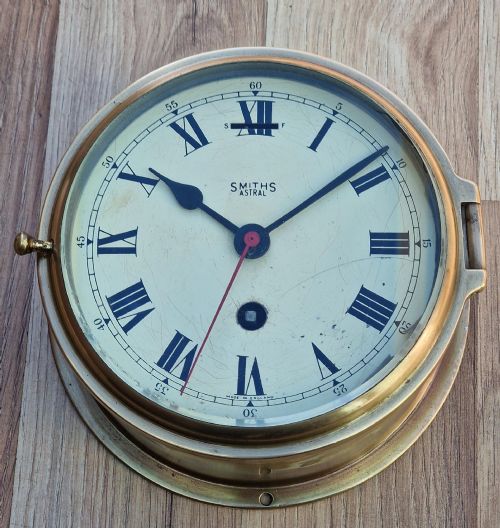
An antique bulkhead clock is a robust timekeeper built originally for the austere confines of a ship's cabin or engine room. When buyers search for this phrase, they encounter heavy metal wall pieces spanning eras from the mid-nineteenth century through the mid-twentieth century.
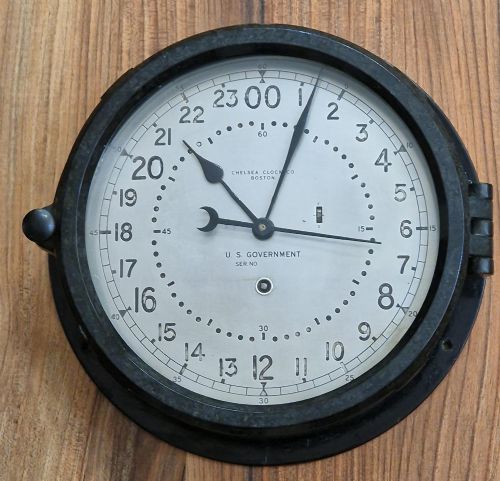
The versions most commonly met on this page include brass marine models and heavy wall clocks rendered in nickel-plated brass, chrome, and steel. These objects often display styles rooted in industrial maritime or Victorian maritime traditions, reflecting utilitarian design.
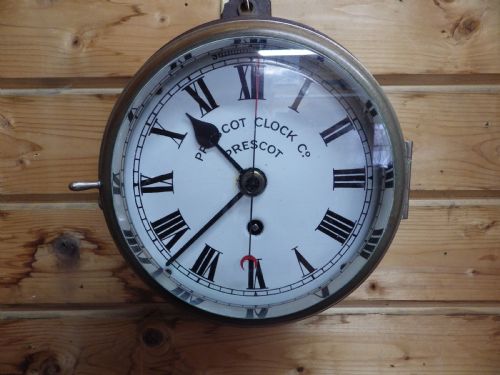
Origins range across British workshops and military supply lines, taking forms such as standard wall clocks, specialised engine room pieces, and matching barometer sets. They serve today as commanding focal points in domestic interiors, valued for their mechanical integrity and industrial presence.
How they were made
Makers constructed these clocks using heavy brass, steel, and nickel-plated brass cases designed to protect delicate movements from moisture and vibration at sea. Heavy glass faces shielded legible enamel dials that could be read quickly in poor light.
The mechanical interiors frequently relied on chain fusee movements, which maintained even tension on the gear train as the mainspring unwound. This specific mechanism ensured accurate timekeeping despite the constant motion of a vessel.
Antique Bulkhead Clock Retail Price Guide 2026
Typical asking prices for bulkhead clock among the pieces listed under this phrase on Sellingantiques today, from the lower quarter to the upper quarter. They describe what is for sale here now, not the wider market.
Engine room clocks often arrived coated in stubborn grease from decades near massive diesel pistons.
What varies in quality
The distinction between ordinary and exceptional examples rests in the complexity and refinement of the internal movement. Clocks featuring chain fusee movements represent a higher tier of horological construction than standard spring-driven alternatives.
Material finishing and maker attribution also dictate worth, with heavy cast brass cases and signed dials from recognised makers carrying greater distinction. The integrity of the original enamel dial and the weight of the metal casing determine the overall gravitas of the piece.
Prescot Clock Co Prescot·Kelvin White Hutton London·Smiths Empire
The Antique Bulkhead Clock Glossary
- Bulkhead
- A vertical partition dividing the hull of a ship into separate compartments. These clocks were screwed directly to these structural walls.
- Fusee
- A conical pulley used in mechanical clocks to equalize the declining power of the mainspring. This device ensures steady force reaches the escapement.
- Enamel dial
- A metal face fused with powdered glass at high heat to create a durable, glossy white surface. Numbers and markers were typically painted in black.
- Chain fusee
- A specialised movement utilising a miniature metal chain instead of a cord to connect the fusee cone to the barrel. It provides superior mechanical longevity.
Antique Bulkhead Clock: Frequently Asked Questions
Where were bulkhead clocks mounted on ships?
These timepieces were secured directly to the interior walls, known as bulkheads, of captains' cabins, chart rooms, and engine rooms. Their sturdy placement ensured they remained stationary despite the rolling of the vessel.
Positioning them in central locations allowed crew members to coordinate navigation schedules and watch rotations efficiently throughout the day and night.
How do fusee movements work?
A fusee movement uses a conical pulley alongside the mainspring barrel to regulate the force delivered to the clock gears. As the spring unwinds and loses tension, the chain moves to a wider part of the cone to maintain steady power.
This clever mechanical design ensures the clock maintains consistent accuracy from the moment it is fully wound until it runs down.
What indicates an engine room variant?
Engine room pieces often display specific utilitarian adaptations designed to cope with intense heat, steam, and vibration below deck. Their casings are frequently reinforced to survive harsher industrial environments.
These variants carry a distinct aesthetic that emphasises raw industrial function over decorative cabin elegance.