



Victorian Religious Wall Art
Victorian religious wall art brings together devotional painting, carved text and sacred imagery from the nineteenth century to anchor a room.
Victorian Religious Wall Art
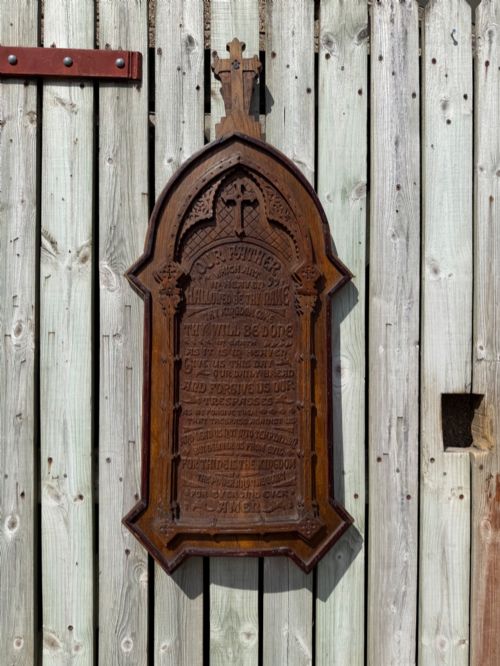
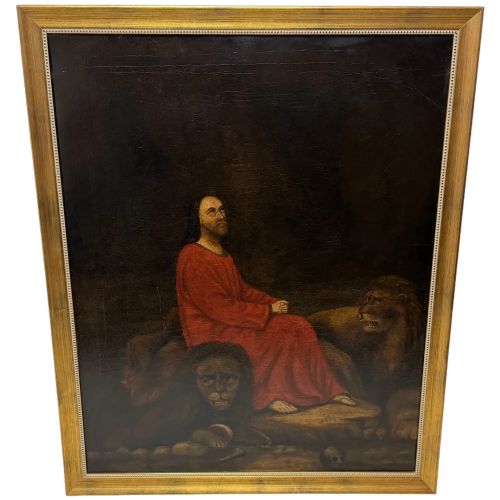
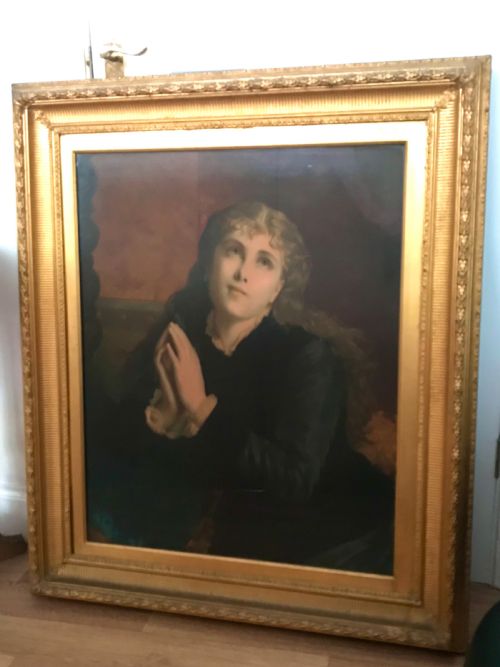
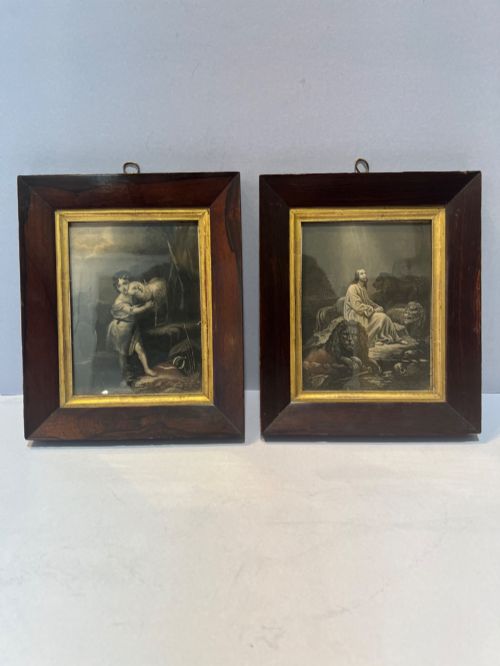
Victorian religious wall art spans devotional oil paintings, framed prints, painted plaques and textual signs created during the nineteenth century. These pieces reflect the deep religious focus of the period, ranging from formal biblical narratives to vernacular household texts.
The selections on this page draw heavily from British and European traditions, incorporating materials and formats used in churches, chapels and domestic interiors alike. Common expressions include framed oleographs, carved wooden signs, tapestries and painted porcelain panels.
Buyers will encounter specific formats such as framed scriptural plaques, shadowboxes, and detailed interpretations of classical religious masterpieces. These items served as focal points for private prayer and public instruction in nineteenth-century spaces.
Materials and Technique
Makers utilised traditional supports such as canvas, pine, oak and paper, frequently framing the finished work behind protective glass. Oil paint, ink, and hand-applied pigments bring colour and depth to portraits of biblical figures and devotional narratives.
Advanced decorative techniques include gilded wood accents, mother of pearl inlay, and delicate silver relief work. Textile pieces incorporate tapestry weaves, while other works employ hand-painted porcelain or engraved printing methods to replicate classical compositions.
Listings feature works spanning the nineteenth century, incorporating oil on canvas, carved wood, paper prints, and glass.
Judging Quality
The standard of execution separates workshop output from individual artistic achievement, particularly in hand-painted oil canvases and detailed portraiture. Masterful handling of light, anatomical precision, and the subtlety of pigment application elevate a piece above standard decorative prints.
The integrity of the original framing, whether carved oak, gilded wood, or deep shadowbox construction, contributes significantly to the visual weight of the artwork. Evidence of skilled handcraft, such as intricate silver relief or careful mother of pearl inlay, distinguishes finer domestic and ecclesiastical commissions.
Eugene Hindle·F R Roffe
The Victorian Religious Wall Art Glossary
- Oleograph
- A reproduction technique using lithography to mimic the texture and appearance of an oil painting. These prints were popular in the nineteenth century for mass-producing devotional imagery.
- Shadowbox
- A deep, glass-fronted framed box designed to hold three-dimensional objects or layered displays. This format protects delicate paper signs and relief work from dust and damage.
- Gothic Revival
- An architectural and decorative style drawing inspiration from medieval design. Pieces in this style often feature pointed arches, vertical emphasis, and ecclesiastical motifs.
- Tapestry
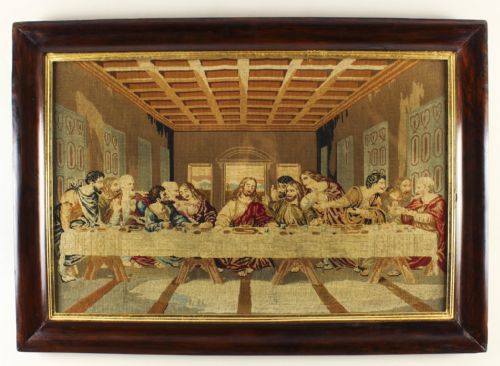
- A form of textile art woven on a loom with coloured threads to form pictorial designs. Flanders examples are particularly noted for traditional weaving techniques applied to religious scenes.
- Porcelain Plaque
- A flat ceramic tablet painted with enamel colours and fired to set the glaze. Makers often used these to render miniature copies of Renaissance religious masterpieces.
Victorian Religious Wall Art: Frequently Asked Questions
How do I hang heavy framed religious oils?
Heavy oil paintings on canvas require robust wall anchors and secure wire or D-ring attachments suited to the weight of the timber frame.
Ensure the hanging point engages directly with wall studs or appropriate masonry fixings to support the piece safely.
Where were tin tabernacle texts displayed?
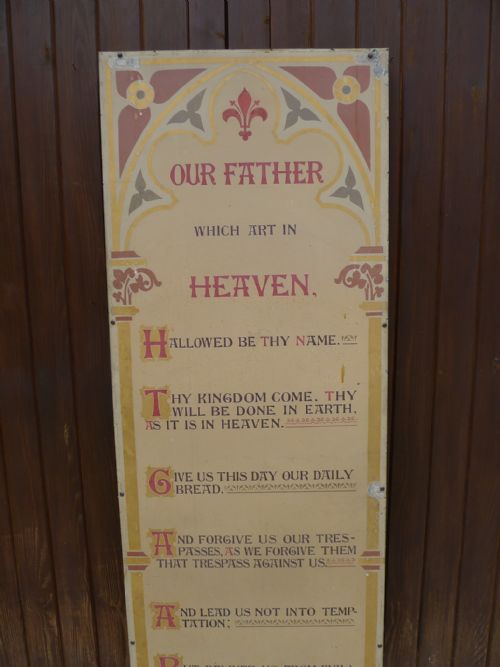
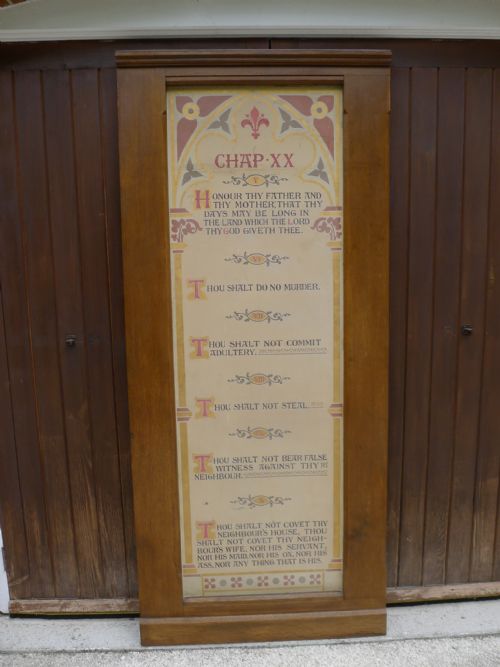
Illuminated religious texts were mounted on the interior walls of corrugated iron mission churches, commonly known as tin tabernacles.
These functional chapels served rural and expanding communities across the nineteenth century, requiring clear scriptural boards for congregations.
How should I clean antique glass and wood?
Dust timber frames gently with a dry, soft cloth, avoiding commercial polishers that can damage aged finishes. Clean the glass surface using a minimal amount of window cleaner applied to a cloth rather than directly to the frame.
Take care to prevent moisture from seeping behind the glazing into paper prints or painted canvases.
What defines Gothic Revival wall art?
Gothic Revival pieces incorporate medieval architectural elements, pointed arches, and solemn theological themes adapted for nineteenth-century interiors. This style reflects a broader cultural return to historicist design principles.
Objects often utilise dark woods, heavy framing, and reverent iconography derived from medieval church decoration.