

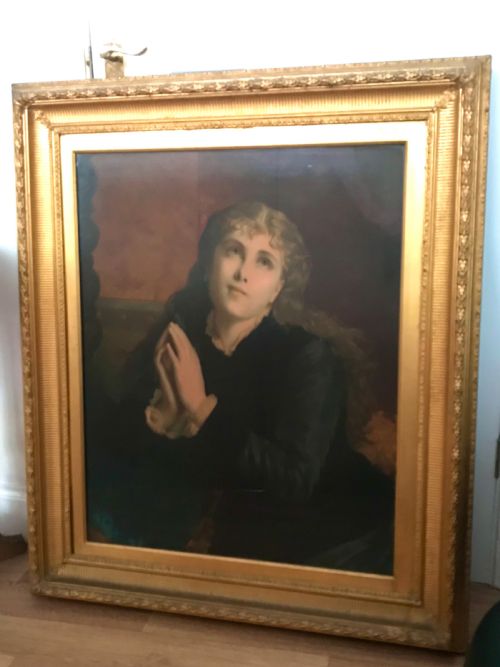
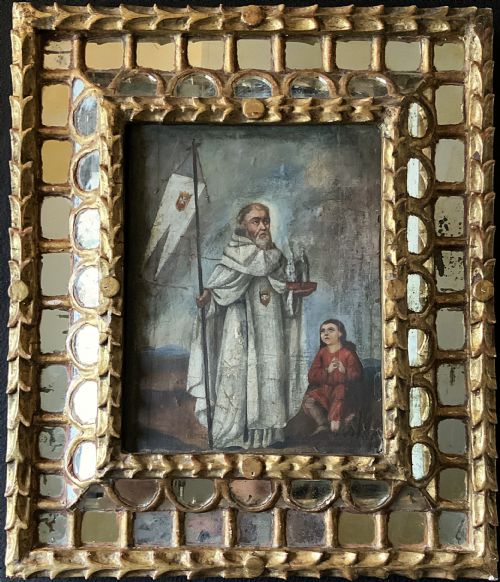


Gold Framed Religious Picture
A gold framed religious picture brings devotional art and centuries-old craftsmanship into a room.
Gold Framed Religious Picture
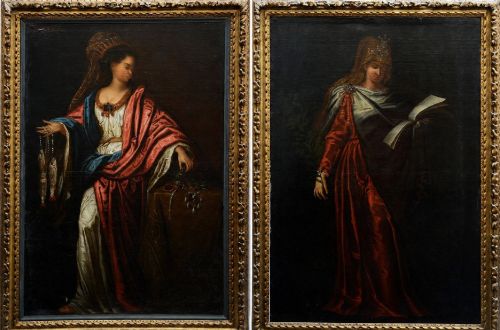
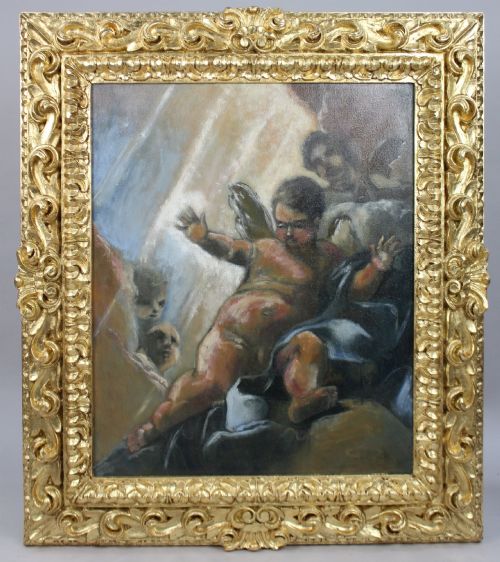
A gold framed religious picture encompasses devotional artworks spanning from the sixteenth century through to the mid-twentieth century, capturing sacred subjects across various European schools. These pieces range from seventeenth-century Spanish Baroque portraits and Italian Renaissance nativity scenes to nineteenth-century oil paintings and oleographs depicting biblical narratives.
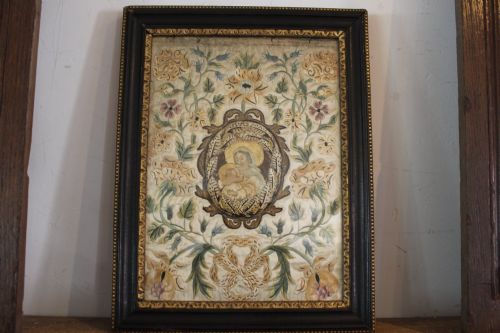
Buyers will encounter oil on canvas paintings, silk embroidery panels, miniatures of saints, and framed classical prints housed within ornate giltwood and gesso frames. Altar frames and cartagloria pieces also appear, alongside works executed on wood panels and paper under glass.
The aesthetic leans heavily towards Renaissance Revival, French Baroque, and Stuart styles, reflecting centuries of pious imagery created for both private devotion and larger ecclesiastical settings.
How they were made
Makers utilised traditional mediums including oil paint applied to canvas or wood panels, alongside delicate silk embroidery and printed paper. Canvases were stretched over wood frames, while panels provided a rigid support for finely detailed religious subjects.
The signature gold frames were constructed from carved wood, applying layers of gesso before finishing with gold leaf or giltwood techniques. This process created the characteristic luminous and ornate borders designed to elevate the sacred artwork within.
Gold Framed Religious Picture Retail Price Guide 2026
Typical asking prices for gold framed religious picture among the pieces listed under this phrase on Sellingantiques today, from the lower quarter to the upper quarter. They describe what is for sale here now, not the wider market.
Listings span six distinct centuries, running from sixteenth-century Italian Renaissance works through to mid-twentieth-century prints.
What varies in quality
The depth of artistic execution in the painted or embroidered subject sets finer examples apart, distinguishing master-led school works from simpler decorative prints and later reproductions. Hand-painted brushwork and intricate needlecraft display a nuance that mechanical printing cannot replicate.
The craftsmanship of the surrounding frame heavily influences the overall standard, particularly the intricacy of the carved gesso and the preservation of the original gold leaf. Period frames that retain their authentic gilding and structural integrity elevate the piece considerably.
The Gold Framed Religious Picture Glossary
- Giltwood
- Wood that has been treated and coated with gold leaf or gold paint. This technique gives frames and decorative objects a brilliant metallic sheen.
- Gesso
- A plaster-like mixture used as a base coat on wood before gilding or painting. It provides a smooth surface for carving intricate frame details.
- Oleograph
- A type of chromolithographic print textured to mimic an oil painting. These gained popularity in the nineteenth century as an affordable way to reproduce fine art.
- Cartagloria
- An altar card containing prayers read by the priest during mass. These were historically placed in ornate frames upon the altar.
- Baroque
- An artistic style originating in the seventeenth century characterised by drama, rich detail, and grand movement. It heavily influenced religious art and frame design across Europe.
Gold Framed Religious Picture: Frequently Asked Questions
How do I date a religious painting?
Dating relies on examining the support materials, the style of the brushwork, and the construction methods of the frame. Pigments and canvas types often provide clear clues to the century of origin.
Secondary indicators include the style of inscription, the stretcher frame construction, and any archival labels or stamps on the reverse of the work.
Are these works original or copies?
The selection includes both original period paintings by regional schools and later interpretations of master works. Descriptions specify whether a piece is an original oil, an embroidery, or a period print.
Many nineteenth-century works explicitly note if they are after earlier masters, such as Guido Reni, providing a transparent record of the piece's lineage.
How should I hang a gilt framed picture?
Ensure the wall fixings match the substantial weight of carved wood and gesso frames. Professional mirror and picture hangers provide the necessary support for heavy pieces.
Keep these artworks away from direct sunlight and excessive humidity to protect the delicate gold leaf and the underlying canvas or panel.
What subjects are most common?
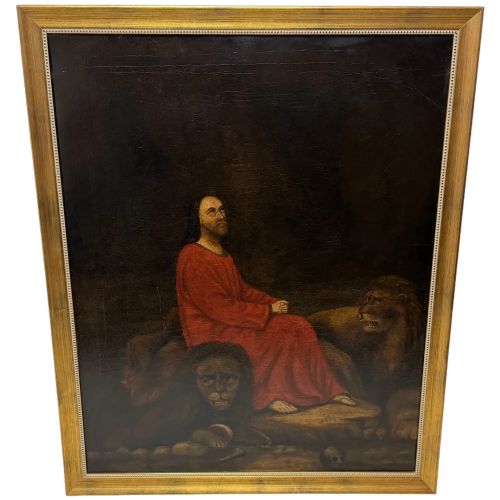
Biblical narratives dominate the category, featuring scenes such as Daniel in the lions' den, the Adoration of the Magi, and depictions of Christ and the Virgin Mary. Portraits of saints, including Saint Sebastian and Mary Magdalene, also appear frequently.
These subjects reflect the devotional function for which the artworks were originally commissioned and displayed.