
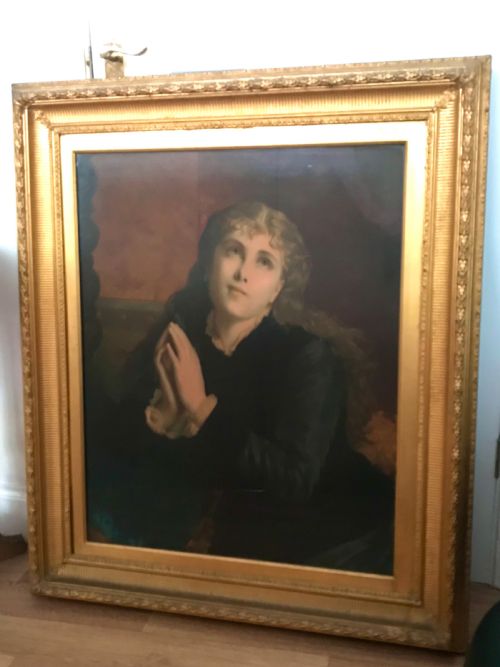
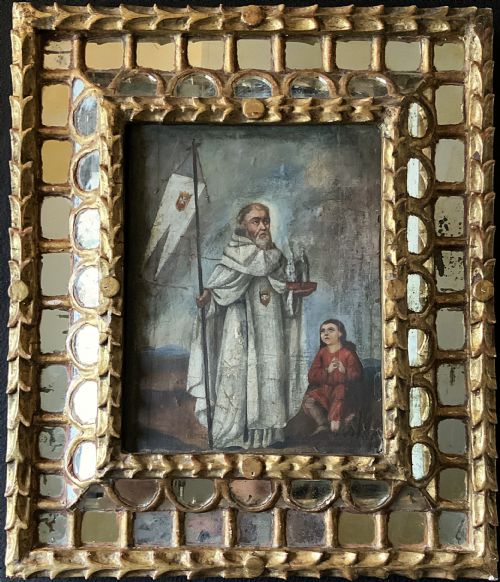


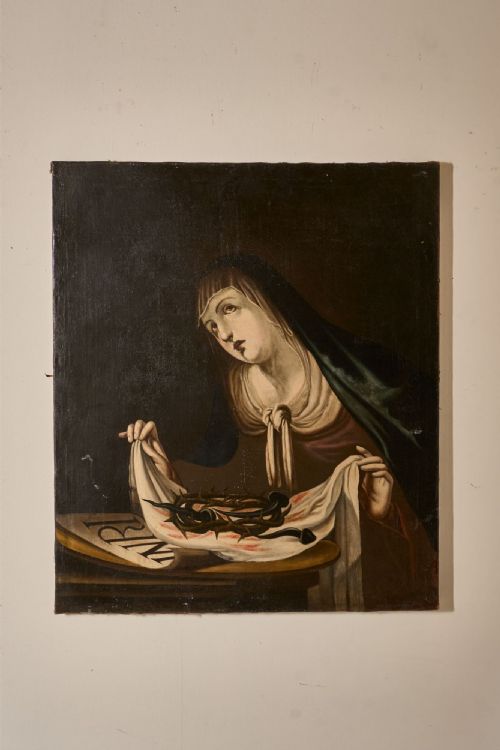


Framed Devotional Portrait
A framed devotional portrait brings centuries of sacred imagery and quiet contemplation into a room, spanning periods from the sixteenth century onwards.
Framed Devotional Portrait
A framed devotional portrait is a religious painting or plaque intended for private prayer and contemplation. When searching this phrase, a buyer encounters sacred subjects including the Madonna and Child, saints, and Christ.
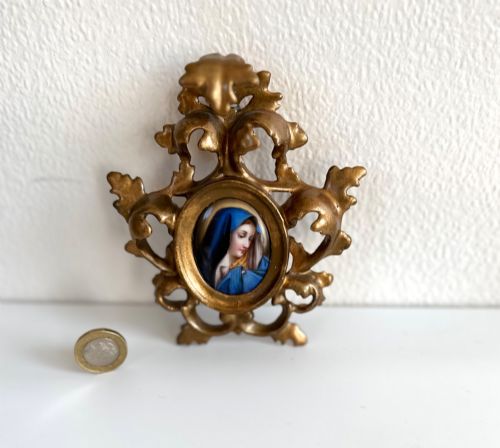
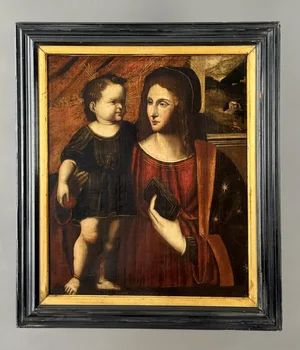
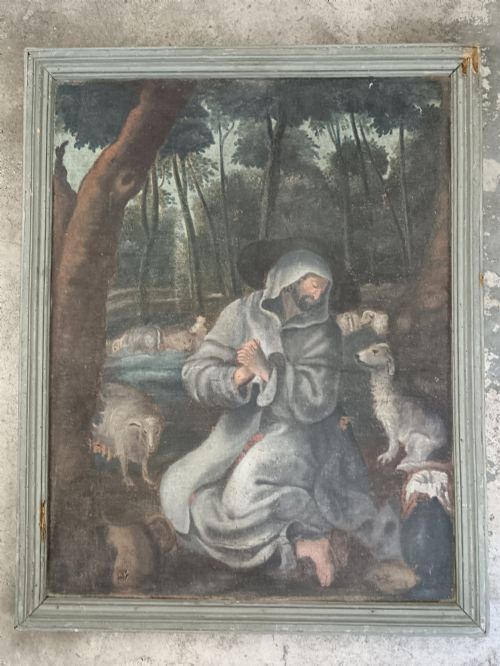
The pieces on this page originate from European schools spanning the sixteenth, seventeenth, eighteenth, and nineteenth centuries. Oil on canvas works predominate, alongside miniatures, oleographs, and enamel plaques.
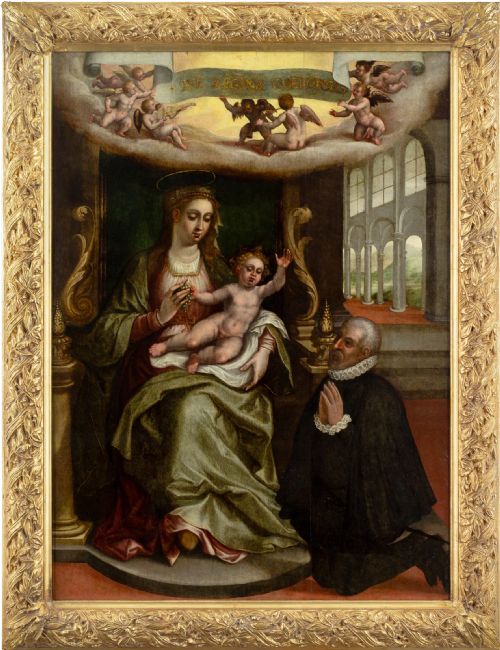
Forms range from small domestic miniatures set in Victorian frames to large Spanish Baroque canvases. Buyers frequently meet works executed in the manner, style, or circle of notable historical painters.
How they were made
Makers utilised oil paint applied to canvas or wood panels, building up rich compositions with layered glazes. Many works retain their period frames constructed from gesso, wood, and gold leaf.
Techniques varied from refined Italian Renaissance methods to spirited regional interpretations by naive or provincial schools. Surrounding elements sometimes include protective glass layers over delicate surfaces.
Listings feature works from the sixteenth to the nineteenth century, executed in oil on canvas, wood, and enamel.
What varies in quality
Quality rests upon the execution of the brushwork and the expressive power of the portrait itself. Works originating directly from an established circle or school display superior draftsmanship in anatomical detail and drapery.
The preservation of the original canvas, paint layer, and period frame elevates a piece. Subtle pentimenti and distinct historical attribution also distinguish finer examples from standard decorative works.
Miguel Barroso·Juan Ruiz Soriano·Gaspar de Figueroa·Costantino Frixione
The Framed Devotional Portrait Glossary
- Pentimento
- A visible trace of an earlier painting, adjustment, or correction beneath the final paint layer. This reveals the artist changing their composition during the creative process.
- Oleograph
- A mechanical colour print textured to imitate an oil painting on canvas. These became common in the nineteenth century for mass-producing religious imagery.
- Giltwood
- Wood carved and coated with gold leaf or gold paint. This finish frequently adorns Baroque and Victorian picture frames.
- Gesso
- A plaster-like mixture applied to wood panels or frames as a base for painting or gilding. It provides a smooth foundation for intricate surface decoration.
- Ex-Voto
- A votive offering presented to a saint or divinity in fulfilment of a vow. These portraits often record acts of thanksgiving or miraculous intervention.
Framed Devotional Portrait: Frequently Asked Questions
What is a framed devotional portrait?
A framed devotional portrait is a sacred artwork depicting religious figures like the Virgin Mary, Christ, or various saints. These pieces were created to inspire prayer and religious reflection in domestic or private settings.
The selection on this page encompasses centuries of European painting traditions. They bridge fine art and personal faith, housed in period frames.
How were these portraits used?
These portraits served as focal points for daily prayer, meditation, and domestic worship in homes or small chapels. Owners turned to them for spiritual solace and protection.
Smaller miniatures and plaques were suitable for intimate, portable devotion. Larger canvases commanded dedicated wall space within domestic interiors.
How do I date a devotional portrait?
Dating relies upon examining the materials, canvas preparation, painting technique, and the style of the frame. Pigments and stretcher frames also offer clues to the century of production.
Attributions often point towards specific artistic circles or historical periods like the Spanish Baroque or Italian Renaissance. Comparing brushwork to known regional schools helps narrow the timeframe.
How do I live with antique religious art?
Living with these pieces involves placing them in calm settings away from direct sunlight and excessive moisture. This protects delicate oil paint, gold leaf, and wooden frames from deterioration.
They pair well with traditional interiors, adding depth and history to a room. Proper placement allows the contemplative mood of the artwork to anchor the space.