




Rosewood Framed Wall Art
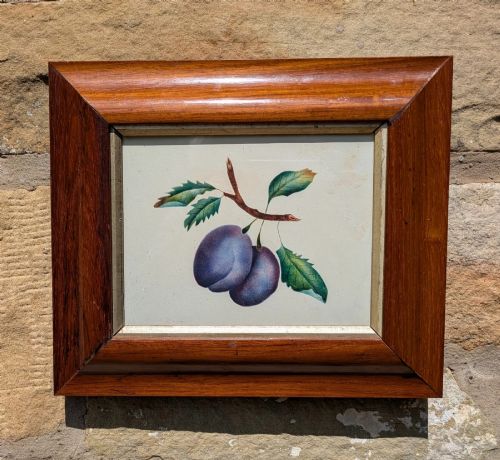
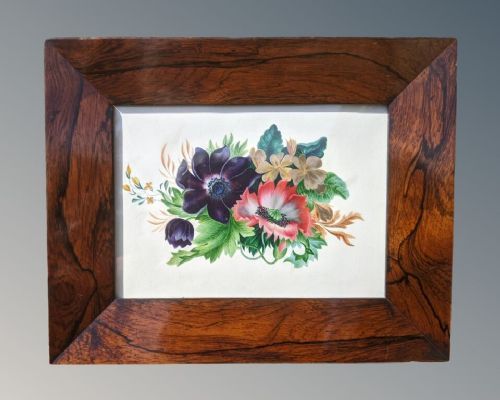
Rosewood framed wall art brings rich dark grain and warm figures to a room, enclosing delicate watercolours, needlework samplers and silhouettes from the nineteenth century.
Rosewood Framed Wall Art
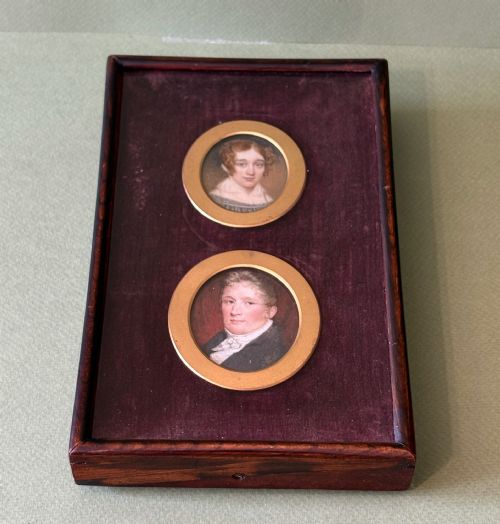
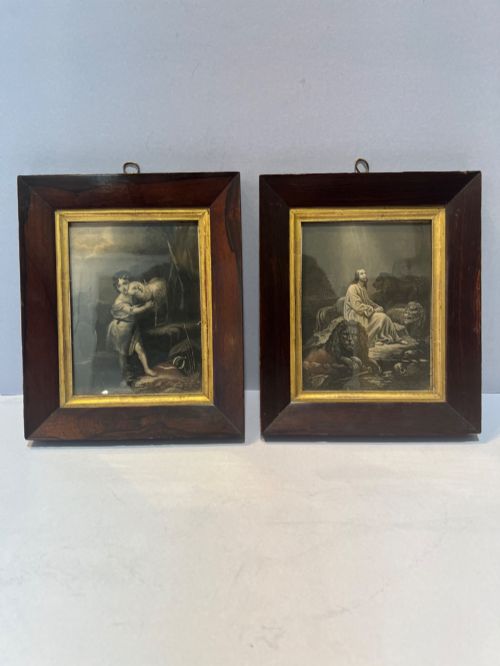
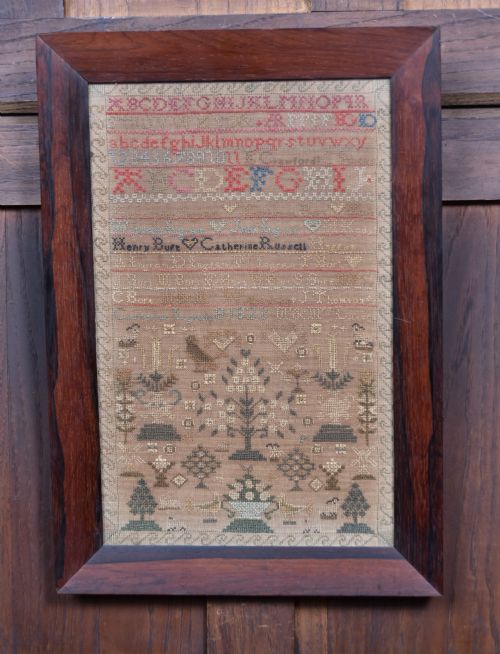
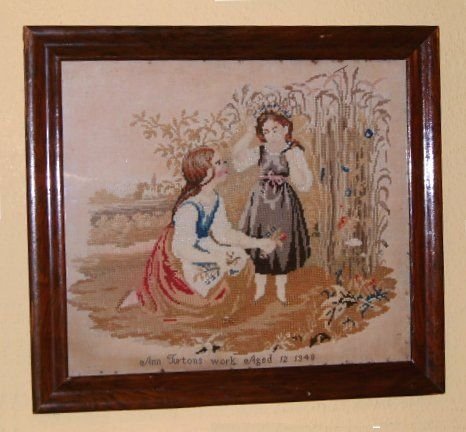
Rosewood framed wall art encompasses nineteenth century decorative pieces set within rich timber moulding, ranging from Regency watercolours and Georgian silhouette portraits to early Victorian needlework samplers and wool work.
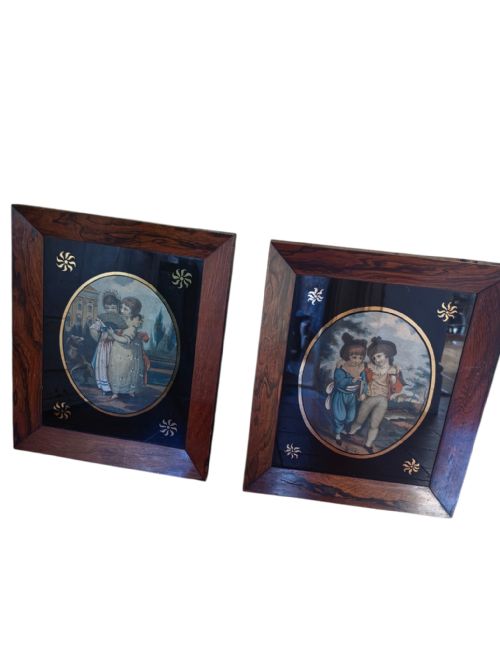
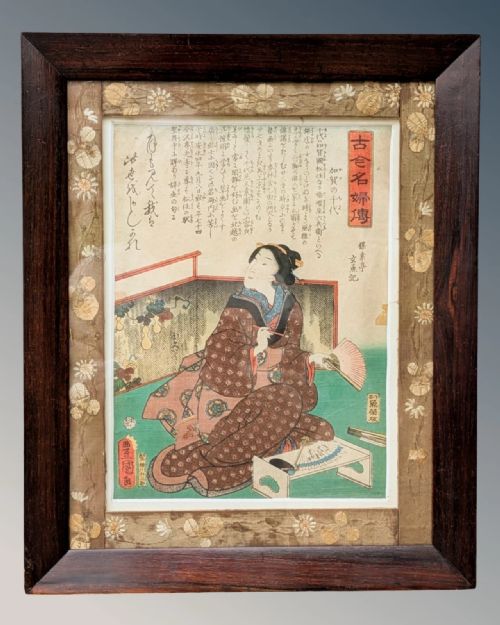
Buyers seeking this phrase encounter items spanning the Regency, Georgian, and Victorian eras, including botanical artwork, miniature portraits, theatrical prints, and Japanese woodblock prints with silk brocade mounts.
The objects serve primarily as interior wall decoration, offering a glimpse into domestic art forms from the eighteen hundreds through framed paper, textile, and wood plaque formats.
How they were made
Maker's workshops constructed the outer surrounds using dense rosewood timber, frequently shaping the grain to complement the paper or textile mounted within.
Internal artworks utilise watercolour, engraving, woodblock printing, and tinsel print techniques, alongside meticulous needlework samplers executed in wool and gros or petit point.
Mounting often incorporates protective glass and occasionally silk brocade or gilded wood elements to secure and highlight the central composition.
An army officer and various theatrical characters gaze out from their nineteenth-century walls.
What varies in quality
Quality rests on the depth of figure in the rosewood timber and the precision of the mitred frame corners, which together dictate the visual impact of the boundary.
The standard of the interior artwork distinguishes finer examples, separating skilful watercolour brushwork or detailed needlework from standard printed reproductions.
Overall preservation of both frame and internal media determines distinction, noting how well textile fibres retain their colour and paper media resists toning.
The Rosewood Framed Wall Art Glossary
- Rosewood
- A dense, heavily grained dark timber prized for cabinetwork and picture framing during the nineteenth century. It often displays rich purplish-brown hues with darker streaks.
- Needlework sampler
- A piece of textile art demonstrating various embroidery stitches, frequently created by younger makers to practice technique. These often include alphabets, motifs, and dates.
- Silhouette
- A portrait profile filled in with a solid dark colour, typically black, mounted against a pale background. Georgian and Victorian examples were hand-cut from paper or painted.
- Tinsel print
- A form of theatrical print popular in the nineteenth century, enhanced with pieces of metallic foil and fabric applied by hand. They depict actors and stage characters of the period.
- Tunbridge ware
- Intricate woodwork characterised by mosaic designs formed from tiny pieces of naturally coloured timbers. Items appear as decorative wall plaques and small objects.
Rosewood Framed Wall Art: Frequently Asked Questions
What periods do these pieces come from?
The available pieces originate primarily in the nineteenth century, spanning the Georgian, Regency, and Victorian eras.
Specific dates within the listings point towards the early and mid eighteen hundreds, including named years such as eighteen forty-one and eighteen sixty.
What types of artwork are framed in rosewood?
The selection includes watercolours, engraved plates, miniature portraits, silhouette profiles, and Japanese woodblock prints.
Textile works also feature prominently, encompassing wool work, gros and petit point, and needlework samplers.
How do I care for rosewood framed wall art?
Keep the pieces away from direct sunlight to protect delicate paper watercolours and wool textiles from fading over time.
Maintain stable indoor humidity levels to preserve the stability of the timber frames and the integrity of the internal mounts.
Are the frames original to the artwork?
Nineteenth-century pictures frequently retain their contemporary rosewood frames, matching the period style of the enclosed paper or textile.
Close inspection of the rebate and backing boards helps reveal whether the framing assembly dates to the same era as the piece inside.