

Victorian Oak Hall Table
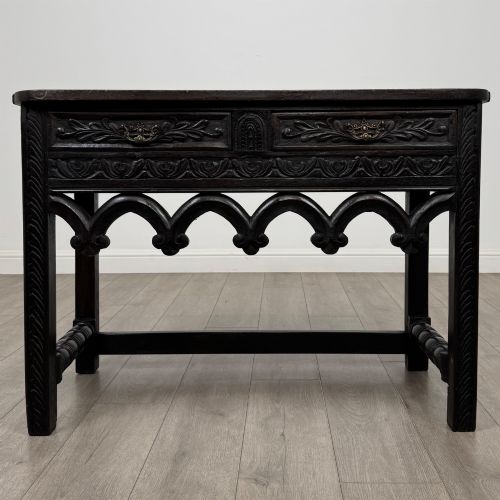
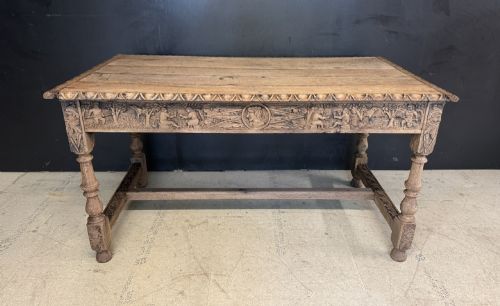
When you search for a victorian oak hall table, you are looking at narrow hallway furniture shaped by nineteenth-century revival styles and solid timber construction.
Victorian Oak Hall Table
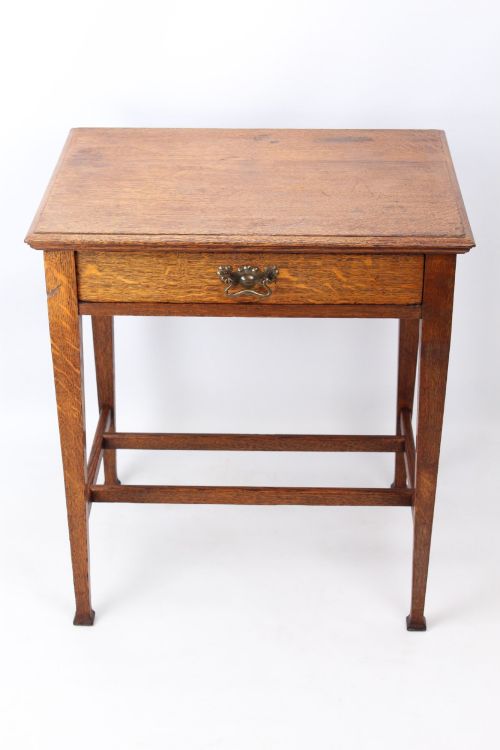
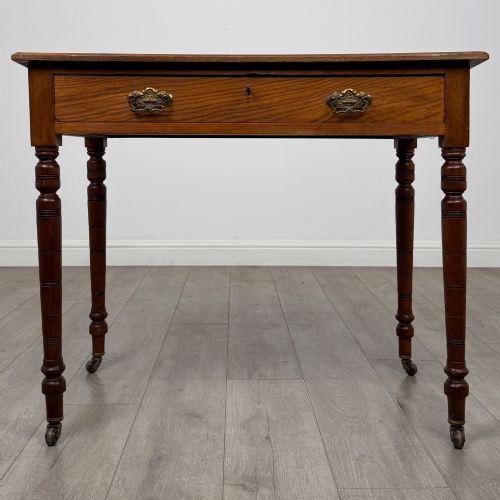
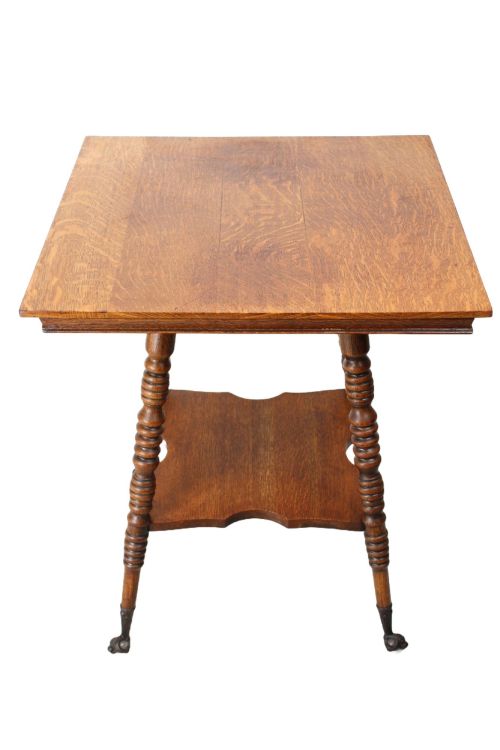
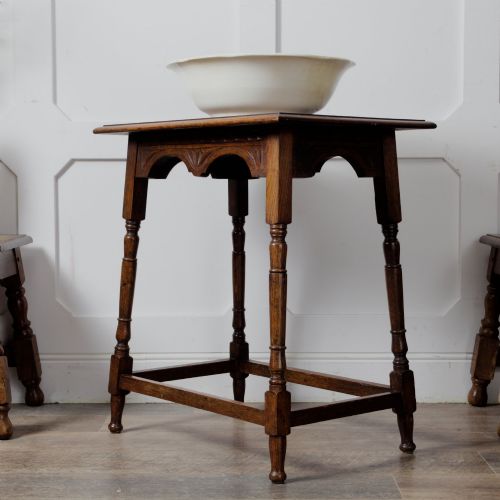
A victorian oak hall table is a compact piece of furniture designed for narrow entrance spaces, reception rooms, and corridors, intended to stand against a wall to hold hats, gloves, and correspondence. The examples found here span the nineteenth century and into the early twentieth, frequently incorporating practical single drawers or undertiers.
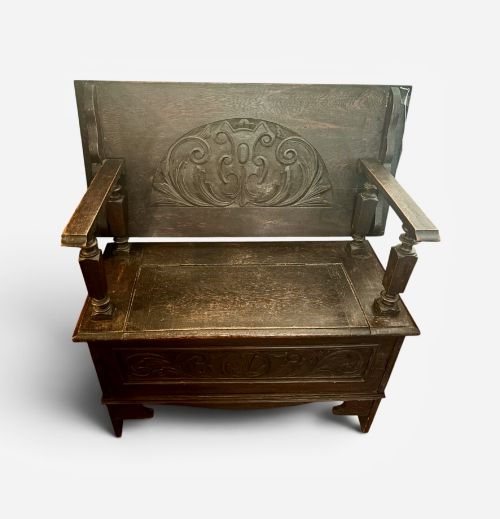
The prevailing aesthetic leans heavily on revival movements, meaning many pieces display architectural Gothic motifs, heavy geometric Jacobean turnings, or the simpler, functional lines associated with the Arts and Crafts movement. Side tables, console tables, and narrow writing desks often double in function as traditional hall furniture due to their shallow footprints.
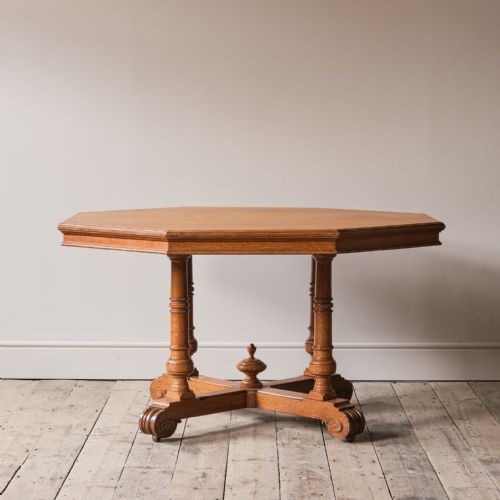
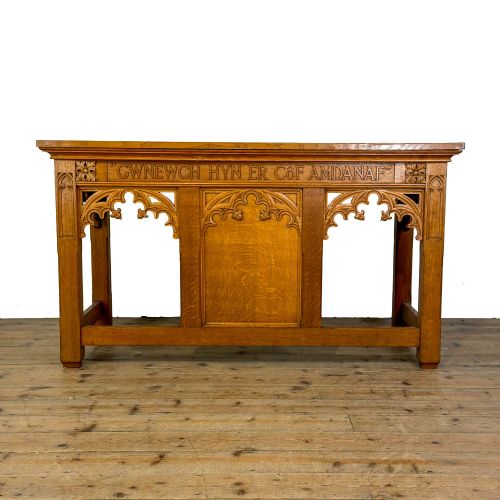
Solid timber predominates, with golden oak, burr oak, and carved varieties appearing alongside occasional painted finishes. While some items were built specifically for domestic entranceways, others originate from ecclesiastical settings, schoolrooms, or civic buildings, adapted over time for residential hallways.
What Varies in Quality
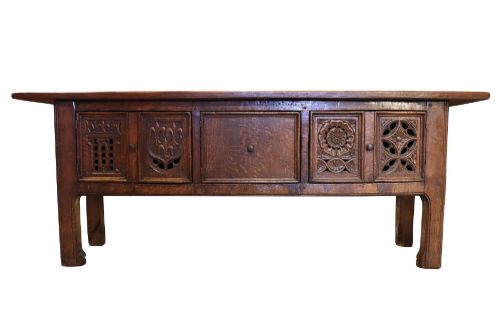
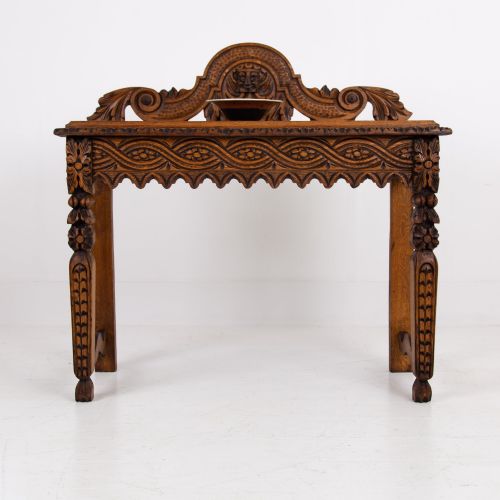
Quality rests upon the crispness of the hand-carved ornamentation and the selection of the timber. Finely figured burr oak boards and deeply undercut relief carving distinguish superior workshops from mass-produced factory output.
Structural integrity and proportion dictate value. Tables retaining original brass hardware, sound drawer runners, and well-balanced narrow proportions without excessive timber shrinkage represent the higher tier of surviving pieces.
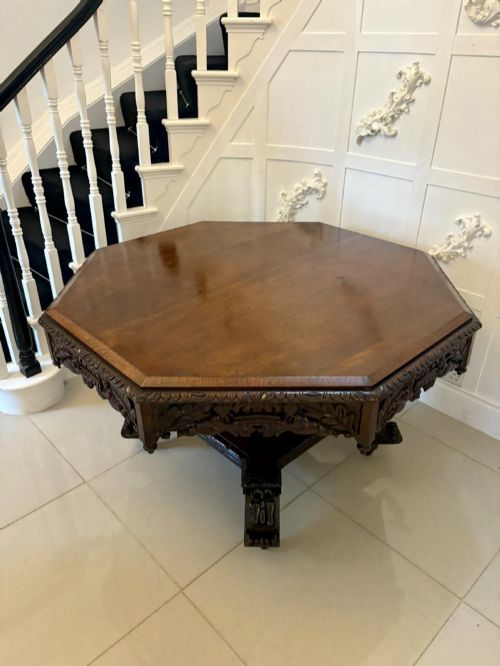
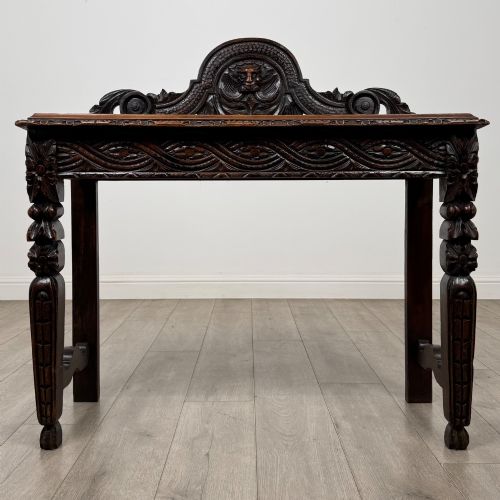
Several Victorian hall tables feature carved green man masks peering out from beneath the drawer, keeping a watchful eye on household visitors.
Liberty of London·William Birch·Alexander McKenzie of Glasgow·Rowland Ward of London·Christopher Pratt and Sons
The Victorian Oak Hall Table Glossary
- Console table
- A table designed to be fixed against a wall, frequently supported by brackets or front legs, intended for hallways and reception spaces.
- Green man
- A sculptural architectural motif depicting a human face emerging from or entwined with foliage, common on Gothic Revival furniture.
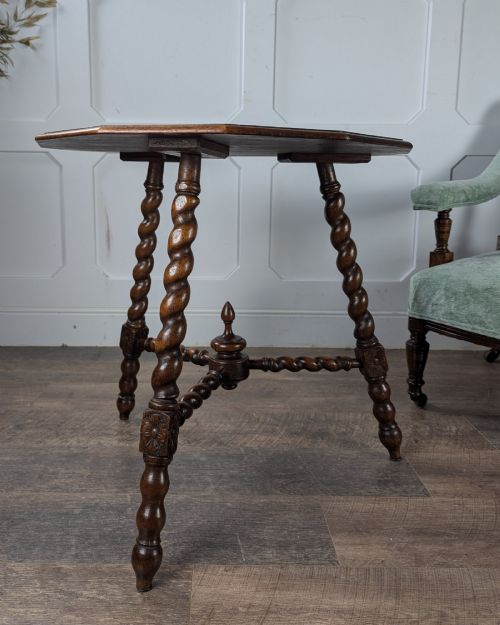
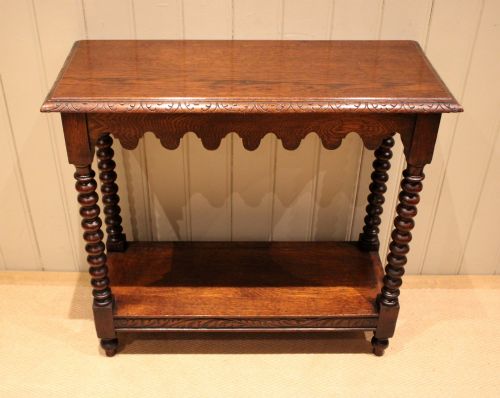
- Barley twist
- A decorative turning technique resembling a spiralling rope, popular on table legs and supports during the Victorian period.
- Dresser base
- A low sideboard or serving table featuring cupboards or drawers beneath a solid top, often adapted for use in hallways.
- Quarter-sawn oak
- Timber cut radially to the growth rings, producing a distinct flecked grain pattern that resists warping and adds strength.
Victorian Oak Hall Table: Frequently Asked Questions
What is a hall table used for?
These tables served primarily as functional furniture placed near an entrance to receive visiting cards, keys, and correspondence. They provided a surface for lamps or decorative items while occupying a minimal footprint in narrow corridors.
Many designs included a single drawer for small items, whilst others incorporated lower shelves or rails for walking sticks and umbrellas. Their narrow proportions allowed them to furnish hallways without obstructing household traffic.
How can I tell a Gothic Revival table apart?
Gothic Revival pieces display distinct architectural motifs drawn from medieval buildings, such as pointed arches, tracery, quatrefoils, and heavily moulded edges. Timber is typically dark oak, often accented with hand-carved panels.
These tables frequently feature robust chamfered legs, plank tops, and ecclesiastical detailing that echoes church furniture. This style emerged strongly during the mid-nineteenth century as a reaction against industrial standardisation.
Are these tables made of solid oak?
Most pieces utilise solid oak throughout the frame, top, and structural members, though secondary timbers such as pine or deal were occasionally used for internal drawer bottoms and back panels. Quarter-sawn oak timber is common among better-quality examples.
Lighter golden oak finishes appear alongside dark stained surfaces depending on the decade of manufacture. Grain patterns vary from straight lines to highly figured burr surfaces on premium tabletops.
How do I fit a hall table into a modern home?
Their shallow depth makes these tables exceptionally useful in modern entrance halls, landings, and behind living room sofas where floor space is restricted. They offer surface space and storage without overwhelming small rooms.
Pairing a historic oak table with contemporary decor creates a contrasting focal point while retaining practical utility for everyday items like keys and mail.