



Carved Oak Wall Table
These carved oak wall table examples combine solid timber construction with historic architectural detailing, offering a practical surface and traditional decorative presence.
Carved Oak Wall Table
A carved oak wall table sits flush or mounts directly against a vertical surface, functioning primarily as a console or side piece for display. The pieces on this page span several centuries, including examples from the eighteenth, nineteenth, and early twentieth periods.
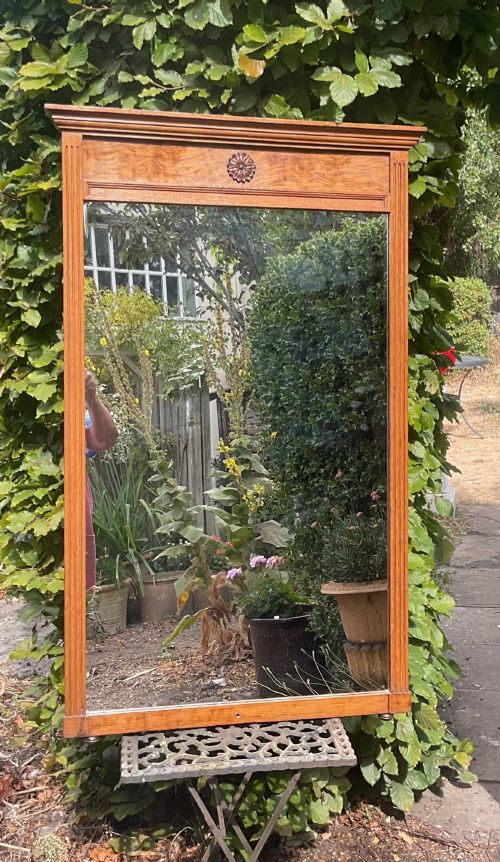
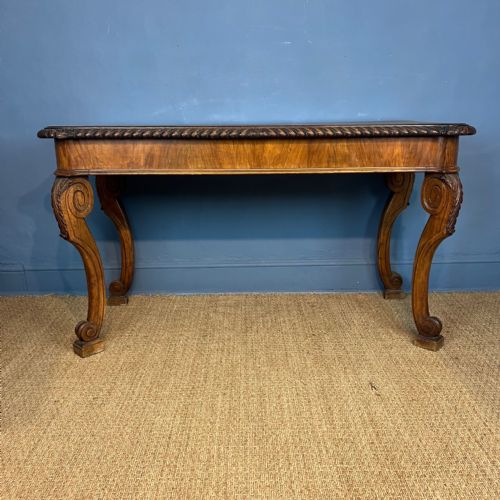
Forms vary from narrow console tables to demi lune shapes and wall-mounted dressing mirrors, incorporating materials such as marble, granite, and glass alongside the primary timber. Regional variations include French Provincial styles and Dutch painted designs.
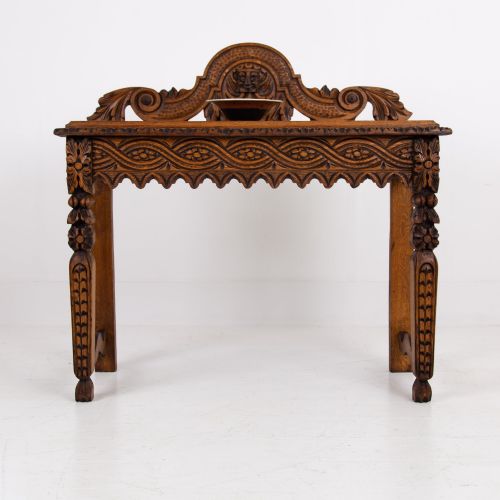
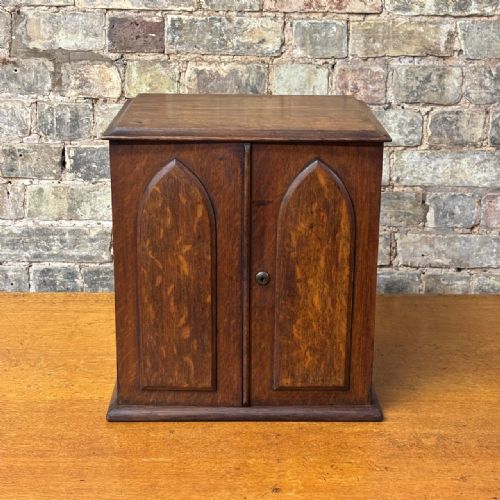
The decorative vocabulary draws heavily from historical revivals, featuring Gothic panel doors, Baroque flourishes, and Victorian rococo elements. Buyers will encounter both simple domestic pieces and heavily carved examples of substantial proportions.
How they were made
Makers utilised solid oak for the structural frames and primary surfaces, often combining walnut or pollard oak veneers to create contrast on tabletops and friezes. Hand-carving techniques define the ornamentation, ranging from crisp Gothic tracery to flowing scrollwork.
Many tables incorporate heavy stone surfaces, utilising inset marble or granite slabs fitted directly into the timber framework to provide durable top plates. Secondary materials such as giltwood accents and brass hardware complete the construction of the more elaborate console formats.
Some tables hide tiny structural quirks behind their grand facades, including mismatched drawer linings and thumbprints pressed into old polish.
What varies in quality
The depth and crispness of the hand-carving separate ordinary production from superior examples, as skilled artisans achieved clean undercut details and balanced symmetry. Finer pieces demonstrate careful timber selection, where grain patterns align harmoniously across the visible top and apron.
Structural integrity depends on the quality of the original joinery and the stability of the wall-mounting fixtures, alongside how well inset stone tops fit their wooden rebates. Alterations to the original height or the integration of later tops change the proportional balance of the piece.
The Carved Oak Wall Table Glossary
- Console table
- A table designed to stand against a wall, traditionally supported by wall brackets or front legs. These pieces often feature decorative aprons and serve narrow entrance halls or reception rooms.
- Demi lune
- A half-moon shape used for tabletops and console furniture. This format allows the piece to sit tightly against a wall while projecting outward into the room.
- Pollard oak
- Timber taken from trees that have been pollarded, producing a dense wood with clustered knot formations and highly decorative grain patterns. It was favoured for high-status cabinet work during the nineteenth century.
- Gothic Revival
- An architectural and decorative style drawing inspiration from medieval design. It is characterised by pointed arches, trefoils, and heavy panel tracery.
- Giltwood
- Wood that has been coated with a thin layer of gold leaf or metallic paint. This treatment highlights carved details and architectural mouldings.
Carved Oak Wall Table: Frequently Asked Questions
How do I secure a wall table safely?
Most wall-mounted console pieces rely on structural brackets or direct fixing points into masonry studs to bear the weight safely. Additional floor support through front legs helps distribute the load of heavier stone tops.
Professional installation is recommended for antique examples featuring heavy marble or granite surfaces to prevent movement against the wall.
What is the difference between a console and a side table?
Console tables are specifically designed to stand against a wall, frequently requiring structural attachment for stability. Traditional side tables possess four independent legs and stand freely without wall support.
In older interiors, console tables often anchored the visual centre of a room beneath a large wall mirror.
How do I care for antique oak furniture?
Maintain the timber by applying traditional beeswax sparingly and buffing with a soft cloth to preserve the natural lustre. Avoid placing oak pieces near direct heat sources or rapid temperature shifts that cause timber shrinkage.
Keep stone tops clean using dry or damp cloths without harsh chemical cleaners that might etch polished marble or granite.
How do I identify nineteenth century styles?
Nineteenth century furniture frequently reinterprets earlier historical movements, combining Gothic, Baroque, and Rococo motifs within single pieces. Examine the consistency of the carving style and the integration of secondary woods like walnut or mahogany.
Tool marks and construction methods visible on the underside often indicate the manufacturing period and workshop standards.