

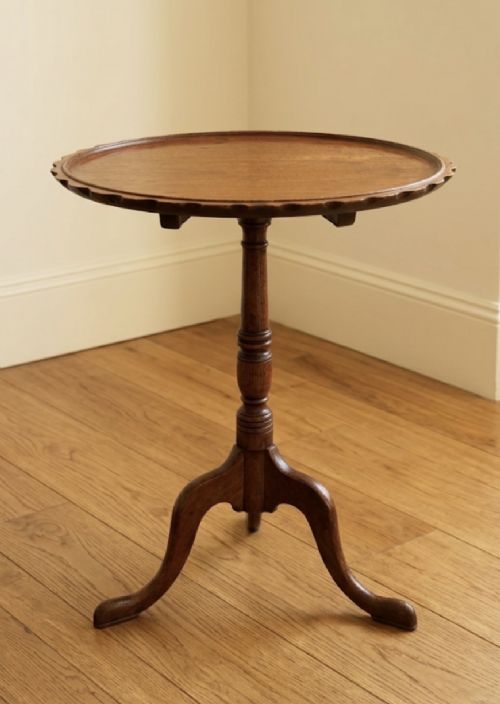
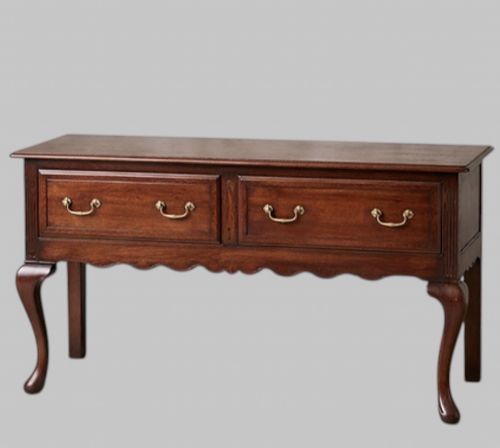


Scalloped Oak Side Table
These scalloped oak side table examples span centuries of domestic timber work, offering sturdy surfaces and rich grain figures for your home.
Scalloped Oak Side Table
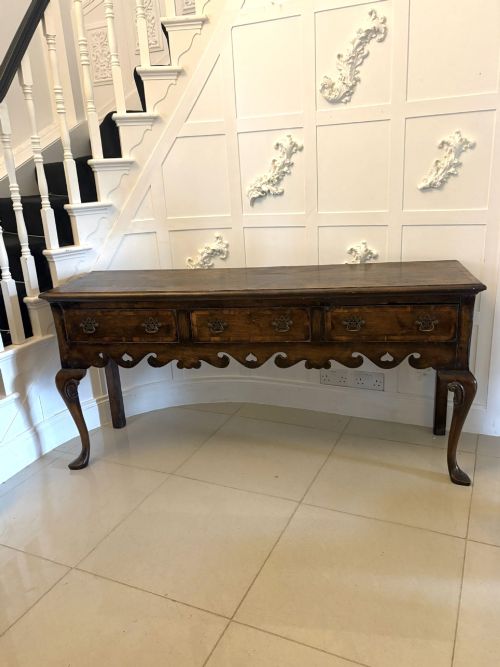
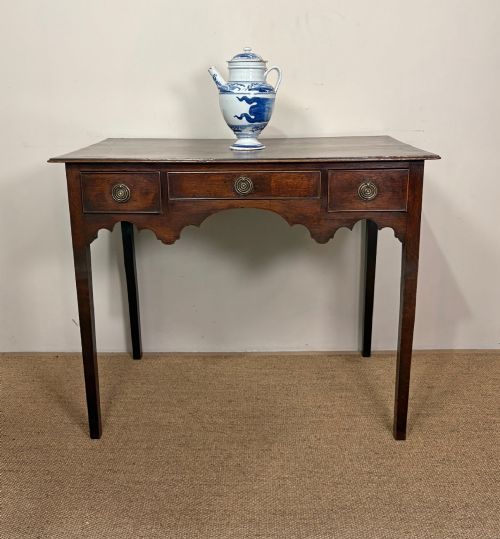
A scalloped oak side table brings domestic utility through centuries of British and continental joinery. You will encounter lowboys, occasional stands, and compact console tables built for everyday service in halls and parlours.
The material focus stays firmly on oak, though related timber forms appear alongside dresser bases and wine tables. Eighteenth-century examples sit next to Victorian revivals and later interpretations, showing sustained preference for sturdy wooden construction.
How they were made
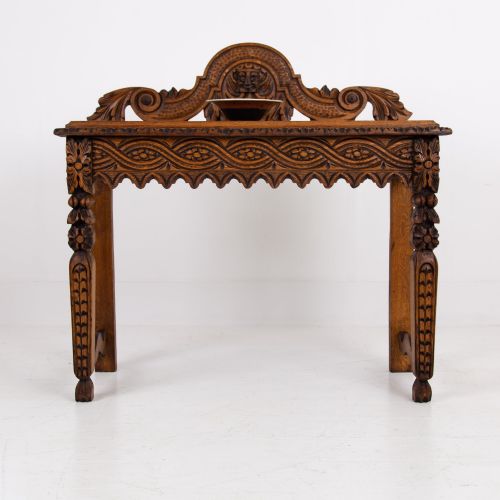
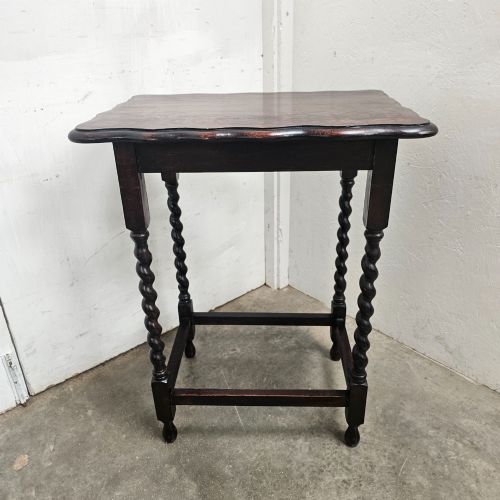
Joiners built these pieces using solid timber, shaping planks with hand tools and securing joints with pegs or traditional fasteners. Turning lathes produced barley twist legs and columnar supports, while surfaces received hand-carved foliate details.
Brass fittings occasionally supplement the timber framework on drawers and accents. Ebonised timber elements and subtle timber inlay also appear to contrast against the primary oak body.
The selection spans from the eighteenth century through the Victorian era into early twentieth-century revivals.
What varies in quality
The distinction between ordinary and exceptional work lies in the depth of timber selection and the precision of the carved details. Grain alignment across visible surfaces and the crispness of shaped edges separate standard utility pieces from ambitious regional cabinet work.
Proportion and structural integrity dictate the standing of individual items. Well-balanced legs and tight joints reflect the original maker's competence, whereas clumsy alterations diminish the historical character of the timber.
The Scalloped Oak Side Table Glossary
- Lowboy
- A small side table or dressing table with one or more drawers, typically dating from the eighteenth century. These low-standing tables served various domestic functions.
- Pie Crust Table
- A small round table with a raised, carved, and scalloped edge resembling pastry work. This decorative top profile requires careful hand-carving.
- Barley Twist
- A cylindrical column or furniture leg carved in a spiral shape resembling twisted barley sugar. This decorative turning style appears frequently on seventeenth and early twentieth-century furniture.
- Dresser Base
- The lower portion of a kitchen or dining room storage unit, often utilised independently as a sideboard or console table. These sturdy structures provide generous surface area and storage drawers.
- Tripod Table
- A small occasional table supported by three legs radiating from a central pillar. This form allows stable placement on uneven floors.
Scalloped Oak Side Table: Frequently Asked Questions
What is a lowboy?
A lowboy is a small table equipped with drawers, traditionally used as a dressing table or side table in eighteenth-century rooms.
Its compact footprint makes it useful for modern entryways or as a lamp table where space is limited.
How do I care for old oak?
Keep wooden furniture away from direct heat sources and sudden humidity changes to prevent the timber from splitting.
Apply natural beeswax occasionally to nourish the grain and protect the surface from everyday wear.
Are these tables solid oak?
Most examples utilise solid timber construction, though secondary woods may appear inside drawer linings or internal framing.
Inspect the grain patterns across the top and sides to understand the specific timber selection used by the maker.
Where were these tables used?
Historical pieces served practical functions in domestic spaces, acting as surfaces for serving food, holding lamps, or writing letters.
Today, they adapt easily to living rooms, bedrooms, and hallways as functional decorative pieces.
How do I identify the period?
Dating relies on construction methods, tool marks, timber characteristics, and stylistic details like cabriole legs or barley twist turnings.
Comparing hardware fixings and joint types helps distinguish eighteenth-century originals from later nineteenth-century revivals.