
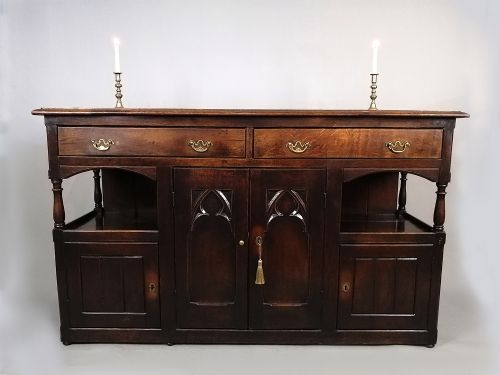
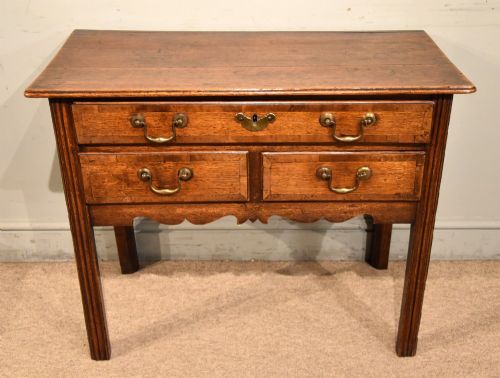
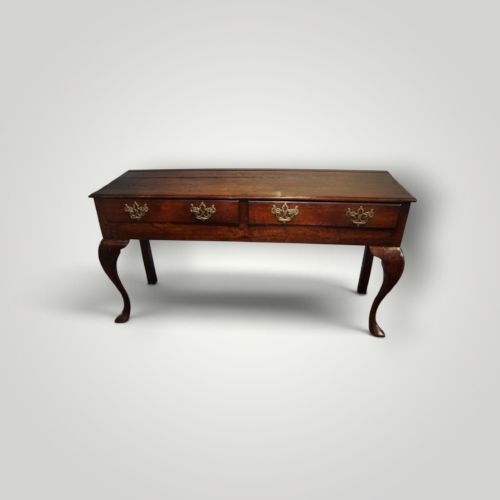
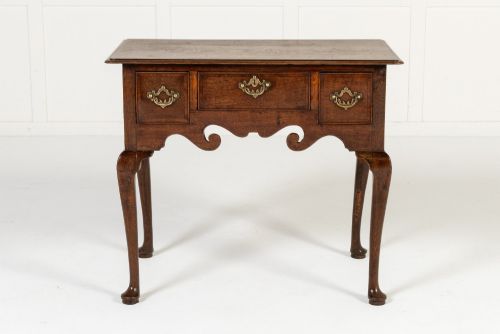
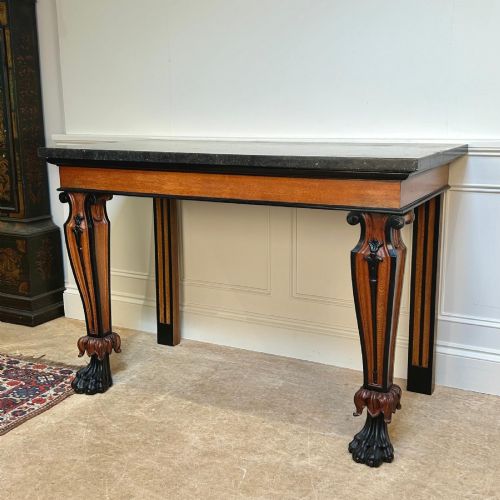
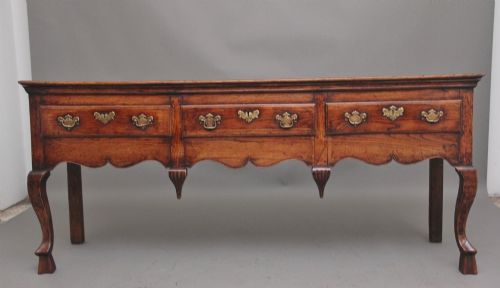
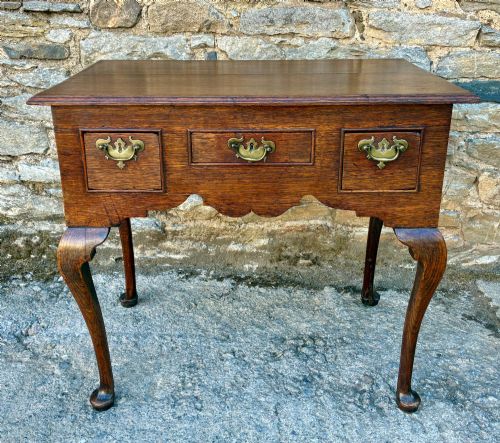
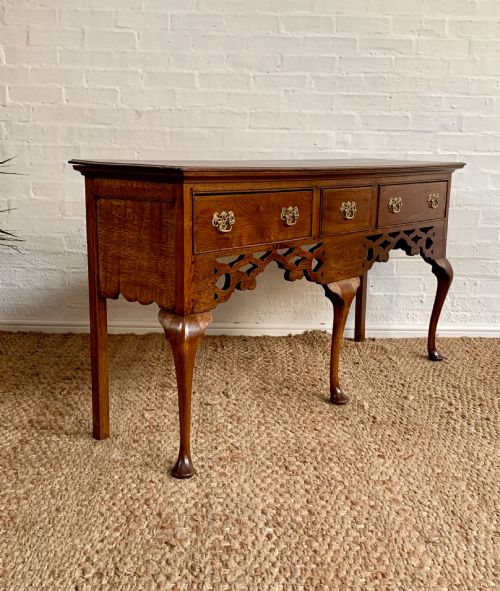
Georgian Carved Oak Table
These pieces combine practical domestic utility with robust timber, offering a georgian carved oak table suited to daily use.
Georgian Carved Oak Table
Buyers searching for a georgian carved oak table encounter a diverse selection of regional dining furniture, serving tables, and lowboys spanning the seventeenth through the nineteenth centuries. The majority of these examples originate from provincial English and Welsh workshops, reflecting domestic utility rather than courtly display.
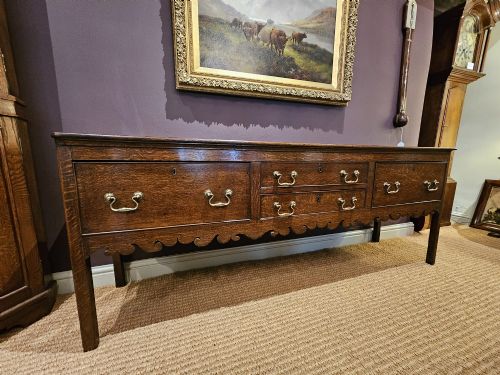
The assortment includes refectory dining boards, tripodoccasional pieces, and multi-drawer dresser bases alongside side tables and mule chests. Forms range from simple utilitarian surfaces to items decorated with geometric moulding, Gothic tracery, and formal carving.
Most items adhere to periods such as the Georgian era, George III reign, and the eighteenth century, though later nineteenth-century revivals and Edwardian interpretations also appear. Construction typically relies on solid native timber rather than decorative veneers, yielding sturdy pieces built for generations of service.
Materials and construction methods
Makers built a georgian carved oak table using solid English and Welsh timber, frequently supplemented with secondary woods for drawer linings and internal framing. Joinery relied heavily on pegged mortise and tenon joints to withstand the expansion and contraction of heavy boards.
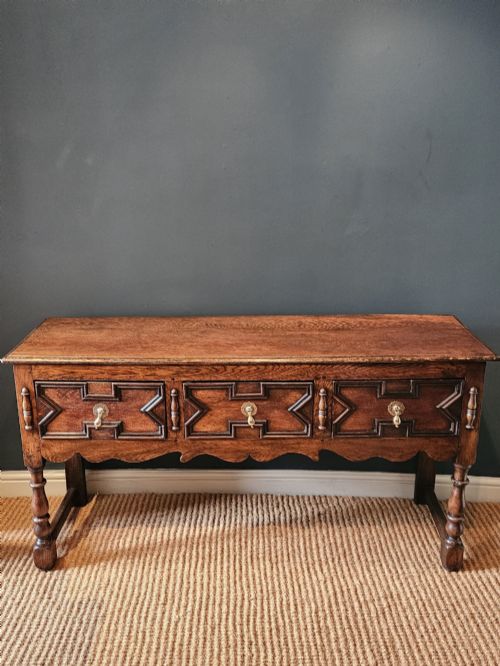
Carving was executed by hand using gouges and chisels directly into the seasoned timber, producing geometric strapwork, foliate motifs, and architectural panels. Surfaces received simple finishes of wax or oil that highlighted the natural grain and medullary rays of the wood over decades of handling.
Available forms include side tables, refectory dining boards, library drum tables, lazy susans, and bible boxes.
Judging quality and proportion
Quality in a georgian carved oak table rests on the integrity of the timber, the crispness of the hand-carved detail, and the retention of original structural elements. Finer examples display balanced proportions, minimal replacement boards, and drawer construction that utilises traditional hand-cut dovetails.
Pieces that retain an authentic surface patina without excessive scraping or modern chemical stripping command greater appreciation from collectors. The relationship between the scale of the base and the thickness of the top also dictates the overall visual success of the piece.
The Georgian Carved Oak Table Glossary
- Lowboy
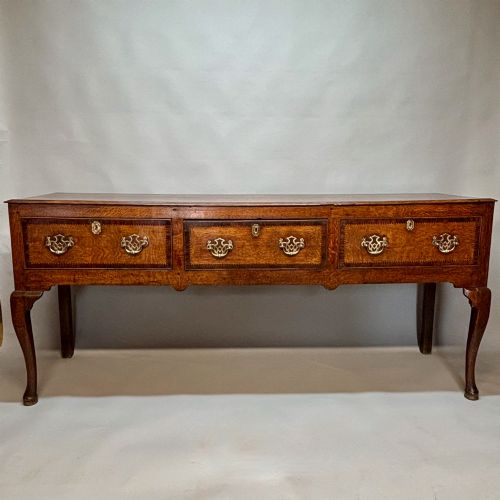
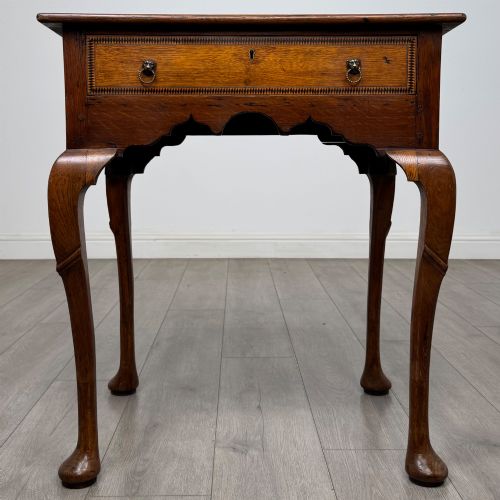
- A small oak table fitted with one or more drawers, typically used as a dressing table or side table in eighteenth-century interiors. These pieces often feature cabriole legs or straight square supports.
- Refectory table
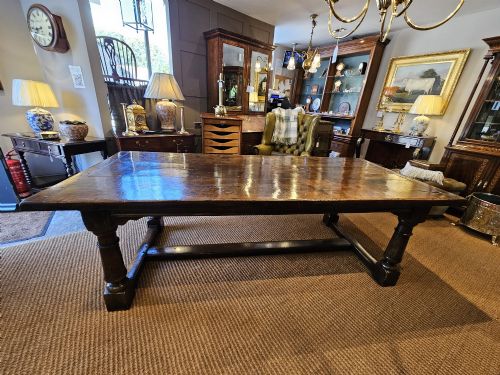
- A long dining board traditionally used in communal halls and substantial country houses. These heavy oak tables rest on robust trestle or four-leg bases connected by floor stretchers.
- Dresser base
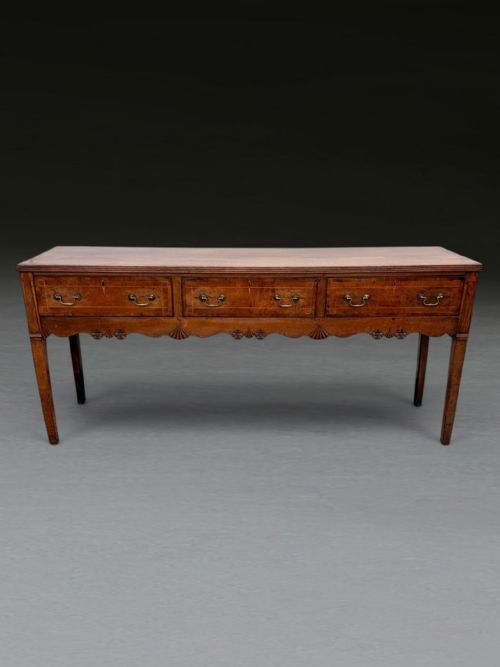
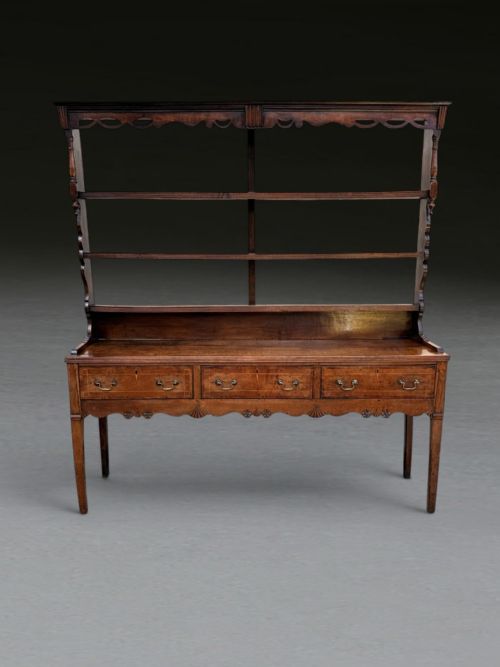
- A lower sideboard component featuring multiple drawers and occasionally cupboards beneath a sturdy timber top. They served as primary work surfaces and storage units in country kitchens.
- Joint stool
- A sturdy wooden seat constructed with mortise and tenon joints rather than turned components. These early pieces doubled as small portable tables.
- Tripod table
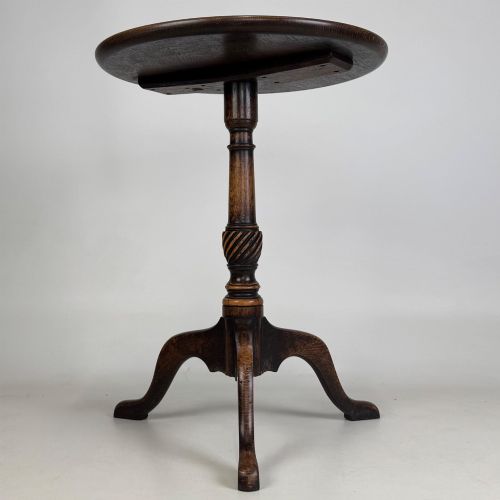
- A pedestal table supported by three legs radiating from a central column, often incorporating a tilt-top mechanism. They date frequently from the Georgian period.
Georgian Carved Oak Table: Frequently Asked Questions
How do I care for an old oak table?
Maintain the wood by applying a natural beeswax polish sparingly and buffing with a soft cloth to protect the surface from moisture. Avoid placing timber furniture near direct heat sources or in fluctuating humidity.
Use felt pads beneath objects placed on the surface to prevent scratching the historic finish. Regular dusting with a dry lint-free cloth preserves the natural patina without chemical buildup.
Were these tables used in kitchens?
Many sturdy oak tables and dresser bases served as central work surfaces for food preparation in large country houses and farmhouses. Their heavy timber construction withstood daily domestic labour.
Other lighter forms, such as side tables and lowboys, functioned in parlours and bedchambers for personal grooming or writing.
How do I distinguish eighteenth-century oak?
Examine the timber closely for hand-sawn marks, irregular board widths, and pegged joinery that indicate construction prior to industrial mechanization. Eighteenth-century oak typically exhibits deep medullary rays and a warm, undulating surface texture.
Check drawer construction for hand-cut dovetails and timber linings consistent with period workshop practices rather than modern mass production.
Can I use a lowboy as a desk?
Lowboys with sufficient knee clearance and functional drawer space often serve adequately as writing desks for occasional laptop use. Ensure the height of the apron matches your seating requirements.
Protect the historic top with a suitable blotter or leather pad if you intend to write on the surface regularly.