
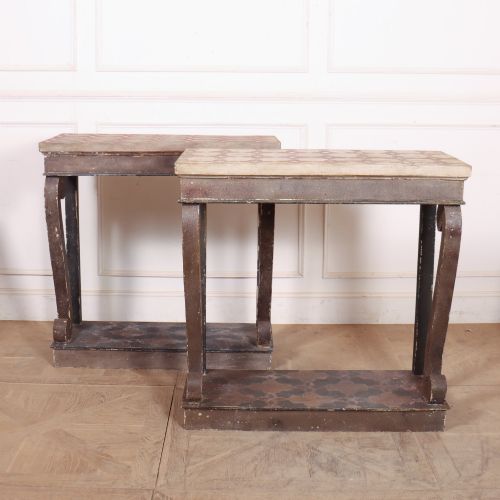
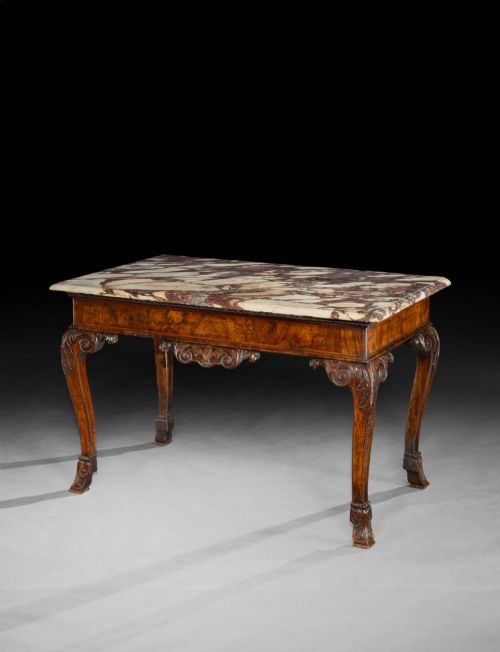
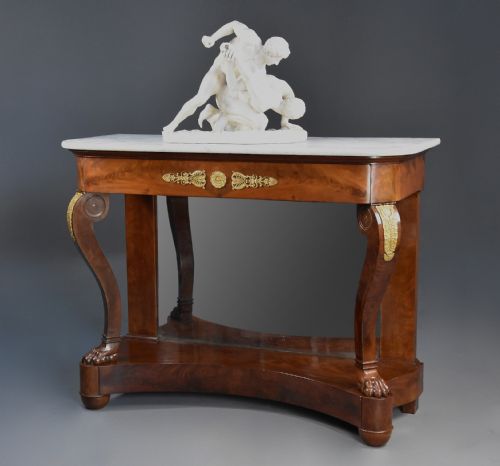
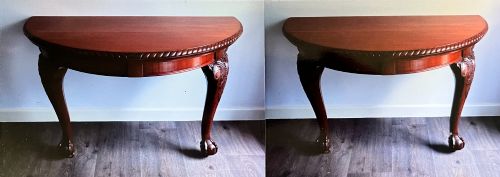
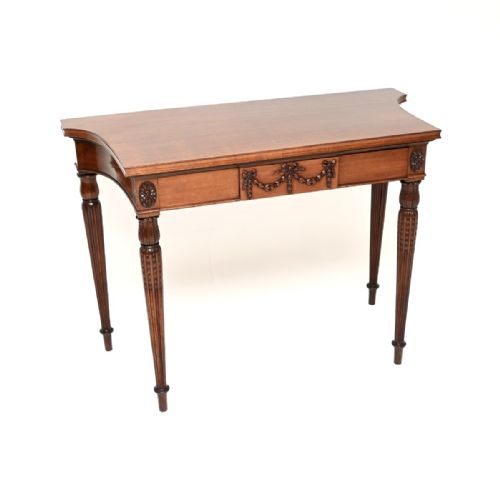
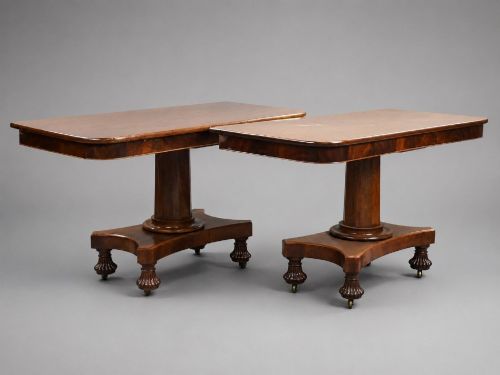
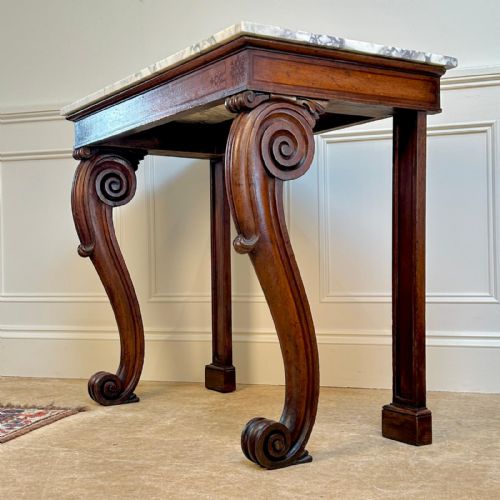
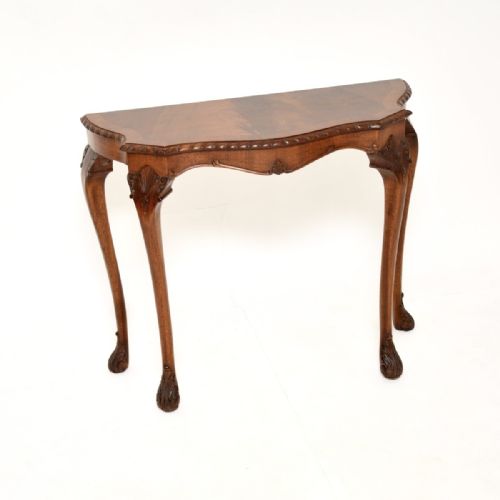
Brown Pier Table
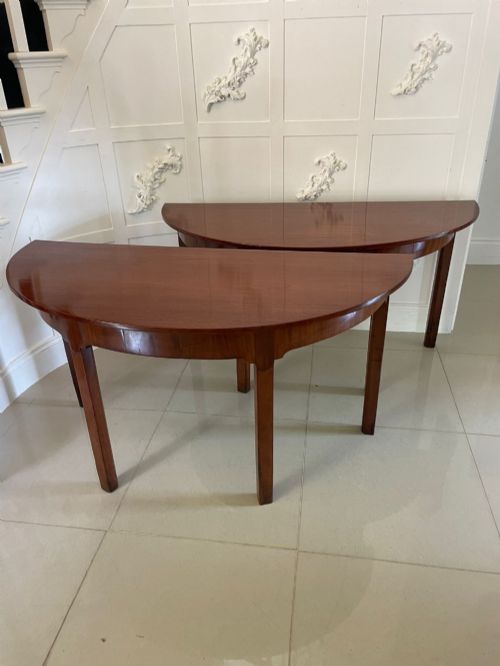
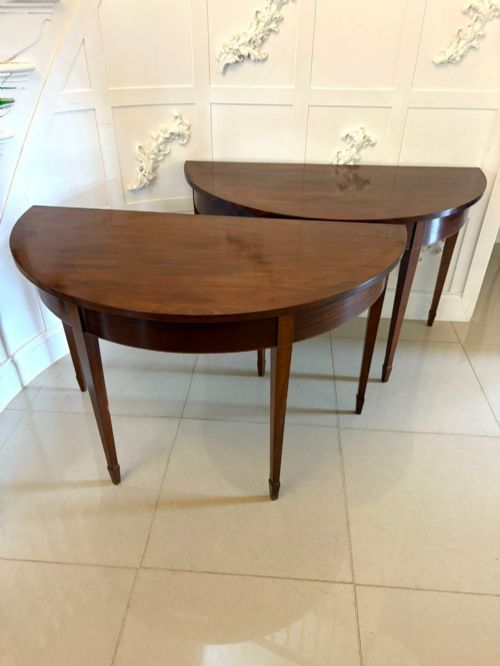
A brown pier table brings classical architectural elegance to a hallway, designed to stand flat against a wall where floor space remains narrow.
Brown Pier Table
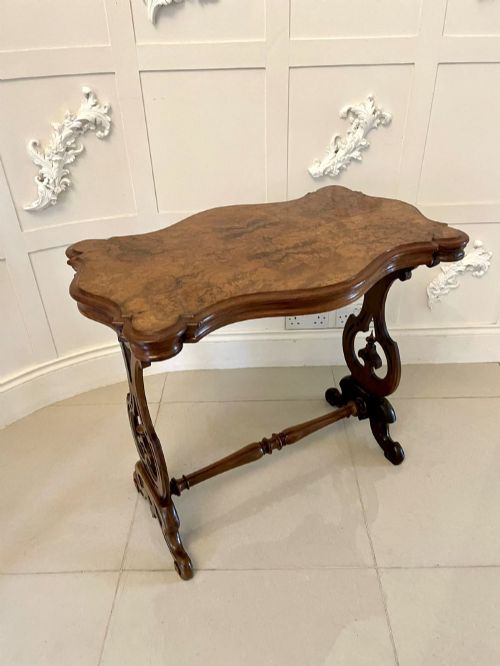
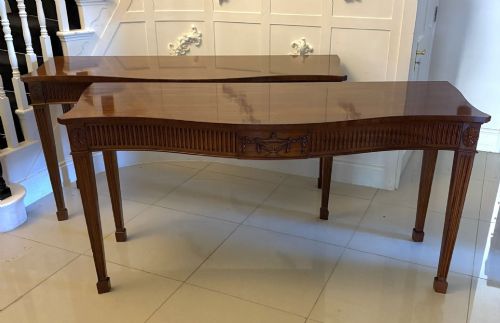
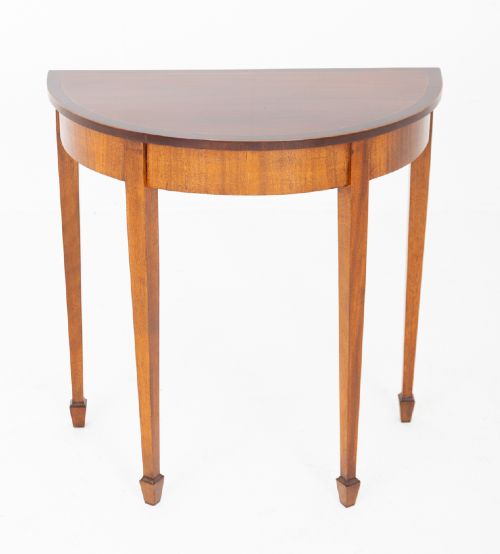
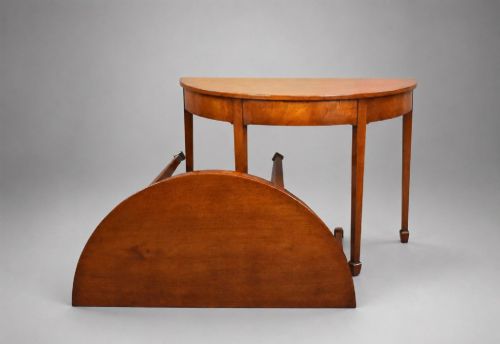
A brown pier table serves as a functional and decorative console, often placed between windows or along a hallway wall. When searching for a brown pier table, buyers encounter various forms including demi-lune console tables, side tables, and wall cabinets originating from periods such as the Georgian, Victorian, and Regency eras.
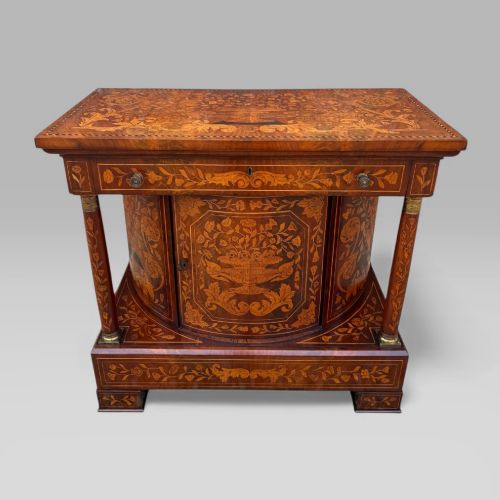
The pieces listed span multiple centuries, ranging from 18th-century Dutch marquetry and George III figured mahogany examples to 19th-century French walnut and later Edwardian designs. These tables frequently appear in rich timber tones, occasionally fitted with contrasting marble or glass surfaces.
How they were made
Cabinet makers utilised dense hardwoods such as mahogany and walnut, frequently selecting burr veneers or figured timber to create striking grain patterns across the tabletops. Structural elements often incorporated oak and satinwood for secondary framing and subtle stringing details.
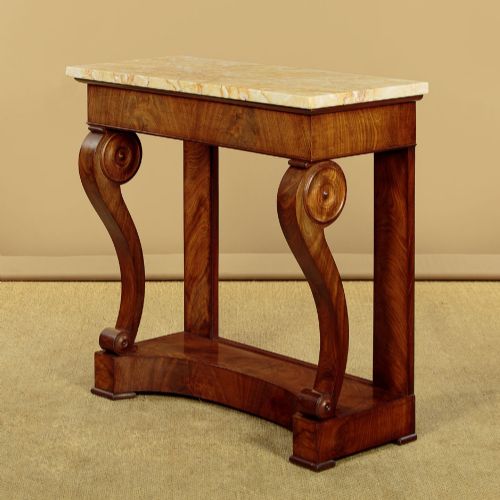
Many examples integrate heavy stone or polished surfaces, featuring marble tops supported by carved woodwork. Finer decorations relied on brass mounts, ormolu, and intricate marquetry inlays rather than simple surface finishes.
Some tables were built with secret compartments just deep enough for a pocket watch and a love letter.
What varies in quality
The standard of a brown pier table depends heavily on the selection of timber and the precision of its construction. Superior examples display carefully matched figured veneers and seamless joint work that maintains stability without relying on heavy modern fixings.
Carving execution defines the upper tier of these pieces, separating standard production furniture from bespoke items. Sharp, deep relief work in mahogany or walnut indicates skilled craftsmanship, whereas softer, shallower moulding suggests simpler workshop output.
Gillows·Epstein and Co
The Brown Pier Table Glossary
- Demi-lune
- A half-moon shape popular for console tables designed to fit snugly against a flat wall. This curved form allowed tables to project minimally into narrow hallways.
- Marquetry
- The art of applying pieces of veneer to a structure to form decorative patterns. Artisans used contrasting woods to create elaborate floral or geometric designs.
- Ormolu
- Gilded bronze ornamentation applied to furniture mounts and feet. This technique added metallic lustre and decorative contrast to dark timber surfaces.
- Serpentine
- A gently undulating tabletop or front contour featuring a convex centre flanked by concave curves. This profile requires advanced woodworking skill to shape accurately.
Brown Pier Table: Frequently Asked Questions
Where should a pier table be placed?
A brown pier table sits best against a flat wall in a hallway, reception room, or entrance space. These narrow tables fit particularly well in transitional areas where deeper furniture obstructs movement.
Because they traditionally stood between architectural pillars or tall windows, placing them beneath a mirror or large artwork maintains their intended visual balance.
How do I identify a Georgian console?
Georgian pieces generally display restrained classical proportions, rectilinear or demi-lune formats, and solid timber construction such as figured mahogany or walnut. Look for disciplined carving motifs like egg-and-dart moulding or subtle fluting along the legs.
Construction methods underneath, including hand-cut dovetails and timber shrinkage patterns, help confirm the period origins of these tables.
Are marble tops original to these tables?
Many 19th-century console tables and pier tables left workshops fitted with fitted marble or glass surfaces designed to handle heavy decorative objects. French and Italian examples frequently utilised white or coloured marble slabs.
Checking the underside and the seating rebate helps determine if a stone top belongs to the original period of the wooden frame.
How do I care for antique walnut?
Burr walnut and standard walnut require consistent indoor humidity levels to prevent timber splitting or veneer lifting. Keep these tables away from direct heat sources and strong sunlight that fades dark patination.
Apply traditional beeswax sparingly and buff with a soft cloth to maintain the natural sheen without building up synthetic residues.