
Rustic Solid Oak Table
A rustic solid oak table brings honest craft and sturdy timber into a room, offering a surface built for daily use and family life.
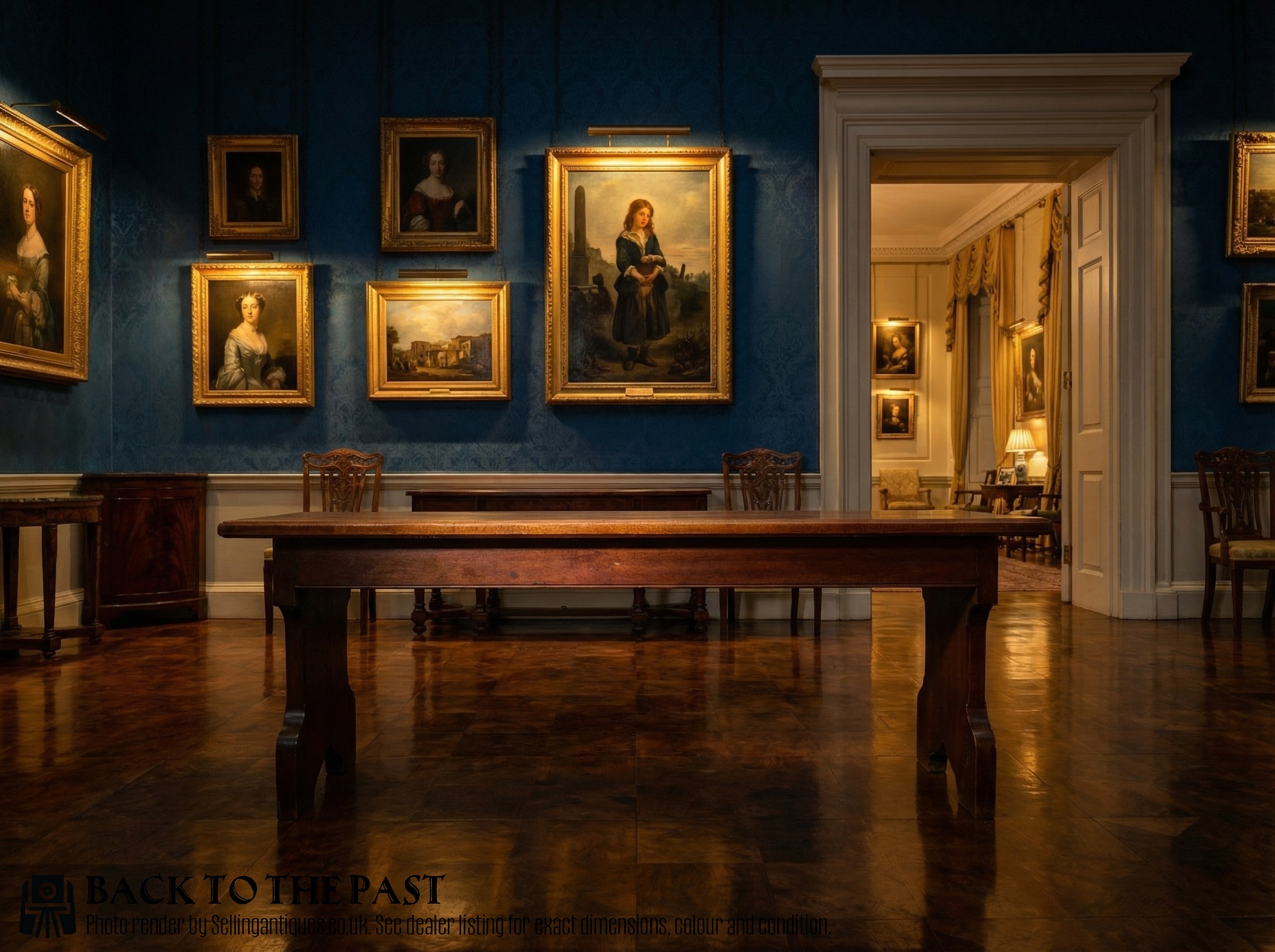
Rustic Solid Oak Table
When you search for a rustic solid oak table, you are looking at substantial wooden furniture designed for gathering, dining, and writing. The selection spans centuries of domestic life, taking the form of large refectory dining tables, gateleg tables, and smaller side or coffee tables.
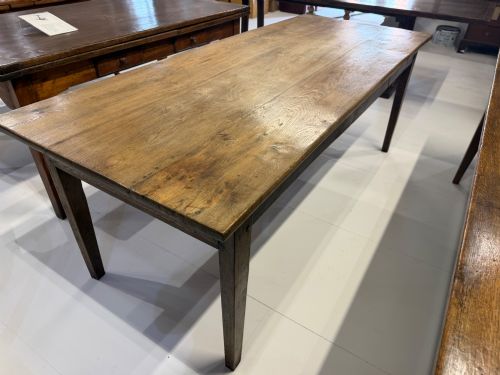
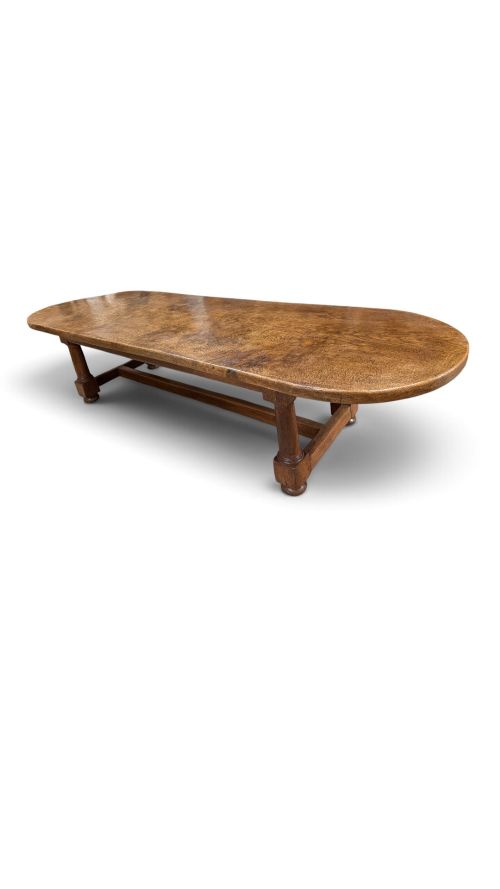
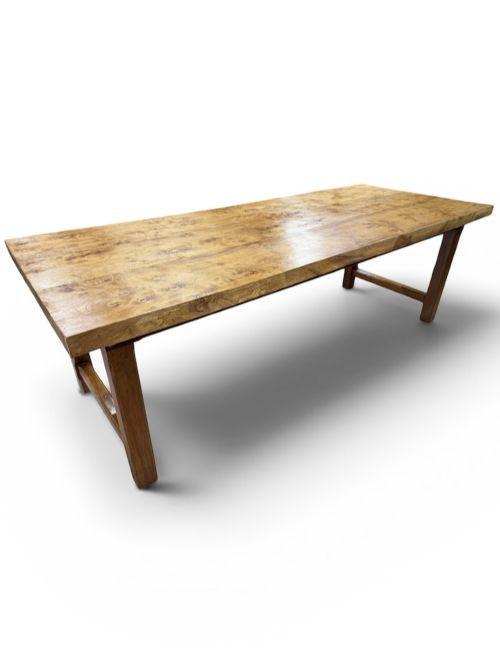
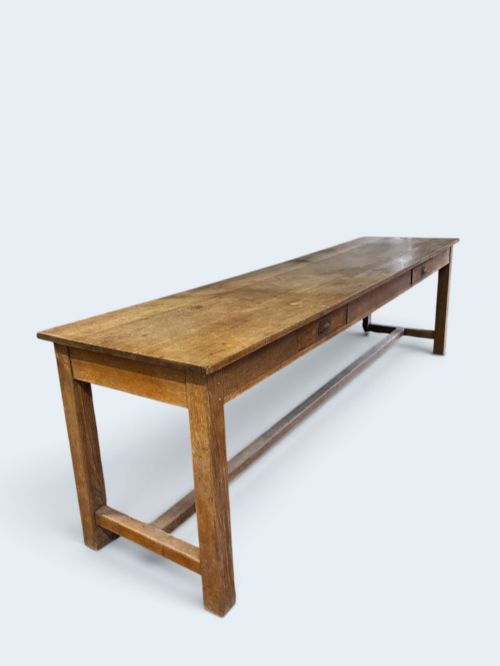
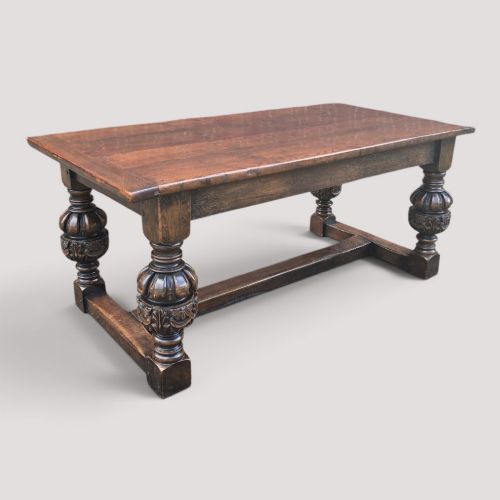
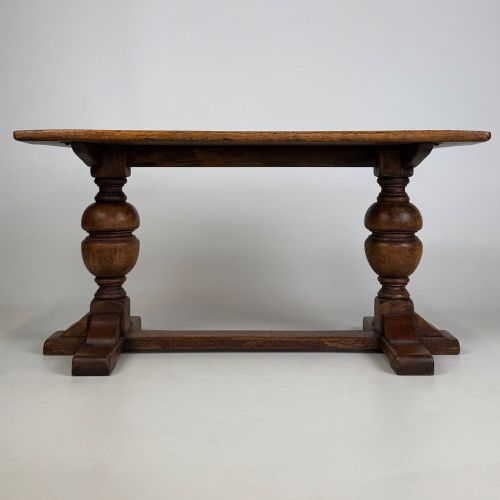
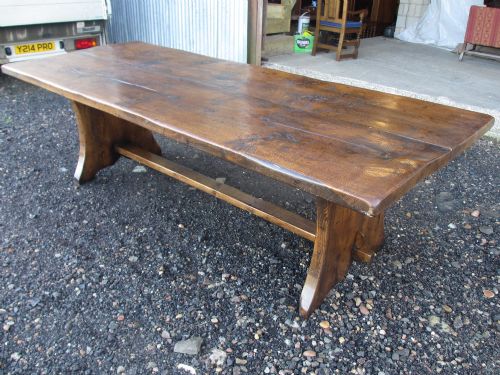
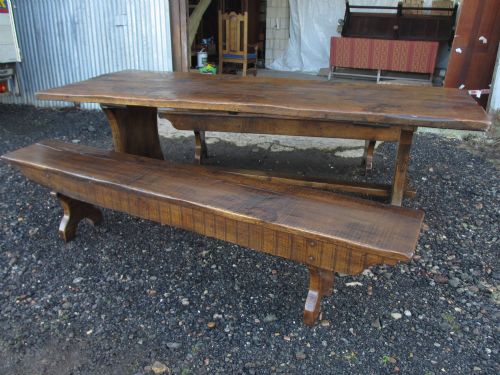
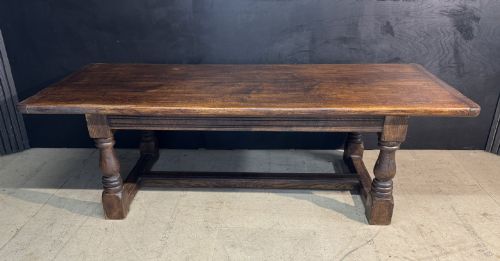
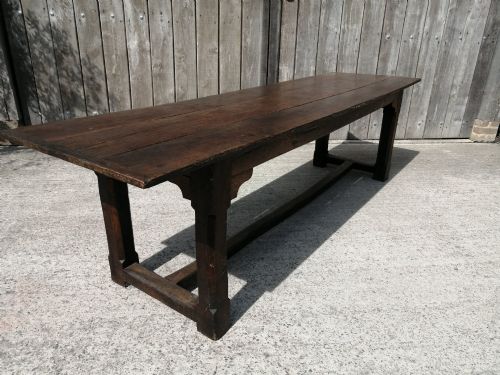
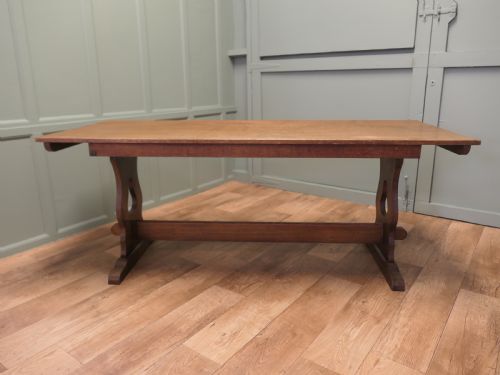
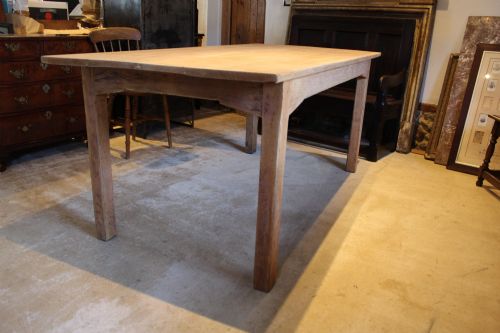
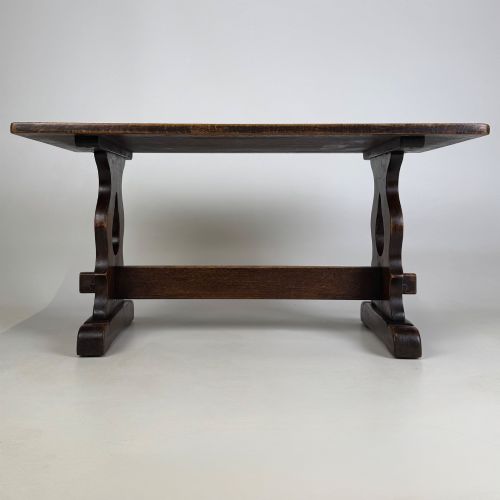
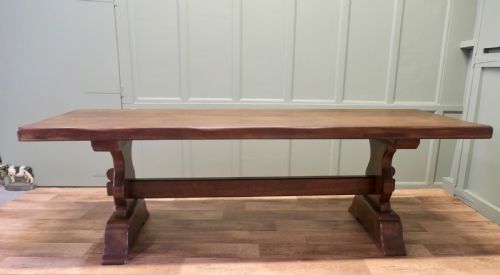
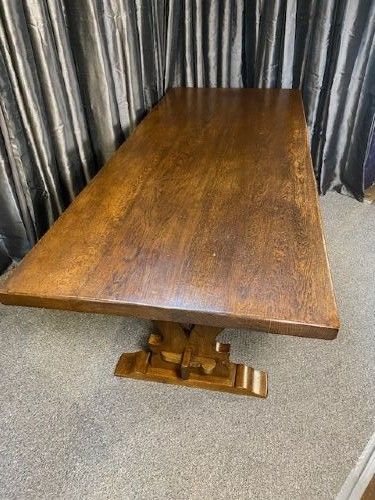
The version you are most likely to meet on this page is the refectory or farmhouse dining table in oak, often dating from the nineteenth or early twentieth century. These pieces show deep timber grains, heavy plank tops, and sturdy trestle or four-leg bases intended to anchor a kitchen or dining room.
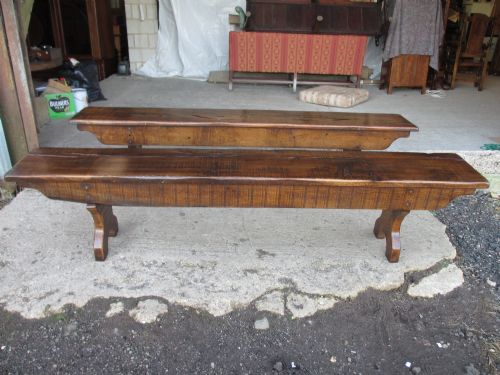
Beyond the standard dining formats, the evidence includes occasional pieces like writing desks, cricket tables, and benches. Their origins stretch from eighteenth-century English and French workshops through to Edwardian interpretations of earlier styles.
What varies in quality
The distinction between standard utility and finer craftsmanship lies in the selection of the timber and the integrity of the joinery. Tables featuring single plank tops or tightly fitted joints demonstrate superior handling by the maker compared to simpler assembled boards.
Proportion and structural balance separate ordinary pieces from exceptional ones. Refectory tables with well-shaped trestle ends and balanced stretcher bases offer a visual harmony that elevates the piece beyond mere utility.
Listings span periods from the eighteenth century through the Edwardian era to the 1940s, utilising materials including oak, elm, walnut, brass, and iron.
The Rustic Solid Oak Table Glossary
- Refectory table
- A long narrow dining table originally built for monastic dining halls. These sturdy tables typically feature thick plank tops supported by trestles or heavy legs connected by stretchers.
- Gateleg table
- A drop-leaf table with hinged legs that swing out to support the folding leaves. This design allowed tables to be folded down against a wall when not in use.
- Cricket table
- A small, lightweight occasional table standing on three splayed legs. The three-legged design kept the table stable on uneven flagstone floors.
- Joint stool
- A sturdy wooden stool constructed with mortise and tenon joints rather than turned legs alone. They served as flexible seating around early dining tables.
- Arts and Crafts
- A design movement valuing handcraft, traditional materials, and simple utility over mass production. Pieces from this tradition show honest construction and understated detail.
Rustic Solid Oak Table: Frequently Asked Questions
How do I date an oak table?
Dating relies on examining the construction methods, tool marks left on the timber, and the overall style of the legs and stretchers. Earlier pieces from the eighteenth century often display hand-sawn surfaces and pegged joints, whereas Edwardian and later examples show more uniform machining.
Hardware such as hinges and screws also provides clues to the period. Hand-forged ironwork points to older eras, while machine-made brass fittings are typical of nineteenth- and twentieth-century production.
Can I use an antique table daily?
These tables were built for daily utility and domestic work, making them well-suited for modern family life. Solid oak is a dense, hard wood that withstands regular use when treated with reasonable care.
Using placemats and coasters helps protect the historic surface from heat and moisture rings. Regular maintenance with appropriate wax preserves the timber without altering its character.
What is a refectory table?
A refectory table is a long, rectangular dining table designed for communal meals. They typically feature heavy plank tops resting on trestle ends or stout legs joined by low stretchers.
Originally developed for large dining halls, they became staple forms in farmhouses and country homes. Their generous proportions make them practical for modern dining spaces.
What is solid oak construction?
Solid oak construction means the visible parts of the furniture are made entirely from natural oak timber rather than veneered panels over secondary woods. This ensures the material can age, develop a patina, and be repaired over generations.
Tables built this way have significant weight and structural integrity. The timber reacts to humidity changes in the room, which is a normal characteristic of genuine wood.