


Victorian Inlaid Centre Table
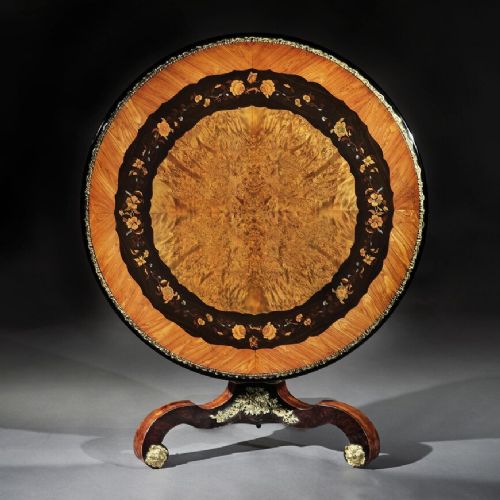
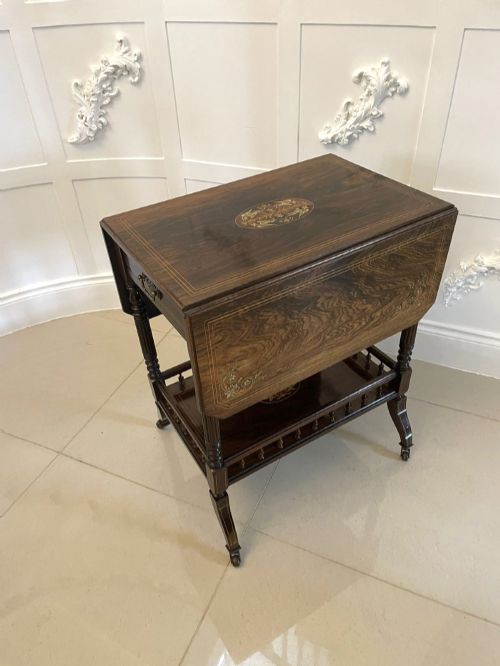
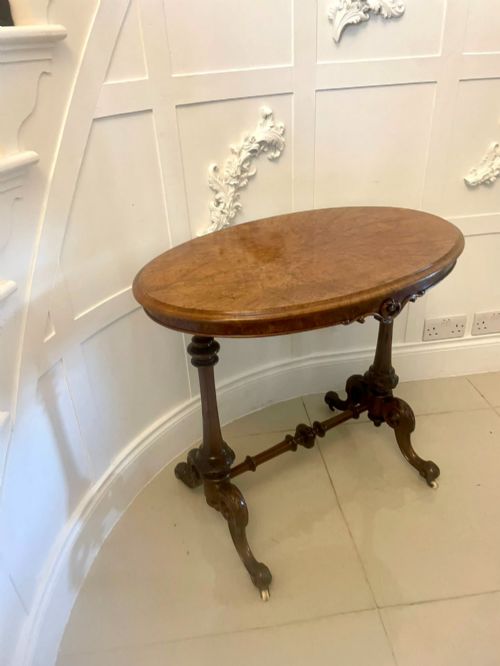
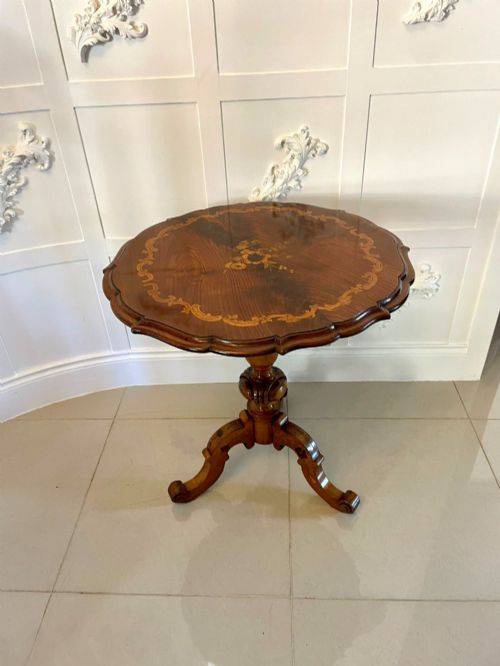
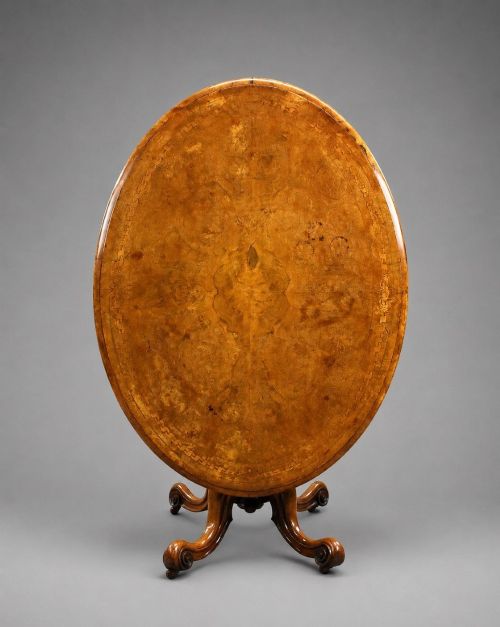
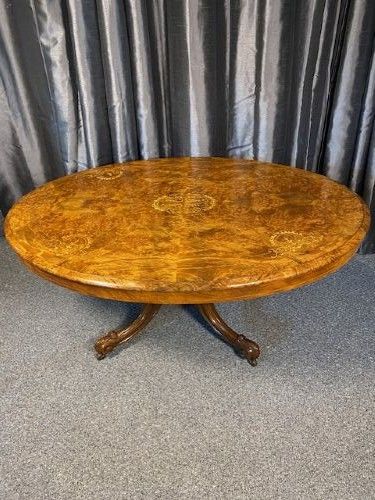
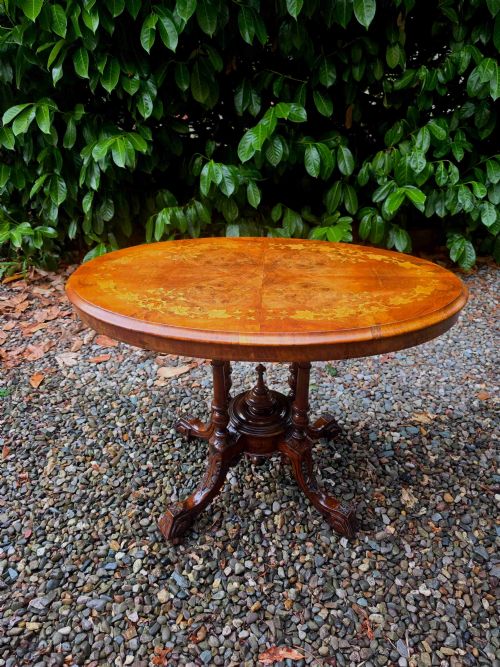
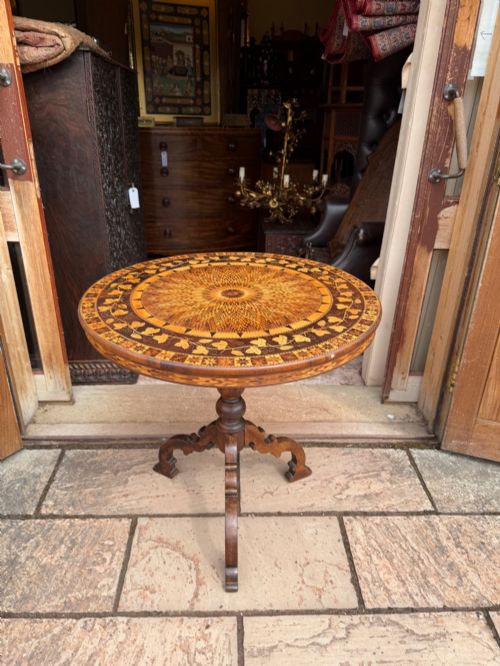
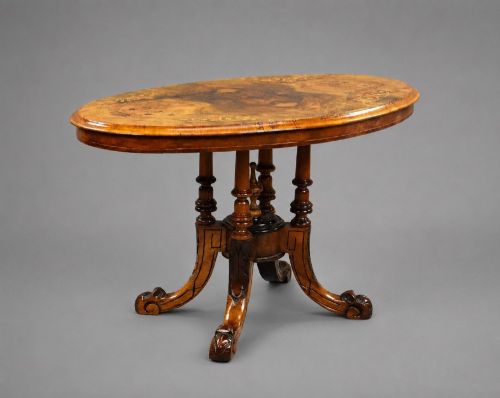
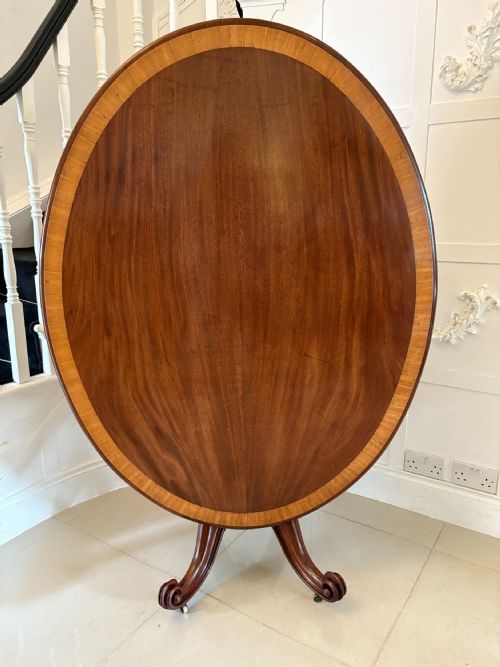
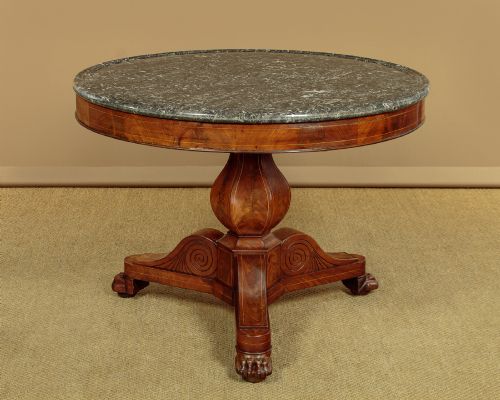
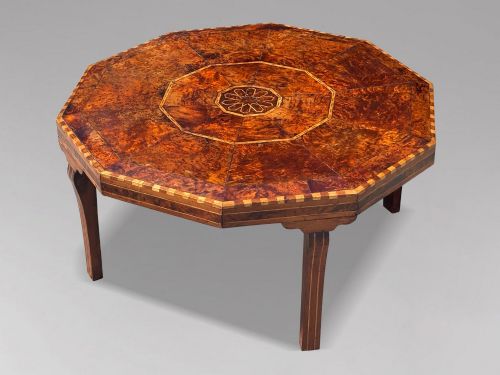
A victorian inlaid centre table sits proudly in the middle of a room, combining rich timber with intricate detail to draw the eye.
Victorian Inlaid Centre Table
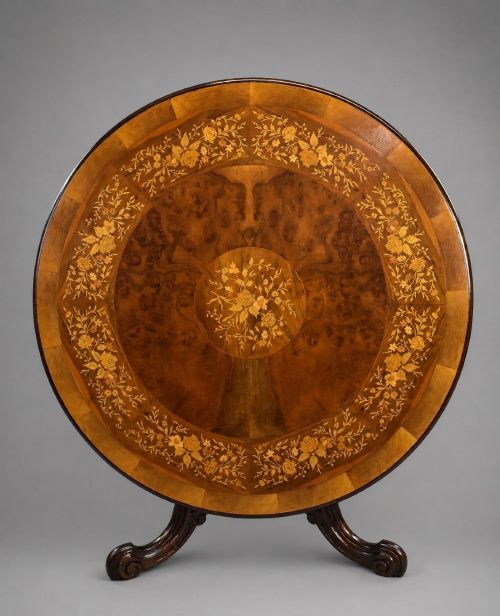
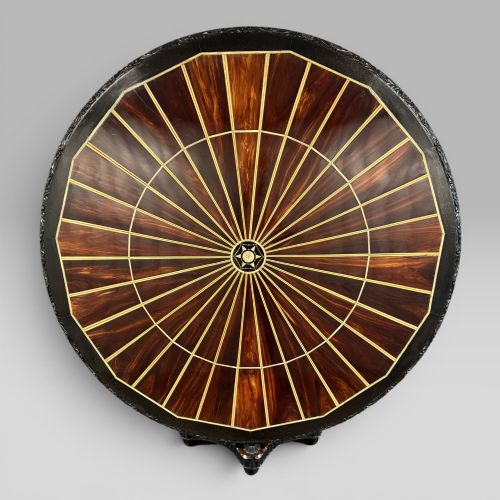
Beyond standard occasional uses, these tables span breakfast, dining, games, and lamp variations. Makers utilised the generous surface areas to display marquetry patterns, floral motifs, and geometric banding that define the aesthetic of the period.
The form developed to anchor large Victorian interiors, serving as a functional surface for lamps, books, or parlour games while functioning as a primary decorative focal point. Examples range from compact lamp tables to large round entry hall pieces.
How They Were Made
Cabinetmakers constructed the carcases using solid timbers like mahogany or walnut, then applied thin veneers of burr walnut, kingwood, satinwood, or rosewood to create richly figured surfaces. Marquetry inlay employed contrasting woods, boxwood, and mother-of-pearl, cut precisely and pressed into recess channels across the top.
Structural embellishments frequently incorporated cast brass and ormolu mounts, particularly on pieces influenced by French revival styles. Pedestal designs relied on robust internal framing to support heavy tilt-top mechanisms or multi-legged pillar supports without warping.
Listings feature pieces spanning the 19th century, with dates concentrated between 1850 and 1890 using walnut, mahogany, and rosewood.
What Varies In Quality
The sophistication of the marquetry and the choice of timber set finer examples apart from standard workshop output. Dense burr walnut with deep, natural figuring combined with crisp boxwood and fruitwood inlays indicates superior cabinetwork.
Joinery execution and the integration of secondary woods dictate structural longevity. Finer specimens display seamless veneer matching, precise hand-cut inlay without excessive filler, and substantial cast mounts that fit the timber contours exactly.
Edward Holmes Baldock·Anton Seuffert·Egan Workshop
The Victorian Inlaid Centre Table Glossary
- Burr Walnut
- A figured wood harvested from the abnormal growth of a walnut tree, prized for swirling, mottled grain patterns. It forms the primary decorative surface on many nineteenth-century examples.
- Marquetry
- The art of applying pieces of veneer to a structure to form decorative patterns and pictorial designs. Craftsmen used various tinted woods to achieve tonal shading.
- Ormolu
- Gilded bronze mounted onto furniture frames for decorative accent. This technique appeared frequently on pieces influenced by French imperial styles.
- Crossbanding
- A border of veneer laid around the perimeter of a table top with the grain running perpendicular to the central field. It frames the main inlay work.
- Cabriole Leg
- A furniture leg that curves outward and then tapers inward, mimicking an animal's leg in motion. This shape appears widely on nineteenth-century revival tables.
Victorian Inlaid Centre Table: Frequently Asked Questions
Where should I place a centre table?
These pieces function best when positioned in the middle of a spacious room, allowing unobstructed access from all sides. Their finished backs and symmetrical designs ensure they look correct from every angle.
In modern settings, they serve effectively in large entrance halls, open-plan libraries, or drawing rooms as a surface for lamps and decorative objects.
How do I use a tilt-top table?
The tilting mechanism allows the top to lock into a vertical position by releasing a wooden catch beneath the surface. This practical design enabled nineteenth-century households to store tables compactly against walls when floor space was required.
When returning the top to horizontal, ensure the safety latch engages fully before placing heavy items on the surface.
Are these tables suitable for daily dining?
Certain variations designated as breakfast or dining tables feature the robust proportions and stability needed for regular seating use. Marquetry surfaces, however, require careful protection with table pads or linens to prevent scratching from tableware.
Smaller occasional and lamp versions lack the knee clearance and surface area required for comfortable dining.
How do I identify a chess top table?
A chess top incorporates an inlaid playing grid, usually constructed from alternating squares of light and dark woods such as boxwood and walnut, integrated directly into the centre of the table surface. These multi-functional pieces often include hidden drawers beneath the top for storing game pieces.
They combine standard parlour table utility with dedicated recreational use.