

Victorian Inlaid Accent Table
A victorian inlaid accent table brings rich timber and intricate decoration to a room, offering a compact surface suited to lamps, books or display.
Victorian Inlaid Accent Table
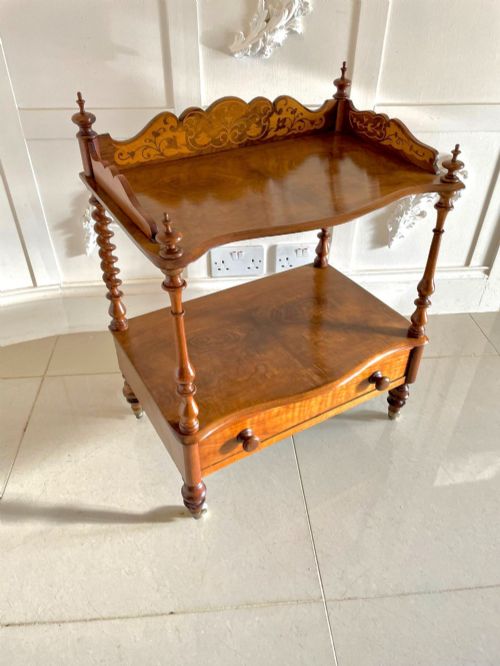
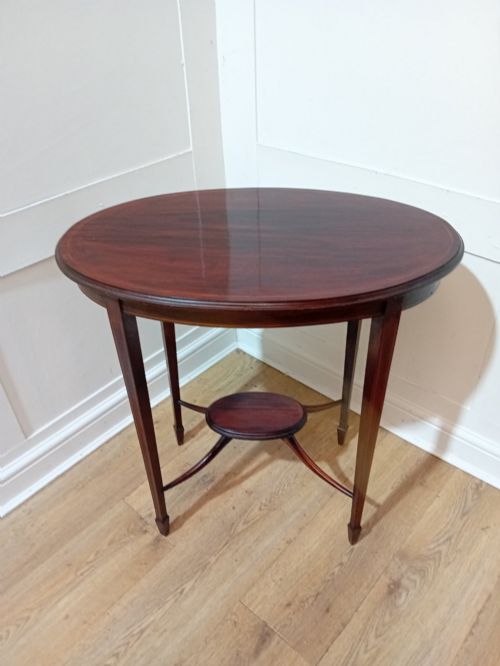
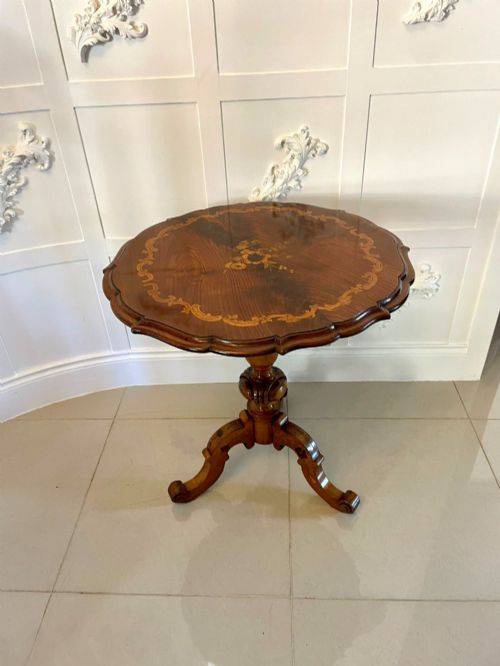
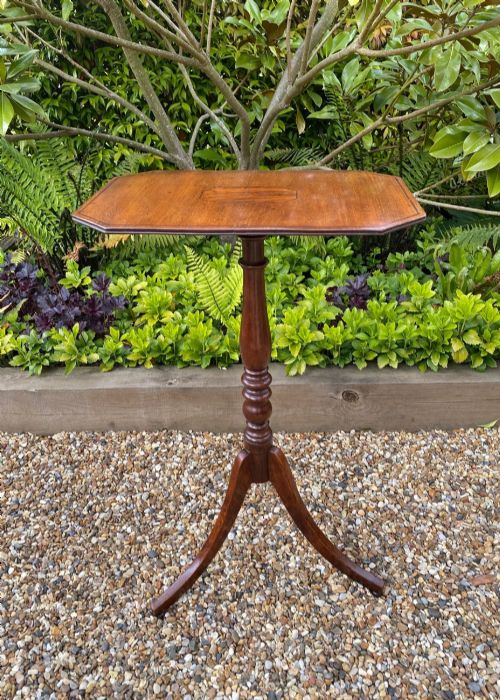
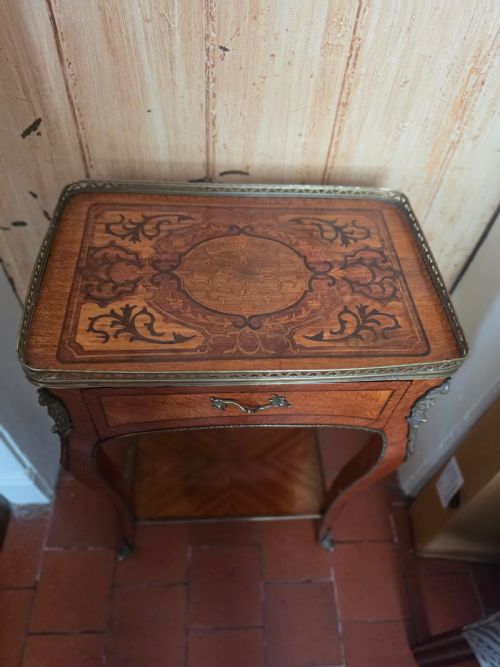
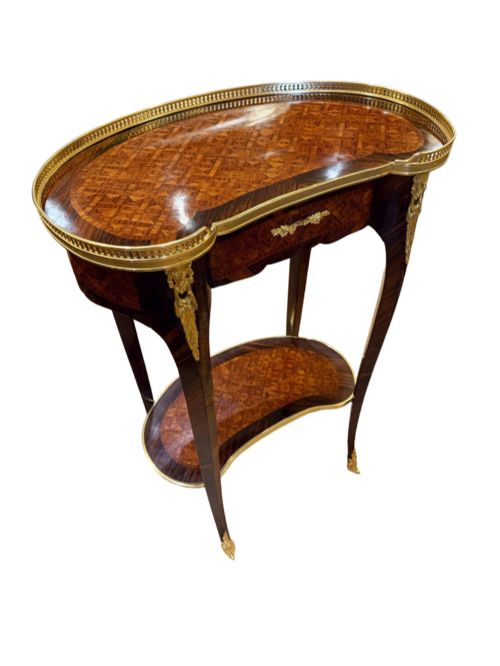
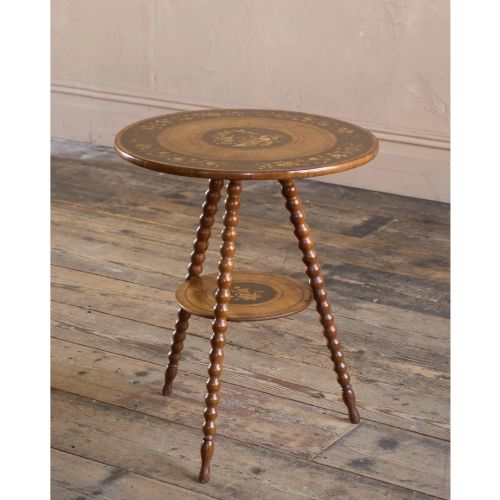
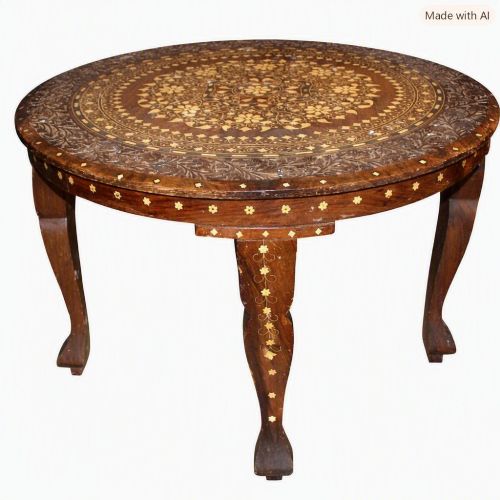
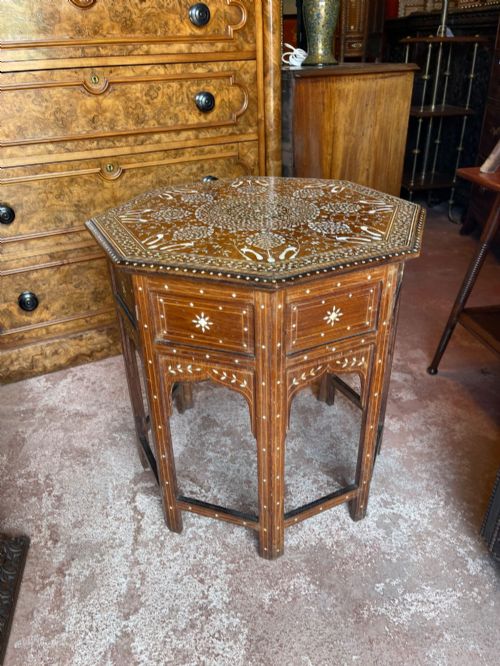
A victorian inlaid accent table encompasses a diverse group of nineteenth-century small tables, including lamp tables, occasional pieces, wine tables, and centre tables. Walnut and mahogany form the foundation of most examples on this page, often shaped into oval, circular, kidney, or octagonal formats.
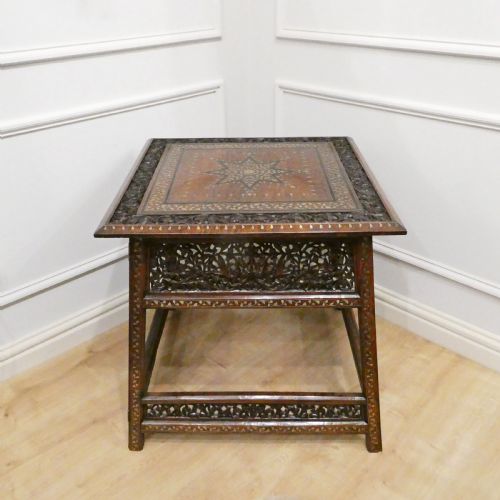
The selection extends beyond standard domestic forms to include specific regional interpretations such as Anglo-Indian, Moorish Revival, and Italian tables. These pieces utilise distinctive regional geometries and decorative motifs while maintaining the practical scale expected of an accent table.
Dated examples span primarily from the mid to late nineteenth century, reflecting the periods commonly designated as Victorian or nineteenth century. Buyers encounter both pedestal supports and traditional four-legged configurations, with occasional nest structures and folding occasional formats appearing among the listings.
Materials and Technique
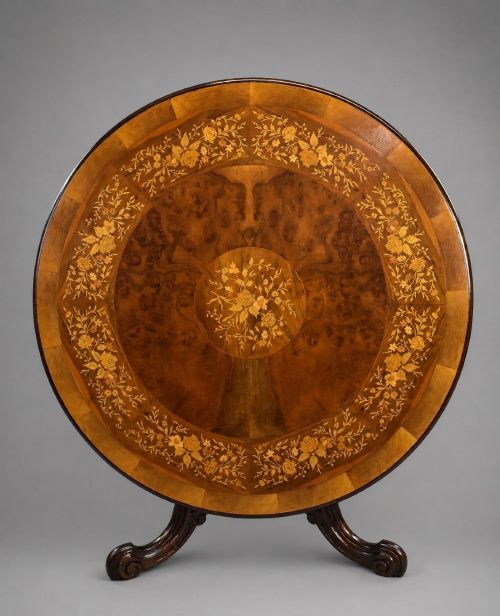
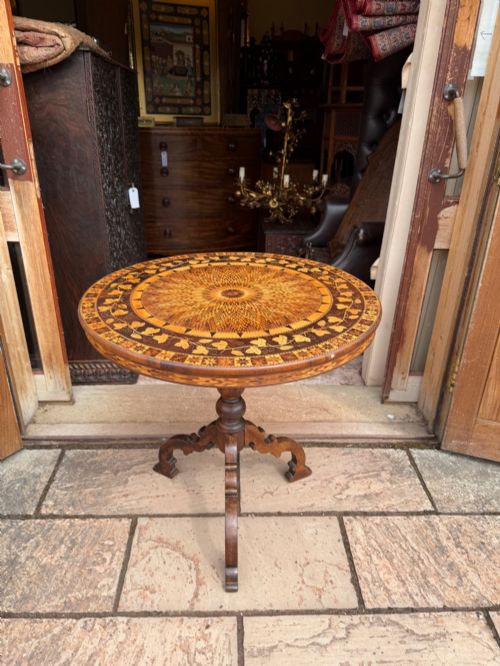
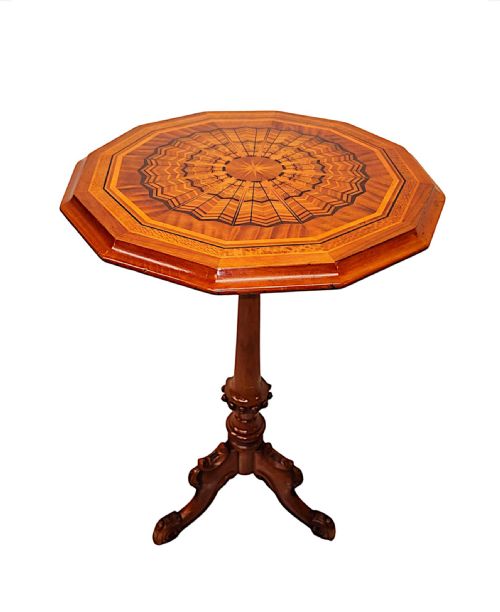
Cabinetmakers employed dense hardwoods like burr walnut, rosewood, and mahogany as the structural base, applying choice veneers to primary surfaces. Marquetry and wood inlay create detailed floral or geometric patterns across tabletops, utilising contrasting timber tones to build depth.
Alternative traditions incorporate surface ornamentation through bone, mother-of-pearl, and sheet brass set directly into the wood or brass wire outlining panels. Cairo-ware examples introduce white-metal and copper-inlaid brass surfaces, while specialised regional pieces combine carved woodwork with intricate inlay techniques.
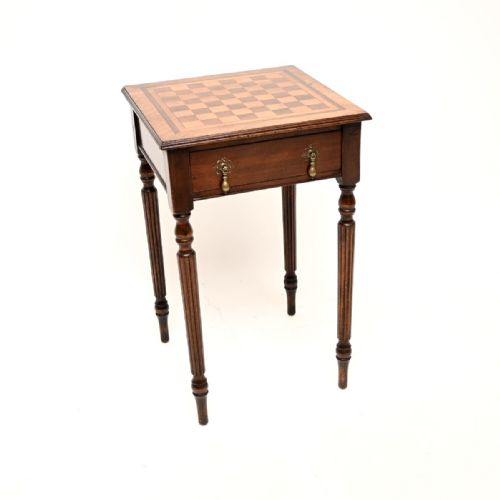
Some tables double as chess boards, proving that nineteenth-century folk took their parlour games very seriously indeed.
Judging Quality
The refinement of the marquetry and the choice of veneer distinguish standard production from exceptional examples. Dense, highly figured burr walnut or varied specimen woods indicate superior material selection by the maker.
Structural integrity and the precision of joint work separate well-preserved pieces from compromised ones. Crisp carving details on legs and aprons, alongside tight, flush joints in the inlay work, point to superior workshop standards.
Gillows·Liberty & Co·Collingson & Lock·Edwards & Roberts·Anton Seuffert
The Victorian Inlaid Accent Table Glossary
- Marquetry
- Decorative veneer work arranged in pictorial or geometric patterns. Craftsmen piece together various wood types to create surface designs.
- Burr walnut
- Timber taken from a tree growth displaying distorted grain patterns. This produces complex, swirling visual textures highly valued in tabletops.
- Occasional table
- A small, movable table designed for specific, intermittent use within a room. Common formats include lamp and side tables.
- Cairo-ware
- Brass or metalware vessels and tables inlaid with copper and silver from late nineteenth-century Egypt. These items often feature dense, geometric Islamic motifs.
- Parquetry
- Geometric mosaic woodwork forming repeating patterns like cubes or chevrons. It differs from marquetry through its strictly geometric layout.
Victorian Inlaid Accent Table: Frequently Asked Questions
What is a victorian inlaid accent table used for?
These tables provide a sturdy surface for small lamps, decorative objects, or drinks within sitting rooms and bedrooms. Their compact dimensions allow them to fit beside armchairs or against walls without dominating the floor space.
Historically, specific forms served specialised functions like chess, writing, or holding candles. Today, they primarily serve as decorative furniture that brings period character and practical tabletop space to modern interiors.
How do I identify a Victorian accent table?
Look closely at the timber selection, construction methods, and decorative vocabulary typical of the nineteenth century. Burr walnut, rosewood, and mahogany form the primary body woods, often enhanced by contrasting fruitwood inlay or marquetry.
Check underneath the piece for traditional joinery, handmade screw threads, and timber shrinkage consistent with nineteenth-century cabinetmaking. Regional variants from Anglo-Indian or Moorish workshops display distinct carved frameworks and metallic wire inlay.
Where should I place an accent table?
Position the table beside a sofa or accent chair where a stable surface is needed for a reading lamp or cup. Their decorative tops make them effective as standalone display pieces in hallways or empty corners.
Keep these tables away from direct heat sources and strong sunlight to protect the fragile wood veneers and natural glues. Regular placement in stable indoor environments preserves the delicate marquetry and polished finishes.
What is the difference between marquetry and parquetry?
Marquetry involves cutting diverse veneers to form pictorial scenes, scrolls, or floral arrangements across the tabletop. This technique prioritises organic shapes and flowing botanical designs.
Parquetry relies on strictly geometric shapes like squares, triangles, and diamonds to create repeating mathematical patterns. Both techniques enhance the visual appeal of nineteenth-century occasional furniture.