

Carved Brown Tripod Table
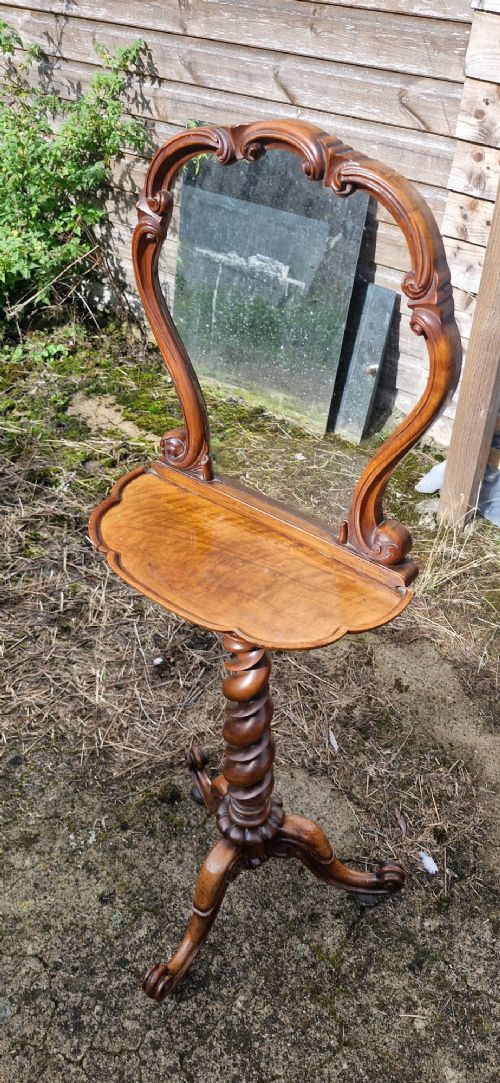
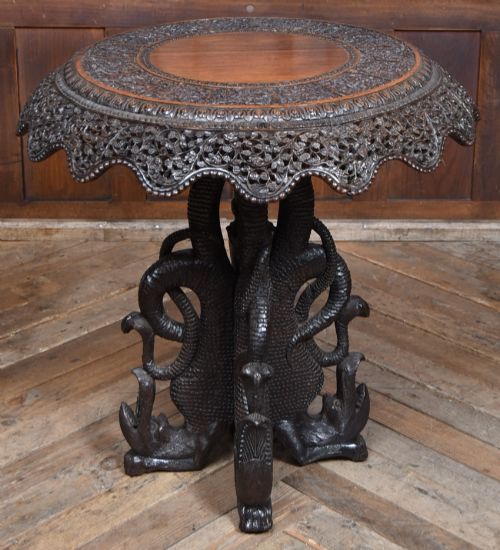
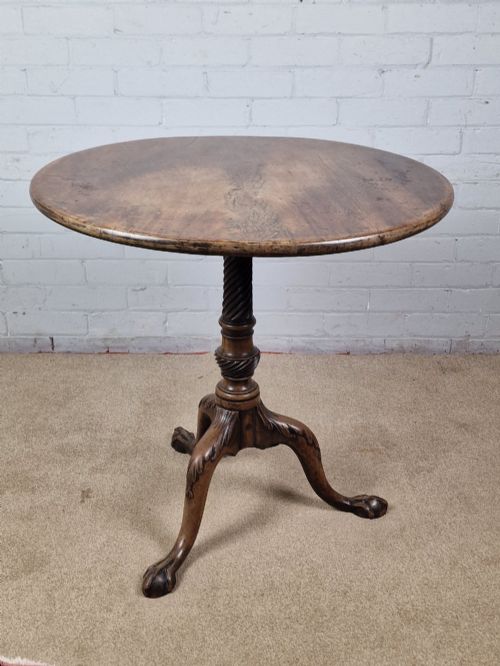
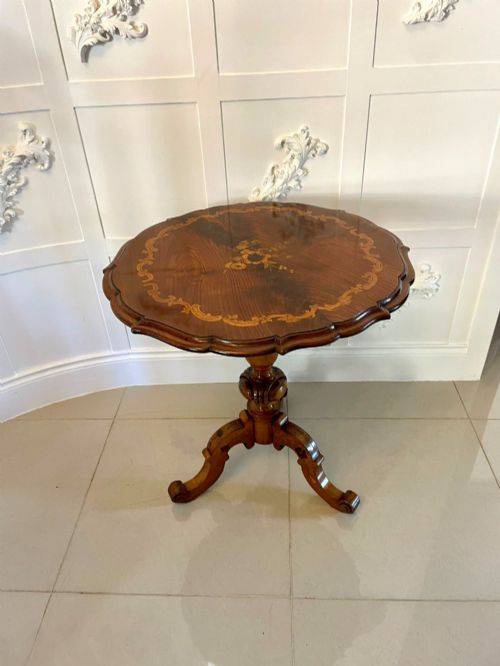
A carved brown tripod table brings three legs and a pillar together to hold a lamp, book, or glass in any room.
Carved Brown Tripod Table
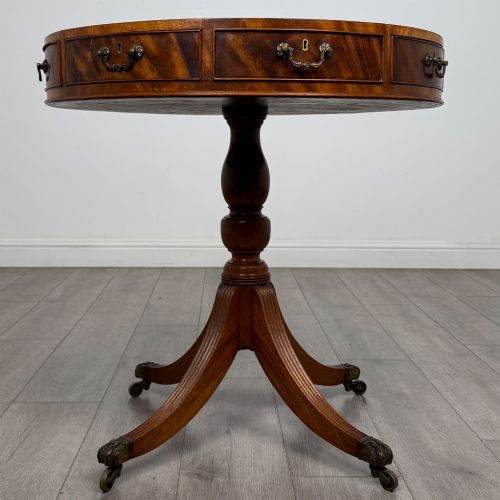
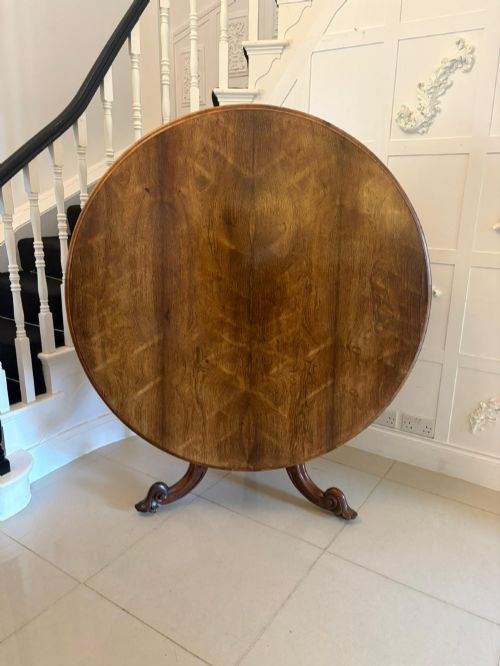
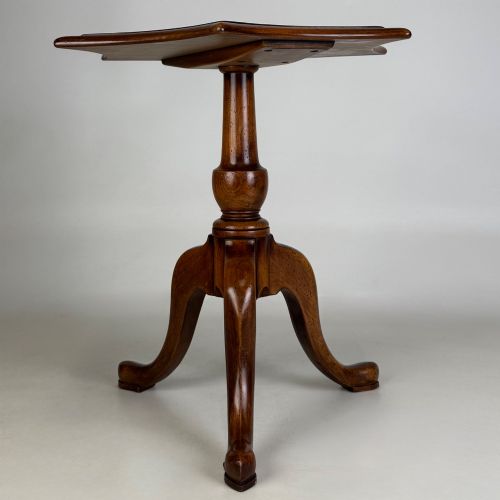
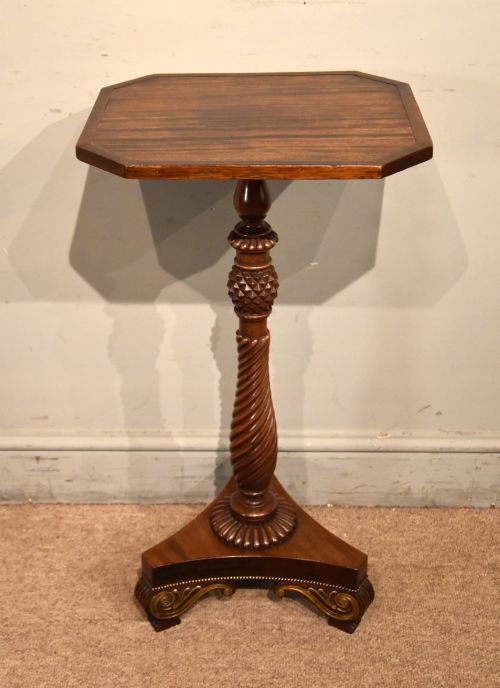
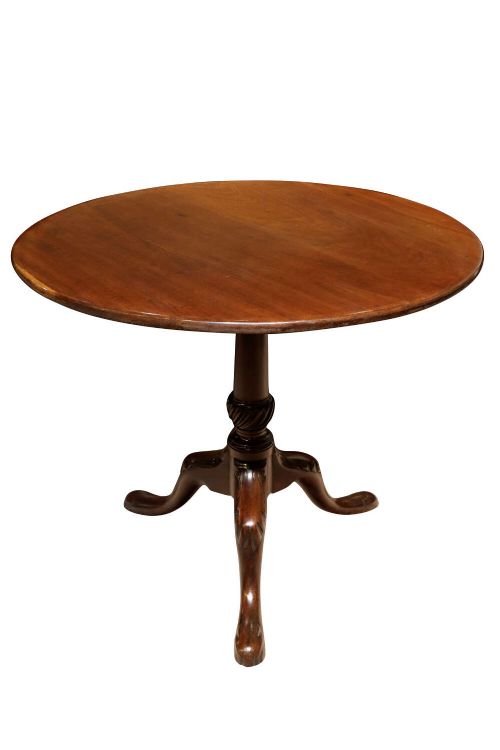
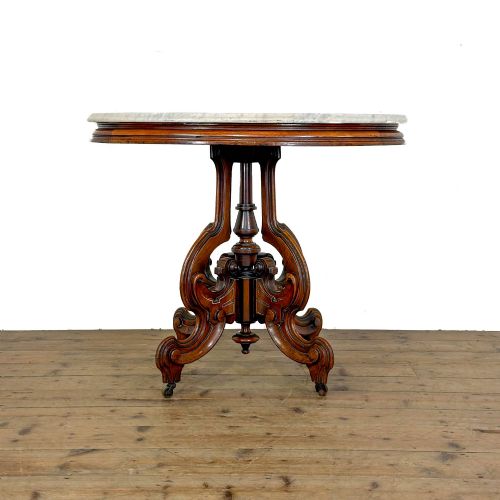
A carved brown tripod table stands on a central pillar supported by three feet, creating a stable footprint for use beside a chair or in the centre of a room. You will frequently encounter mahogany and walnut versions across this page, alongside occasional oak and rosewood examples.
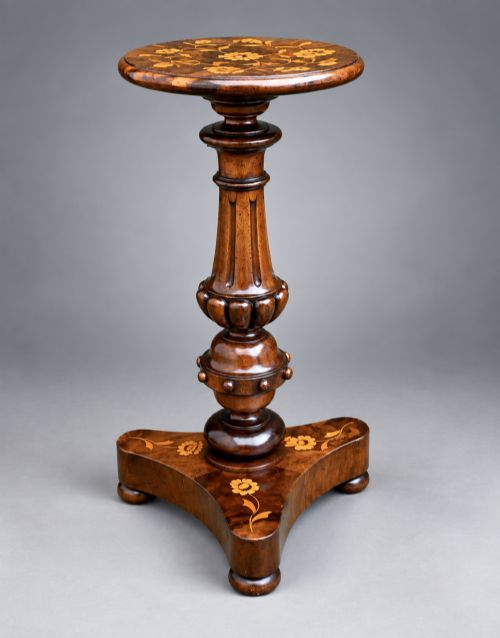
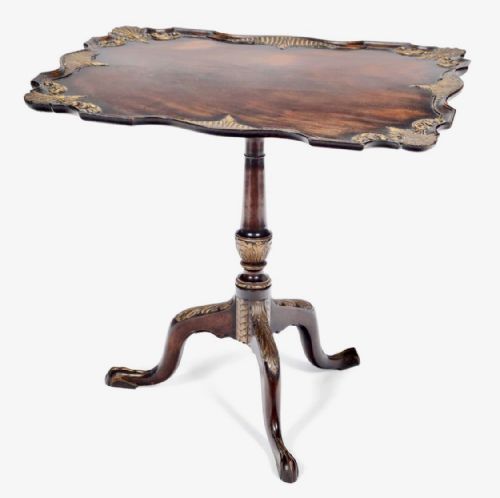
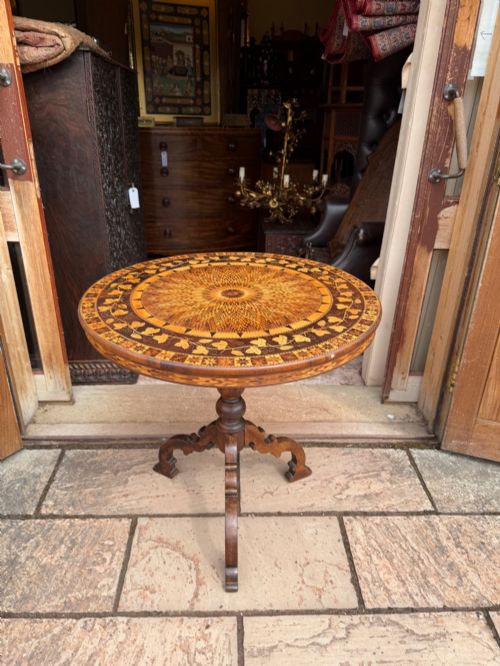
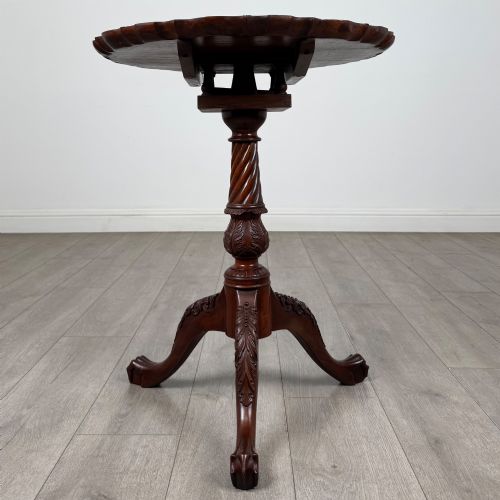
The selection ranges from compact wine tables and tilt-top designs to larger occasional and centre tables spanning the Georgian, Victorian, and Edwardian periods. Some pieces incorporate decorative elements such as pie crust edges, birdcage mechanisms, or marquetry inlay.
Makers drew on various historical aesthetics, producing items in Georgian, Regency, Gothic Revival, and Chippendale styles. These forms served practical domestic functions, from holding lamps to functioning as occasional dining surfaces.
How they were made
Cabinet makers utilised dense timber such as mahogany, walnut, oak, and rosewood, often selecting figured grains or burr veneers for the top surface. Timber selection dictated both the colour and the grain pattern visible across the table top.
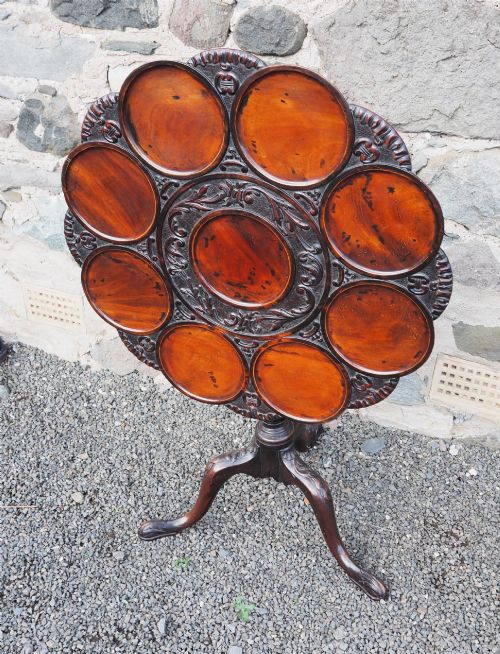
Carving was applied by hand to the central pedestal, legs, and borders, sometimes complemented by parcel gilding or marquetry inlay. Mechanics such as tilt-top mechanisms and birdcage pivots required precise carpentry to allow table tops to pivot and fold.
Listings span multiple centuries, incorporating Georgian, Victorian, and Edwardian examples in mahogany, walnut, oak, and rosewood.
What varies in quality
The refinement of the hand carving on the pedestal and legs distinguishes standard production from superior work. Crisp detailing in the foliage, claw feet, or pillar turning demonstrates the maker's skill.
The quality of the timber grain, particularly on figured mahogany or burr walnut tops, determines visual depth. Construction integrity, including the smooth operation of tilt-top or birdcage mechanisms, also marks out better examples.
The Carved Brown Tripod Table Glossary
- Tripod table
- A small table supported by a central pillar resting on three legs. These versatile pieces were common from the eighteenth century onwards for domestic use.
- Tilt top
- A tabletop mounted on a hinge mechanism that allows the surface to be rotated and stored vertically against the pillar when not in use.
- Birdcage
- A timber framework beneath a tilt top that allows the table surface to rotate independently of the central pillar.
- Marquetry inlay
- Decorative patterns formed by fitting contrasting pieces of veneer into a prepared wooden ground.
- Pie crust edge
- A carved, scalloped border raised around the perimeter of a circular tabletop.
Carved Brown Tripod Table: Frequently Asked Questions
How do I use a wine table?
A wine table provides a small surface suited for holding a glass, cup, or small lamp beside a seating area. Their compact footprint allows them to fit easily into tight corners or beside armchairs.
In daily life, they function effectively as movable lamp stands or bedside supports rather than primary dining surfaces.
What woods are common?
Mahogany and walnut appear frequently across these listings, alongside oak, rosewood, and pollard oak. Cabinet makers selected these timbers for their strength and rich natural colour.
Fitted veneers such as burr walnut or marquetry inlay were often applied to table tops to create visual pattern and contrast.
How do I date a pedestal table?
Dating relies on examining the timber species, the style of the carving, and the construction methods used on the pillar and legs. Georgian and Regency examples often display cleaner classical lines, whereas Victorian pieces tend to feature heavier carving and darker timber.
Supplementary mechanisms like birdcage pivots or specific edge profiles also help narrow down the period of manufacture.