

Colonial Wood Side Table
A colonial wood side table brings dense imported timbers and intricate regional carving into a room, offering a compact surface with a distinct historical pedigree.
Colonial Wood Side Table
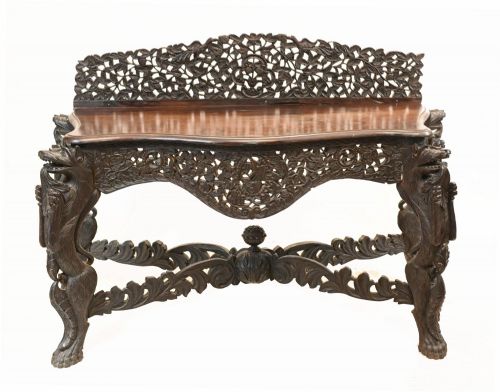
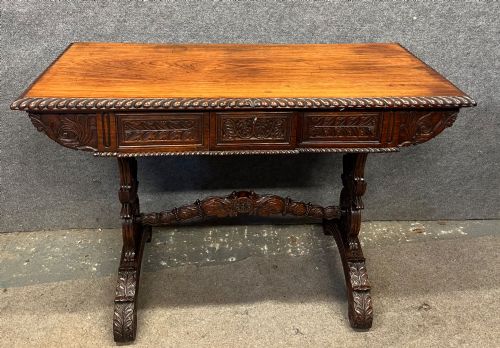
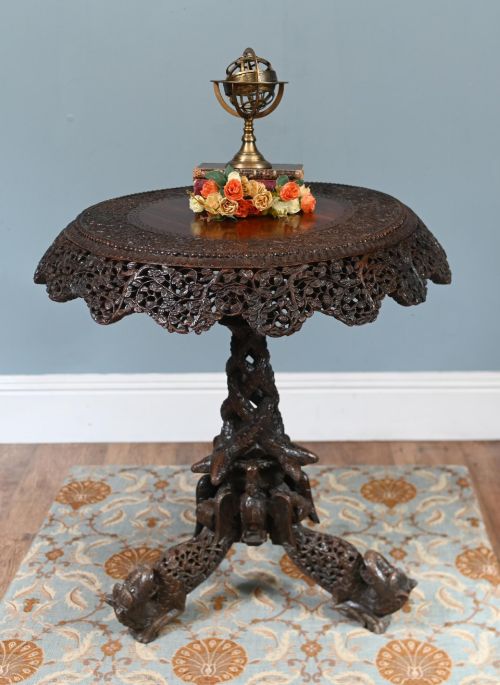
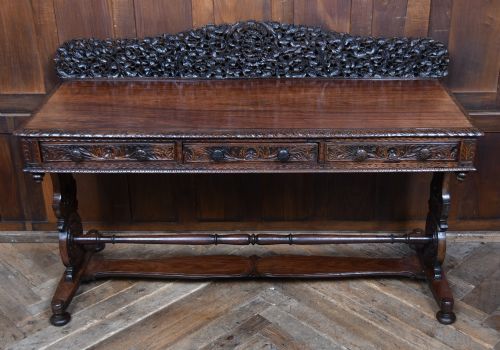
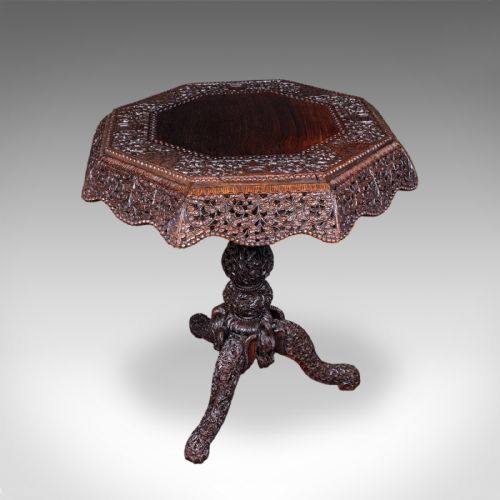
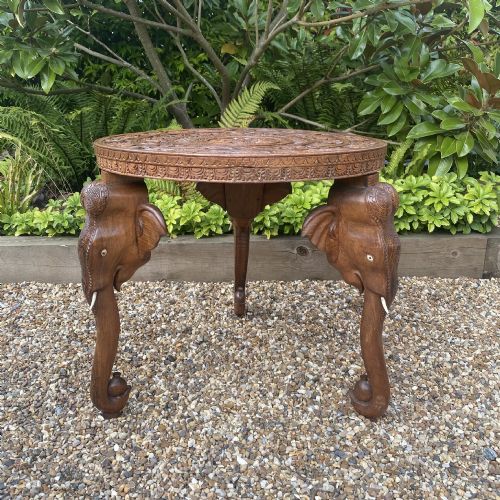
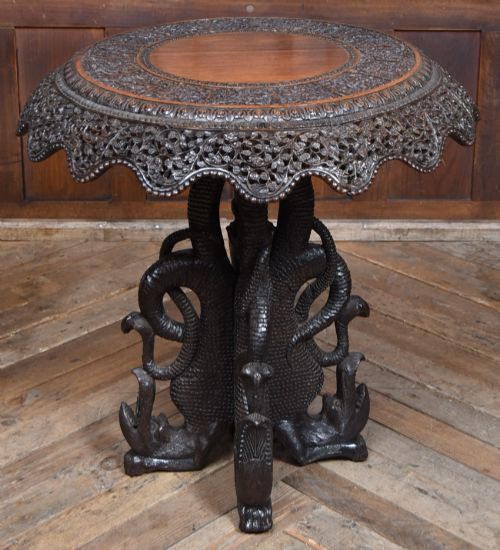
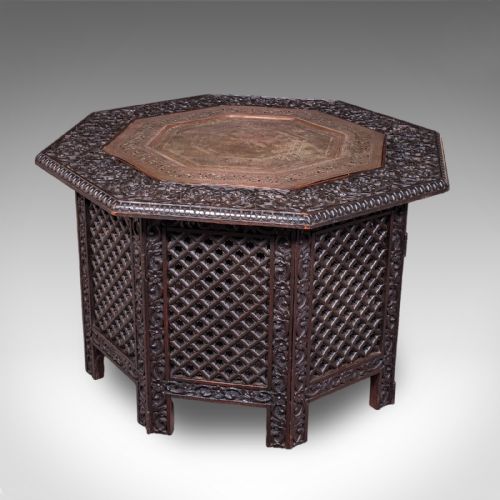
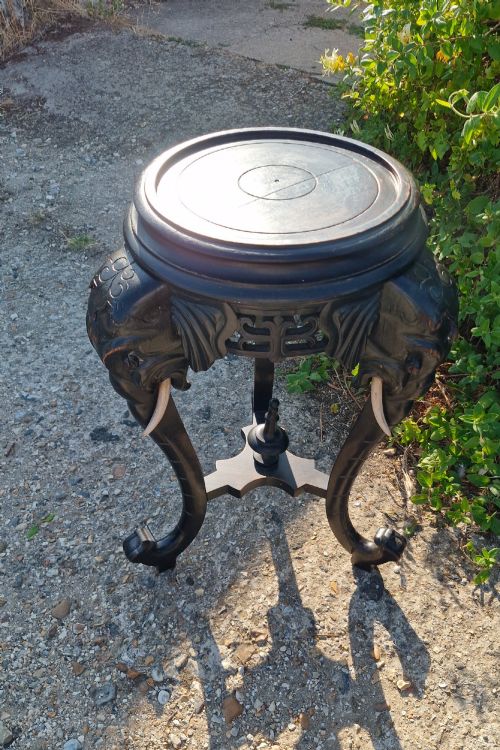
When searching for a colonial wood side table, buyers encounter small supporting furniture created during periods of overseas administration and trade, most frequently originating from nineteenth-century British India, Burma, and Ceylon. These items emerge in diverse forms including occasional tables, coffee tables, low tables, and specialised figural pieces such as elephant and peacock tables.
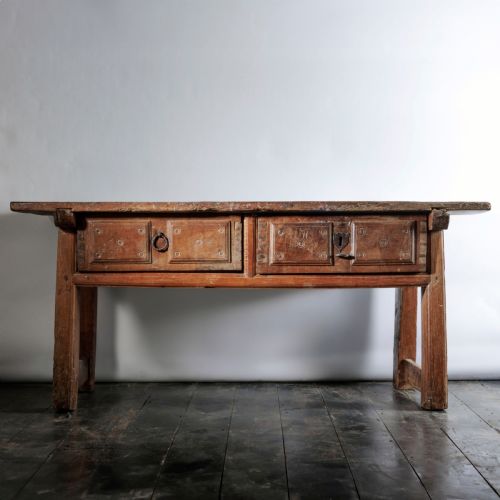
The prevailing examples on this page date from the nineteenth century, spanning decades from the 1860s through to the early 1900s, alongside occasional Spanish colonial and Portuguese examples. Makers utilised regional building traditions to construct compact surfaces intended for drawing rooms and parlours, incorporating local flora and fauna motifs into the woodwork.
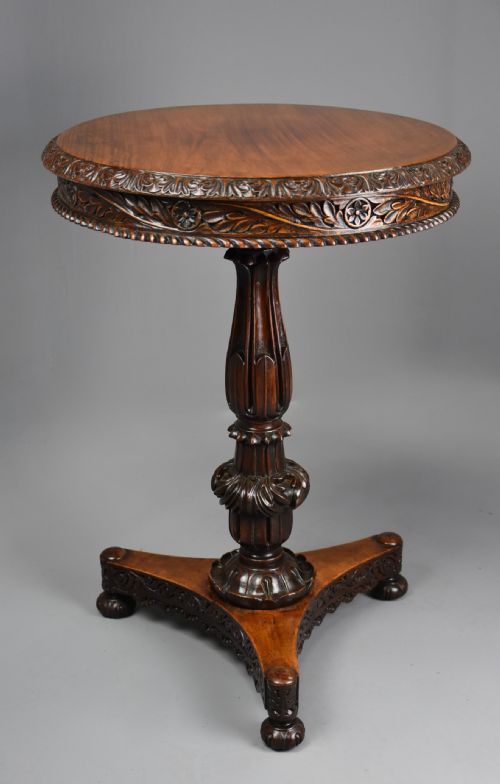
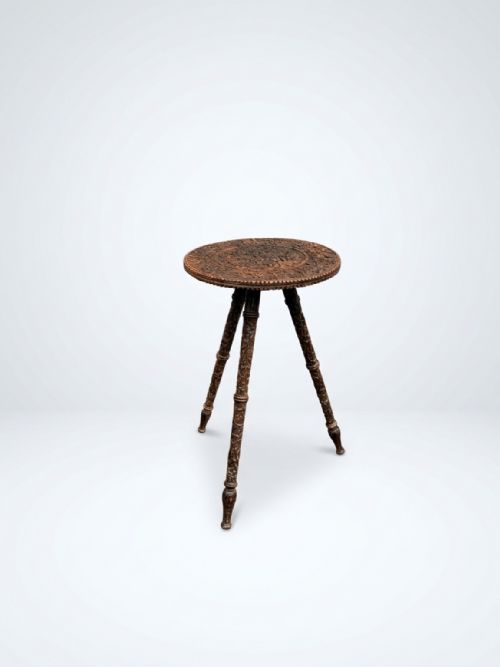
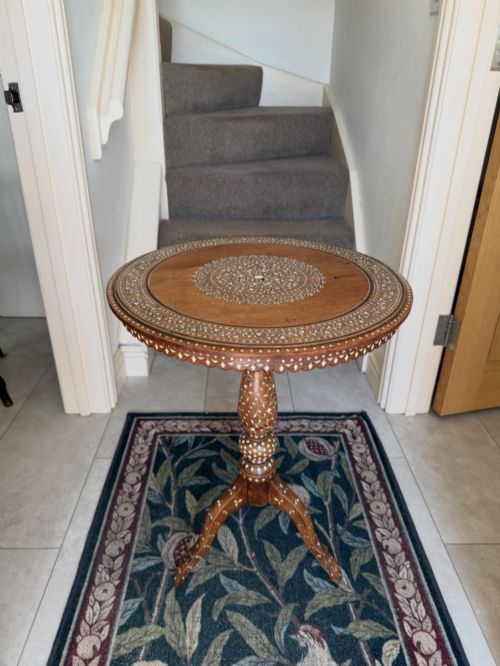
Forms vary from simple circular tilt-top tripod tables to heavily carved multi-tiered tables and console tables. Buyers find that these pieces function practically as bedside surfaces, lamp tables, or central display points while carrying the visual weight of dense tropical hardwoods.
How they were made
Craftsmen utilised dense tropical timbers such as padouk, teak, rosewood, and ebony, which were chosen for their durability and capacity to hold microscopic detail under hand-carving tools. Workshops frequently combined these heavy woods with contrasting materials, inserting brass wire inlay, bone elements, or painted wooden components into the primary surfaces.
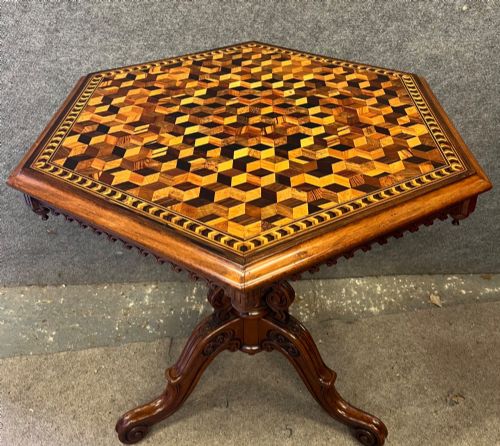
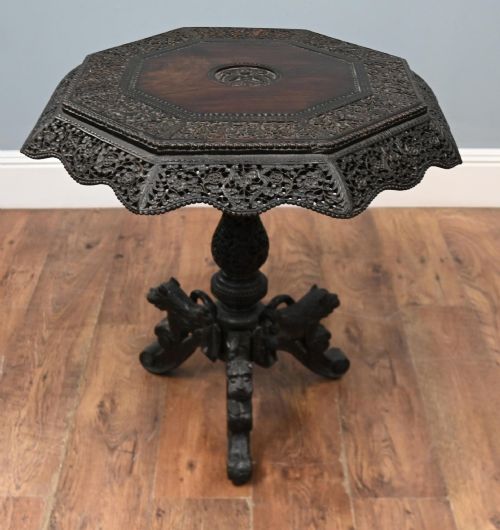
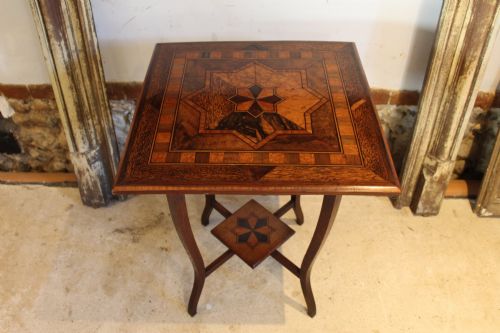
Joinery and surface ornamentation relied heavily on intricate relief carving, piercing, and marquetry techniques to depict foliage, dragons, and animal figures. Artisans in regions such as Hoshiarpur and the Bombay presidency employed specialised multi-media inlay methods, setting bone and brass into dark hardwood carcasses.
Colonial Wood Side Table Retail Price Guide 2026
Typical asking prices for colonial wood side table among the pieces listed under this phrase on Sellingantiques today, from the lower quarter to the upper quarter. They describe what is for sale here now, not the wider market.
Listings feature woods spanning teak, padouk, rosewood, and walnut, alongside decorative additions of brass, bone, and specimen marquetry.
What varies in quality
Quality rests in the crispness and depth of the hand-carving across the frieze and top, distinguishing master workshops from commercial production pieces. Tables featuring deep, undercut foliage or articulated figural elements demonstrate superior technical execution compared to shallow, flat-carved surfaces.
The choice and integration of secondary materials dictate the standard of a piece, particularly where brass wire is neatly flush or bone inlay remains complete within the timber. Construction integrity, seen in the stability of tripod bases and the precise fitting of tilt-top mechanisms, separates fine cabinetwork from simpler utilitarian items.
Anton Seuffert
The Colonial Wood Side Table Glossary
- Padouk
- A heavy, durable reddish-brown tropical hardwood favoured in Anglo-Indian cabinetmaking for its stability and rich natural colour. It darkens gracefully with age.
- Marquetry
- The art of applying small pieces of veneer to a structure to form decorative patterns and pictorial designs. Specimen marquetry utilises various natural wood tones without stain.
- Teapoy
- A small stand or table originally designed to hold a tea caddy, later evolving into a general occasional table. These often feature internal compartments or substantial carved pedestals.
- Tilt-top
- A tabletop hinged to a central pillar, allowing the surface to fold vertically when not in use. This mechanism permits compact storage against a wall.
- Bone inlay
- The technique of embedding small cut pieces of animal bone into carved recesses within a wooden ground. This creates intricate geometric or floral patterns of pale contrast.
Colonial Wood Side Table: Frequently Asked Questions
Where were colonial side tables made?
Production occurred across various regions touched by trade and empire, with many pieces originating in the Bombay presidency, Hoshiarpur, Burma, and Ceylon. European colonial outposts in Spain and Portugal also produced distinct regional variants using local walnut and oak.
Craftsmen adapted indigenous woodworking traditions to suit European furniture forms, creating a unique cross-cultural aesthetic that defined the period's domestic interiors.
How do I care for tropical hardwood tables?
Maintain these surfaces by keeping them away from direct heat sources and rapid humidity fluctuations, which can cause dense timbers and inlay to split. Dust regularly with a dry, soft cloth and apply a minimal amount of appropriate natural wax only when the wood appears dry.
Avoid commercial liquid polishes, as silicone and heavy solvents can degrade historic finishes and loosen delicate brass or bone inlays over time.
What is an elephant table?
An elephant table is a specialised form of occasional furniture featuring carved elephant heads, trunks, or tusks as structural supports or decorative motifs. These pieces were prominently produced in regions of India for export during the Victorian era.
The iconography often incorporates painted wooden tusks or detailed facial carvings directly into the apron and legs of the table.
How can I tell the period of these tables?
Dating relies on examining the timber species, construction methods, and stylistic cues recorded across the nineteenth century. Pieces from the earlier decades frequently display restrained rosewood surfaces, while late-Victorian examples often show denser, deeply undercut carving and multi-tiered structures.
Comparative analysis of regional motifs, such as Anglo-Indian leaf designs versus Spanish baroque turns, helps narrow down the decade and origin of the piece.