

Victorian Indian Tea Table
When you search for a victorian indian tea table, you enter a world of dense botanical carving, rich exotic timbers and folding campaign forms made for colonial life.
Victorian Indian Tea Table
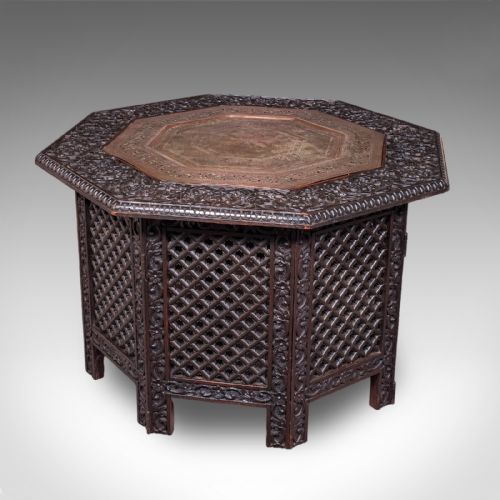
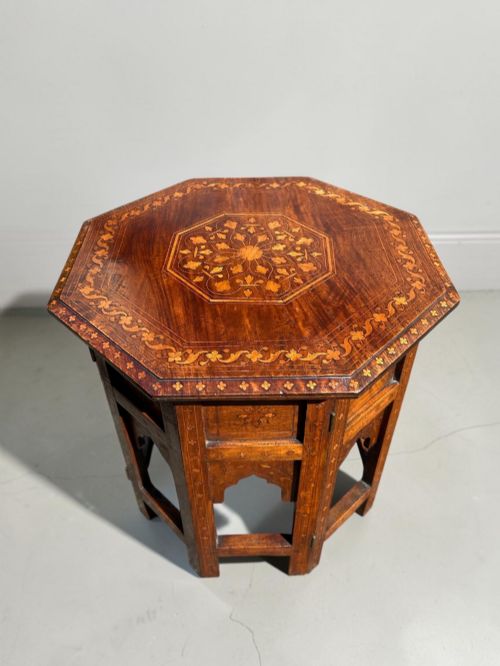
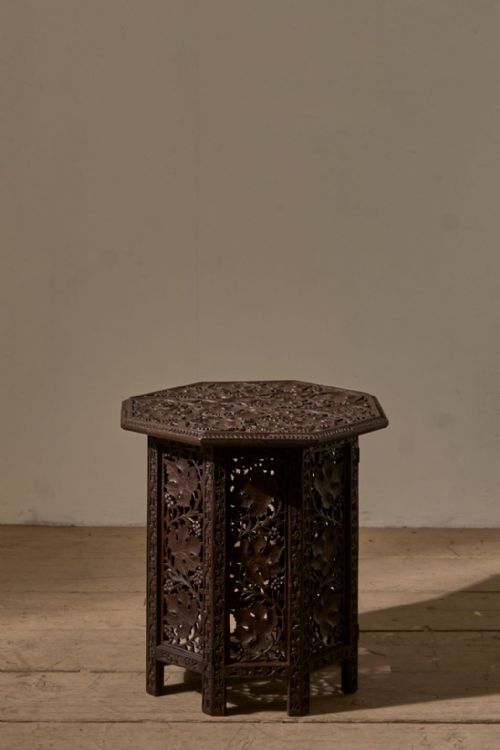
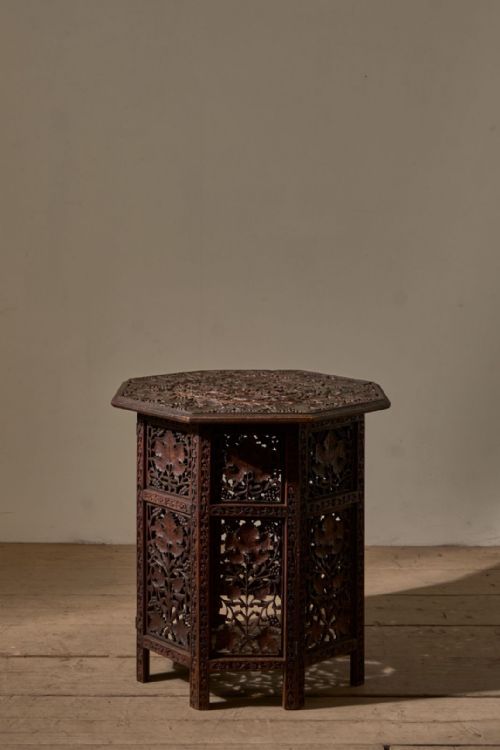
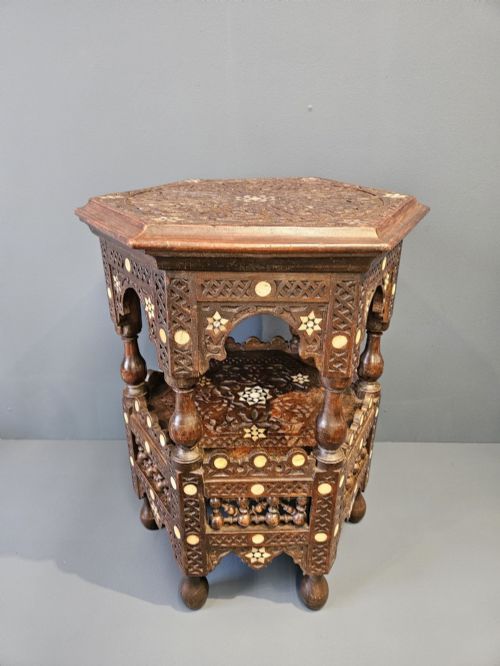
A victorian indian tea table is fundamentally a product of nineteenth-century trade and empire, encompassing folding campaign pieces, occasional tables and intricately carved surfaces designed for colonial drawing rooms. The selection here brings together Anglo-Indian, Anglo-Burmese, and Moorish Revival forms that served as tea tables, lamp stands and coffee tables.
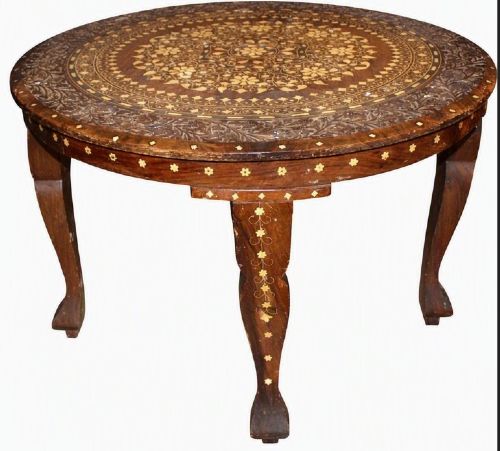
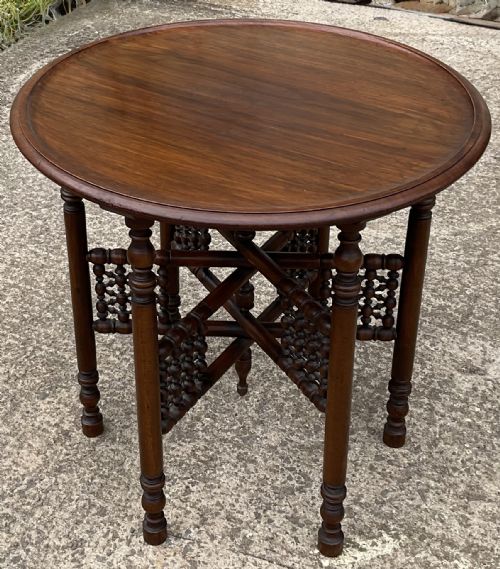
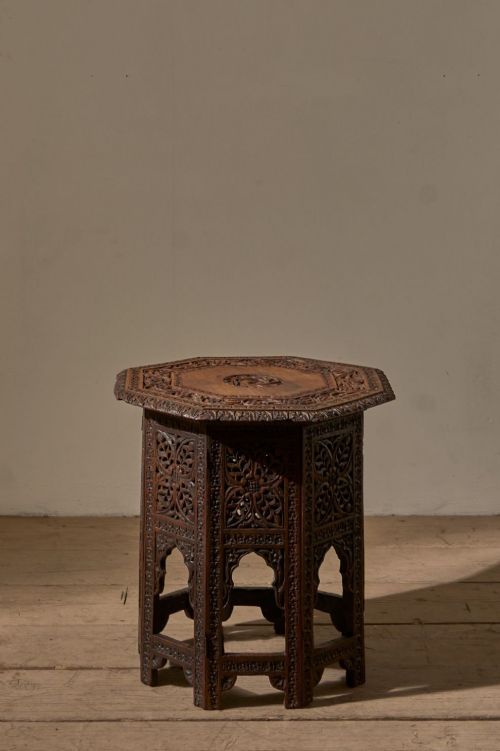
You will most frequently encounter octagonal and circular occasional tables alongside folding campaign tea tables that pack flat for travel. These pieces range from compact lamp tables to large centre tables, often defined by regional workmanship from centres such as Hoshiarpur or Bombay.
While many function as low coffee tables today, their original Victorian contexts varied from serving afternoon tea to acting as decorative display surfaces in domestic interiors influenced by the Aesthetic Movement.
How they were made
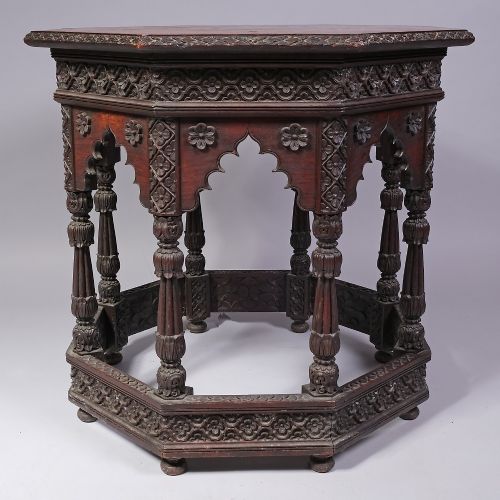
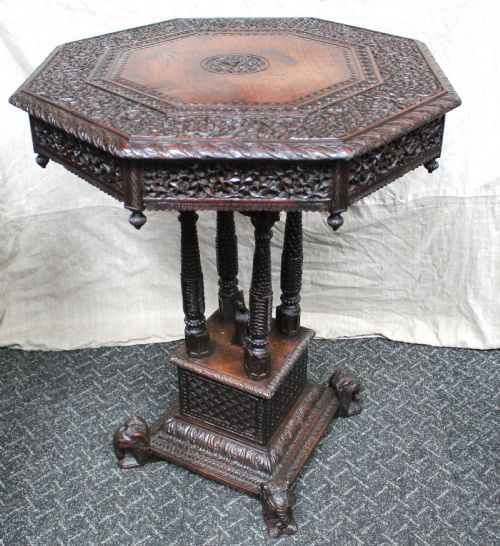
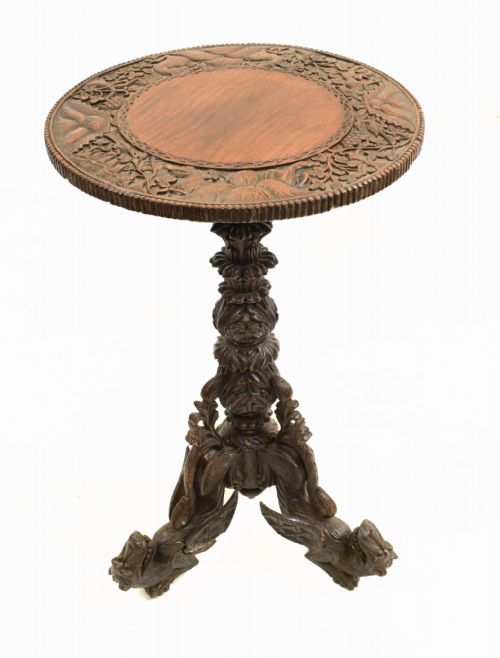
The construction relies heavily on dense hardwoods such as teak, padauk, rosewood and ebony, chosen for their stability and capacity to hold extraordinarily fine, deep relief carving. Artisans carved intricate leaf motifs, scrolling foliage and figural elements directly into the timber surface.
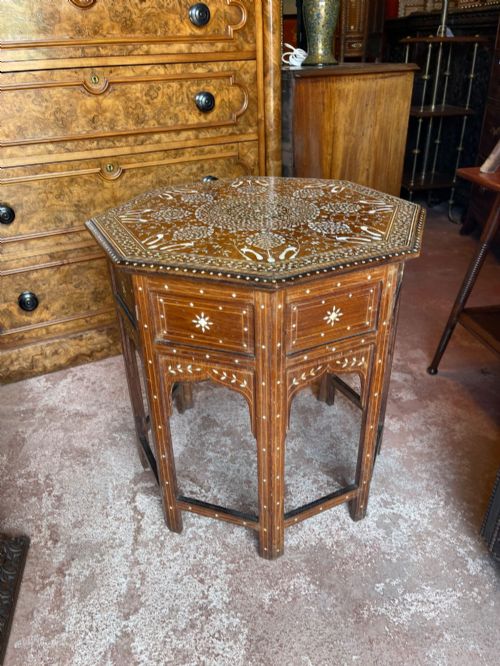
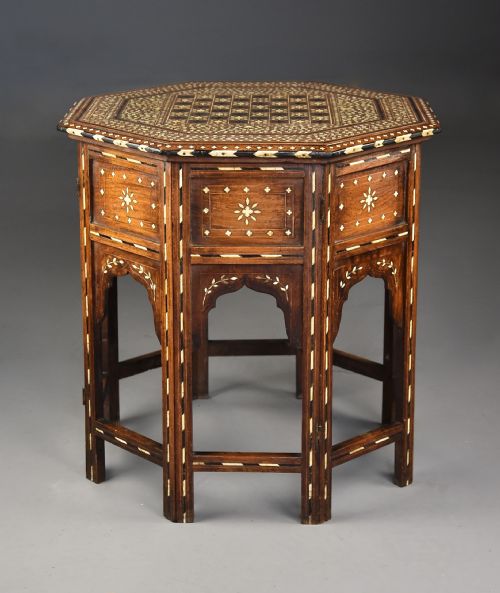
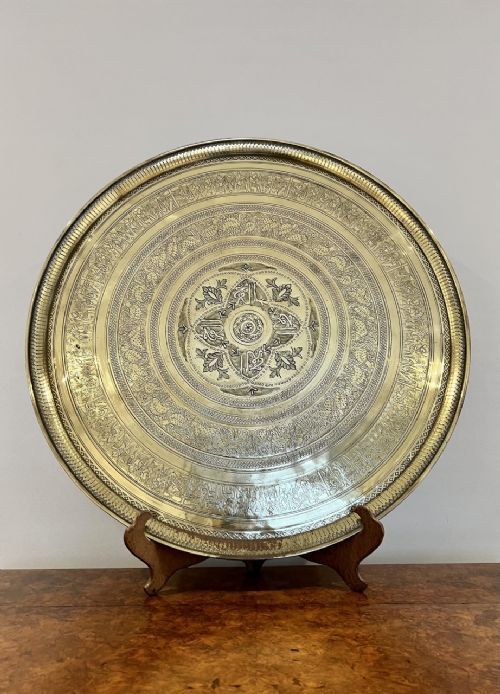
Surface ornamentation extends beyond bare wood through meticulous inlay techniques utilising bone, brass, mother-of-pearl and copper wire. Bone inlay creates stark geometric patterns against dark woods, while brass and mixed metal engraving adds metallic contrast to tabletops.
Many tables utilise clever folding or tilt-top mechanisms, particularly the campaign styles designed for portability, allowing frames to collapse without sacrificing structural integrity.
Several tables feature carved elephants supporting the tabletop, ensuring your afternoon tea is overseen by hardworking pachyderms.
What varies in quality
Quality in these pieces is dictated by the depth, crispness and ambition of the carving. Superior examples exhibit high relief work where undercut foliage and sharp detail demonstrate supreme hand-carving skill, whereas lesser pieces rely on shallow, repetitive stamping or machine-milled lines.
The choice and execution of inlay set the finest examples apart from standard production. Tables featuring complete, uninterrupted bone or mother-of-pearl geometric borders demand far greater labour than those with sparse or missing inlay fragments.
The structural integration of folding mechanisms and the choice of solid cabinet timbers over secondary veneers determine long-term durability and the fidelity of the colonial workshop tradition.
Liberty and Co
The Victorian Indian Tea Table Glossary
- Anglo-Indian
- Pertaining to decorative arts and furniture produced in India under British rule, combining British furniture forms with traditional Indian craftsmanship. These pieces often feature dense carving and exotic hardwoods.
- Hoshiarpur
- A North Indian city renowned for its distinctive woodwork, characterised by intricate micro-mosaic bone or brass inlay set into dark timber grounds in geometric patterns.
- Campaign furniture
- Portable furnishings designed to dismantle or fold easily for military officers and colonial administrators on the move. They typically feature brass corners, folding X-frames and secured joints.
- Teapoy
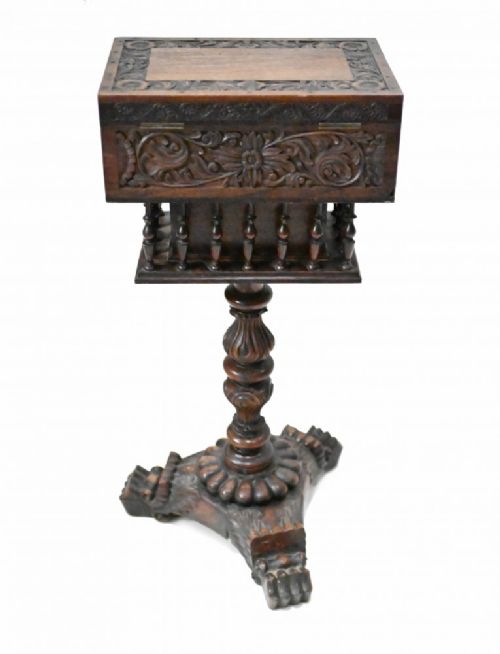
- A small occasional table or stand, originally used in British India to hold tea caddies and serving apparatus. The term derives from Hindi and Persian words relating to feet or tripods.
- Padauk
- A heavy, durable tropical hardwood with a distinctive reddish-brown colour that darkens with age. It provides a stable and rich canvas for deep relief carving.
Victorian Indian Tea Table: Frequently Asked Questions
What is a campaign tea table?
A campaign tea table is a folding table designed for portability by colonial travellers and military officers in the nineteenth century. They collapse flat for easy transport.
These pieces combine practical folding frames with decorative carved teak tops, making them versatile occasional tables for modern homes.
How do I identify Hoshiarpur tables?
Hoshiarpur tables are identified by their dense geometric inlay work using materials like bone, brass or white metal set into dark wood bases. They frequently take an octagonal form.
The entire surface is typically covered in a combination of intricate micro-inlay and botanical carving characteristic of the Punjab region.
Were these tables used for tea?
Yes, many were utilised for serving tea in colonial households or Victorian drawing rooms, while others functioned as lamp stands or decorative occasional surfaces.
Their sturdy hardwood construction and raised borders made them practical for holding vessels and cups securely during daily use.
How do I care for bone inlaid wood?
Bone inlay requires a stable indoor environment away from extreme humidity and direct heat sources to prevent the wood from expanding and loosening the inlay pieces.
Dust gently with a dry, soft cloth and avoid chemical polishes that can seep into the porous bone and darken the material over time.