

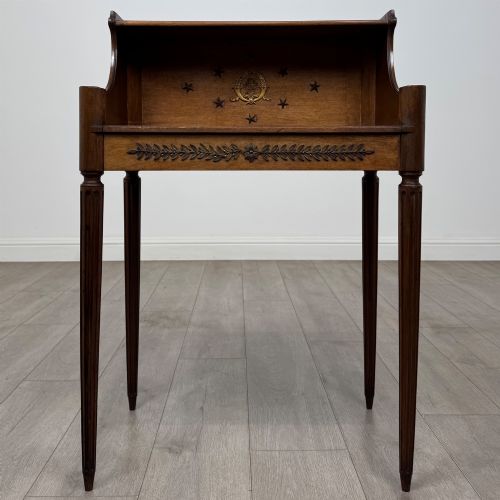
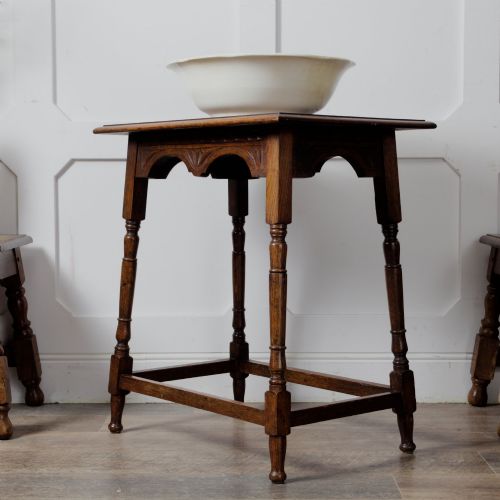
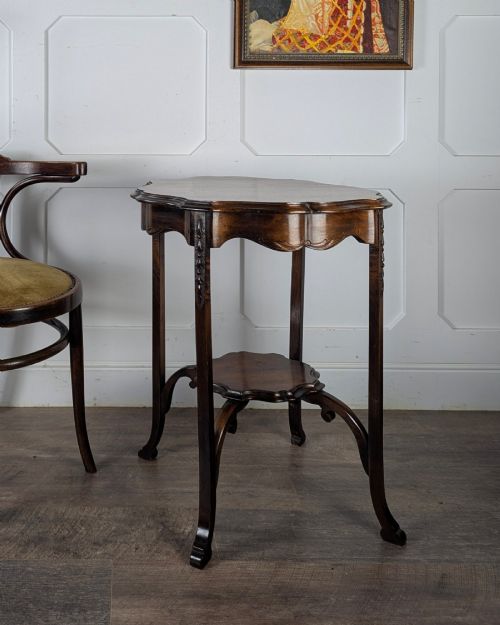
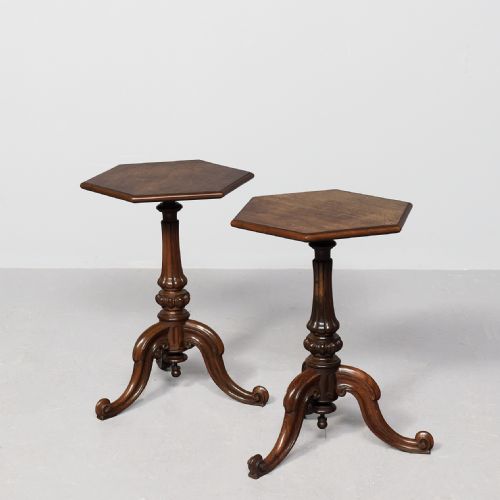
Small Carved Wood Table
A small carved wood table brings tactile warmth and period character to compact spaces, spanning occasional wine tables to ornate gilt consoles.
Small Carved Wood Table
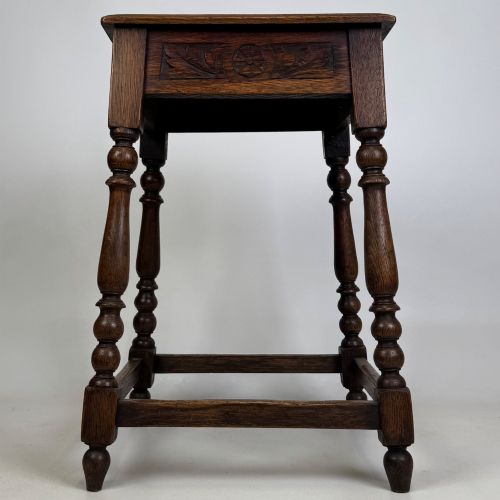
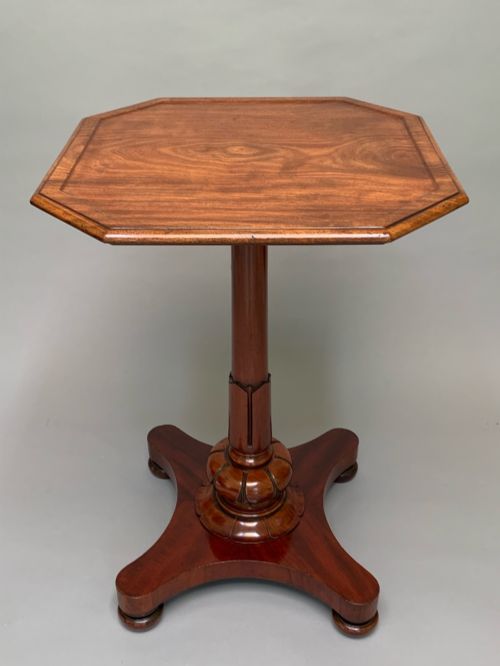
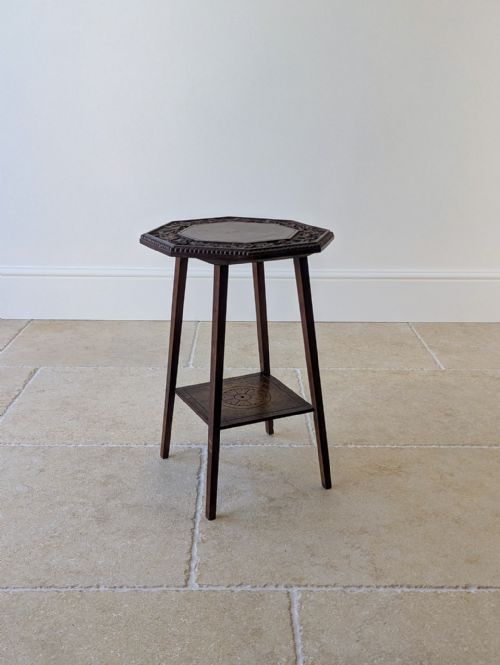
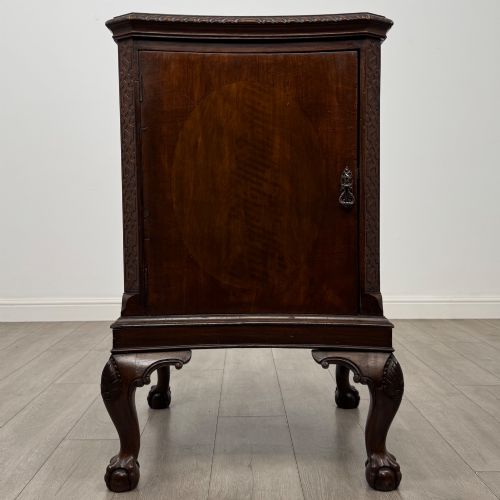
A small carved wood table is typically found in forms such as occasional tables, wine tables, side tables, and console tables designed for domestic use. The pieces appearing here span the nineteenth century, the Edwardian era, and the Victorian period, reflecting a rich heritage of British and continental cabinetmaking.
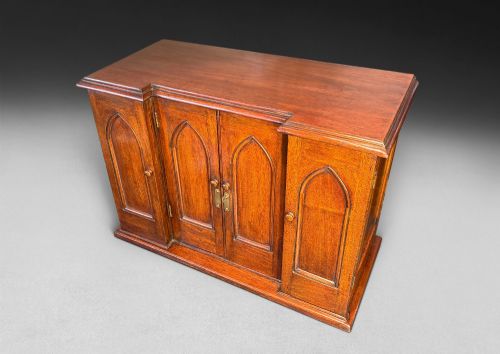
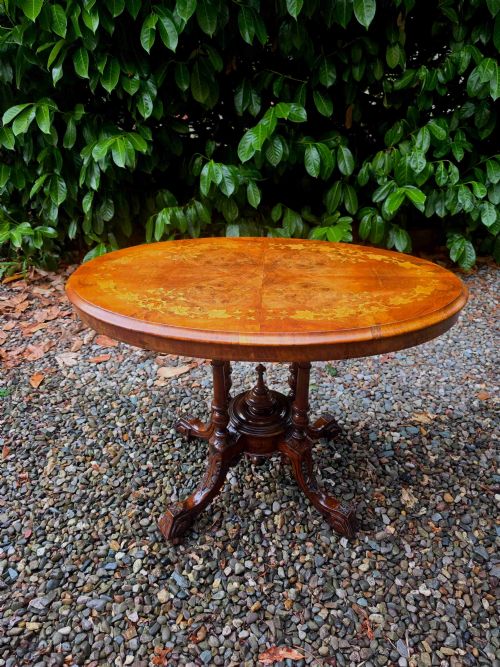
Buyers seeking a small carved wood table encounter versatile items executed in timbers like mahogany, oak, walnut, burr walnut, and rosewood. These compact furnishings frequently serve beside seating, in hallways, or as lamp tables, combining practical surface area with decorative carved detail.
How they were made
Cabinetmakers utilised dense hardwoods including mahogany, oak, and walnut, often selecting burr veneers or rosewood for decorative impact on tabletop surfaces. Construction methods relied on traditional joinery, turning, and hand-carving techniques executed by skilled artisans across the Victorian and Edwardian periods.
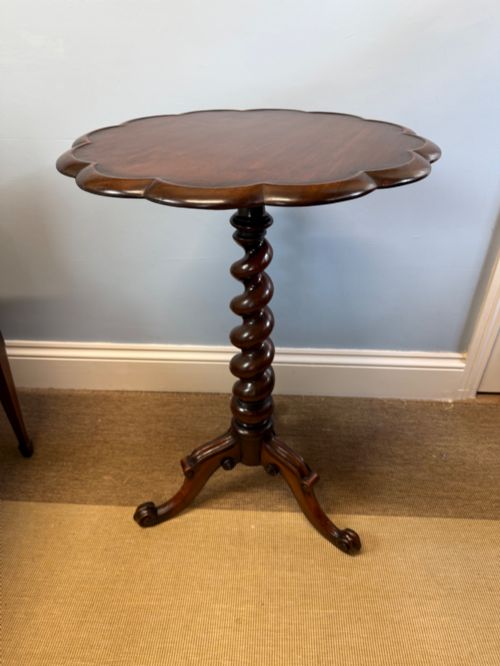
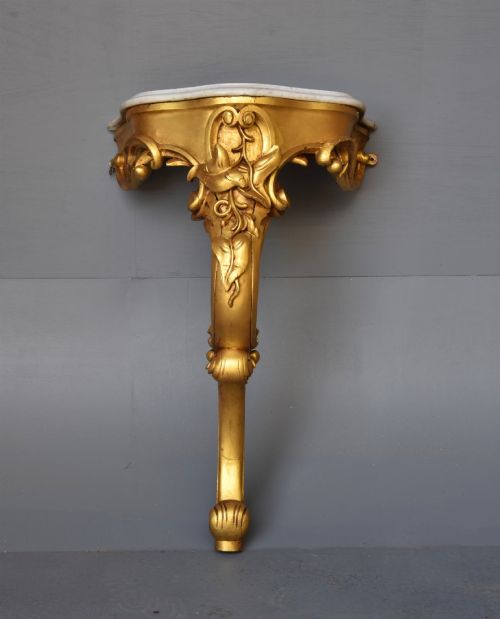
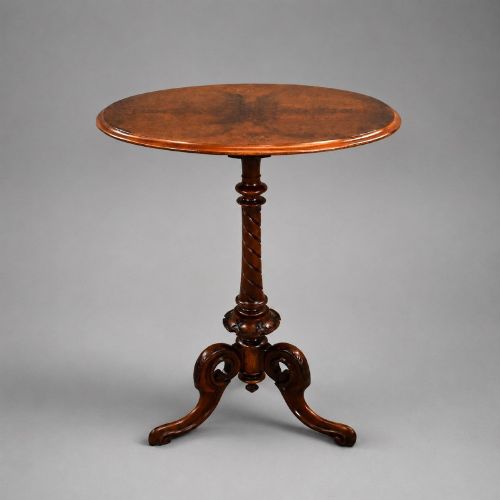
Surface enhancement involved intricate chip carving, bobbin galleries, barley twist pedestals, and occasionally giltwood or marble inserts, as seen on French console tables. These combined structural timbers and ornamental details create the varied profiles recorded in the inventory.
Listings feature woods including mahogany, oak, walnut, burr walnut, rosewood, brass, marble, and giltwood across nineteenth and twentieth-century periods.
What varies in quality
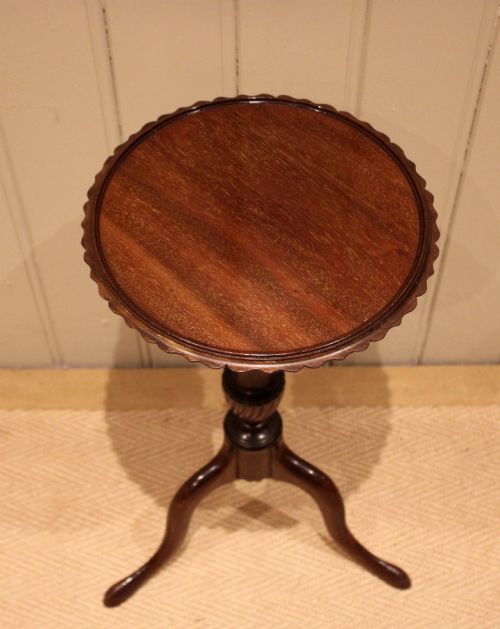
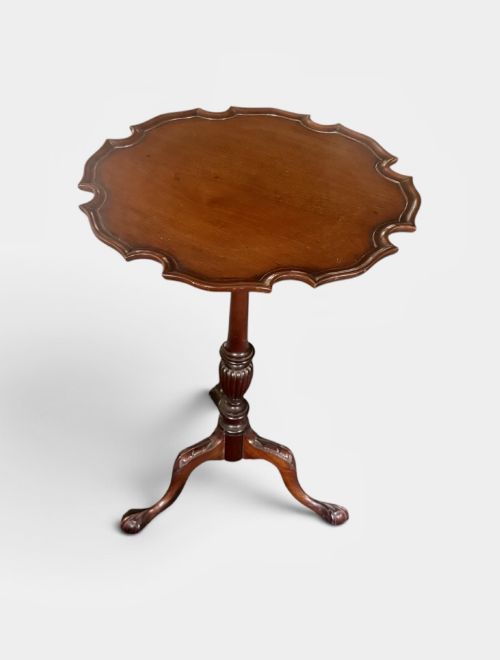
The distinction between ordinary and superior pieces rests on the crispness of the hand-carving and the deliberate choice of figured timber, such as burr walnut or rich mahogany. Master craftsmen demonstrated greater control in proportion, joinery integration, and the fluidity of turned elements like tripod legs or barley twist columns.
The Small Carved Wood Table Glossary
- Occasional table
- A small, movable table designed for specific, intermittent uses such as holding drinks, books, or lamps.
- Tripod table
- A small freestanding table supported by a central pillar resting on three legs, common in eighteenth and nineteenth-century parlours.
- Wine table
- A compact occasional table traditionally utilised for holding glasses or decanters during social gatherings.
- Console table
- A table fixed or placed against a wall, frequently topped with marble and supported by carved brackets or legs.
- Burr walnut
- Timber taken from the abnormal growth of a walnut tree, highly prized by cabinetmakers for its swirling, mottled grain patterns.
Small Carved Wood Table: Frequently Asked Questions
Where should I place a small occasional table?
These compact pieces fit easily beside armchairs, beside beds, or in narrow hallways where floor space is limited.
They provide a convenient surface for lamps, books, or decorative objects without dominating the room layout.
How do I distinguish Victorian from Edwardian tables?
Victorian pieces often feature darker timbers, heavier carved ornamentation, and robust turnings such as barley twists.
Edwardian examples frequently display lighter mahogany or satinwood influences, drawing inspiration from earlier Georgian designs with refined proportions.
What is a wine table used for?
Wine tables were originally created to hold individual glasses or bottles during evening entertaining in drawing rooms.
Today they function effectively as portable lamp stands or display surfaces in tight corners.
Are marble top console tables heavy?
Console tables featuring marble inserts possess additional weight due to the stone slab resting on the carved wooden base.
This construction provides stability when placed against a wall, though they remain manageable to position during room arrangement.