
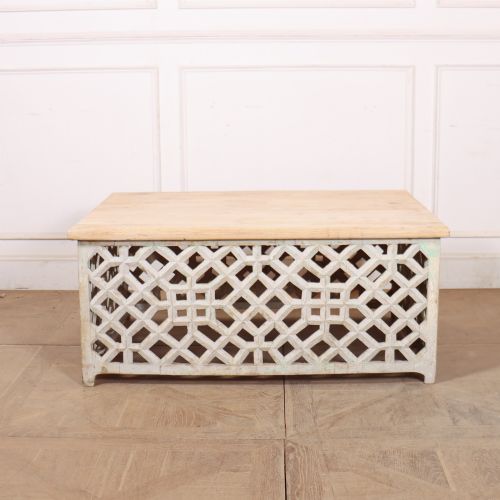
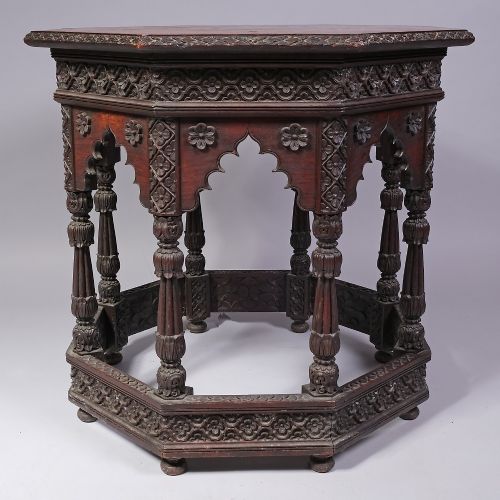
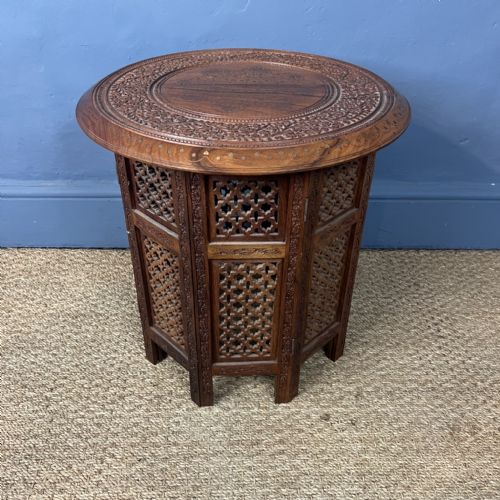
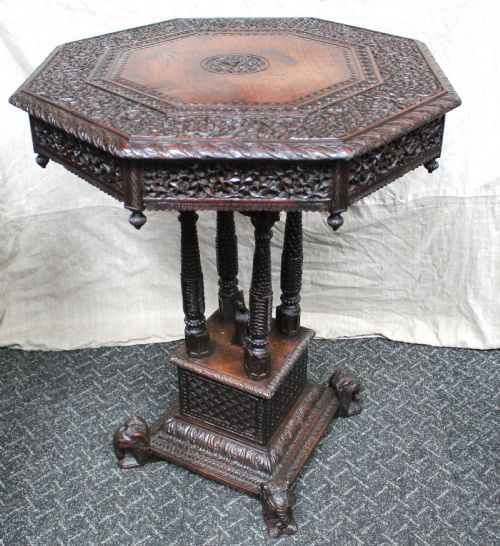
Colonial Indian Carved Table
A colonial indian carved table brings dense floral motifs and rich timber into a room, shaped by British and South Asian design.
Colonial Indian Carved Table
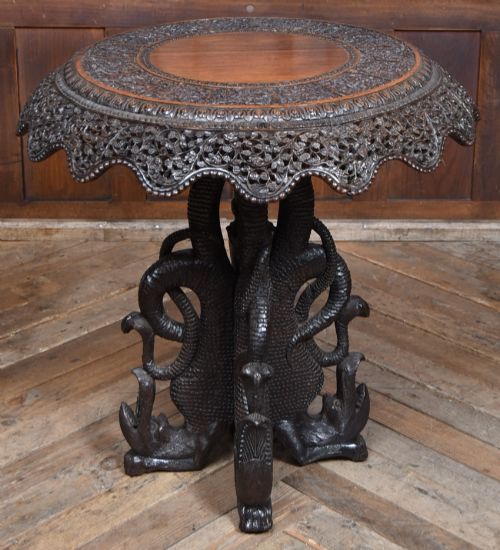
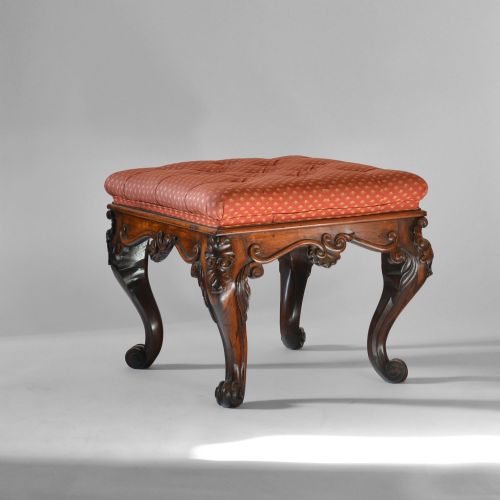
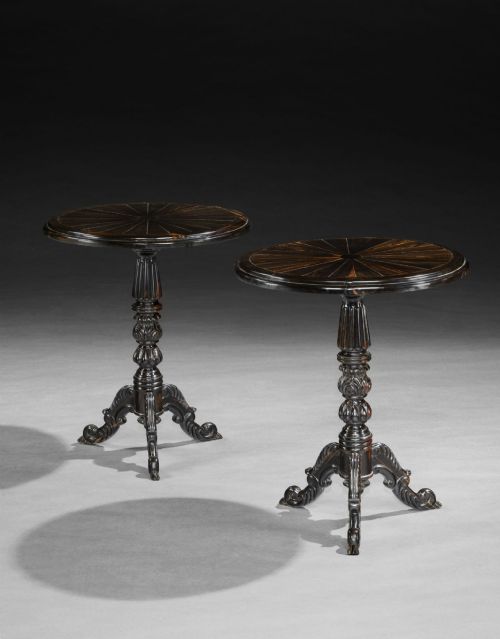
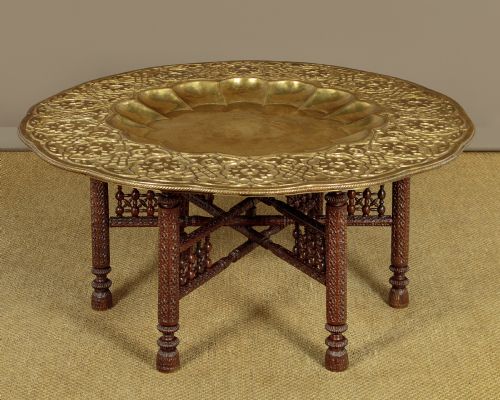
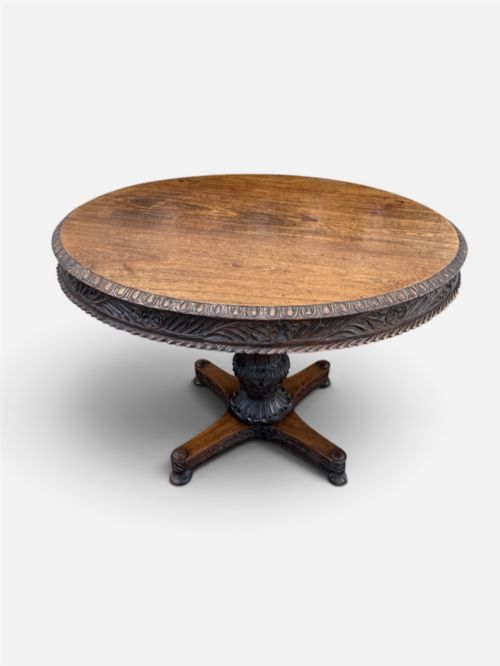
A colonial indian carved table combines traditional South Asian woodworking techniques with forms suited to British domestic interiors of the nineteenth and early twentieth centuries. These pieces emerge from regions such as Hoshiarpur, Ceylon, and Burma, taking shapes from occasional and side tables to centre tables and coffee tables.
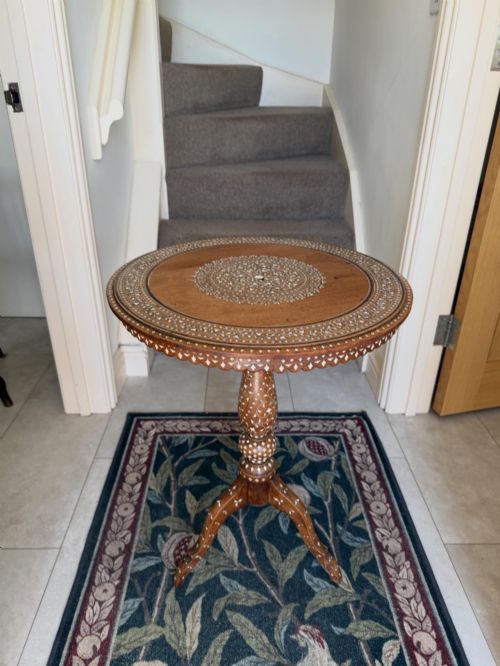
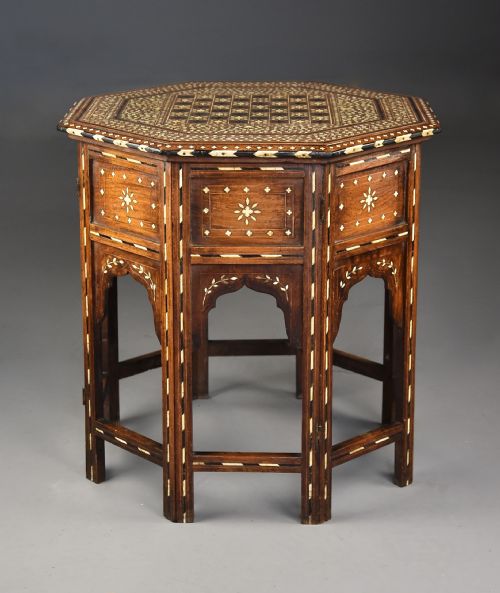
The most common examples on this page are occasional and side tables featuring octagonal or circular tops, often folding or supported by carved pedestals. These objects reflect the exchange of craft and taste during the colonial period, frequently labelled under Anglo-Indian, Anglo-Burmese, or Ceylonese styles.
How They Were Made
Artisans carved dense tropical timbers such as teak, rosewood, ebony, padauk, and assorted hardwoods using intricate hand-chiselling methods. Deep relief carving covers surfaces with foliage, animal motifs, and geometric patterns.
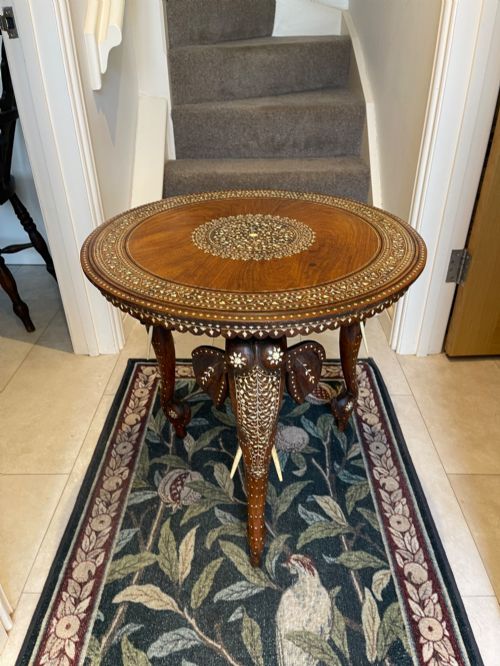
Many examples incorporate contrasting materials embedded into the timber, utilising brass wire, bone, bone inlay, and mother of pearl. These inlays create complex geometric or floral compositions across table tops and panels.
What Varies in Quality
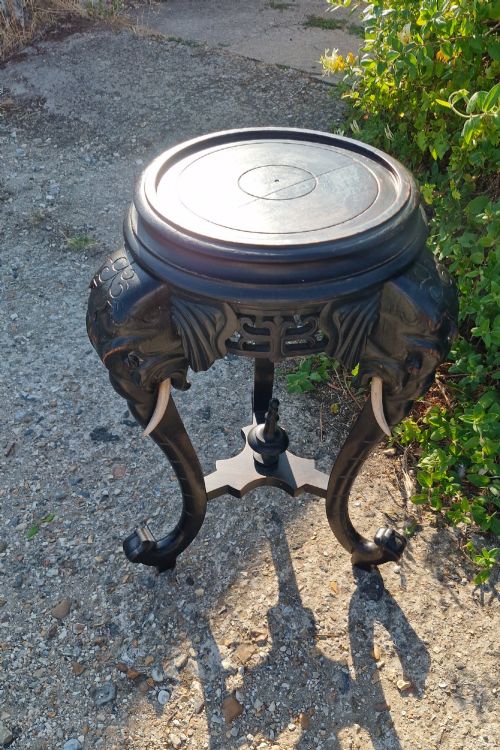
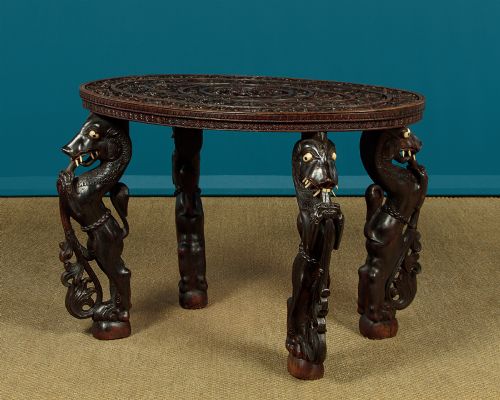
The crispness and depth of the hand carving dictate the visual standard of the piece, separating shallow mechanical work from deeply undercut foliage and figures. Tables featuring complex figural elements like elephants or dragons demand greater skill from the carver.
The selection and stability of the timber ground the piece, with dense native hardwoods and precise contrasting inlay work marking the finer examples. Assembly methods, such as original folding mechanisms and pegged joints, also influence the structural integrity.
The Colonial Indian Carved Table Glossary
- Hoshiarpur
- A city in Punjab known for producing intricate inlaid woodwork using brass and bone. Pieces from this centre often display dense geometric patterns.
- Padauk
- A heavy, durable hardwood native to tropical regions, frequently utilised for carved side tables and partners desks. Its rich reddish-brown tone darkens with age.
- Teapoy
- A small occasional table or stand originally designed for holding tea caddies. In colonial contexts, these tables often feature carved surfaces and pedestals.
- Campaign table
- Portable furniture constructed with folding or removable parts for travel. These items retain structural ingenuity alongside decorative carving.
- Bone inlay
- The technique of recessing small pieces of carved bone into timber to form patterns. This method creates striking contrast against dark woods like ebony and rosewood.
Colonial Indian Carved Table: Frequently Asked Questions
How do I identify a Hoshiarpur table?
Look for dense geometric and floral patterns covering the entire surface, usually constructed from shesham or other hardwoods. These tables frequently incorporate delicate inlay work using brass or bone.
Many examples feature octagonal folding bases that allow the top to be removed or collapsed easily. The intricate chip-carving defines the origin and distinguishes these pieces from other regional styles.
What woods were used for colonial tables?
Craftspeople utilised native timbers suited to detailed carving, including teak, rosewood, padauk, ebony, and assorted dense hardwoods. These materials provided the necessary weight and stability for elaborate relief work.
Inlaid elements often used contrasting materials like bone or brass wire to highlight the grain and colour of the primary wood. Over time, exposure to light deepens the natural tones of these timbers.
Where were these tables made?
Production occurred across various regions of the Indian subcontinent, Ceylon, and Burma during the nineteenth and early twentieth centuries. Specific workshops operated in areas renowned for distinct carving traditions, such as Hoshiarpur and Galle.
Items were often commissioned or purchased by British officials and travellers stationed abroad before being transported to homes in Britain. This blend of local craftsmanship and British furniture forms created the distinctive Anglo-Indian aesthetic.
How should I care for a carved wooden table?
Maintain the timber by keeping the surface clean with a soft, dry cloth and avoiding excess moisture or direct heat sources. Natural waxes can be applied sparingly to nourish dense hardwoods like teak and padauk.
Check inlaid sections periodically to ensure bone and brass components remain secure within the wood. Gentle handling preserves the delicate relief carving and structural joints.