
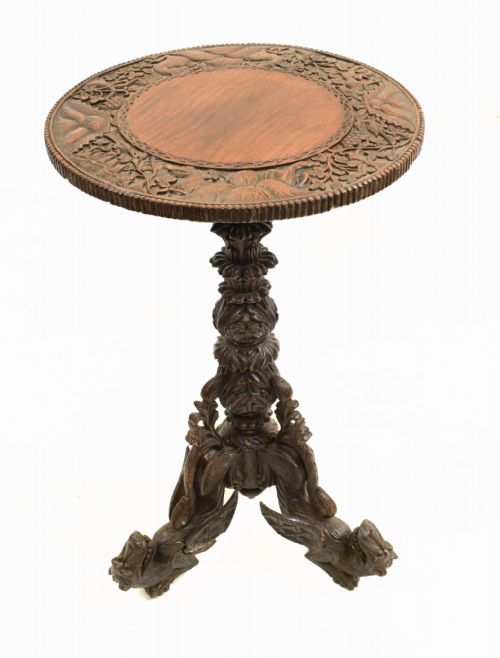


Victorian Teak Side Table
A victorian teak side table brings dense tropical timber and intricate colonial carving into a room, offering a sturdy surface with distinct regional character.
Victorian Teak Side Table
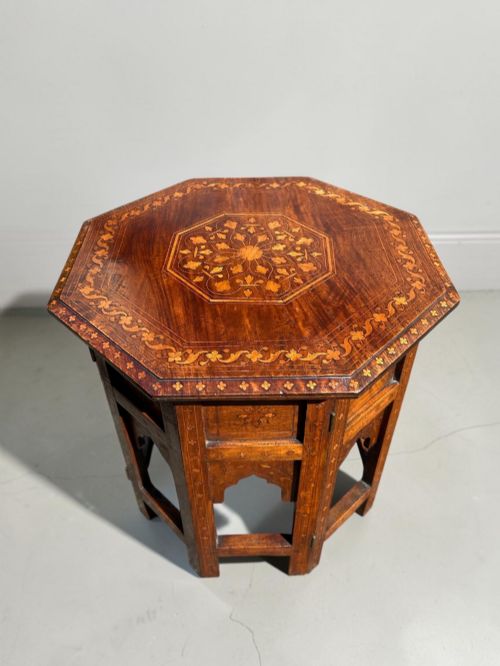
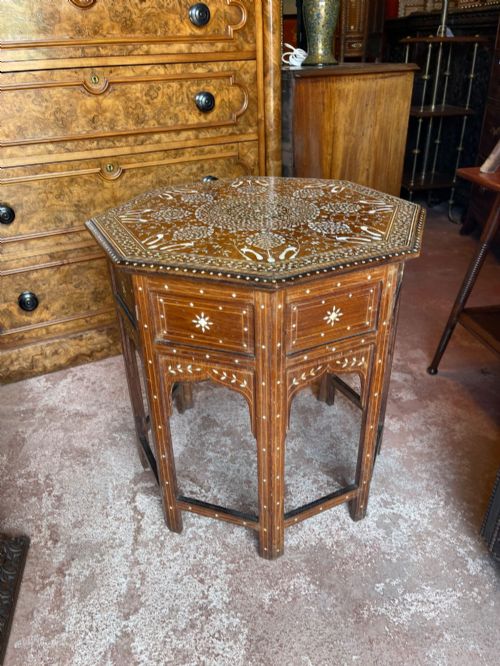
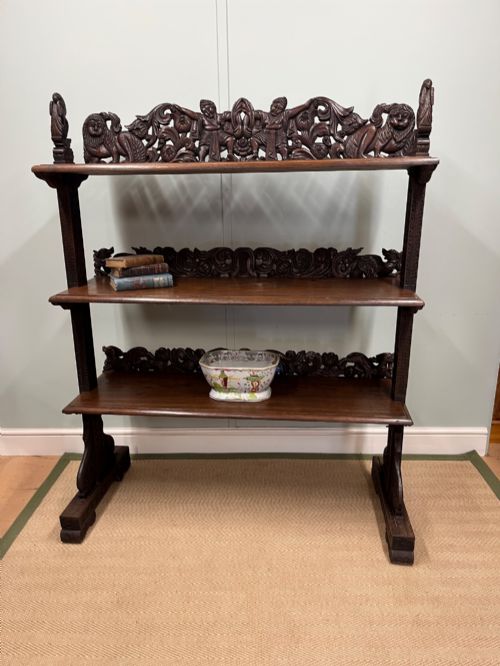
A victorian teak side table spans several distinct colonial design traditions, originating predominantly from nineteenth-century Indian and Burmese workshops. These pieces frequently manifest as octagonal, circular, or square occasional tables, alongside larger multi-tiered buffets and console forms.
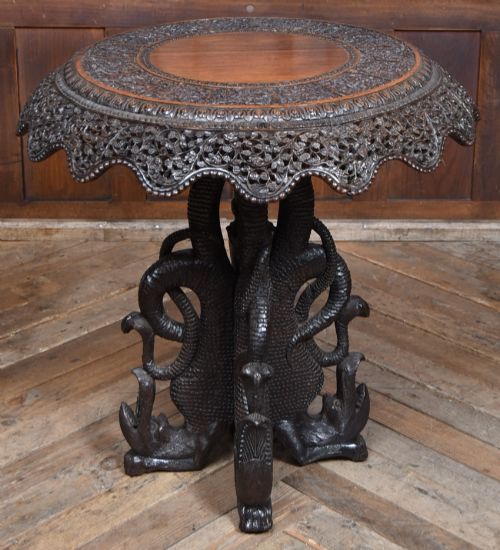
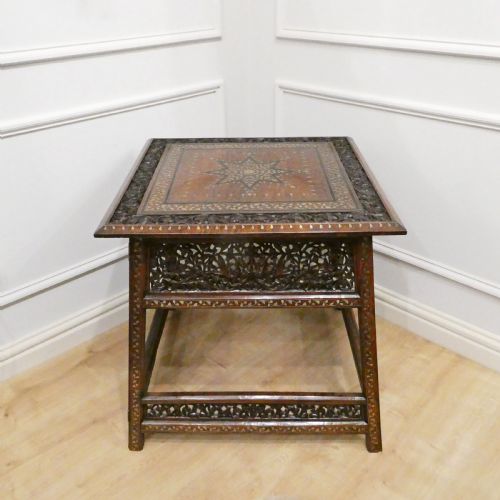
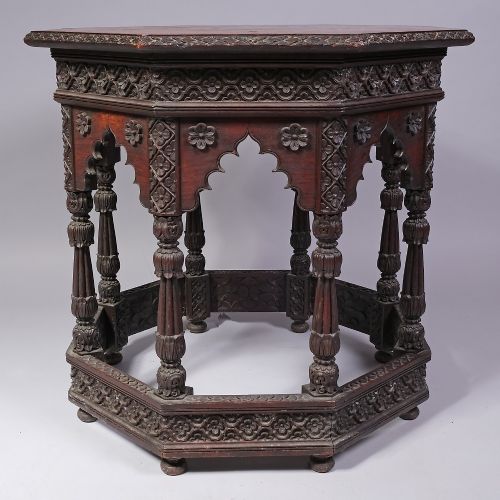
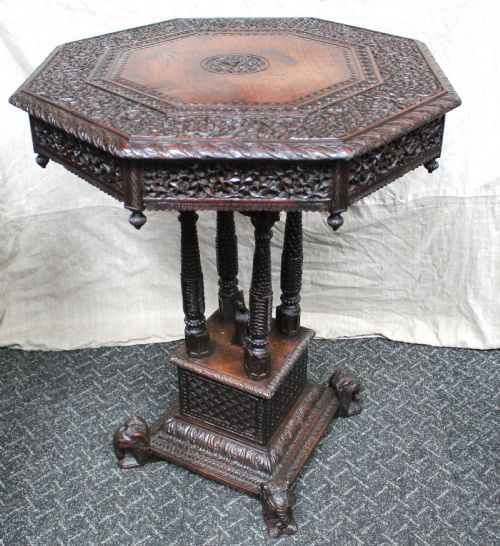
The most common examples encountered on this page display heavy surface carving associated with Anglo-Indian and Anglo-Burmese production centres such as Hoshiarpur and Bombay. Buyers also encounter folding campaign variants and figural supports incorporating elephants, camels, and peacocks.
Dating across the nineteenth century, particularly from the 1860s through to 1900, these items reflect the intricate woodwork popularised during the British colonial period. The fundamental structure relies on durable Asian hardwoods, principally teak, chosen for stability and dense grain.
Assessing quality and craftsmanship
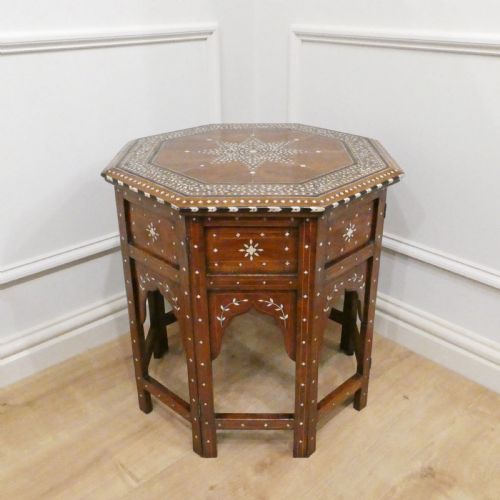
Quality rests heavily on the depth and crispness of the hand-carving across the top and legs, where superior pieces retain sharp relief work rather than shallow, softened detailing. The integration of inlaid brass and bone requires precise fitting to ensure stability across seasonal changes in humidity.
Structural integrity differentiates standard production from finer workshop output, particularly in joints and the balance of figural supports such as elephant or camel legs. Selection of timber figure and the preservation of the original wax finish further elevate specific examples.
Several tables feature hand-carved elephants serving as structural legs, bearing the weight of the Victorian parlour with considerable charm.
The Victorian Teak Side Table Glossary
- Anglo-Indian
- Pertaining to furniture made in India during the British period, often combining indigenous craft techniques with European forms. This style frequently displays dense botanical carving.
- Hoshiarpur
- A town in Punjab renowned for intricate woodwork involving delicate brass inlay on teak and shisham surfaces. Pieces from this region are easily identified by minute geometric patterning.
- Campaign table
- Portable furniture designed for military officers or travellers, typically featuring folding legs or removable tops. Teak was selected for its resistance to warping during transit.
- Pedestal table
- A table supported by a single central column resting on feet or a platform base. This form allows maximum legroom around octagonal and circular tops.
- Tilt-top
- A tabletop hinged to the pedestal so it can be pivoted vertically when not in use. This mechanism saved space in nineteenth-century interiors.
Victorian Teak Side Table: Frequently Asked Questions
What woods were used?
These tables are predominantly constructed from teak and other dense tropical hardwoods sourced in India and Burma. Secondary materials such as rosewood and padouk also appear in specific regional pieces.
Inlay work frequently incorporates brass wire and bone to highlight the carved surface patterns.
How do I date them?
Dating relies on stylistic markers, construction methods, and recorded workshop periods spanning the nineteenth century. Most surviving examples date between the 1860s and 1900.
Archival records and specific regional carvings help narrow the decade of manufacture for individual pieces.
Were they made for export?
Much of this furniture was produced specifically for the European market during the Victorian era, blending local craftsmanship with British domestic tastes. Export pieces often adopted familiar side table and occasional table formats.
Colonial administrators and merchants also commissioned or purchased these items to send home.
How should I care for teak?
Maintain the timber by dusting with a dry cloth and occasionally applying a suitable wax finish to preserve the grain. Avoid placing these tables near direct heat sources or strong sunlight to prevent wood movement.
Careful handling of inlaid brass and delicate carved edges will protect the intricate surface details.