





Anglo Raj Carved Table
An anglo raj carved table brings the rich dense ornament of the subcontinent directly into an English interior.
Anglo Raj Carved Table
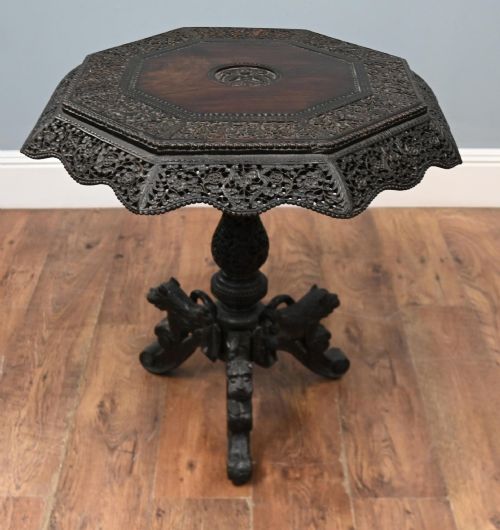
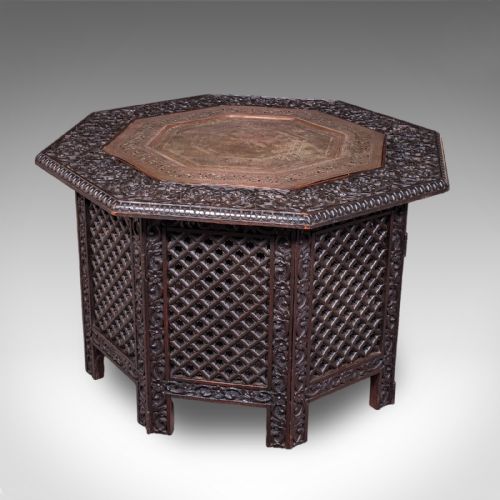
An anglo raj carved table is a piece of furniture made in India during the nineteenth and early twentieth centuries for British colonial homes and export. You will frequently meet side tables, occasional pieces, and the distinctive folding tables associated with this tradition.
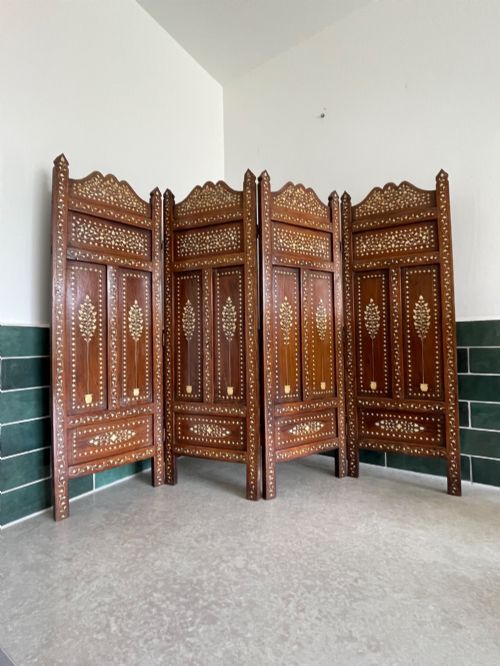
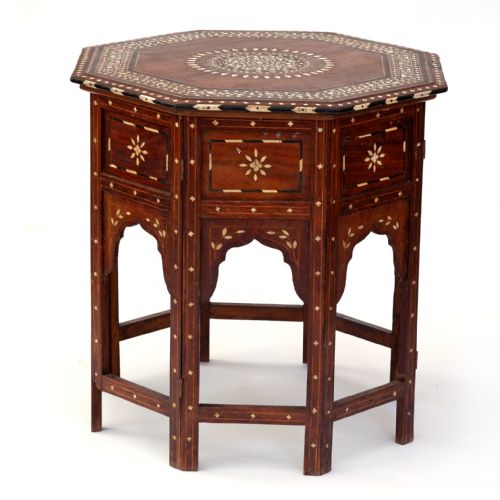
The objects span multiple decades from the Victorian era into the 1930s, reflecting changing tastes in colonial craftsmanship. Forms range from octagonal tea tables to intricate table screens and low coffee variants.
Materials and construction
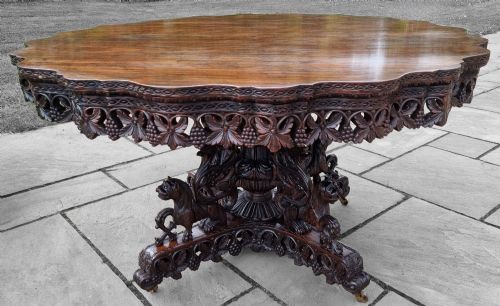
Carpenters utilised durable regional woods including teak, padauk, rosewood, and sheesham as the structural foundation for these pieces. Artisans then executed deep relief carving across the timber surfaces to portray foliage, geometric patterns, and figurative motifs such as elephants.
Many examples incorporate contrasting materials embedded directly into the wood, utilising brass, copper, and bone inlay. Folding designs relied on clever articulated wooden hinges that allowed the structure to collapse flat without metal fasteners.
Anglo Raj Carved Table Retail Price Guide 2026
Typical asking prices for anglo raj carved table among the pieces listed under this phrase on Sellingantiques today, from the lower quarter to the upper quarter. They describe what is for sale here now, not the wider market.
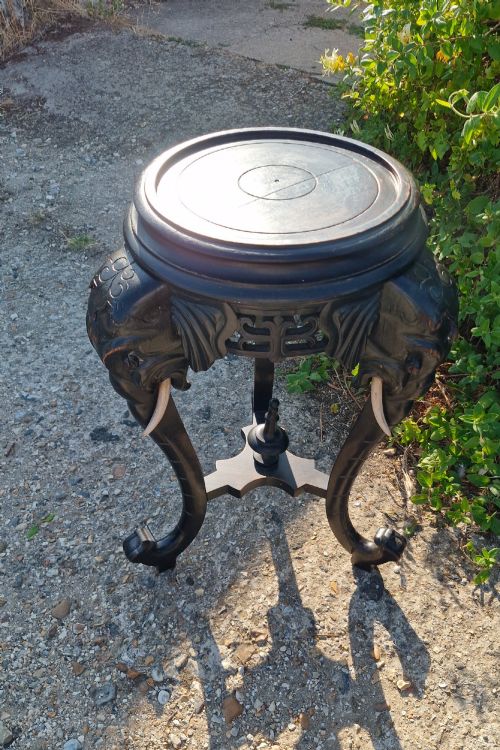
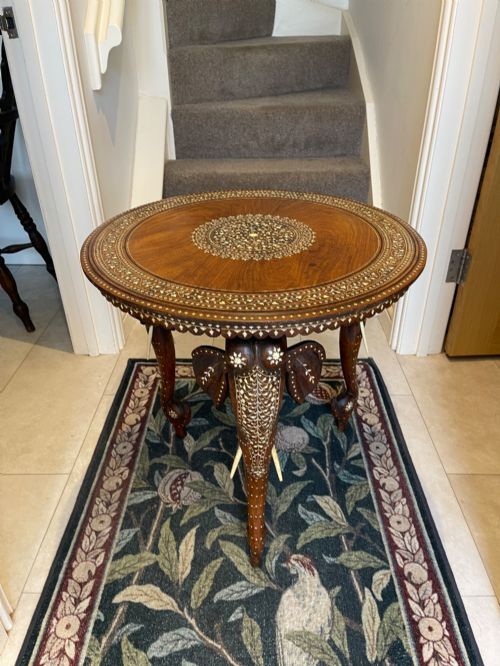
Several tables rely on painted wooden tusks that occasionally require a gentle dusting behind the ears.
Judging quality in these tables
Quality rests upon the crispness of the chisel work and the depth of the carved relief across the timber. Superior pieces display intricate undercut foliage and meticulously fitted inlay where bone or metal sits flush with the surrounding wood.
The choice of primary timber dictates the initial grade of the object, with dense hardwoods like padauk and rosewood providing a heavier, finer canvas than softer alternatives. Structural integrity in folding mechanisms and stability in the assembled frame separate master workshops from mass production.
The Anglo Raj Carved Table Glossary
- Anglo-Indian
- A descriptive term for furniture and decorative arts made in India under British rule, combining local craftsmanship with European forms.
- Benares
- A historical manufacturing centre in northern India known for metalwork, particularly tables featuring inset brass or copper tops.
- Hoshiarpur
- A town in the Punjab renowned for its skilled woodcarving and the production of inlaid folding tables decorated with bone and sheesham.
- Bone inlay
- A decorative technique where small pieces of animal bone are shaped and pressed into carved recesses within the wooden surface.
- Padauk
- A heavy, durable tropical hardwood with a reddish-brown colour used for high-status furniture during the nineteenth century.
Anglo Raj Carved Table: Frequently Asked Questions
How do I date an anglo raj carved table?
Dating relies upon examining the timber, the style of the carving, and the specific construction methods used in the frame. Earlier nineteenth-century examples often employ heavier padauk or rosewood with deep, hand-chiselled relief.
Later pieces from the twentieth century frequently utilise lighter woods and simpler folding mechanisms suited for the export trade.
What is an elephant table?
An elephant table is a specific form of anglo raj carved table where the structural supports take the shape of carved elephants. These figures often feature ivory or wooden tusks protruding from the head.
They were extremely popular during the late Victorian period as exotic conversation pieces for British drawing rooms.
How should I clean bone inlay?
Bone inlay requires gentle dusting with a soft, dry brush to prevent dirt from settling into the porous material and the surrounding dark recesses. Avoid using liquid cleaners, water, or harsh chemical polishes that can stain the bone or loosen the adhesive holding the pieces in place.
Are these tables sturdy enough for daily use?
Most occasional and side tables from this tradition are built to support standard decorative items, books, or tea sets. Folding versions require careful handling when opening and closing to protect the wooden hinges and prevent strain on the carved joints.