
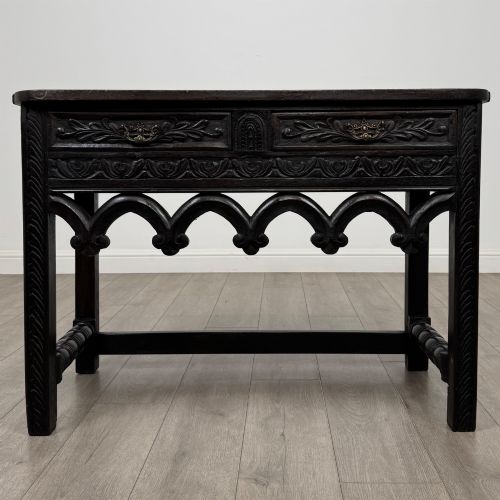
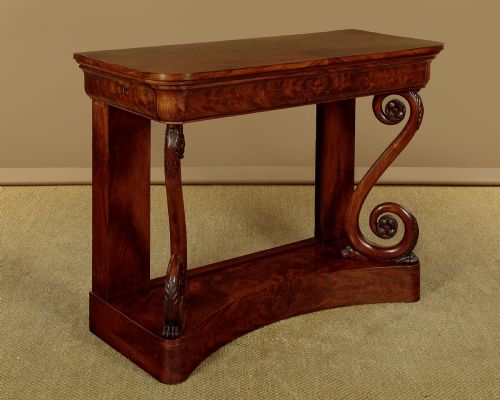
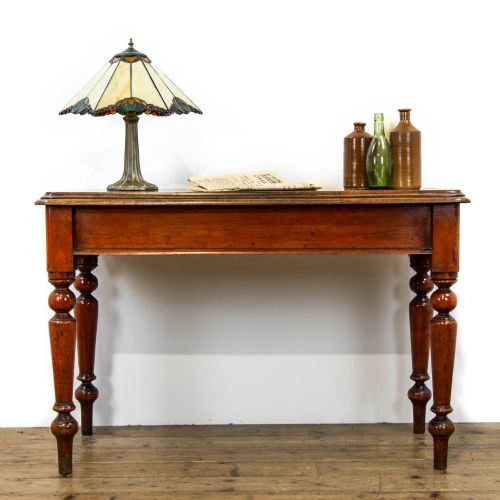
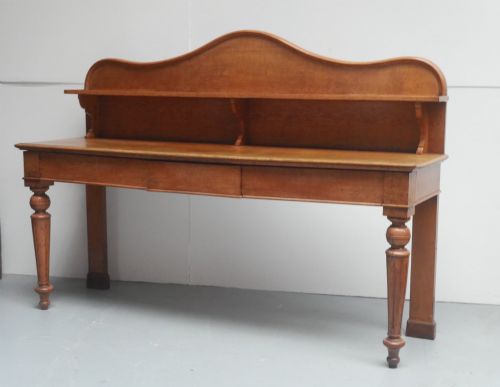
Victorian Hallway Console Table
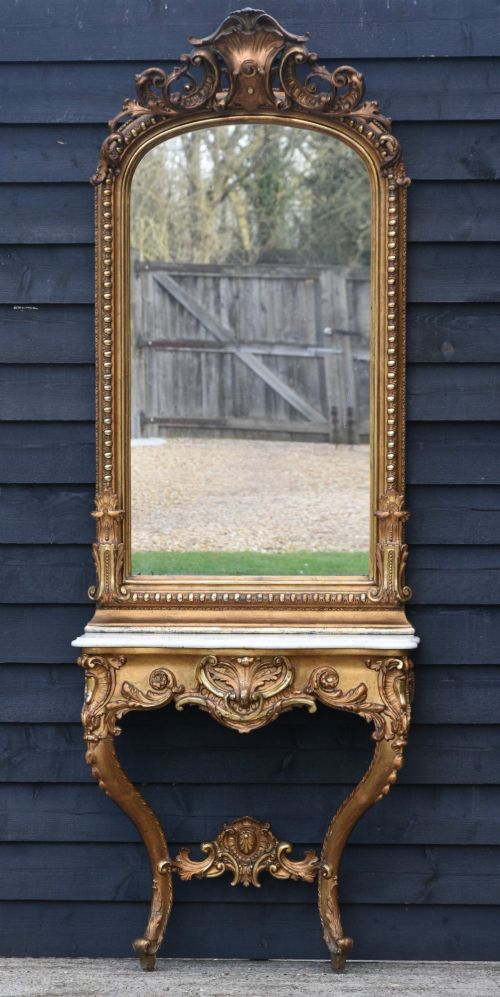
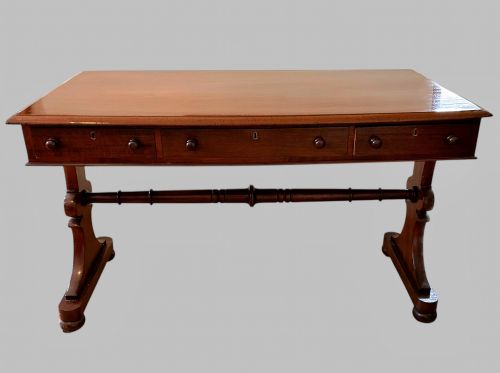
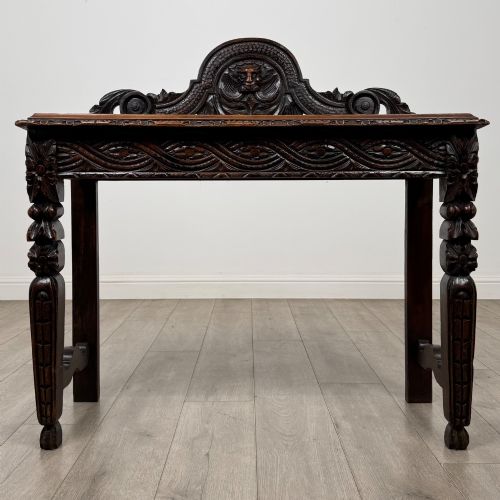
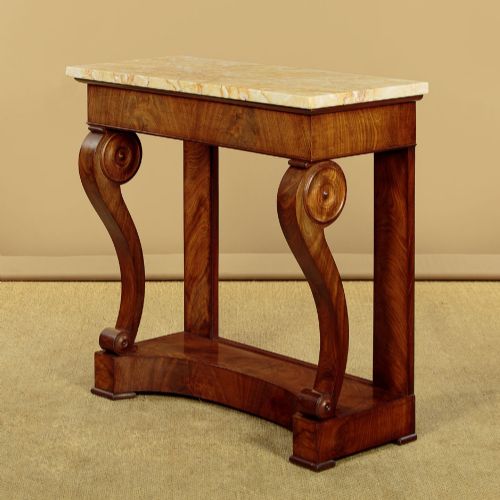
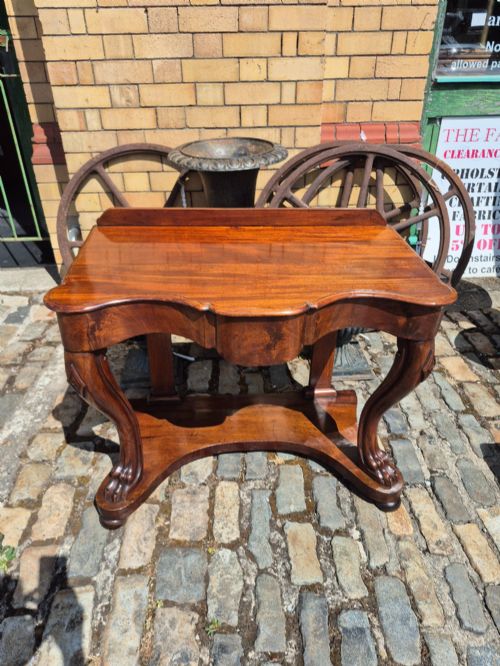
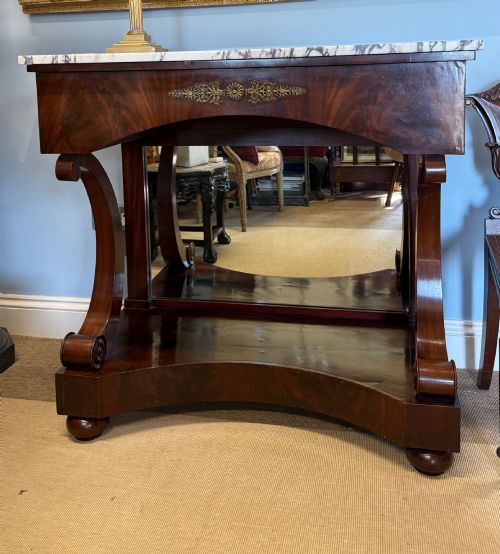
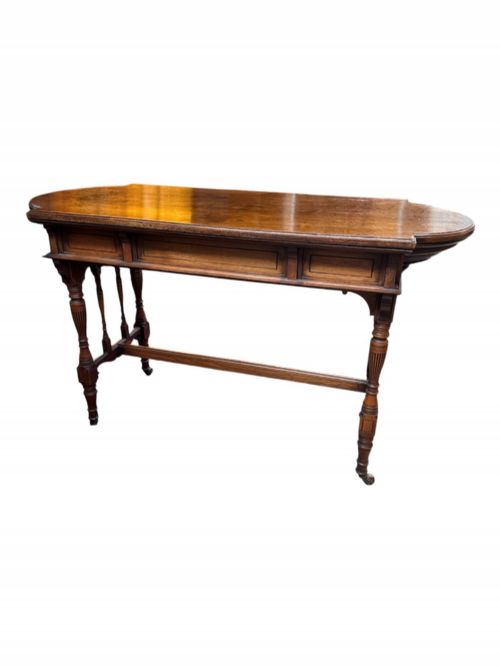
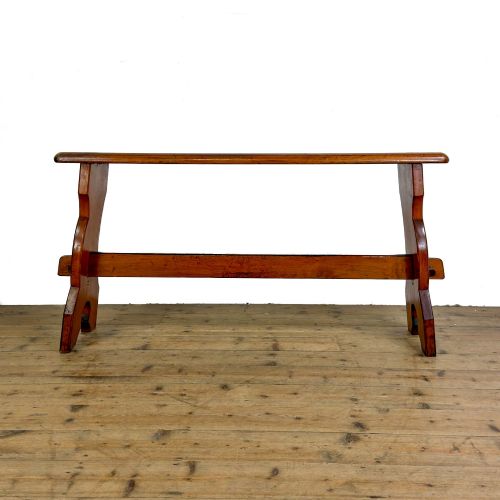
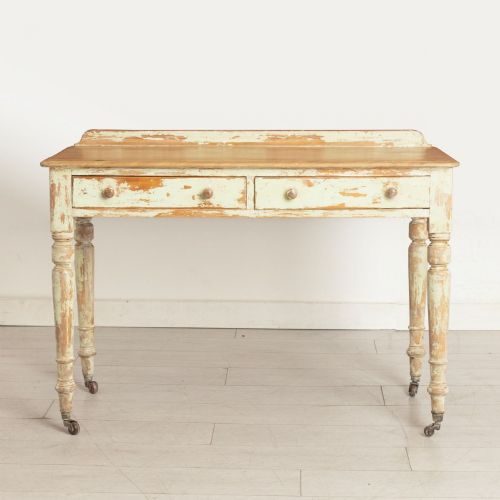
A victorian hallway console table meets the narrow proportions of an entrance hall, offering a sturdy surface for letters and keys.
Victorian Hallway Console Table
A victorian hallway console table serves as a functional anchor for entrance spaces, providing a place to deposit daily items upon entry. The selections gathered here span the nineteenth century, including specific dates such as eighteen-fifty, eighteen-sixty, and eighteen-eighty, alongside broader Victorian and early Victorian periods.
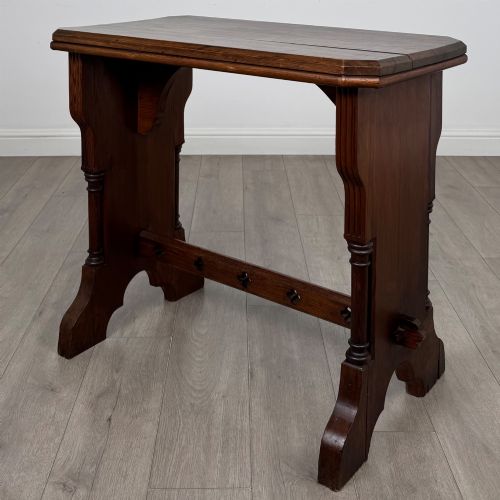
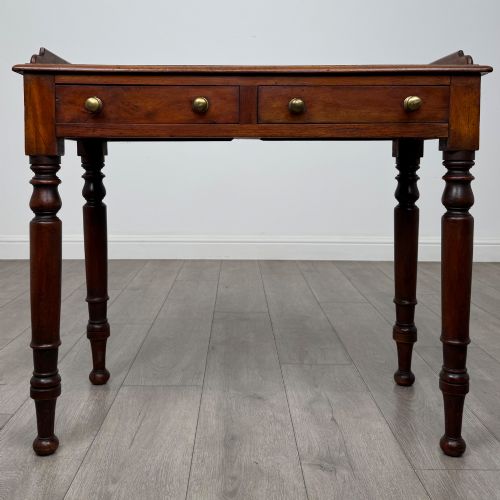
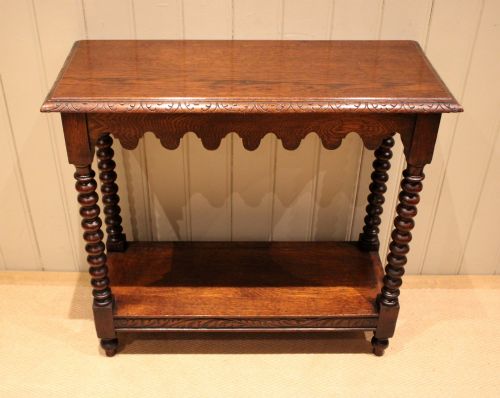
Forms extend beyond conventional console tables to encompass side tables, serving tables, and hall tables constructed to sit flush against a wall. Woods like mahogany, oak, walnut, rosewood, and pine dominate the structural framework, occasionally paired with marble tops or brass fittings.
Regional and stylistic variations appear across the inventory, ranging from English country and rustic farmhouse examples to Gothic Revival and Anglo-Indian designs. Buyers frequently encounter rectangular silhouettes, some incorporating drawers or mirror backs suited to hallway placement.
How they were made
Cabinet makers utilised dense hardwoods such as mahogany, walnut, and rosewood for formal reception pieces, turning timber on lathes for legs and shaping panels by hand. Softer timbers like pine and oak appear in domestic country pieces, often showing straightforward jointing and plank construction.
Surface treatments rely on traditional polish and wax finishes that bring out the grain of the wood, whilst marble inserts provide a cool, water-resistant surface on selected console tops. Brass handles, brackets, and campaign mounts add utilitarian durability to structural joints.
Listings feature woods spanning mahogany, oak, pine, walnut, rosewood, birch, and padauk.
What varies in quality
Construction methods dictate structural integrity, distinguishing simple utilitarian pine workbenches from meticulously joined mahogany and rosewood tables. The choice of primary timber and the precision of carved ornamentation separate standard domestic items from high-status architectural pieces.
Fittings and secondary materials, such as polished marble slabs and cast brass hardware, elevate the execution of a piece. The crispness of carved details in oak and walnut further marks the distinction between workshop outputs.
Druce and Co
The Victorian Hallway Console Table Glossary
- Console table
- A table designed to stand against a wall, frequently supported by brackets or front legs rather than four conventional corners. These pieces suit narrow areas like hallways.
- Serving table
- A large side table historically used in dining rooms for food preparation and service. Many examples share similar proportions to large console tables.
- Gothic Revival
- A nineteenth-century design style drawing on medieval architectural motifs. Pieces in this manner feature pointed arches, heavy chamfering, and linenfold carving.
- Serpentine
- A curved furniture front characterised by a convex centre flanked by concave ends. This shaping requires specialist woodworking skill.
- Padauk
- A heavy tropical hardwood with a reddish-brown colour used in imported furniture. It provides exceptional durability and a fine grain.
Victorian Hallway Console Table: Frequently Asked Questions
Where should I place a console table?
A victorian hallway console table fits well in entrance halls, corridors, and narrow passageways where floor space is restricted. Its shallow depth allows it to sit against a wall without obstructing foot traffic.
Positioning one beneath a mirror or coat rack creates a functional drop zone for post, keys, and daily accessories upon entering the home.
Did these tables always have drawers?
Not all tables include storage; many nineteenth-century examples are built as simple open frames with legs and a top surface. Single-drawer and multi-drawer configurations exist depending on whether the piece was intended as a writing table, library table, or hall table.
Open versions provide an uncluttered look underneath, whereas drawer variants assist with containing small household items.
How do I care for a marble top?
Marble tops require wiping with a damp cloth and mild soap to remove dust and spills. Acidic liquids like citrus juice or wine can etch the polished stone surface if left unattended.
Applying a protective stone sealer periodically helps guard against staining while preserving the natural figure of the marble.
What is the difference between oak and mahogany tables?
Oak tables generally present a rustic or country aesthetic with visible grain texture, appearing frequently in farmhouse, Gothic Revival, and heavy serving table forms. Mahogany versions lean towards formal reception rooms, displaying a smoother reddish-brown surface and finer cabinet work.
Both timbers offer robust longevity, though mahogany was traditionally favoured for refined urban interiors.