
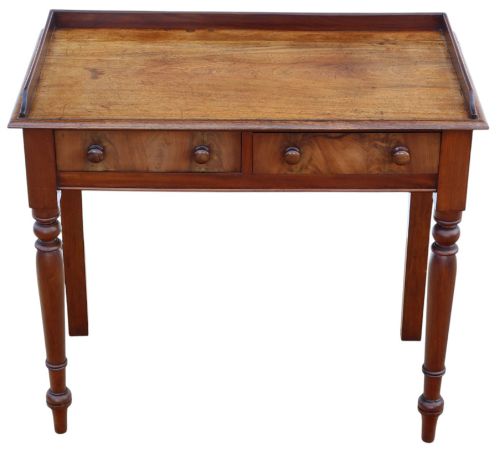
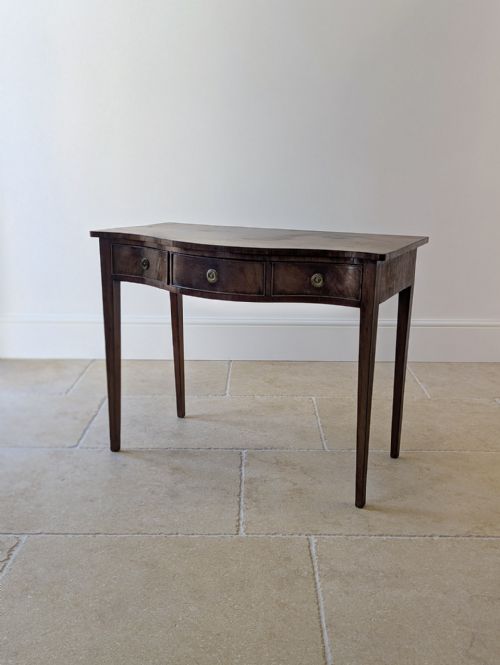

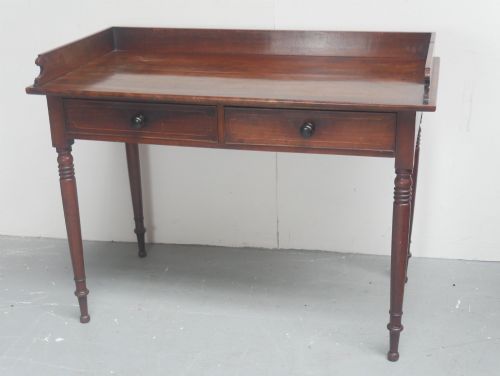
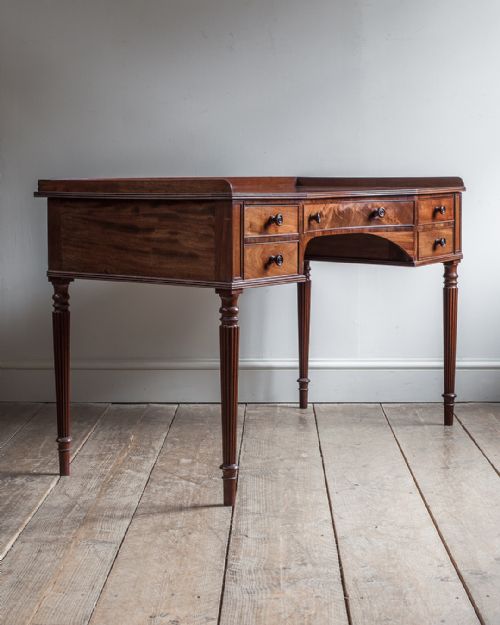
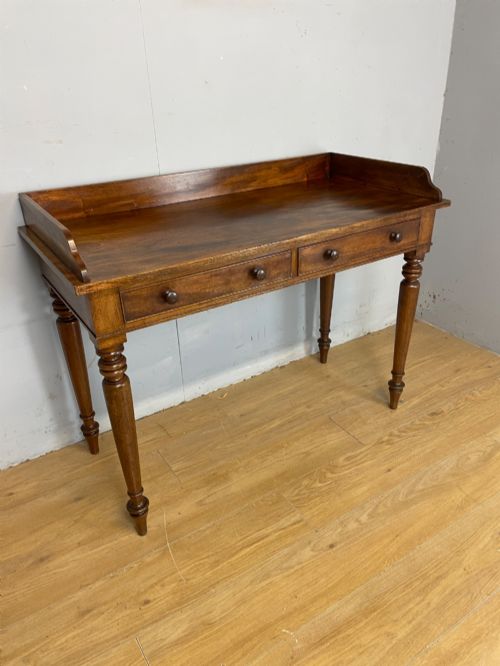
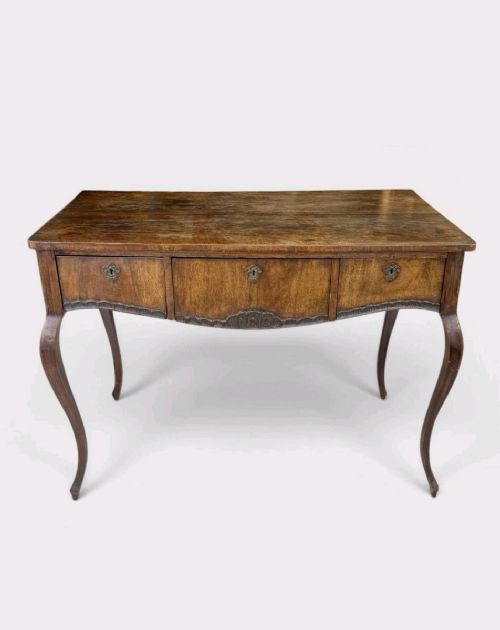
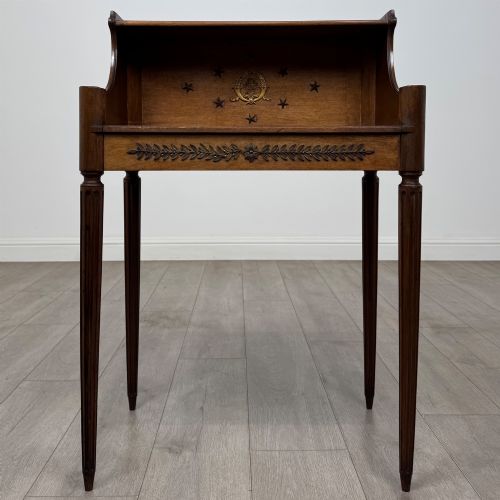
Mahogany Side Table Desk
Mahogany side table desk examples bridge formal utility and domestic grace, offering surface space alongside functional writing drawers.
Mahogany Side Table Desk
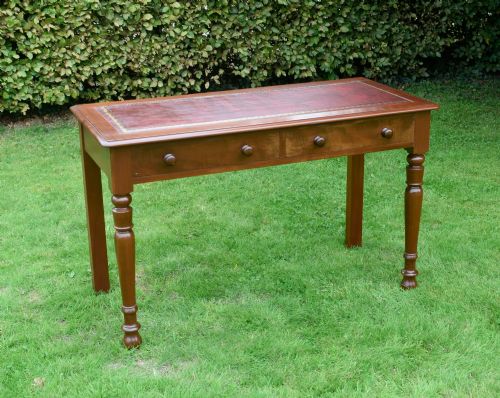
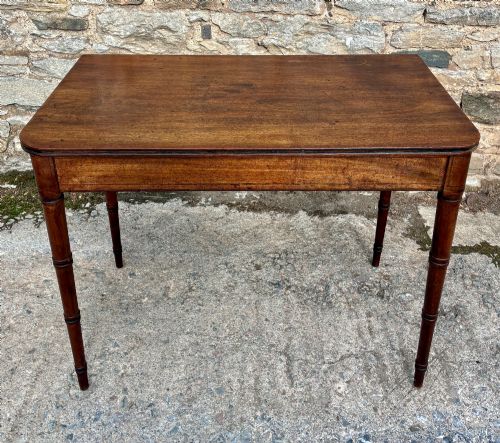
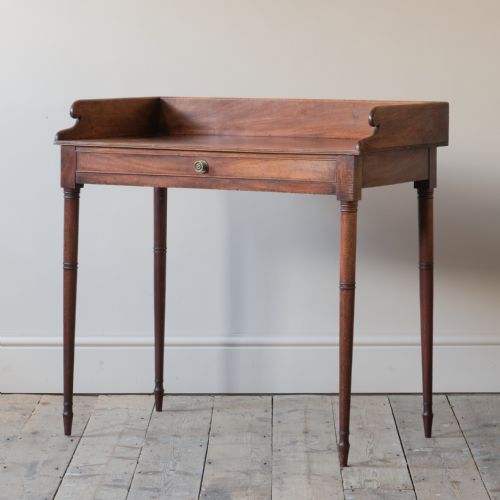
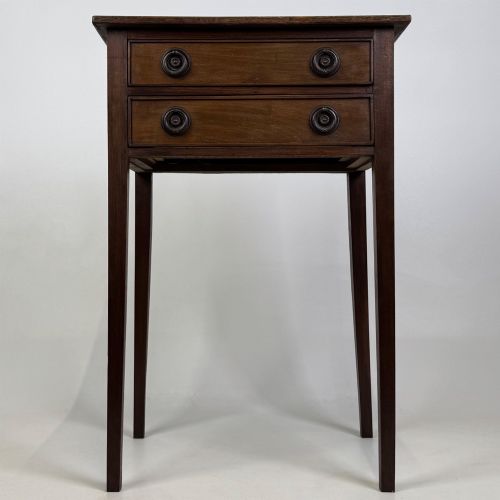
A mahogany side table desk combines the narrow profile of a side or hall table with the functional drawers of a writing surface. These pieces appear across Georgian, Regency, Victorian, and Edwardian periods.
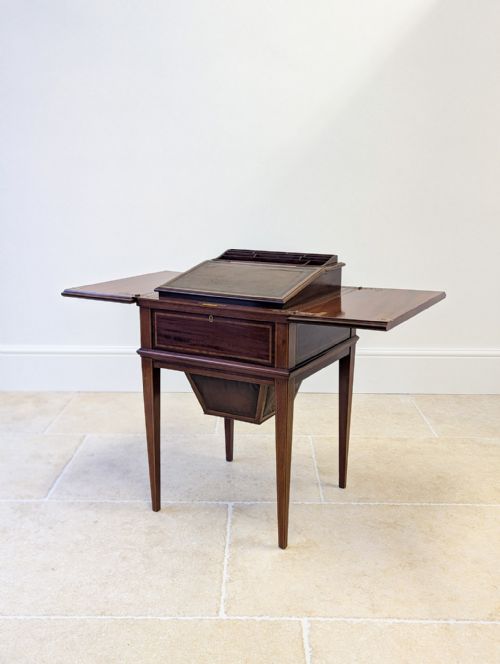
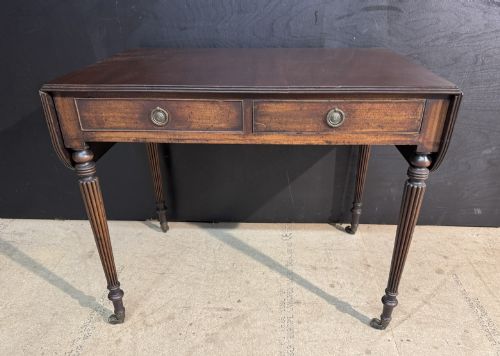
The form varies from simple single-drawer drop-leaf tables to grand partners desks and metamorphic writing tables. Buyers frequently encounter nineteenth-century adaptations built for domestic study and dressing rooms.
Originating as utilitarian writing furniture, these tables serve today as compact desks, console surfaces, and dressing tables in living spaces.
How They Were Made
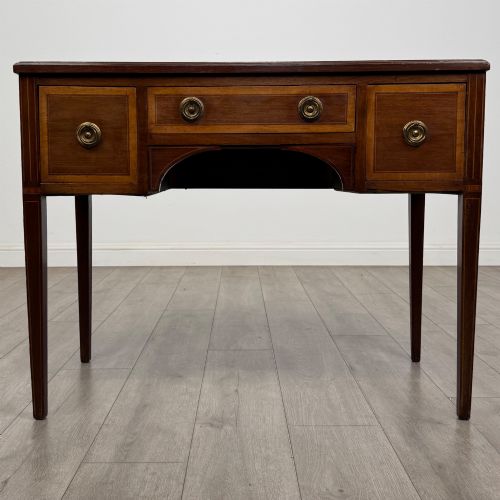
Cabinet makers utilised solid timber alongside flame mahogany veneer to construct carcass frames and drawer fronts, often accented with satinwood and boxwood stringing.
Working surfaces frequently incorporate inset leather writing panels, sometimes complemented by brass handles and ormolu mounts depending on the period.
Listings span Georgian, Regency, Victorian, and Edwardian eras, incorporating mahogany, brass, leather, and satinwood.
What Varies in Quality
The choice of timber grain dictates much of the visual weight, with matched flame veneer and thoughtful inlay separating standard examples from high-end commissions.
Construction details such as dovetailed drawer boxes, secondary timber selection, and original brass hardware indicate the level of workshop care.
Gillows·Alphonse Tahan·Charles Andrea Nosotti
The Mahogany Side Table Desk Glossary
- Flame Mahogany Veneer
- A decorative wood cut sliced from the fork of the tree to create a distinctive flickering flame pattern. This veneer appears prominently on Georgian and Regency drawer fronts.
- Partners Desk
- A large writing table designed with drawers on opposing sides to accommodate two users simultaneously. These pieces often feature extensive pedestals and leather inserts.
- Satinwood
- A pale exotic timber utilised for contrasting stringing and banding in inlaid furniture. Makers employed it to highlight drawer edges and borders.
- Lowboy
- A small dressing or writing table featuring one or more rows of drawers beneath a flat top, typically raised on slender legs. They date primarily from the eighteenth century.
- Cross Banding
- A border technique where veneer strips are laid perpendicular to the grain of the central panel. This frames the top surface of high-quality writing tables.
Mahogany Side Table Desk: Frequently Asked Questions
How do I date a mahogany side table desk?
Dating relies on observing structural characteristics, timber selection, and hardware styles associated with periods like Georgian or Victorian.
Secondary woods and dovetail construction methods further clarify the era of manufacture.
Were these desks used in bedrooms or libraries?
These versatile tables served multiple functions across the home, appearing in private libraries, bedrooms as dressing tables, and grand halls.
Their compact depths allowed them to sit flush against walls without obstructing pathways.
How should I care for the leather writing surface?
Leather inserts require gentle cleaning with specialised leather balms to prevent drying and cracking over time.
Avoiding direct sunlight preserves both the leather hide and the surrounding mahogany polish.
What distinguishes a sofa table from a side table desk?
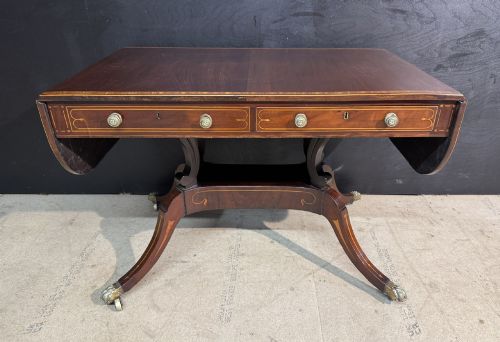
Sofa tables typically feature drop leaves on either end and stretchers connecting twin pedestal supports.
Writing desks prioritise drawer depth and internal stationery compartments over folding side flaps.