



Adjustable Book Rest Table
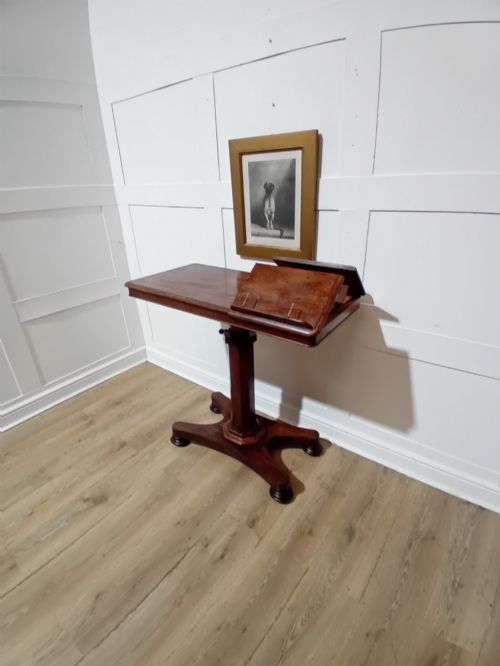
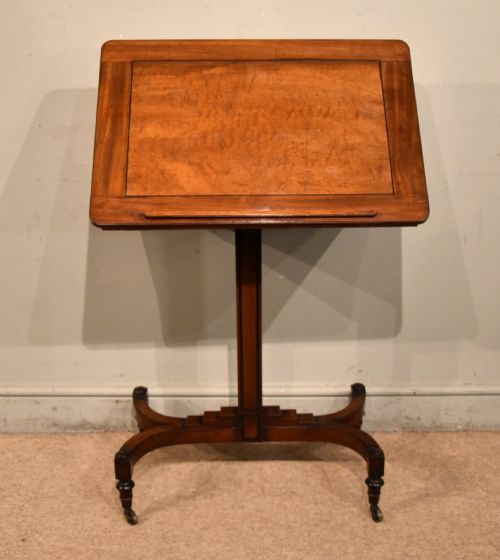
An adjustable book rest table is a practical device designed to hold texts at a readable angle, combining a stand with a surface.
Adjustable Book Rest Table
An adjustable book rest table serves as a dual-purpose piece of furniture that functions both as a book rest and an occasional table. Buyers searching for an adjustable book rest table often encounter forms ranging from simple reading stands to complex double-sided library tables.
The pieces catalogued here span several periods, with examples appearing from the eighteenth century through the Edwardian era. Regency and Victorian specimens dominate the selection, showcasing standard forms like reading stands and occasional tables.
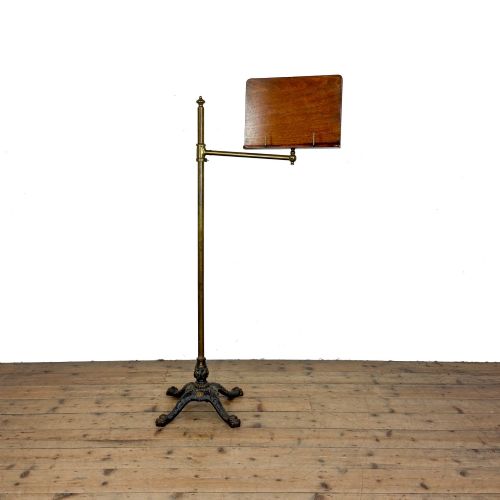
Most entries combine reading surfaces with adjustable mechanisms intended to alter the height or angle of the book rest. These items originate from workshops utilising robust timbers suited for daily study and reference.
How they were made
Cabinet makers constructed these pieces primarily using dense hardwoods such as mahogany, rosewood, and oak for stability. Brass fittings and cast iron components appear in the mechanical assemblies that allow the book rests to move.
The construction relies on stable frames capable of supporting heavy volumes without tipping. Joinery methods varied by period, supporting both the elegant pedestals of the Regency era and the robust industrial iron frameworks of the early twentieth century.
Adjustable Book Rest Table Retail Price Guide 2026
Typical asking prices for adjustable book rest table among the pieces listed under this phrase on Sellingantiques today, from the lower quarter to the upper quarter. They describe what is for sale here now, not the wider market.
Some models feature a marine theme, suggesting books had to stay put even if the room felt a bit nautical.
What varies in quality
The refinement of the adjusting mechanism distinguishes standard pieces from superior examples. Smooth movement in the brass or iron adjustments indicates careful engineering by the maker.
Selection of timber grain and the complexity of the design, such as double-sided book rests or marine-themed tops, elevate certain pieces above simpler reading stands. The integration of the reading surface with the occasional table base dictates overall utility and visual balance.
Carters of London
The Adjustable Book Rest Table Glossary
- Reading Stand
- A furniture piece designed specifically to support books or music sheets at an angled position for easier viewing. These often include adjustable ledges to keep pages secure.
- Occasional Table
- A small, movable table intended for specific, intermittent use rather than dining or primary seating tasks. They complement larger room layouts in libraries or studies.
- Regency
- A British design period spanning the early nineteenth century, characterised by classical restraint and elegant proportions. Furniture from this time often incorporates fine mahogany and restrained brass detailing.
- William IV
- A transitional nineteenth-century style sitting between Regency and early Victorian aesthetics, known for robust forms and rich timbers like rosewood. Pieces from this era often display heavier turning and carved supports.
Adjustable Book Rest Table: Frequently Asked Questions
What is an adjustable book rest table?
An adjustable book rest table is a specialised item combining a support for reading material with a portable table surface. It allows users to read comfortably at varying heights and angles.
Such pieces serve as functional furniture for studies, libraries, and parlours, accommodating heavy volumes and reference texts with ease.
How do I date an adjustable table?
Dating relies on observing the timber species, construction techniques, and stylistic markers present in the frame. Regency pieces often show classical restraint, while Victorian and Edwardian examples introduce heavier woods and cast iron elements.
Mechanical hardware also helps establish age, as manufacturing methods for adjustable brass and iron joints evolved across the nineteenth century.
Where were these tables used?
These tables typically stood in libraries, studies, and drawing rooms where individuals engaged in sustained reading or writing. Their portability allowed them to be placed beside chairs or windows.
Double-sided variants accommodated multiple readers or larger spreads of reference materials in shared study spaces.
How do I care for mahogany surfaces?
Care involves keeping the timber away from direct heat sources and strong sunlight to prevent warping and fading. Regular dusting with a soft, dry cloth preserves the finish.
Application of appropriate furniture wax maintains the moisture balance of antique hardwoods without building up heavy residues.