





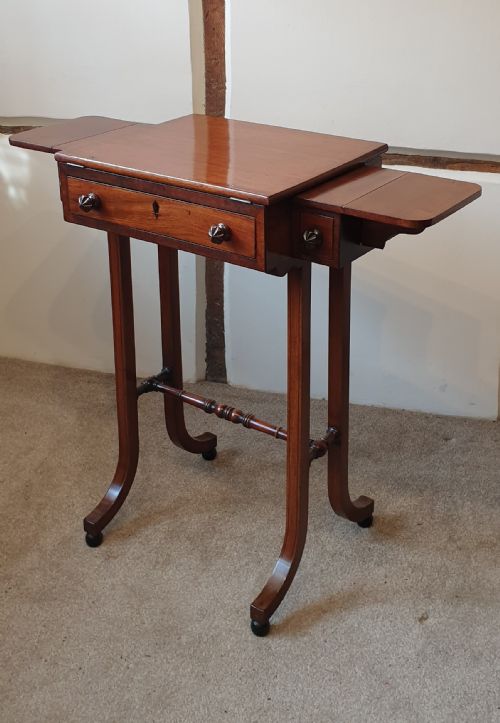
Ratcheted Reading Stand
A ratcheted reading stand brings mechanical ingenuity to your study, offering adjustable angles for books, music, and drafts.
Ratcheted Reading Stand
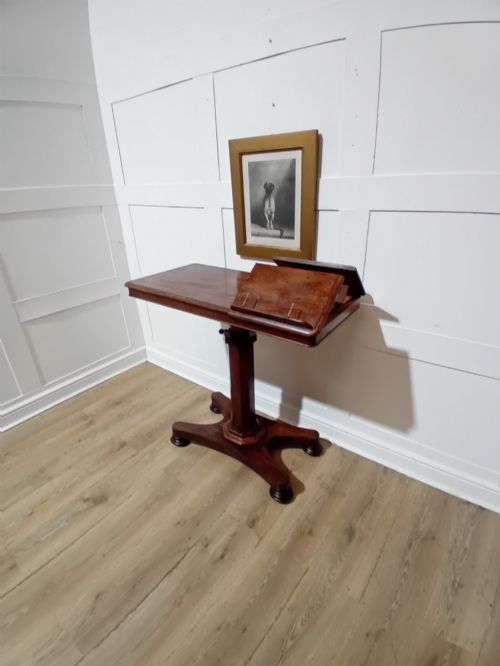
A ratcheted reading stand offers mechanical adjustment for books, music, or writing, designed to hold materials at a comfortable angle. When you search for a ratcheted reading stand, you encounter pieces intended for practical daily use in studies, libraries, and drawing rooms. The selection on this page centres primarily on reading tables and music stands, alongside occasional tables fitted with adjustable supports.
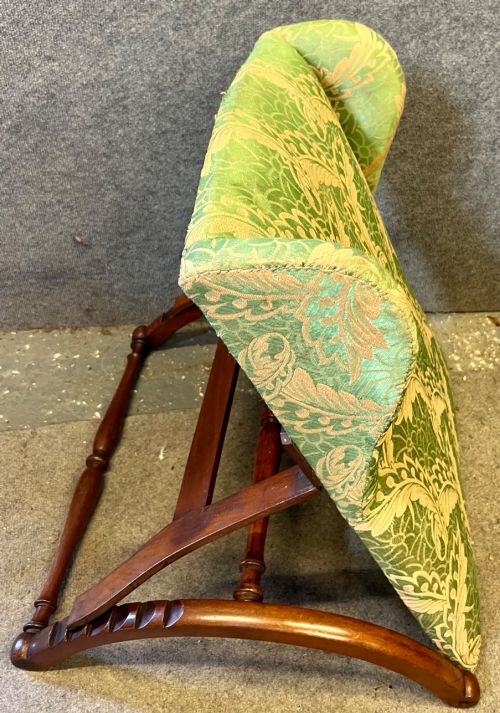
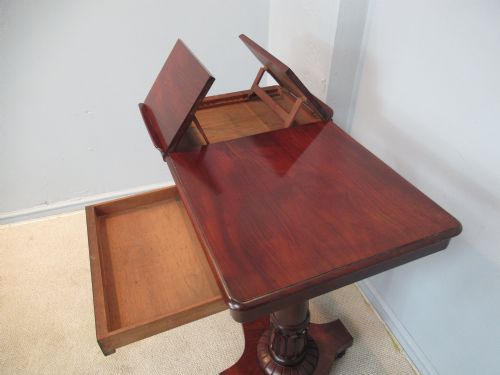
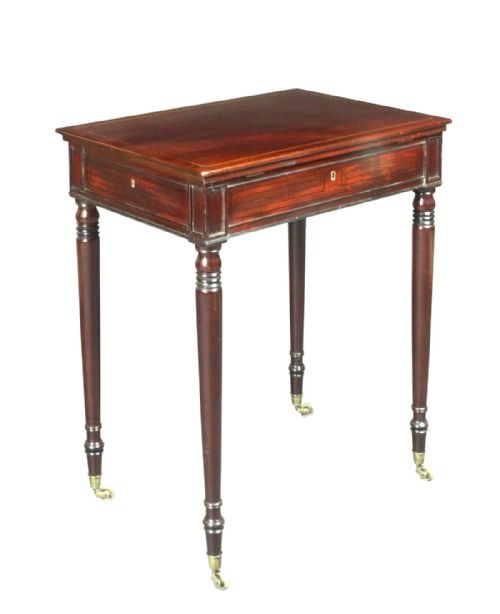
The periods represented stretch across the Regency and Victorian eras, alongside pieces dated to the nineteenth century and into the early twentieth century. These furnishings take several forms, including metamorphic architect's desks, double-sided tables, and campaign chair backs. Mahogany and walnut dominate the construction, often paired with brass mechanisms and boxwood details.
Originating mostly from nineteenth-century English workshops, these items reflect an era of domestic ingenuity where furniture served multiple utilitarian functions. You will find items ranging from tall riser desks for cartographers to portable bed reading tables bearing patents like Carter's. Each piece relies on a ratcheted mechanism to alter the height or slope of the reading surface.
How they were made
Makers utilised dense hardwoods such as mahogany and walnut to construct the primary frames and reading surfaces, ensuring durability for heavy volumes. These woods were chosen for their strength and rich grain, which responded well to polishing and sustained daily handling. Brass components were integrated into the joints, ratchets, and extendable columns to provide smooth mechanical movement.
Adjustability was achieved through internal wooden racks or metal ratchets that locked the reading slope at various angles. Boxwood stringing and inlay occasionally adorned the edges of the tables, adding fine decorative detail without compromising structural integrity. Fabric surfaces also appear on selected reading platforms to prevent books from slipping when tilted.
Ratcheted Reading Stand Retail Price Guide 2026
Typical asking prices for ratcheted reading stand among the pieces listed under this phrase on Sellingantiques today, from the lower quarter to the upper quarter. They describe what is for sale here now, not the wider market.
Listings feature mahogany and walnut woods paired with brass mechanisms across Regency and Victorian periods.
What varies in quality
The sophistication of the mechanical adjustment separates standard utility pieces from more complex metamorphic designs. Simpler tables feature basic wooden ratchets for the reading slope, whereas advanced examples incorporate double-sided surfaces or multi-positional mechanisms for height and tilt. The precision of the brass fittings and the smoothness of the ratcheting action indicate the level of care invested by the maker.
Timber selection and secondary woods also dictate the standing of a piece within the range. Superior examples utilise well-figured mahogany or walnut throughout the primary surfaces and framing, paired with crisp boxwood detailing. The integrity of the mechanical parts and the retention of their original working order remain central to the overall standard of the construction.
The Ratcheted Reading Stand Glossary
- Ratcheted
- Fitted with a notched mechanism that allows a surface to be locked securely at various angles. This enables the user to alter the slope of a desk or bookrest.
- Metamorphic
- Furniture designed to transform from one form or function into another, such as a table converting into a desk. These pieces often conceal folding actions or extending parts.
- Campaign
- Portable furniture designed for travel, typically featuring brass corners, recessed handles, and folding supports. These items were built to be packed down easily.
- Lectern
- A stand with a slanted top used to hold a book or notes for reading aloud. They appear in floor-standing formats and tabletop variants.
Ratcheted Reading Stand: Frequently Asked Questions
How do ratcheted reading stands work?
These stands utilise a hinged support prop that engages with a notched wooden or metal rack beneath the reading surface. Lifting the board allows the prop to slide into different slots, securing the desired angle for the book or paper.
Lowering the surface requires lifting it past the highest notch to release the mechanism and guide the board back down to a flat position. This simple yet effective design provides stable support without relying on complex modern hardware.
What were reading tables used for?
Reading tables served scholars, draughtsmen, and readers by holding heavy folios, maps, and manuscripts at an ergonomic angle. They were placed in libraries, studies, and drawing rooms where people spent hours consulting reference materials.
Some variants, such as bed reading tables, allowed invalids or studious individuals to read comfortably while seated in a chair or resting in bed. Their adjustable nature made them versatile additions to nineteenth-century domestic interiors.
How do I identify a Regency reading stand?
Regency pieces often display classical proportions, deep mahogany timbers, and restrained brass mounts characteristic of the early nineteenth century. Look for clean architectural lines and sturdy pedestal bases fitted with brass paw castors.
They frequently incorporate double-sided tops or clever mechanical adjustments designed for contemporary scholars and artists. The absence of heavy Victorian ornamentation helps distinguish these earlier examples.
Can I use these stands for modern laptops?
While these stands were built for books, music sheets, and paper, many sturdy examples can accommodate modern reading devices or lightweight laptops. You should check the weight capacity and the depth of the retaining ledge to ensure your device sits securely on the slanted surface.
Care should be taken not to overload the ratcheted mechanism, which was originally engineered for bound volumes rather than modern electronics.