






Victorian Fusee Movement Clock
A victorian fusee movement clock brings dependable mechanical precision and classic British cabinet work into any room.

Victorian Fusee Movement Clock
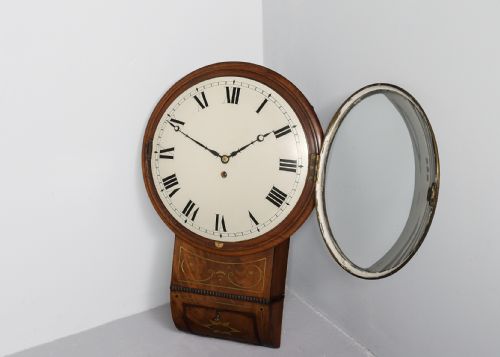
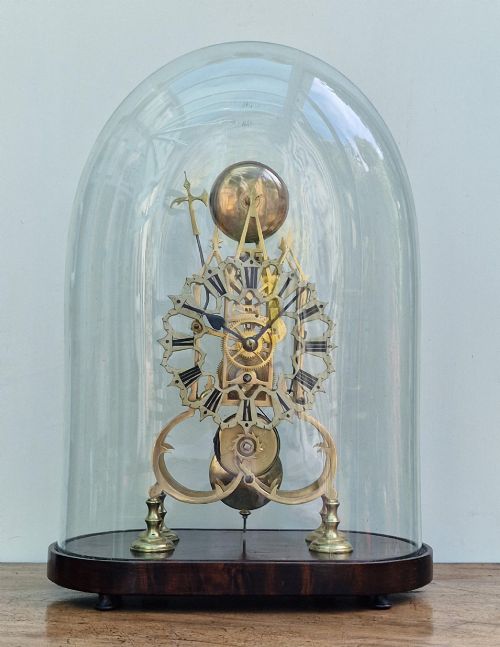
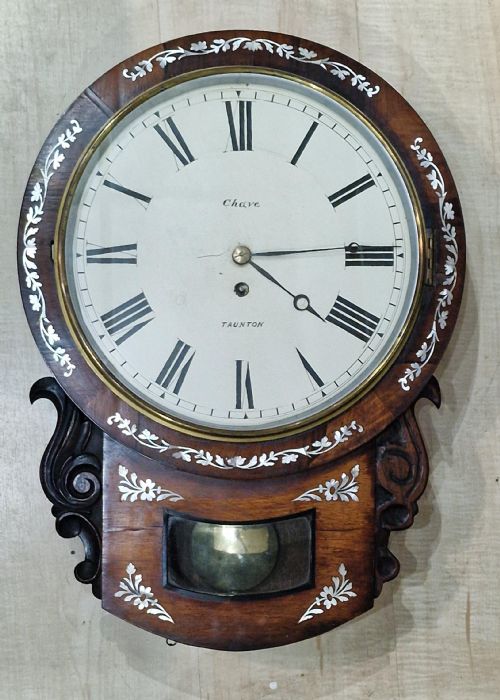
When you search for a victorian fusee movement clock, you encounter timepieces designed for functional spaces, railway stations, and formal drawing rooms. The selection ranges from wall-mounted dial clocks and drop-dial school clocks to elaborate mantel, bracket, and skeleton clocks housed beneath glass domes.
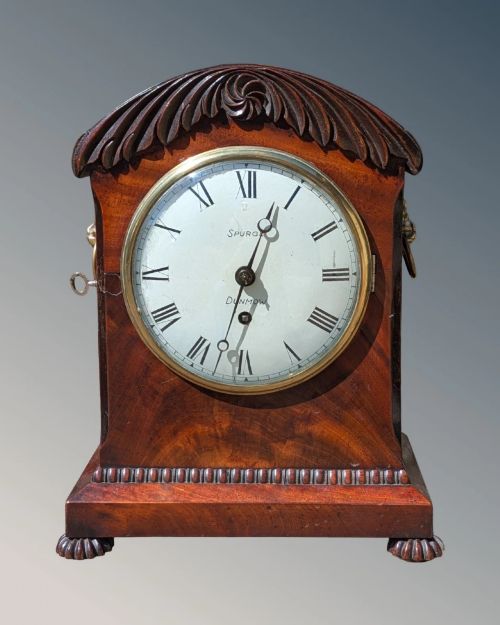
Mahogany and rosewood cases dominate the regional and London pieces, alongside occasional examples in oak. Many originate from specific makers and retailers across towns and cities in England, spanning the nineteenth century.
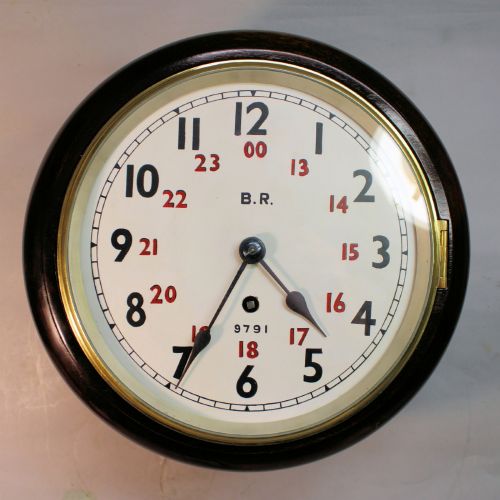
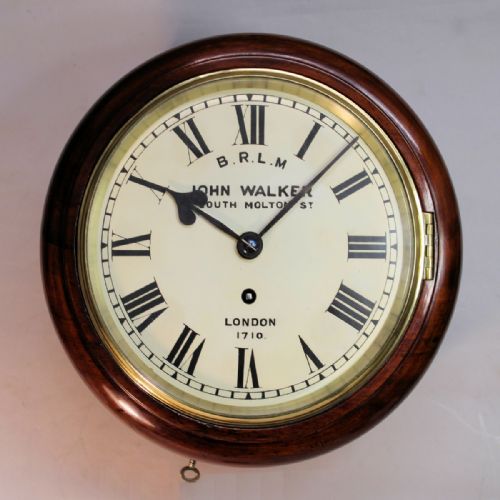
The wall-mounted dial version is the form most frequently met on this page, often carrying the provenance of railway companies or provincial station masters. These sit alongside table and library timepieces that display the intricate wheel work of the movement directly to the observer.
What separates examples
The distinction between standard timepieces and superior examples lies in the complexity of the movement and the crispness of the cabinet work. Twin-fusee configurations that strike bells or gongs require significantly more skill to construct than simple single-fusee timepieces.
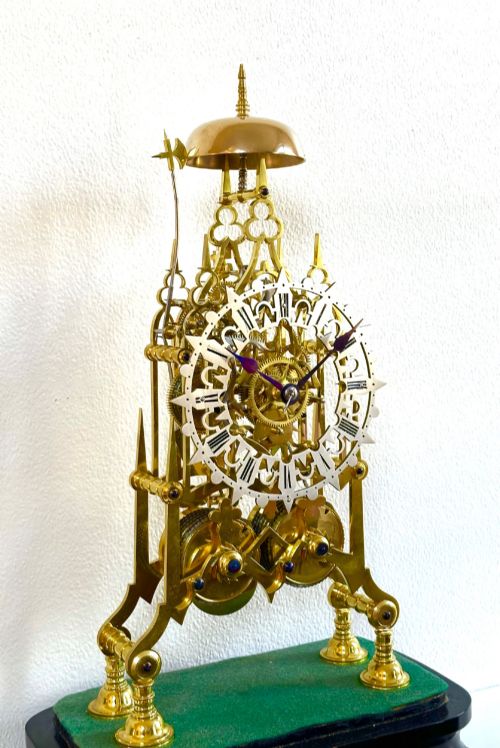
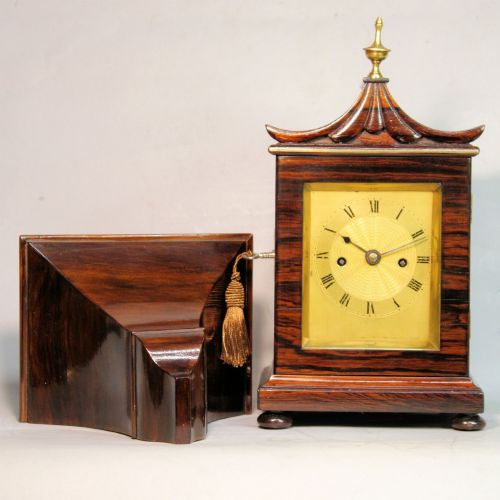
Case execution and engraving on the brass movement plates also separate ordinary production from high-grade work. Sharply cut brass fretwork on skeleton clocks and neat inlay on mahogany and rosewood bracket cases indicate superior workshop standards.
Listings feature wall clocks, skeleton clocks, and bracket clocks constructed from mahogany, rosewood, oak, brass, and steel across the nineteenth century.
John Walker·Dent·William Payne·Phillips Brothers·Harrods·Prescot Clock Co
The Victorian Fusee Movement Clock Glossary
- Fusee
- A conical pulley used in mechanical clocks to maintain even power delivery as the mainspring unwinds. This mechanism ensures steady timekeeping from the beginning to the end of the winding cycle.
- Skeleton clock
- A clock with a stripped-down brass frame that exposes the gear train and movement to view. These are usually displayed under a protective glass dome.
- Drop dial clock
- A wall clock featuring a circular dial above an extended wooden trunk that houses the pendulum. This form was widely adopted in offices, schools, and railway stations.
- Bracket clock
- A portable mantel or table clock traditionally designed to sit upon a dedicated wall bracket. They often feature carrying handles and glazed side panels.
- Twin fusee
- A movement incorporating two separate fusee cones and spring barrels, typically allowing one train to drive the timekeeping and another to strike a bell or gong.
Victorian Fusee Movement Clock: Frequently Asked Questions
How does a fusee movement work?
A fusee uses a spiral-grooved cone connected to the spring barrel by a fine chain or gut cord. As the mainspring unwinds and loses tension, the chain moves to a wider part of the cone, maintaining steady torque.
This clever mechanical compensation prevents the clock from losing speed as the power runs down over its eight-day or longer cycle.
What is the difference between a timepiece and a clock?
In horological terms, a timepiece is designed purely to indicate the hours and minutes without any striking mechanism. A clock includes additional gear trains that strike bells or gongs on the hour or half-hour.
Many wall and library versions function as simple timepieces, while larger bracket and mantel pieces frequently include striking functions.
Where were railway dial clocks used?
Railway companies placed these robust wall clocks in booking halls, platform offices, and boardrooms to maintain strict synchronisation across the network. Companies like the GWR and LMS stamped their dials and movements with specific identifiers.
Their clear painted faces and sturdy mahogany or oak cases ensured durability in busy public environments.