
Brass Carriage Timepiece
A brass carriage timepiece brings precise nineteenth-century mechanics and heavy cast metalwork into a domestic room.

Brass Carriage Timepiece
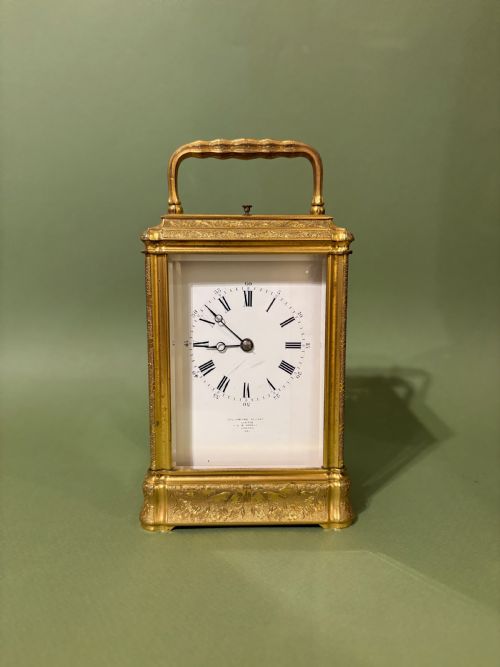
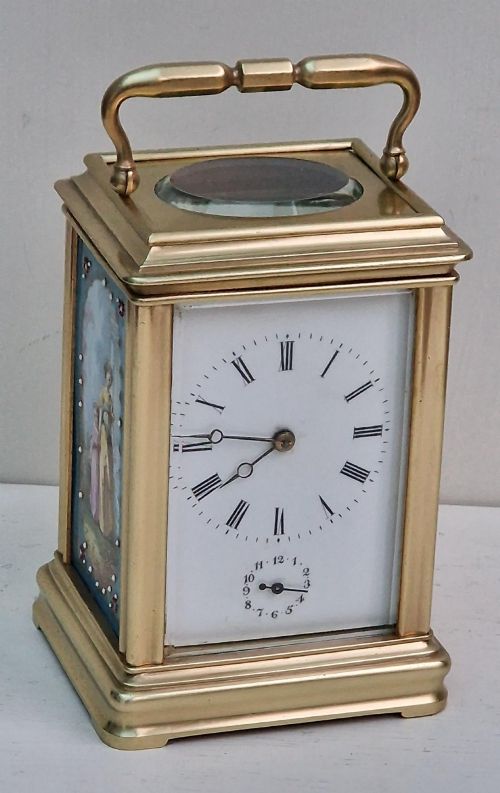
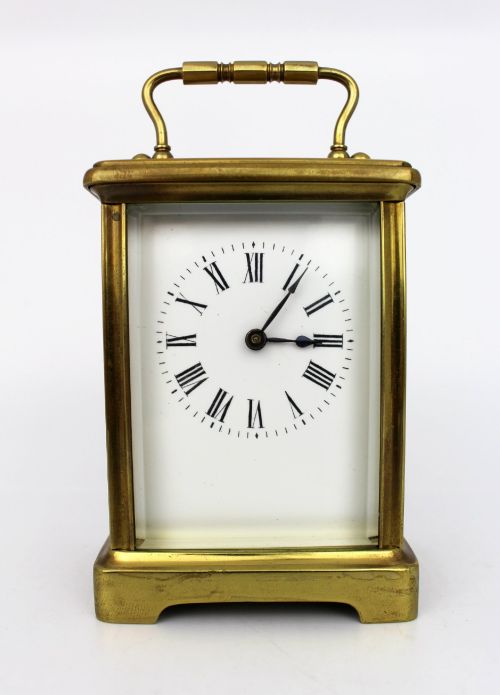
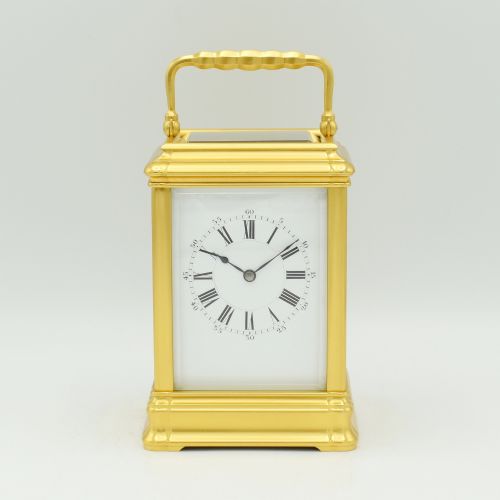
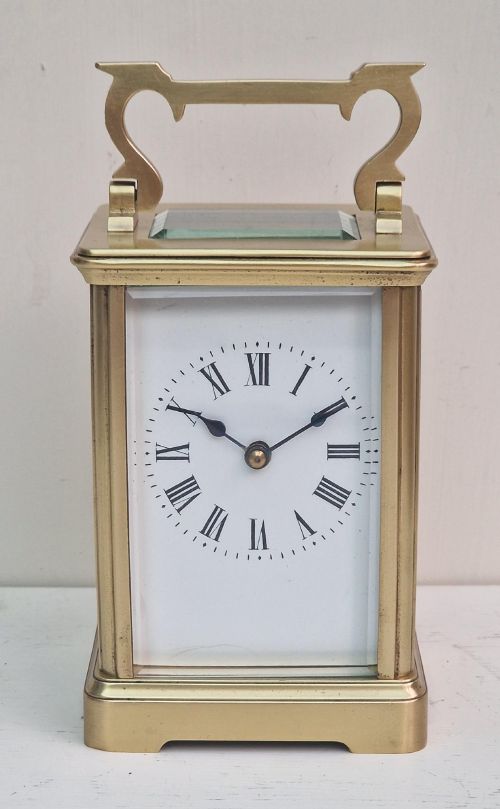
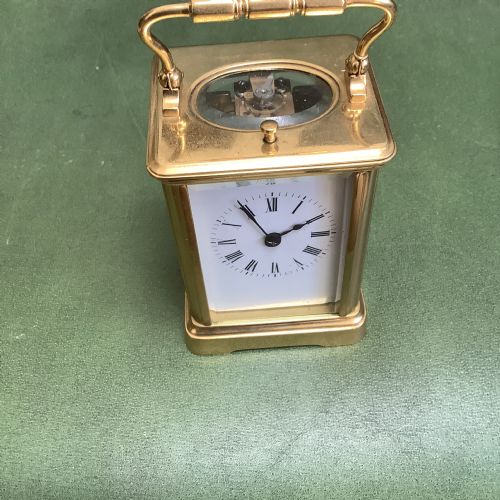
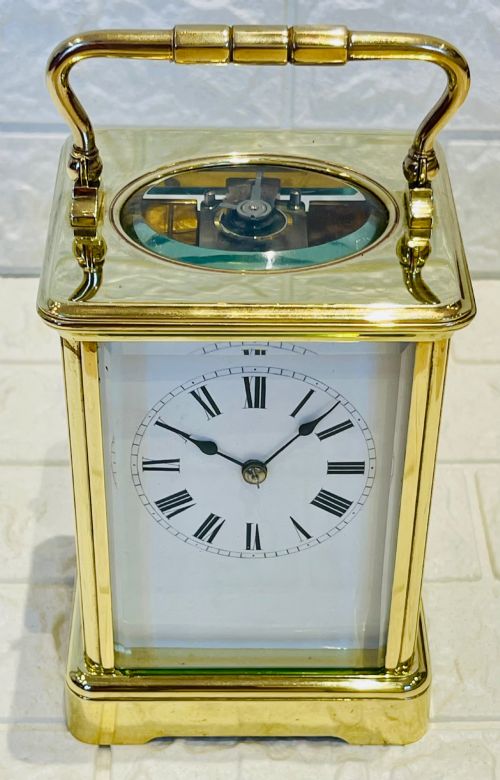
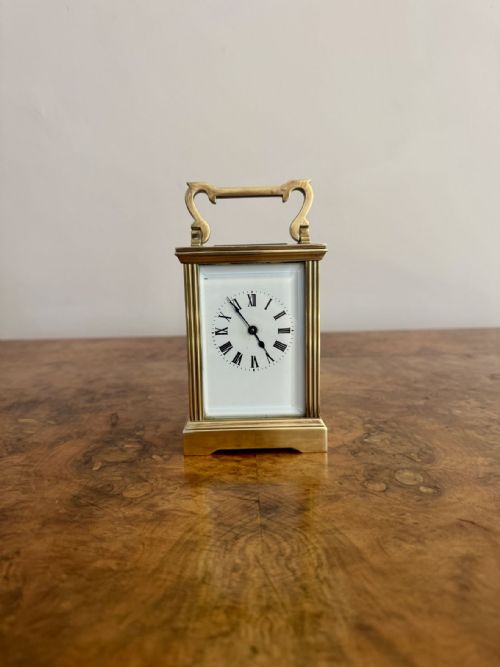
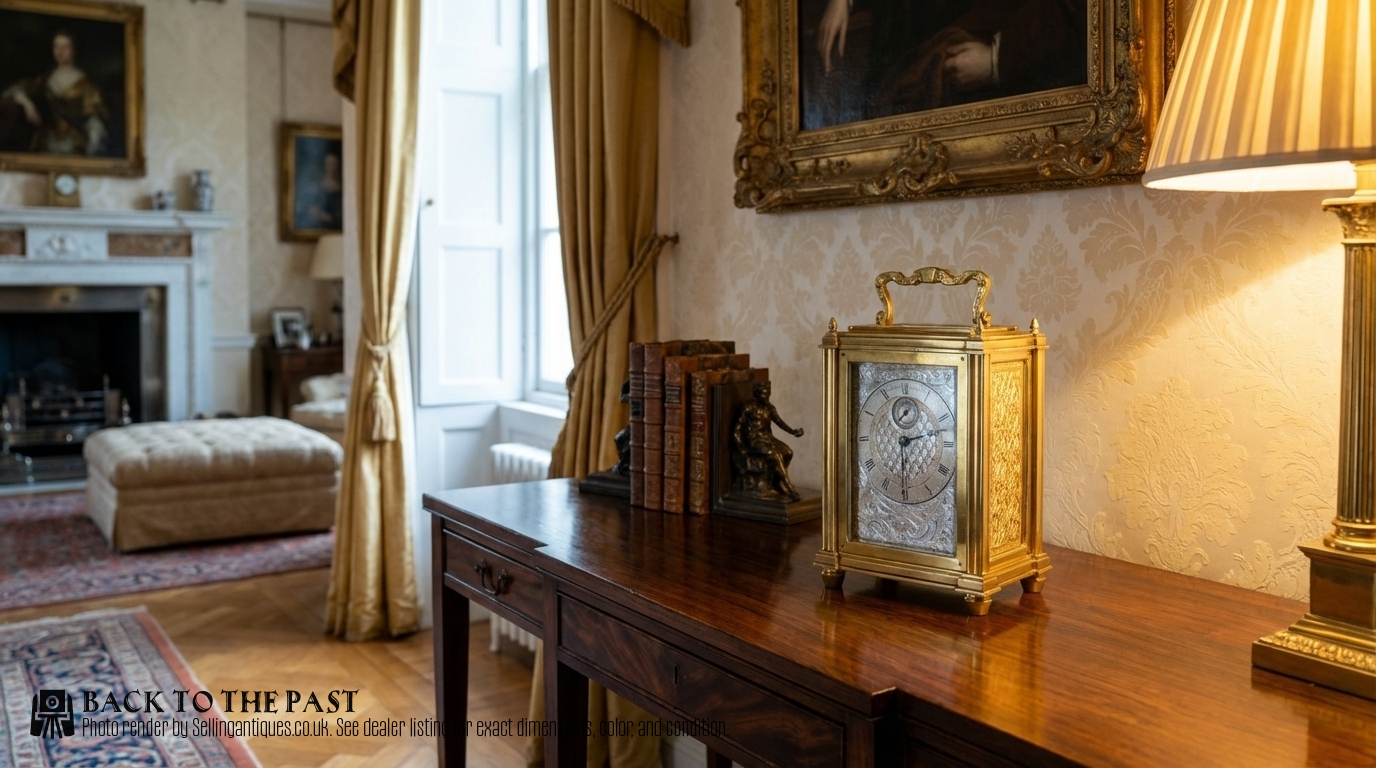
When you search for a brass carriage timepiece, you encounter portable mechanical clocks designed for travel and domestic use during the nineteenth and early twentieth centuries. These objects typically take the form of upright rectangular metal housings glazed on multiple sides to display the internal escapement.
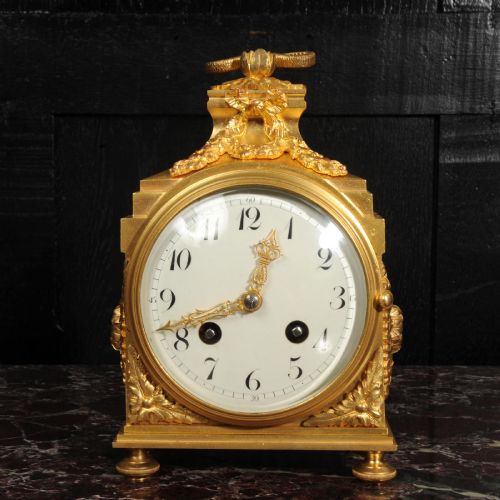
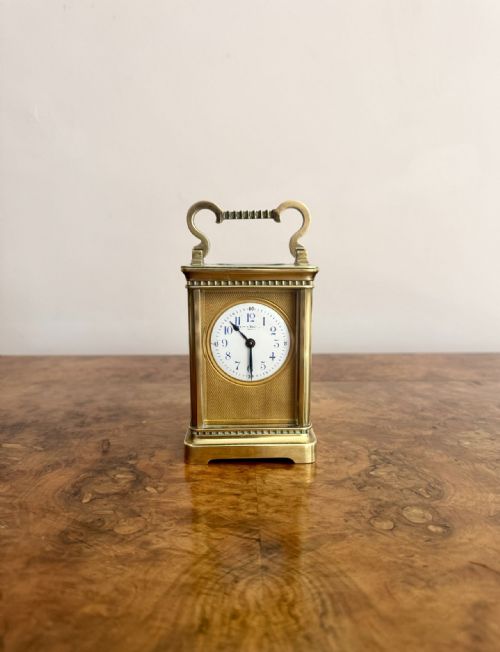
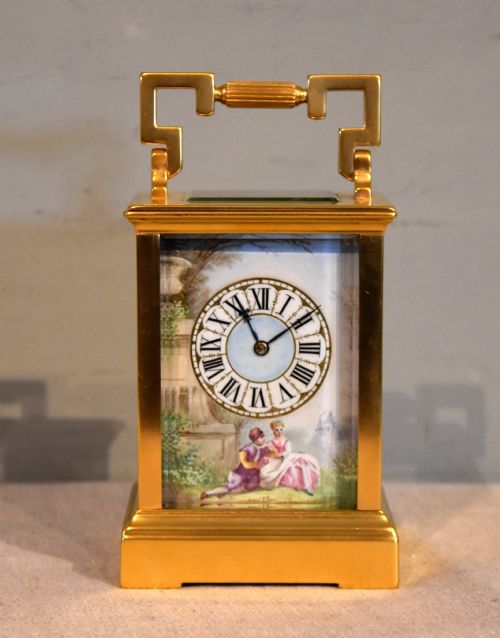
The versions most common on this page originate from French workshops and English makers dating from the eighteen-fifties through the Edwardian period. They range from plain polished brass cases to ornate models mounted with porcelain panels or champlevé enamel.
How they were made
Maker workshops built these housings primarily from cast brass, gilt brass, or ormolu, often shaping them into distinct forms such as gorge or doucine cases. Bevelled glass panels fit tightly into the metal frames to enclose the mechanical movement and enamel dials.
Internal movements utilise brass gear trains driven by mainsprings, housed alongside platforms that carry the escapement. Many examples incorporate specialised complications like repeaters, alarm mechanisms, or Swiss movements.
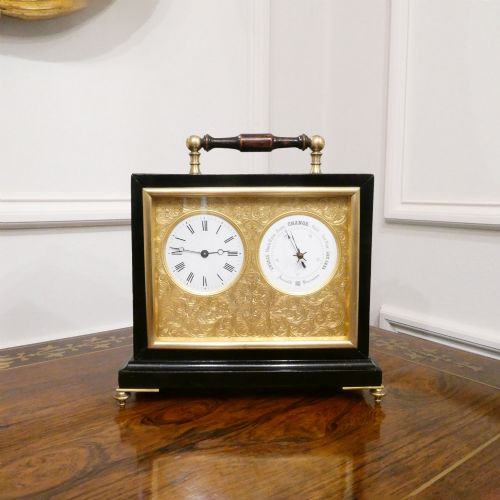
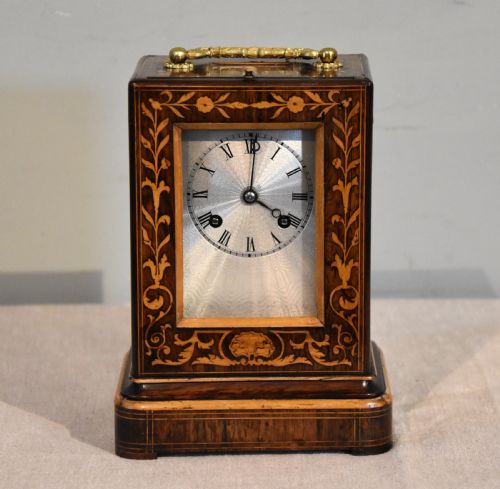
Object forms represented across the site include standard carriage clocks, miniature models, mantel clocks, and desk clocks.
What varies in quality
The standard of a brass carriage timepiece rests on the crispness of the cast metal frame and the presence of fully engraved detailing across the brass surfaces. Heavier cases with thick, bevelled glass panels demonstrate superior original manufacture compared to lighter, plain equivalents.
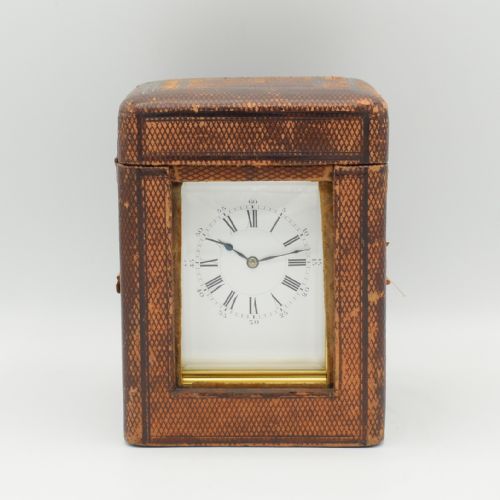
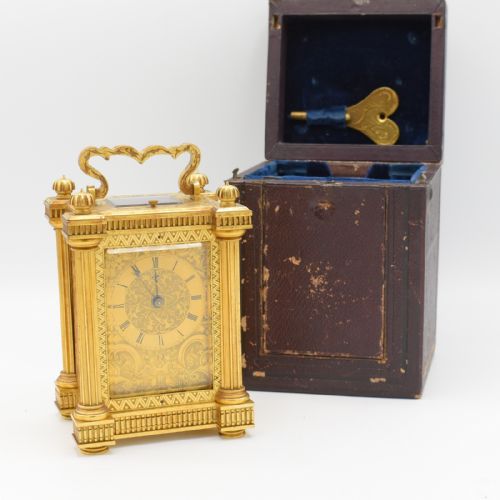
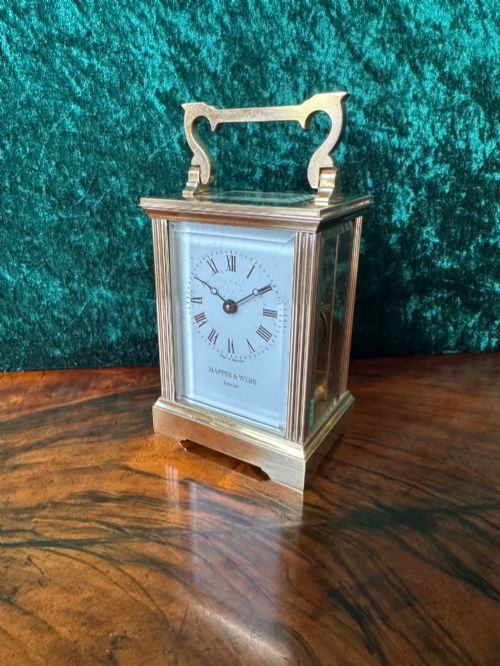
Movement execution also dictates grade, with signed maker plates from established French and English firms separating standard commercial items from superior workshop production. The inclusion of original leather travel cases further elevates an example.
HENRI JACOT·Howell & James London·Mappin and Web·Pickford of London·Drocourt Paris·T. Martin & Co·C. Detouche Paris·Antoine Redier of Paris·Duverdrey & Bloquel·John Morley
The Brass Carriage Timepiece Glossary
- Gorge case
- A stepped brass carriage clock case style featuring concave mouldings around the top and base. This architectural framing is typical of better nineteenth-century French makers.
- Pendule d'officier
- A French military-style carriage clock often featuring a distinct bell strike or simplified dial arrangement. These pieces were originally made for officers on campaign.
- Champlevé
- An enamelling technique where troughs are dug into the brass surface and filled with vitreous colour before firing. It creates vibrant decorative bands around the dial and columns.
- Repeater
- A mechanical complication that chimes the hours and quarters upon pressing a button on the case. It allowed owners to check the time in darkness.
- Escapement
- The internal mechanism that controls the release of power from the mainspring to the gear train. Platform escapements are standard in these portable clocks.
Brass Carriage Timepiece: Frequently Asked Questions
How do I wind a brass carriage timepiece?
Most examples use a matching key inserted into arbours on the backplate to tension the mainspring barrels. Take care not to over-wind the mechanism when resistance builds.
Ensure you turn the key in the correct direction indicated by internal arrows or standard movement design for that specific French or English calibre.
What is the difference between a timepiece and a clock?
In horological terms, a timepiece is a clock that simply tells the time without any striking mechanism or chiming train. Many carriage pieces lack bells to maintain a simpler internal layout.
Clocks include striking trains that sound the hours or quarters, requiring extra gear train components within the brass housing.
Why do some have travel cases?
Original leather outer cases protected the polished brass and glass panels from knocks during journeys in carriages or trains. They feature hinged lids and small cut-outs to view the dial.
Finding a timepiece with its original fitted case adds significant historical completeness to the object.
How do I date these clocks?
Dating relies on stylistic details such as case shape, dial typography, and signature marks stamped on the backplate by makers like Henri Jacot or Drocourt. Victorian and Edwardian examples often show distinct architectural shifts in brass casting.
Serial numbers stamped into the movement also allow comparison against known maker production records from nineteenth-century France and London.