




Ormolu Carriage Clock
An ormolu carriage clock brings heavy gilt bronze, bevelling and precision timekeeping together into a portable, refined package for any mantel.

Ormolu Carriage Clock
When you search for an ormolu carriage clock, you are looking at portable mechanical timepieces housed in polished metal and glass cases. The versions you are most likely to meet on this page hail from nineteenth-century France, spanning periods from the Victorian era up to nineteen hundred.
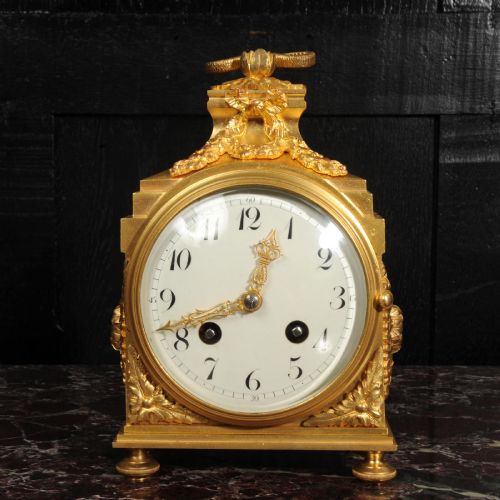
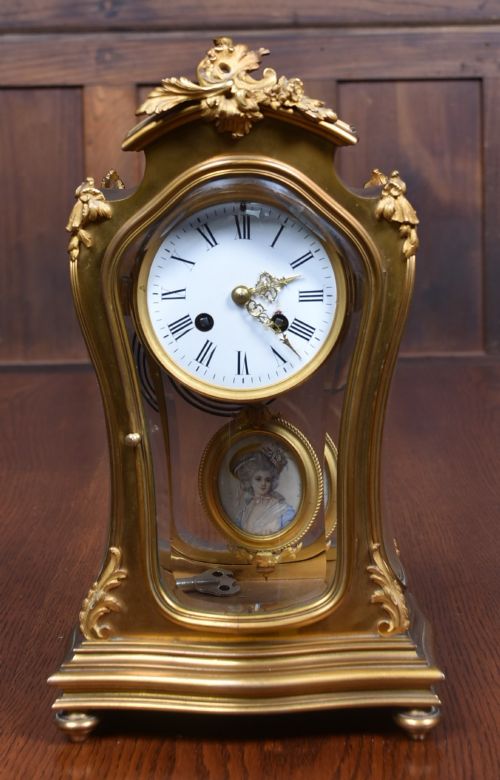
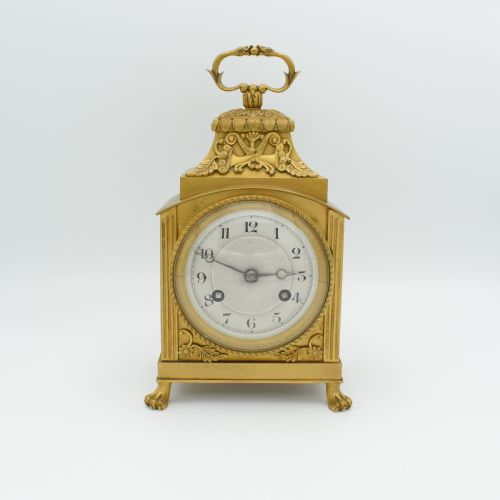
These pieces encompass various forms including four-glass mantel clocks, crystal regulators, and pendule d'officier models. Many reflect French Empire, Rococo Revival, or Napoleon III styles, demonstrating heavy gilt brass, bronze, and glass construction.
The evidence shows examples equipped with enamel dials, miniature paintings such as the Rodier miniature, and occasional matching travel cases. They range from compact bedside pieces to larger mantel clocks designed for prominent display.
How they were made
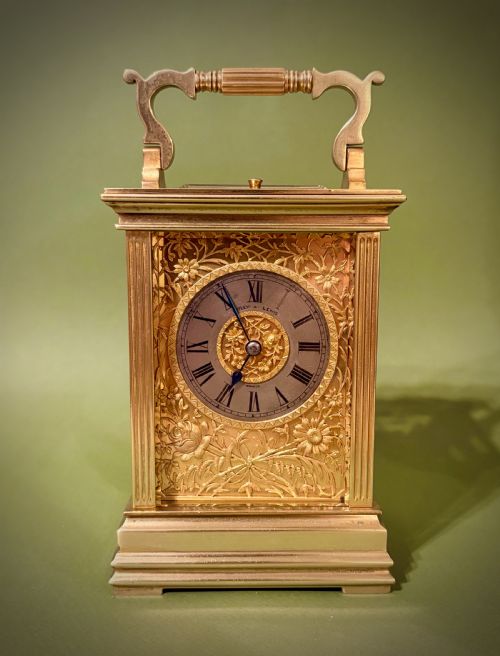
The construction relies heavily on cast ormolu, gilt bronze, and gilt brass to form the structural frames and decorative mounts. Artisans combined these polished metals with heavy plate glass panels to create cases that allowed light to reach the internal escapements and movements.
Dials were frequently fashioned from white enamel with delicate painted numerals, often paired with fine steel hands. Interior mechanisms utilised traditional brass gear trains, sometimes incorporating repeater complications and precision fusee movements.
Specialised decorative elements included inserted malachite panels, pink glass panels, and hand-painted miniature portraits. Every metal component was meticulously cast, chased, and gilded to achieve a uniform, luminous finish.
What varies in quality
Quality rests significantly in the crispness of the ormolu casting and the depth of the gilding across the bronze or brass case. Finer examples display sharp, detailed chased ornament rather than soft, blurred edges on the decorative mounts.
The sophistication of the internal movement dictates much of the distinction, separating standard timepieces from repeating clocks with complex striking mechanisms. Signed dials and artist-painted miniatures also elevate the standard of an individual piece.
Condition of the glass panels, integrity of the enamel dial without hairline fractures, and the presence of original components all separate standard production items from superior survivals.
The Ormolu Carriage Clock Glossary
- Ormolu
- Gilded bronze or brass, typically created by applying a mercury-gilding technique to a cast metal base. This treatment gives the surface a deep, warm golden lustre.
- Carriage clock
- A small, portable spring-driven timepiece designed for travel during the nineteenth century. These clocks usually feature a glass-panelled brass case and a folding handle on top.
- Pendule d'officier
- A military-style French mantel clock with a distinctive arched top and carrying handle, historically attributed to designs from the Napoleonic era. They combine robust utility with refined gilt metal decoration.
- Crystal regulator
- A mantel clock housed within a heavy glazed case of four glass panels, revealing the movement suspended within. They gained immense popularity in France during the later nineteenth century.
- Fusee
- A conical pulley used in mechanical clocks to maintain an even pull on the gear train as the mainspring unwinds. This mechanism ensures consistent timekeeping accuracy throughout the power reserve.
Ormolu Carriage Clock: Frequently Asked Questions
What is an ormolu carriage clock?
An ormolu carriage clock is a portable mechanical timepiece enclosed in a gilt bronze or brass and glass case. They were designed for travel and domestic use during the nineteenth century.
These pieces showcase intricate metal casting, visible gear movements, and often feature enamel dials or decorative side panels. They represent a blend of functional engineering and ornate decorative art.
How do you wind a carriage clock?
Winding requires a matching key inserted into the arbours located on the backplate or dial face of the movement. Care must be taken not to overwind the mainspring.
Many nineteenth-century examples feature separate trains for timekeeping and striking functions, requiring each to be wound independently. Regular maintenance ensures the delicate brass gears continue to run smoothly.
Where were carriage clocks made?
The vast majority of nineteenth-century carriage clocks originate from French workshops, particularly in Paris. Makers produced everything from standard bedside timepieces to elaborate repeating models.
British makers also produced fusee timepieces, though French examples dominate the surviving record with their distinctive gilt ormolu and four-glass cases.
What does four glass mean?
A four-glass clock refers to a mantel clock featuring glass panels on the front, back, and both sides. This design allows light to flood the interior and displays the swinging pendulum and movement.
Originating in France during the Victorian period, these clocks often incorporate crystal regulators and ornate gilt bronze frames to accentuate the transparent case.
How do you date a carriage clock?
Dating involves examining the style of the case, the complexity of the escapement, and any maker signatures on the movement or dial. Periods range from early nineteenth-century Regency and Napoleon III styles to late Victorian designs.
Materials such as malachite panels, specific enamel techniques, and the transition from platform escapements provide further clues to the decade of manufacture.