






Engraved Brass Carriage Clock
These heavy, portable timepieces housed in glazed metal cases are an engraved brass carriage clock, prized for intricate surface work and reliable mechanical movements.
Engraved Brass Carriage Clock
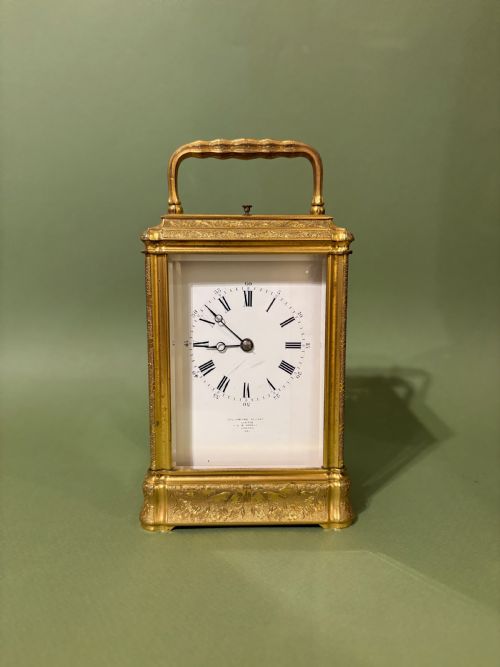
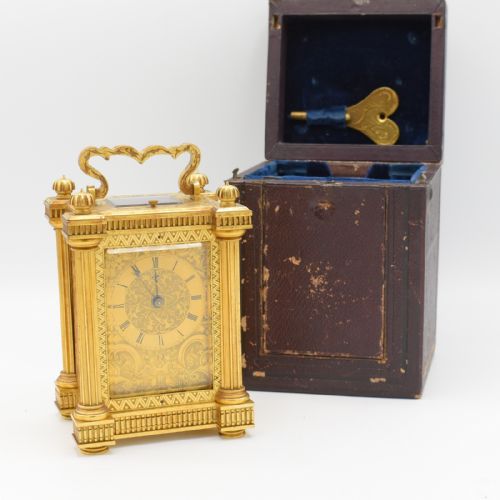
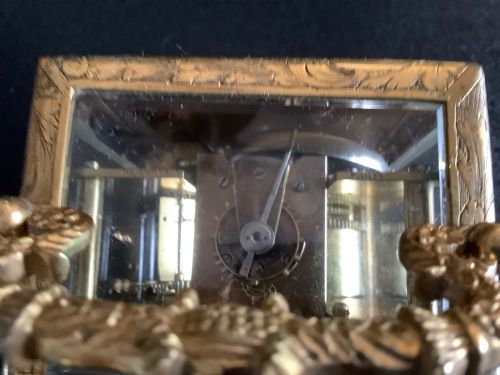
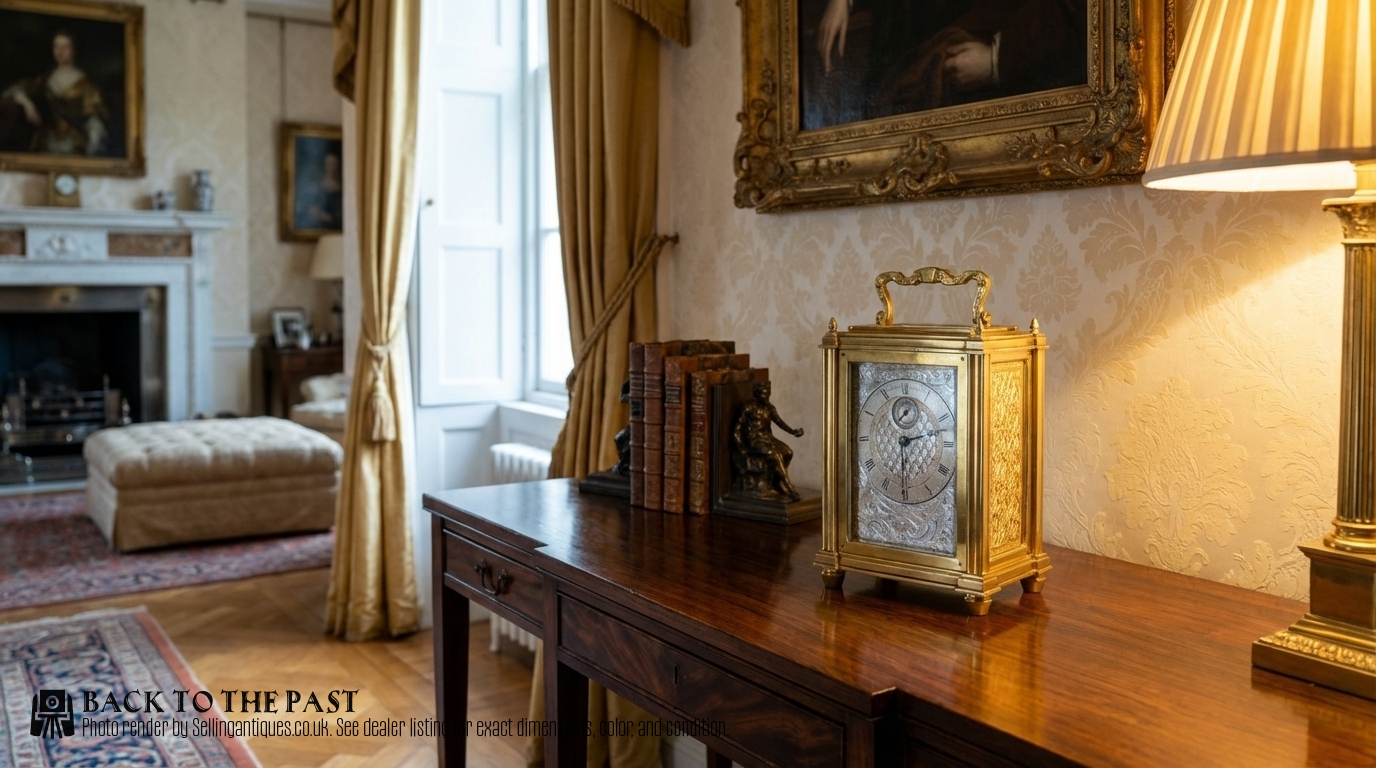
An engraved brass carriage clock sits within a heavy metal frame, featuring glazed panels that reveal the internal movement and an engraved brass exterior casing. These pieces appear frequently from the nineteenth century, particularly from French workshops, alongside examples bearing English fusee movements.
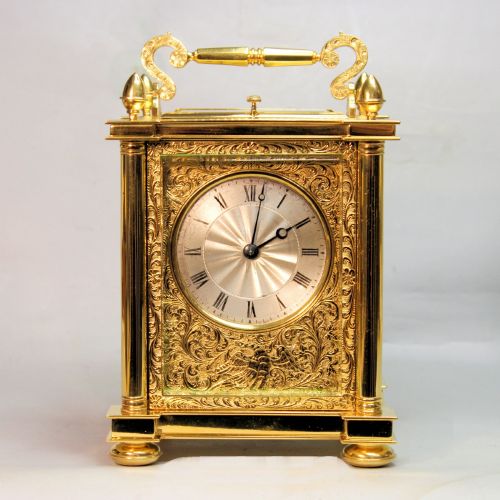
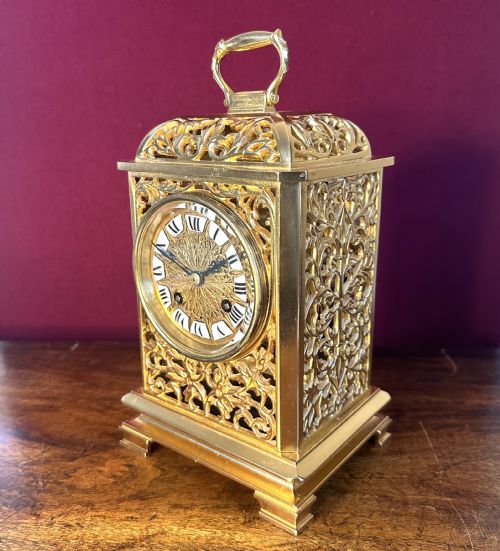
Makers often housed these timepieces in gilt brass, augmenting the heavy metal construction with engraved masks around the dial and decorative patterns across all sides of the case. Forms range from miniature examples to giant or exceptionally large formats, some featuring repeaters or alarm complications.
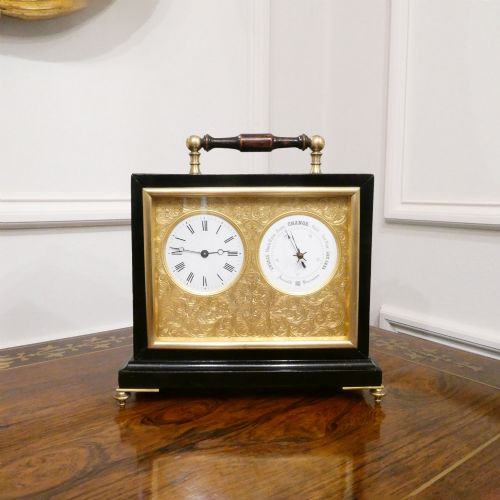
The materials recorded in these pieces include glass, enamel, silvered metal, ebonised wood, and leather travel cases. Stylistic influences span Victorian Gothic Revival, Grand Regency, and Edwardian periods, though French nineteenth-century design predominates across the selection.
Assessing quality in construction
The depth and clarity of the hand-engraving across the brass case distinguish finer examples, where crisp lines and detailed foliate or geometric motifs cover every visible surface rather than just the front mask. The density and weight of the gilt brass frame also indicate superior craftsmanship.
Mechanical sophistication separates standard timepieces from high-end pieces, with complications such as repeaters, alarms, or grand sonnerie striking work requiring exceptional watchmaking skill. Platform escapements featuring fine adjustments and jewelled pivots represent the upper tier of production.
Engraved Brass Carriage Clock Retail Price Guide 2026
Typical asking prices for engraved brass carriage clock among the pieces listed under this phrase on Sellingantiques today, from the lower quarter to the upper quarter. They describe what is for sale here now, not the wider market.
Specific pieces in the evidence originate from French workshops and London makers, spanning standard timepieces to giant repeating models.
HENRI JACOT·COUSENS & WHITESIDE·Margaine·Mappin and Webb·Arnold and Frodsham·Thomas Cole and James Cole·Hunt And Roskell·Charles Frodsham·Drocourt·Paul Garnier·Bourdin·Tiffany·Moser·E.J.Dent·L Epee·Alfred Hollinge
The Engraved Brass Carriage Clock Glossary
- Gorge
- A distinctively moulded case style featuring a stepped top profile and pillars at the corners. This form is common in fine French carriage clocks.
- Repeater
- A mechanism that strikes the hours and quarters on demand when a lever or button is pressed. This complication adds considerable weight and mechanical complexity.
- Platform escapement
- The small, self-contained assembly mounted on top of the movement containing the balance wheel and hairspring. It allows portable clocks to keep accurate time in any orientation.
- Fusee
- A conical pulley used in English carriage clocks to maintain even tension on the gear train as the mainspring unwinds. This system ensures consistent timekeeping throughout the power reserve.
- Grand sonnerie
- A striking train that sounds both the hours and the quarters automatically on every quarter hour. It represents one of the most advanced complications found in these timepieces.
Engraved Brass Carriage Clock: Frequently Asked Questions
How do you wind a carriage clock?
Most pieces require a specialised key inserted into the winding squares located on the backplate of the movement. Turning the key clockwise tensions the mainspring, though care must be taken not to overwind.
Some examples feature a butterfly key permanently attached to the winding arbor or require opening a rear glass door to access the mechanism.
What is a carriage clock used for?
Originally designed for officers and travellers during the nineteenth century, these heavy timepieces provided reliable portable timekeeping inside horse-drawn carriages and hotels.
Today, they serve as mantel or desk clocks, valued for their ability to sit stably on flat surfaces while displaying complex mechanical movements through glass panels.
How do you tell French and English clocks apart?
French pieces typically utilise platform escapements visible through a glass top panel and rely on a standard barrel spring movement. They frequently feature gilt brass cases with elaborate engraved masks.
English examples more often employ a fusee movement with a chain drive, housed in sturdier architectural cases that prioritize mechanical precision over decorative engraving.
Why do some clocks have leather cases?
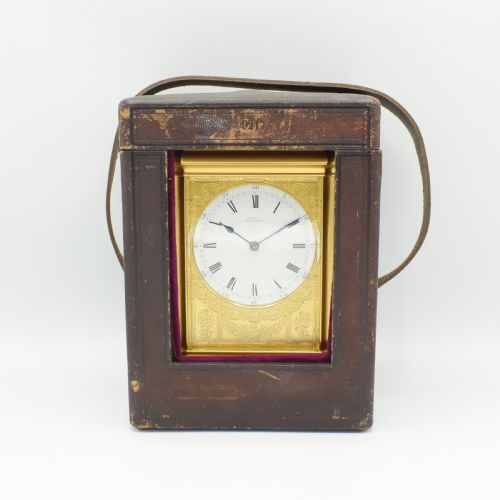
Travel cases, often constructed from heavy leather with velvet linings, protected the gilt brass exterior and glass panels from scratching during long journeys. These outer cases usually featured drop-front doors and small viewing windows so the dial remained visible in transit.